Produced in the 1850s, Dr. John Bull’s Extract of Sarsaparilla was a success from
the start. It was the perfect miracle cure, with six times the amount of pure sarsaparilla
than other similar products. Or at least that’s what the advertising claimed. In reality,
it was just normal sarsaparilla and its medical feats were iffy at best. But luckily for
Dr. John Bull, people believed it.
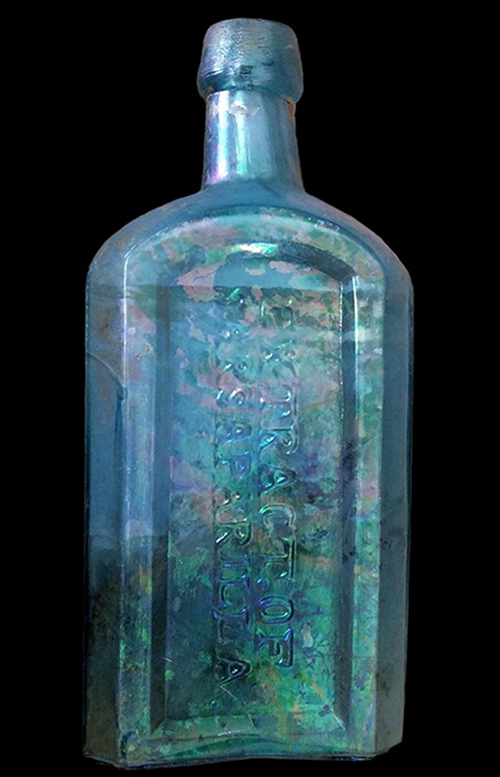 The sarsaparilla bottle from the circa 1850-1870 Feature 30 privy at the Federal Reserve
Site (18BC27).
The sarsaparilla bottle from the circa 1850-1870 Feature 30 privy at the Federal Reserve
Site (18BC27).
John Bull was born near Simpsonville, Kentucky in 1813. At twelve he became a porter in
Hyer's and Butler’s drug store, and he studied medicine under Dr. Shrock. In 1837, he
opened his own drug store, which failed within two years. Bull then joined the wholesale
drug firm of James B. and Edward Wilder as a prescription clerk, where he also began to
produce his own medicine. Eventually his medicine earned him a lot of money, getting
annual business of around $311,540.
The sarsaparilla was one of his more successful medicines and was said to be able to cure
Scrofula, King’s Evil, Cancers, Tumors, Colds and more. Apparently hundreds of physicians
had overseen its production and not one had said anything bad about it. This obviously
was either a marketing ploy or poor physicians, because the healing properties it had
are suspect.
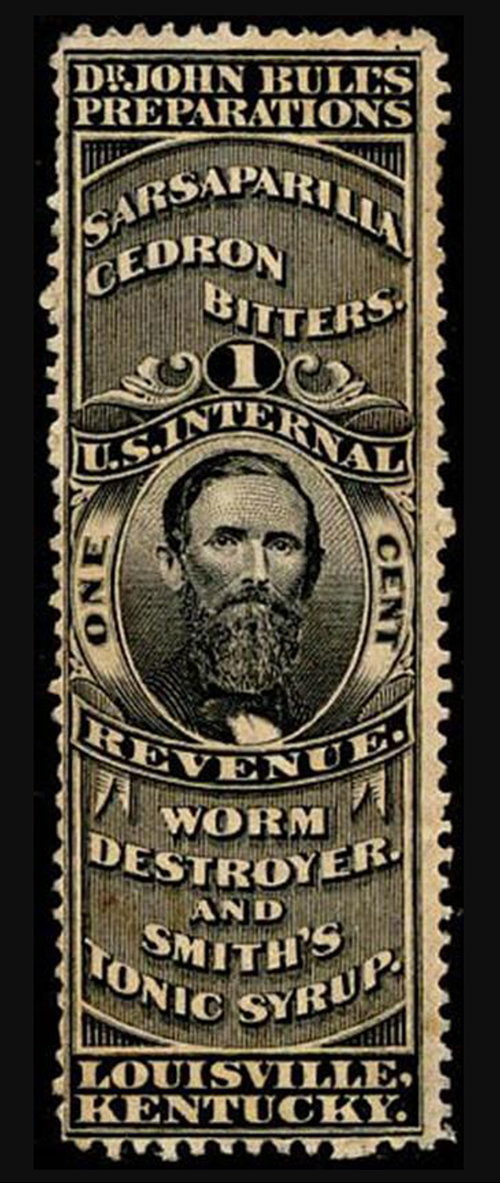 Portrait of Dr. John Bull on this private die proprietary stamp.
http://www.rdhinstl.com/mm/rs42.htm.
Portrait of Dr. John Bull on this private die proprietary stamp.
http://www.rdhinstl.com/mm/rs42.htm.
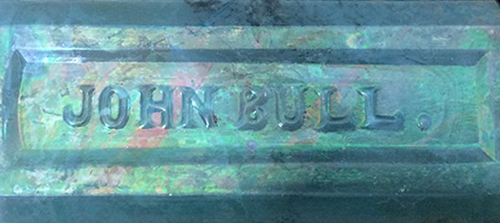 John Bull Extract of Sarsparilla bottle seen from the side, showing the plate mold
with John Bull's name. The privy pit where the bottle was found contained trash from the
Southern Dispensary, a neighborhod medical facility that operated in the mid-nineteenth
century.
John Bull Extract of Sarsparilla bottle seen from the side, showing the plate mold
with John Bull's name. The privy pit where the bottle was found contained trash from the
Southern Dispensary, a neighborhod medical facility that operated in the mid-nineteenth
century.
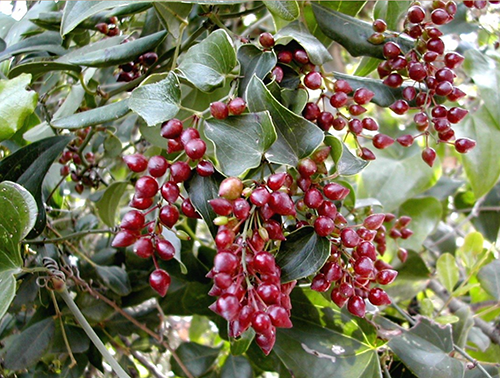 The leaves and berries of the sarsaparilla plant, a woody, rambling vine
native to Central and South America. http://therootsstory.co.uk/sarsaparilla/
The leaves and berries of the sarsaparilla plant, a woody, rambling vine
native to Central and South America. http://therootsstory.co.uk/sarsaparilla/
References Cited
Dr. John Bull and Louisville at That Time. Ferdinand Meyer V. Website.
www.peachridgeglass.com/2014/07/dr-john-bull-and-louisville-at-that-time/ Accessed on 6/8/2015.
Bull’s Sarsaparilla Advertisement. Southern Cultivator and Dixie Farmer
volume 44. January 1886, pp. 296.