In the 1800s, personal hygiene methods were different than they are in the modern era. Due to
the lack of running water and misconceptions about the causes of many diseases, there was often
not as much emphasis on personal cleanliness as there is today. Many people used washbasins and
pitchers of water to take regular sponge baths, but full immersion bathing was difficult without
running heated water.
Public baths have been a part of urban living since at least the Roman times, but the public bath
movement in North America began in the mid-19th century. Increasing immigration from Europe and
crowded living situations in cities brought about the need for public bathing facilities. A number
of public bath houses, administered by the city, began to appear in Baltimore at the turn of the
20th century. These baths were heavily used for decades, but the final bath closed in 1959 as
part of a set of city-based austerity measures (Rasmussen 2006).
Many people in the 19th century would be characterized today as dirty because of body odor. Yet
even then, smelling bad was still undesirable. These circumstances led to the use of perfumes
and colognes, especially by the middle and upper classes who could afford these pleasant
commodities.
This perfume bottle, found in a Baltimore privy, was made by the Boston & Sandwich Glass Company
of Sandwich, Massachusetts (Boston and Sandwich 2017). The company operated between the years
1826 to 1888, producing blown and pressed glass products (Barlow and Kaiser 1998). The tiny bottle,
measuring only three inches tall, was made in the shape of a much larger bottle called a carboy
or demijohn. These bottles, ranging in size from 5 to 16 gallons and used to transport bulk
liquids like vinegar or acid, were covered in woven wicker to prevent breakage. This little
cologne bottle dated between circa 1845 and 1865, a date range that fit nicely with the privy
fill date of between 1850 and 1870.
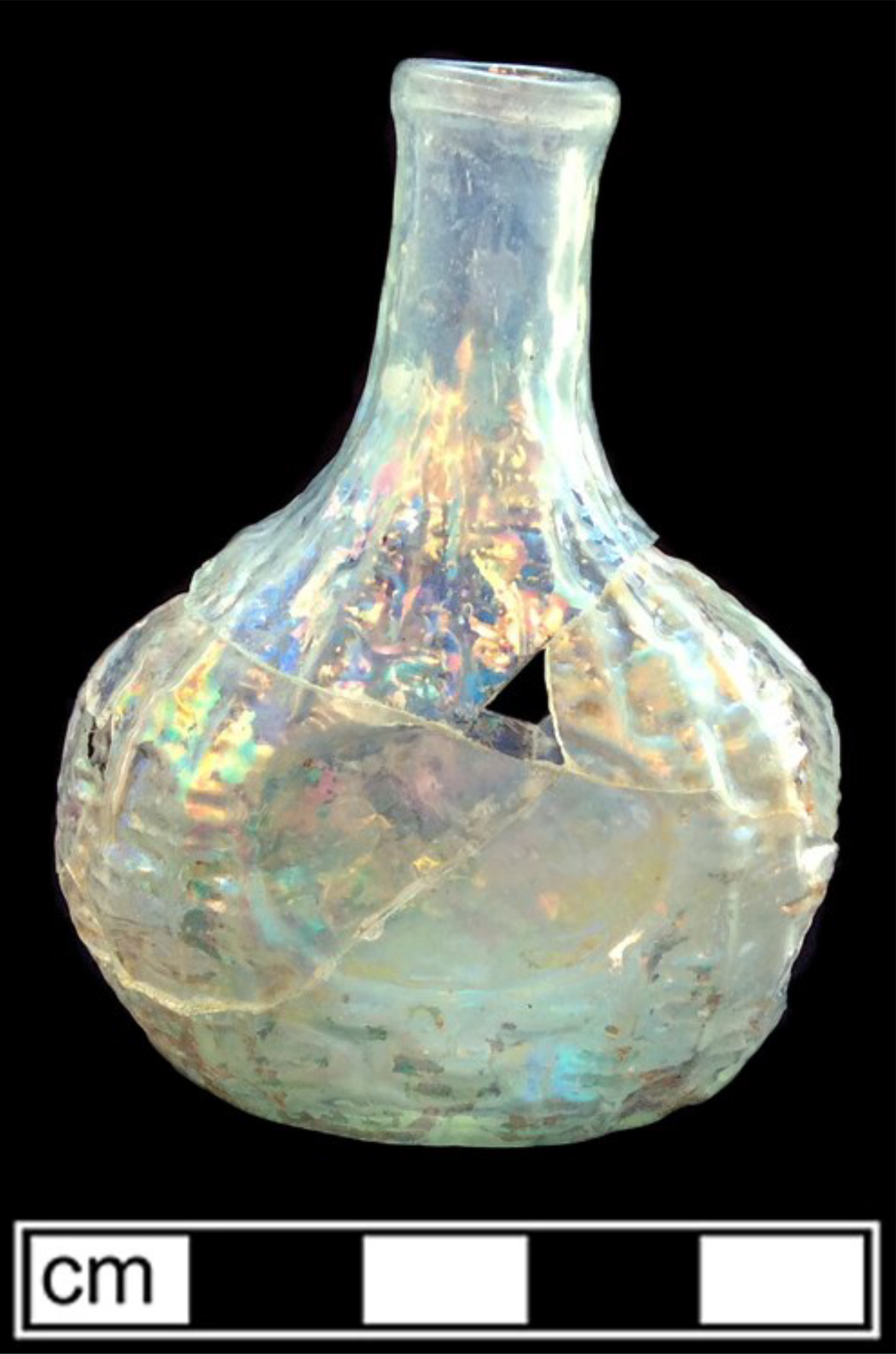 Boston & Sandwich Glass Company cologne bottle found in circa 1850 to 1870 privy
in Baltimore.
Boston & Sandwich Glass Company cologne bottle found in circa 1850 to 1870 privy
in Baltimore.
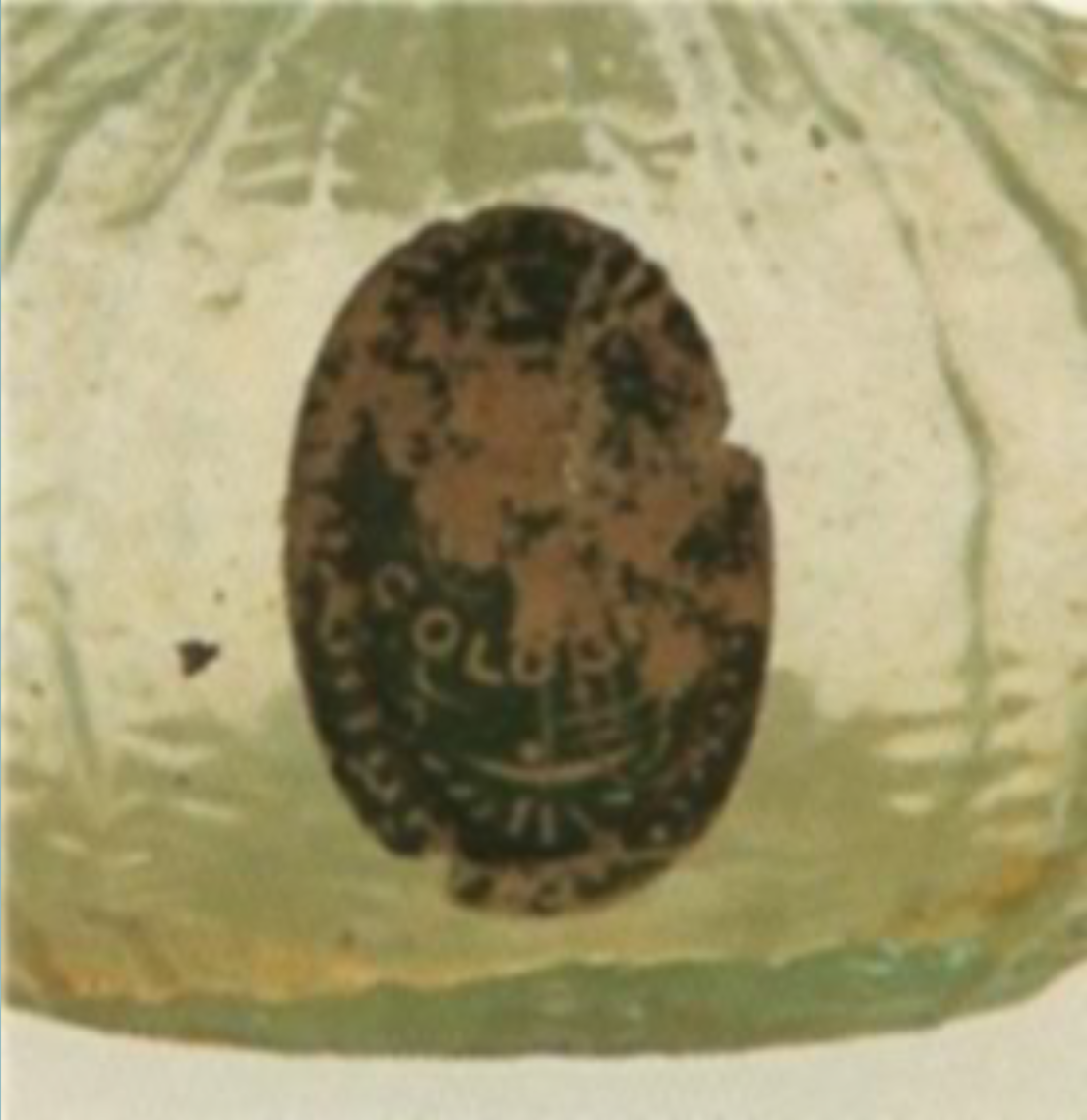 Paper label from a similar bottle from a private collection.
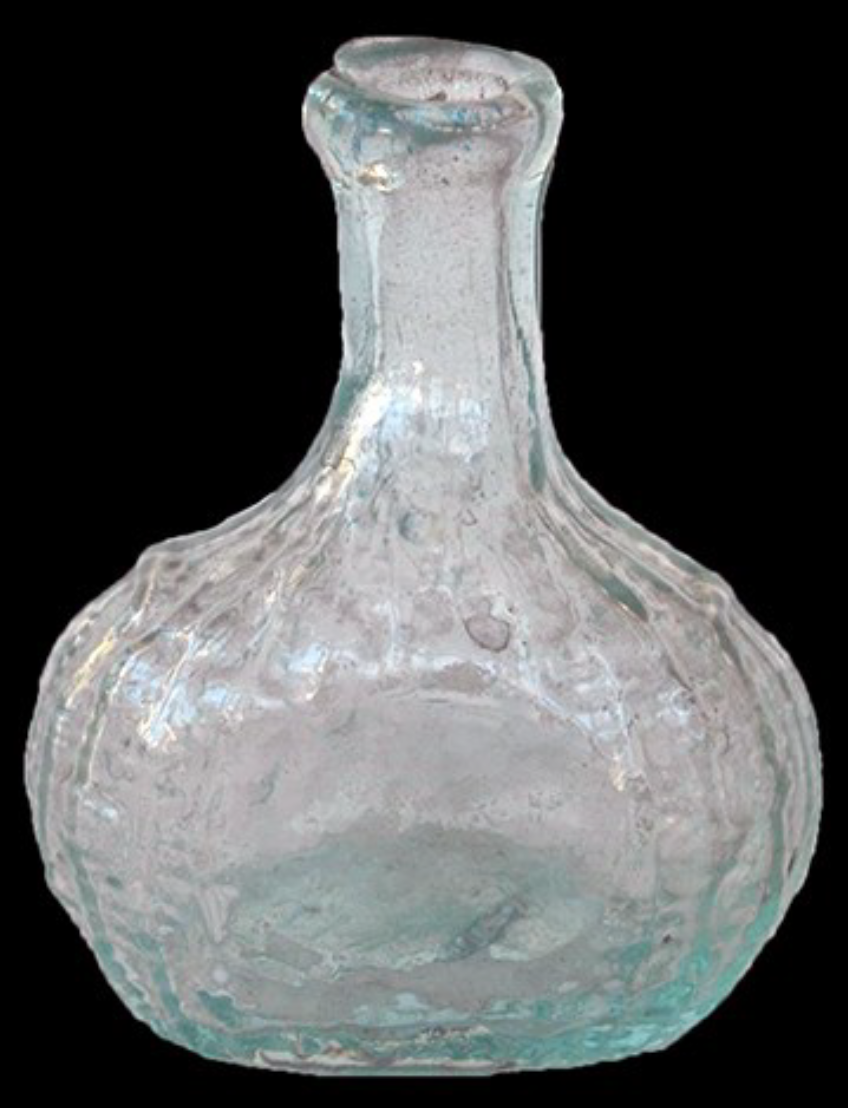 Complete example of a similar cologne bottle from a private collection.
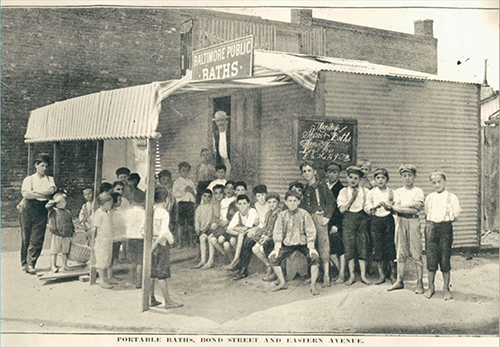 Public baths were often the only option for Baltimore’s unwashed population.
Undated photograph from the Baltimore Sun.
Public baths were often the only option for Baltimore’s unwashed population.
Undated photograph from the Baltimore Sun.
References Cited
Bradfield, Nancy
1998 The Glass Industry in Sandwich. Volume 5. Schiffer Publishing, Limited.
Boston and Sandwich
2017 Boston and Sandwich Glass Company. Wikipedia. Website accessed 01 May
2017. https://en.wikipedia.org/wiki/Boston_and_Sandwich_Glass_Company
Rasmussen, Frederick N.
2006 Public Bathhouse Era Ended in 1959. The Baltimore Sun. Website accessed July 17, 2017.
http://articles.baltimoresun.com/2006-09-02/news/0609020179_1_public-baths-regular-bathing-urban-poor