In the mid-1990s, the City of Annapolis planned a major reconstruction project on Main Street. This project included
replacing utilities and repaving the sidewalks and street. In advance of this work, archaeologists conducted test
excavations to identify any historically significant deposits followed by complete excavation of any intact features
destined to be disturbed by the utility and paving work (Polglase et al. 1997: 1). One of the areas excavated recovered
a large cluster of 18th-century artifacts, including four white clay wig curler fragments (Figure 1).
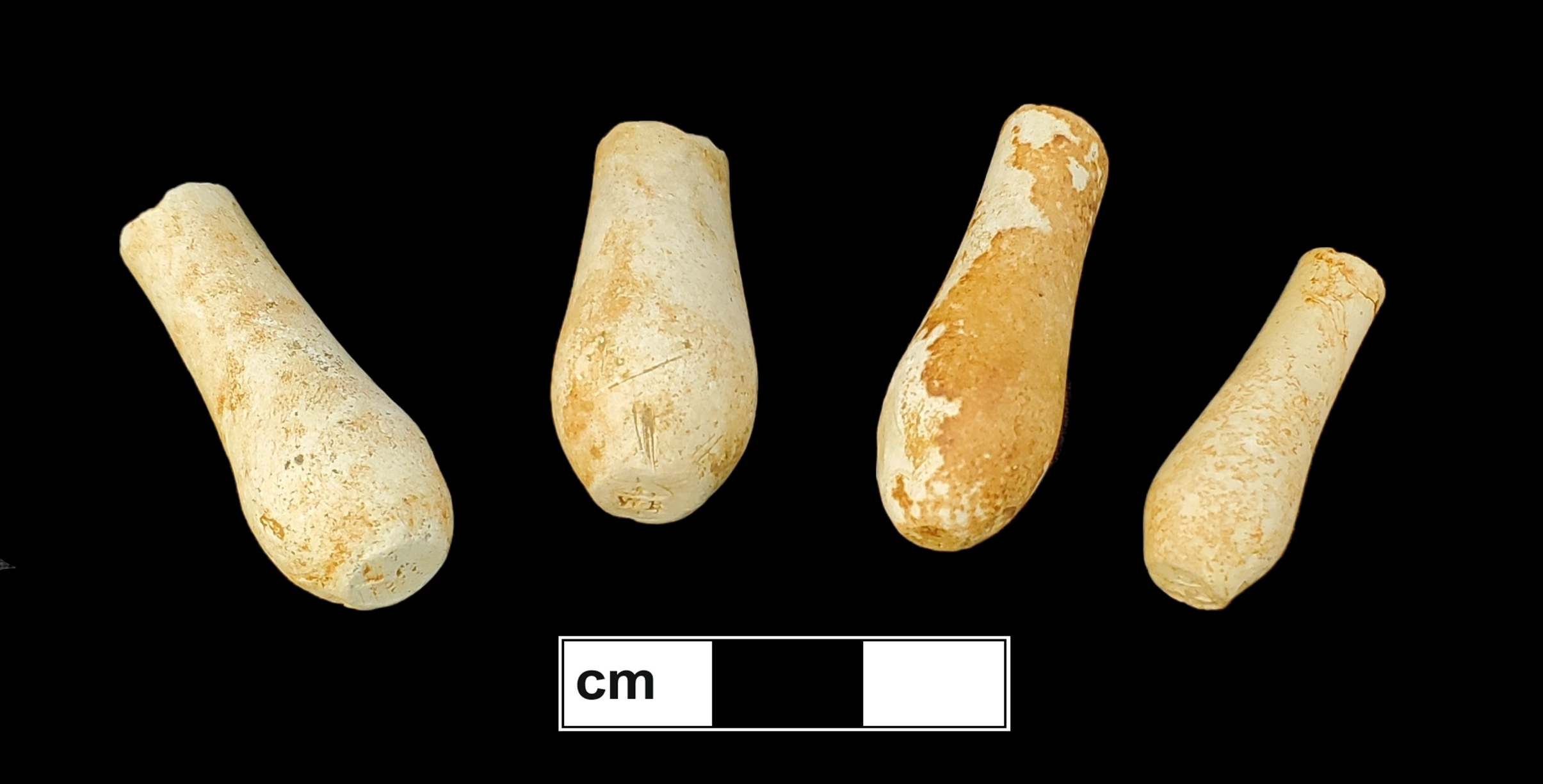 Figure 1: Wig curlers recovered from excavations on Main Street in Annapolis.
These curlers, also known as bilboquets, bigoudis, roulettes, or pipes were used by 17th- and 18th-century hairdressers
to curl wig hair, not the hair on a person’s head (Diderot 1751-1765; Le Cheminant 1982: 345; Noël Hume 1969: 322).
Made from the same white clay as tobacco pipes, wig curlers were cylindrical, measuring 6-8 cm long, and flared at the
ends. The ends of the curlers were sometimes flattened and marked with initials, presumably of the maker, similar to
marks on tobacco pipes of the same period (Noël Hume 1969: 345; White 2005: 116). Two of the curlers recovered from
Annapolis have the initials “WB” under a crown (Figure 2). Similar curlers have been found on archaeological sites in
both Europe and America, but the maker has never been identified (Noël Hume 1969: 321). However, it is quite likely
that at least some of the hundreds of tobacco pipe makers in the 17th and 18th centuries would have also made curlers.
Seventeenth century author John Houghton wrote the following account of the England’s pipe making industry:
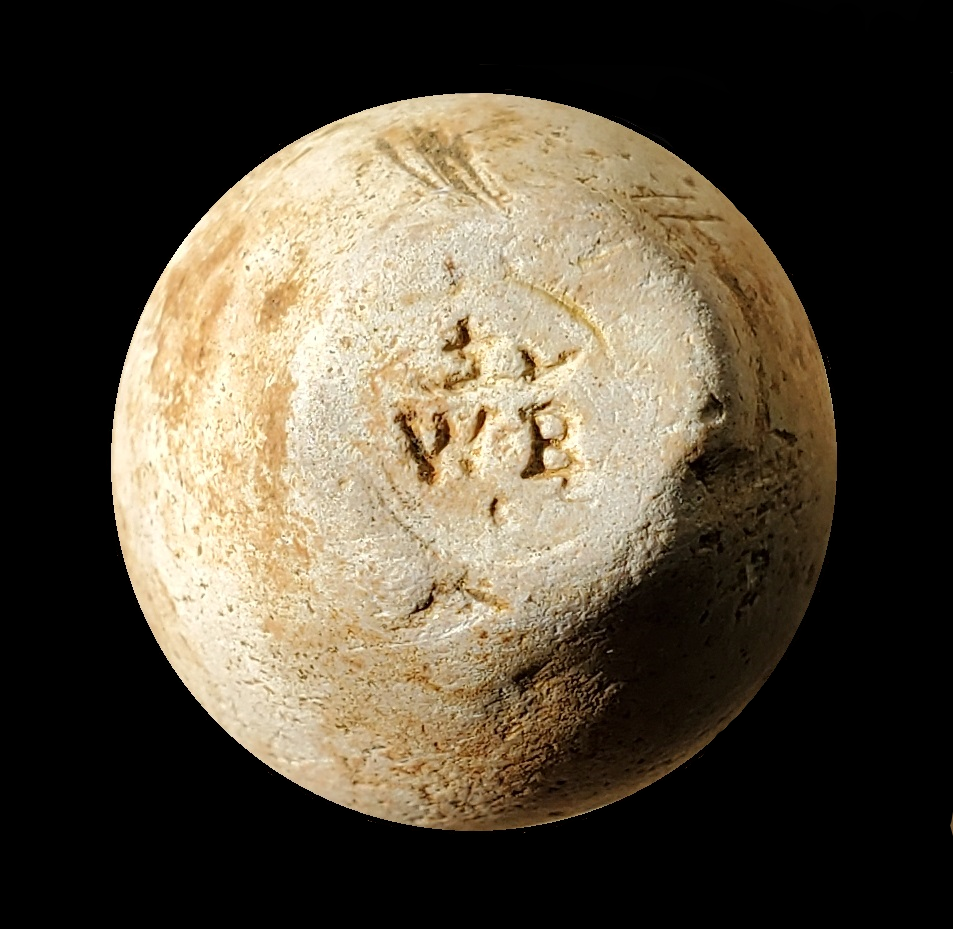 Figure 2: A wig curler with stamped initials "WB" from excavations on Main Street in Annapolis.
…the pipes are used not only for tobacco but often to blow fires; and being warmed they curl hair if wrapt
about them, and not only pieces of pipe but instruments are made on purpose for peruke makers to bake their
hair on. (Le Cheminant 1982: 347)
To create a wig’s curls, the curlers were first wrapped in paper, then with sections of hair, which were tied with a
rag (Noël Hume 1969: 322) (Figure 3C). These sections were then boiled, dried, and baked, sometimes twice (Diderot 1751-1765;
Stewart 1782: 185). Once this was accomplished, the hair sections were sewn into the wig.
Wigs, also known as perukes or periwigs, were primarily worn by men in France and England starting at the beginning of
the 17th century. Made of long sections of curled hair, wigs were often tied at the nape of the neck with a ribbon
(Figure 3E). These hairpieces found their way to America and became increasingly popular in the 18th century before
falling out of fashion in the early 1800s (Diderot 1751-1765; Le Cheminant 1982: 345; White 2005: 115-116).
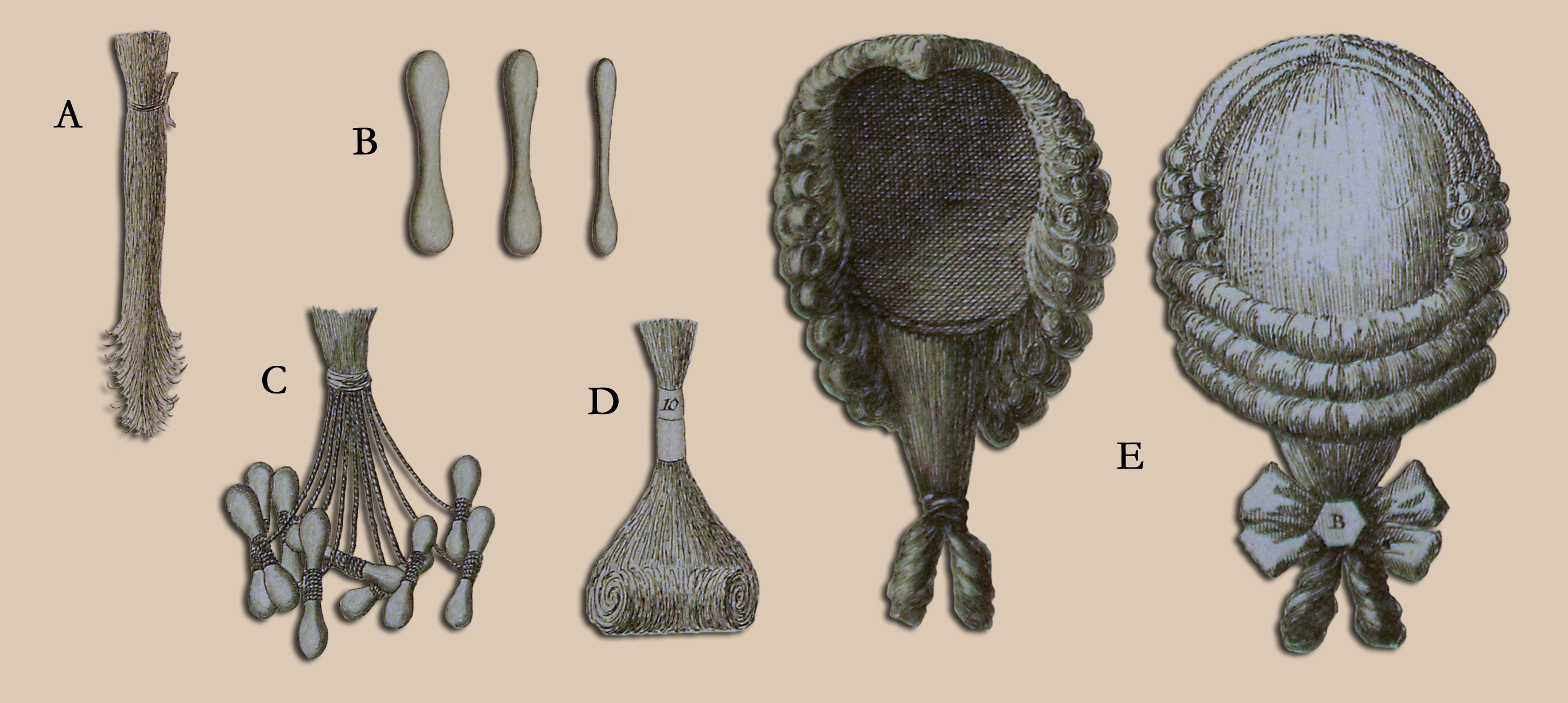 Figure 3: Diderot's Encyclopedie (1751-1765) illustrates various tools used for wig-making and types of wigs worn in the 18th century.
A) A packet of hair before it is styled.
B) Wig curlers, also known as bilboquets.
C) A hair packet wound with bilboquets that is ready for boiling.
D) The curled hair packet after it is dried and the curlers removed.
E) A wig style known in French as a peruke à la brigadier.
Documentary research conducted by archaeologists working on the Main Street excavations found a 1759 rental agreement
between the owner of the lot where the wig curler fragments were recovered, a gentleman named Benjamin Tasker, and
a local innkeeper (Polglase et al. 1997: 60). This document listed William Elting (also designated as Elton in legal
records) as owning or renting the parcel just to the south of Tasker’s property. Further research found an advertisement
from the 1754 Maryland Gazette listing a William Elton as “peruke maker” (Figure 4). Archaeologists aren’t always able
to link a specific artifact to a specific individual but, in this case, there is little doubt that the wig curler
fragments excavated on Main Street once belonged to the Annapolis wig maker, William Elton.
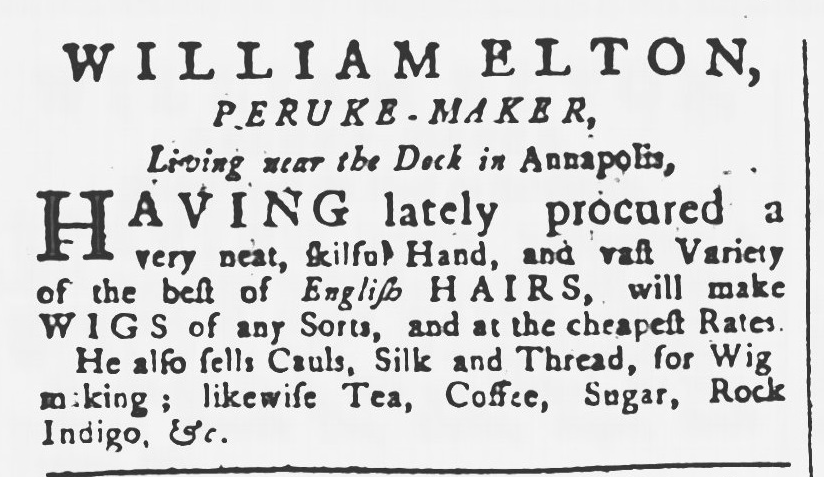 Figure 4: Advertisement from the 1754 Maryland Gazette for William Elton, "peruke maker."
References
Diderot, Denis and Jean Le Rond d'Alembert
1751-65 Encyclopédie, ou Dictionnaire Raisonné des Sciences, Des Arts et des Métiers.
Chez Braisson, David, Le Breton, Durand: Paris. Robert Charles Lawrence Ferguson Collection, the Society of the
Cincinnati, Washington, DC.
Le Cheminant, Richard
1982 “The Development of the Pipeclay Hair Curler––A Preliminary Study.”
In The Archaeology of the Clay Tobacco Pipe. VII, More Pipes and Kilns from England, ed. by Peter Davey, pp. 345–354.
British Archaeology Reports, British Series 100, Oxford.
Maryland Gazette
1754 Maryland Gazette advertisement
(https://msa.maryland.gov/megafile/msa/speccol/sc4800/sc4872/001279/pdf/m1279-0471.pdf)
Noël Hume, Ivor
1969 Artifacts of Colonial America. University of Pennsylvania
Press, Philadelphia.
Polglase, Christopher R., April L. Fehr, Suzanne L. Sanders, Martha Williams, David Landon, Andrew D. Madsen,
Kathleen Child, and Michele Williams
1997 Cultural Resources Management Investigations for the Main Street
Reconstruction Project, Annapolis, Anne Arundel County, Maryland.
Stewart, James
1782 Plocacosmos: or the Whole Art of Hairdressing. Bookfellers in
Town and Country: London.
White, Carolyn L.
2005 American Artifacts of Personal Adornment, 1680-1820: A Guide to
Identification and Interpretation. AltaMira Press, Oxford.