If you lived in the 18th century and needed a quick and easy way to keep track of your to-do
list, jot down ideas, or plan out your weekly schedule, what might you use? We outsource
many of these tasks to post-it notes or our electronic devices in the 21st century, but
in the era before computers, people relied on different writing media to organize their
everyday lives and remember important things. Paper and ink may come to mind first, but
for those who could afford them, sheets of ivory presented a simple solution, in addition
to being both reusable and erasable.
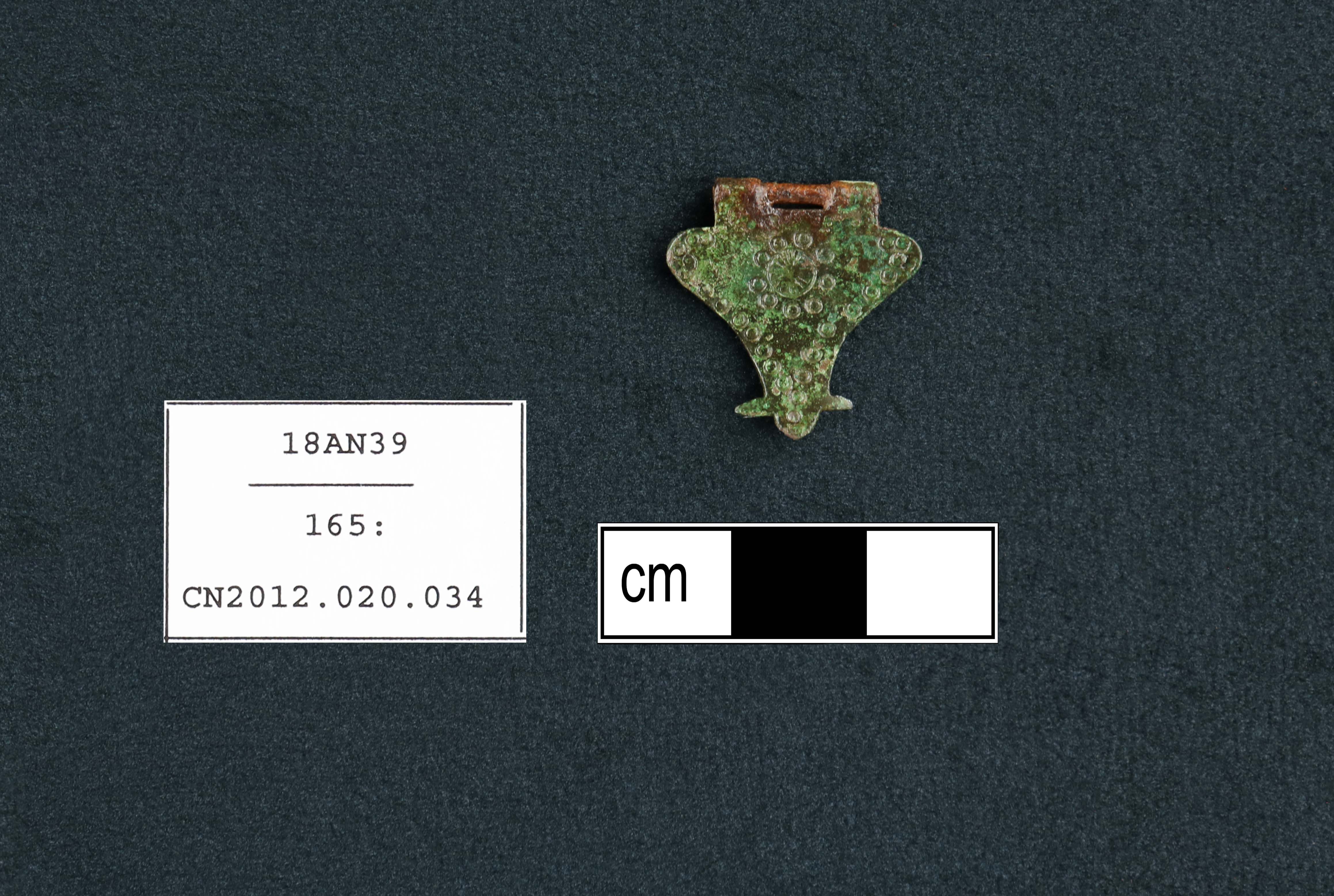 Figure 1: Aide-mémoire hardware from the Saunders Point site.
The Saunders Point site (see Figure 2) was an accidental discovery. When private owners in Anne Arundel
County, Maryland began the construction of a pool on their property in the late 1960s, a
bulldozer unearthed a cellar. A group of archaeologists from the Archaeological Society
of Maryland were called in to assist, and together they recovered a collection of 18th
century artifacts. Research determined that the site had been the home of the Saunders
family, who may have had family ties to John Saunders, a co-owner of the famous Dove
which brought Maryland's first European settlers in 1633 (Maryland Archaeological
Conservation Laboratory 2014).
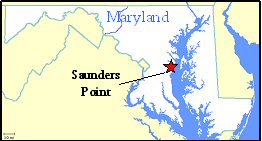 Figure 2: A map showing the location of the Saunders Point site.
A unique artifact in the Saunders Point collection is a copper alloy hardware piece that
belonged on an aide-mémoire (see Figure 1), which translates to "reminder" from French
(Cambridge Dictionary). The piece is smaller than 5cm in both length and width,
semi-triangular, and decorated with small circles. It would have been placed on the
outer cover of the aide-mémoire (as in Figure 3) opposite the central pin hardware. The
aide-mémoire itself would have consisted of several flat sheets of ivory within a case/cover.
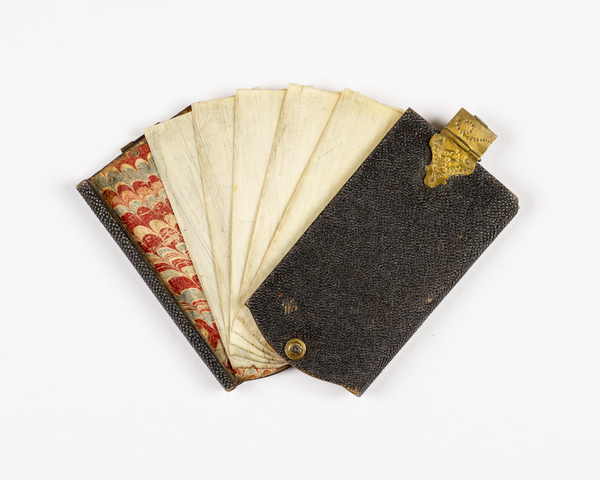 Figure 3: An aide-mémoire from the Winterthur collections, dating to
1730-1740 (Winterthur 2009).
Figure 3: An aide-mémoire from the Winterthur collections, dating to
1730-1740 (Winterthur 2009).
Ivory sheets had been used as writing media long before the 18th century. One 14th century
example from the Walters Art Museum consists of a box with ivory pieces inside that were
each coated with wax. The writer would press into the wax using a stylus and reuse it
once the wax had been smoothed over (The Walters Art Museum). By the 18th century,
aide-mémoire books (also referred to as memorandum books) evolved to become smaller and
more compact (see Figures 3 and 4). The ivory leaves could pivot on a central pin and
unfold in a fan-like fashion. Both Thomas Jefferson and Benjamin Franklin owned and
regularly wrote in aide-mémoire books (Stallybrass 2006:556-557).
Both men and women utilized aide-mémoire books to record various notes. Jefferson
famously jotted down meteorological and climatological data in his aide-mémoire before
transferring it to logs within his notebooks (Monticello). An aide-mémoire could also
function as a miniature planner or to-do list, as some books came with the days of the
week stamped into the ivory. Ladies may even have used them as dance cards. Re-use
and maintenance were simple: the book's owner simply needed to wipe the ivory leaves
clean using a damp cloth or sponge (Stallybrass 2006:556-557).
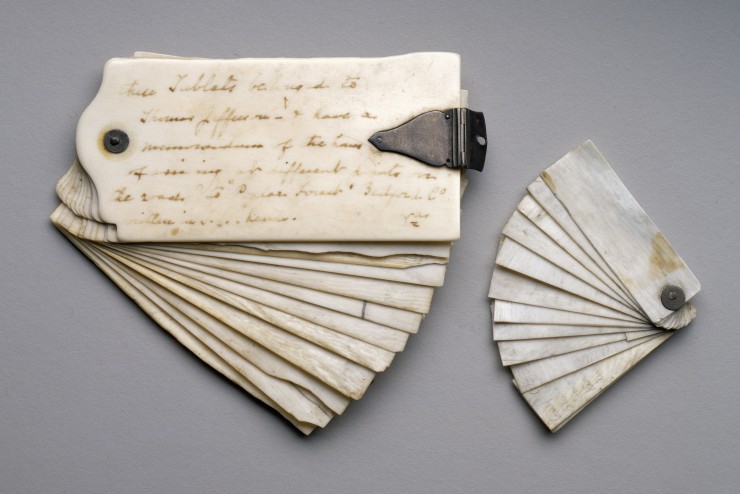 Figure 4: Aide-mémoire books from the collections at Monticello
(Monticello).
Figure 4: Aide-mémoire books from the collections at Monticello
(Monticello).
We may never know for certain who in the Saunders family owned an aide-mémoire, or which
parts of their lives they recorded on its ivory sheets. However, the presence of an
aide-mémoire was a peek into the family's comfortable, affluent lifestyle (Cleveland
Museum of Art).
References Cited
Cleveland Museum of Art
n.d. "Writing Tablet (Aide-Mémoire) c. 1760-1770."
Cleveland Museum of Art. Available online at https://www.clevelandart.org/art/2009.59
Cambridge Dictionary
n.d. "Translation of aide-mémoire." Cambridge
Dictionary French-English Dictionary. Available
online at https://dictionary.cambridge.org/us/dictionary/french-english/aide-memoire
Maryland Archaeological Conservation Laboratory
2014 Saunders Point (18AN39). In Maryland Unearthed:
A Guide to Archaeological Collections at the Maryland Archaeological Conservation Laboratory.
Available online at https://apps.jefpat.maryland.gov/mdunearth/SiteSummaries/Site18AN39.aspx
Monticello
n.d. "I Rise with the Sun." In
A Day in the Life of Jefferson. Available
online at https://www.monticello.org/thomas-jefferson/a-day-in-the-life-of-jefferson/i-rise-with-the-sun/
Stallybrass, Peter
2006 Benjamin Franklin: Printed Corrections and Erasable
Writing. In Proceedings of the American Philosophical Society. Vol. 150(4):553-567. Available
online at https://www.jstor.org/stable/4599024
The Walters Art Museum
n.d. "Writing Tablet and Lid." The Walters Art Museum.
Available online at https://art.thewalters.org/detail/9704/writing-tablet-and-lid/
Winterthur Museum, Garden & Library
2009 "Memorandum book (Aide-memoire)." Winterthur Museum,
Garden & Library. Available online at https://tinyurl.com/cw2axjws