Conservators have many tools to clean artifacts at the Maryland Archaeological Conservation
Lab. A new tool employed in the lab this summer can be sourced here on the grounds of the
Jefferson Patterson Park and Museum (JPPM): thorns!
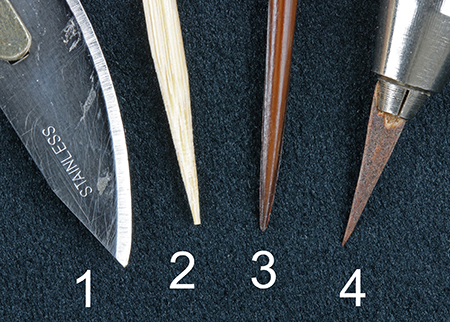 Image 1: Compare the tip size of common cleaning tools: 1) Steel
scalpel, 2) bamboo skewer, 3) porcupine quill, 4) black locust thorn.
Image 1: Compare the tip size of common cleaning tools: 1) Steel
scalpel, 2) bamboo skewer, 3) porcupine quill, 4) black locust thorn.
Thorns are ideal for cleaning soft archaeological artifacts that are easily scratched, like
gold and gilt surfaces (Auffret and Nikolaus 2019). They're also sharper than other tools
used around the MAC Lab, like bamboo skewers and porcupine quills, so they’re great for
getting into hard-to-reach places. Thorns are harvested, allowed to dry and harden, and
mounted in a pin vice to make them a handheld tool to use under the microscope.
Thorns were most notably used by the UK conservation team that cleaned the Staffordshire
Hoard, a collection of 4,000 7th century gold and garnet cloisonné and filigree artifacts
excavated from a potato field in England. This team selected several types of plants based
on what was available in England (The Institute of Conservation 2015). The thorny plants
used by the Staffordshire Hoard team aren’t available in Maryland. With the help of
Lindsay Hollister, JPPM’s horticulturalist, conservators selected two species that could
be sourced here at the park.
Black locust trees (Robinia pseudoacacia) are native to the western Maryland mountains
but have since spread to most of the state (Ujeta-Esteban and Tayviah n.d.). They are fast
growing trees that like sunny, disturbed areas, and thorns are more common on new growth
(Huntley 1990). At JPPM, black locusts are found along field edges, and low hanging branches
are often in the way of our mowing crews.
Common greenbrier (Smilax rotundifolia) is a climbing vine with glossy green leaves
native to the Eastern US including Maryland (JPPM n.d.). Individual vines grow into thickets
that provide cover for birds and small mammals. Greenbrier thorns have black tips. At JPPM,
greenbrier is common along field edges and occurs in patches in the woods.
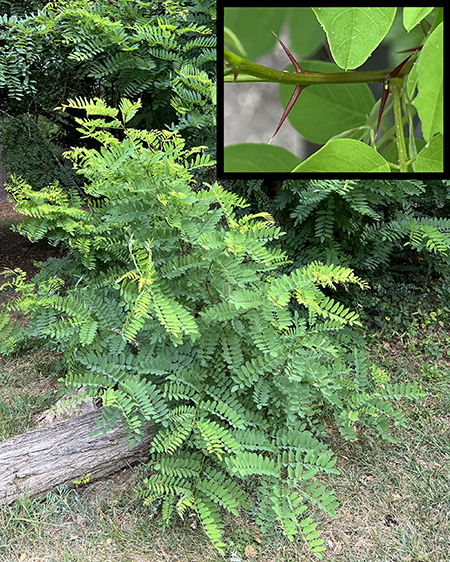 Image 2: Black Locust, also known as false acacia, and its thorns.
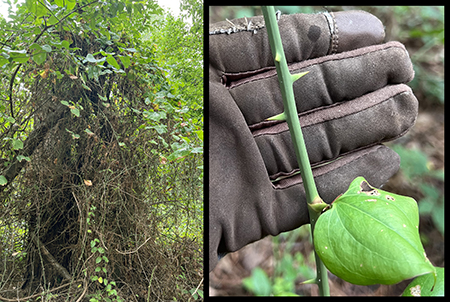 Image 3: Common greenbrier, also known as roundleaf greenbrier, and its thorns.
Thorns recently helped in the cleaning of a historic copper alloy spur. A chalky white
substance was embedded in microscopic divots across the spur. This may be an old coating or
old polishing compound and needed to be removed. While a scalpel tip could fit in most of
the divots, copper alloy is softer than steel and could be easily scratched. Both a bamboo
skewer and porcupine quill were too large to fit into most of the divots, so a black locust
thorn came to the rescue.
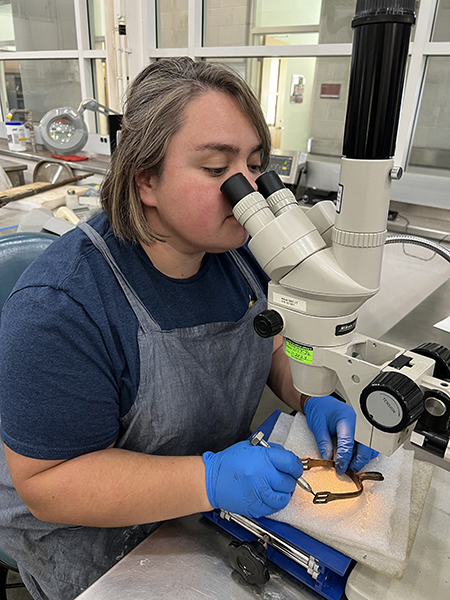 Image 4: Conservator Arianna Johnston works on the copper alloy spur (TIMU 3082, NPS
Timucuan Ecological and Historic Preserve) under the microscope.
Image 4: Conservator Arianna Johnston works on the copper alloy spur (TIMU 3082, NPS
Timucuan Ecological and Historic Preserve) under the microscope.
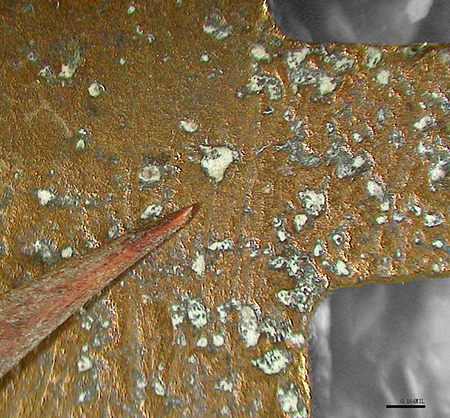 Image 5: Microscope screenshot of a black locust thorn clears out the white accretions
from the polished copper alloy surface. Magnification 1.38x.
Image 5: Microscope screenshot of a black locust thorn clears out the white accretions
from the polished copper alloy surface. Magnification 1.38x.
References Cited
Auffret, Stéphanie, and Sydney Beall Nikolaus
2019 Cleaning of Wooden Gilded Surfaces: An Experts Meeting Organized by the
Getty Conservation Institute. Los Angeles: Getty Conservation Institute. http://hdl.handle.net/10020/gci_pubs/gilded_surfaces.
Huntley, J.C.
1990 "Robinia Pseudoacacia L." In Silvics of North America: Volume 2.
Hardwoods, edited by Russell M. Burns and Barbara H. Honkala. Southern Research Station, USDA Forest
Service, 1990. https://srs.fs.usda.gov/pubs/misc/ag_654/volume_2/robinia/pseudoacacia.htm.
The Institute of Conservation
2023 "ICON News: The Magazine of the Institute of Conservation," May 2015. Accessed
August 1, 2023. https://www.icon.org.uk/resource/icon-news-58-may-2015-pdf.html.
Jefferson Patterson Park and Museum (JPPM), Maryland Department of Planning
2023 "Common Greenbrier." Accessed August 17, 2023.
https://jefpat.maryland.gov/Pages/education/plants/common-greenbrier.aspx.
Ujeta-Estaban, K., and Tayviah V.
2023 "Black Locust." Glen Arboretum, Towson University.
Accessed August 17, 2023. https://wp.towson.edu/glenarboretum/home/black-locust/.