"It was a revelation for me, at some point later in life, when I discovered there were
people who didn't… sing or play an instrument."-- Andre Brown
This quote from Andre Brown, a Wallville community descendent, highlights the central
role music played in the lives of community members (Oral history on file at JPPM).
In his 2023 oral history, Brown added, "practically every family member played at
least one instrument, most played two, and sang." Other oral history interviews for
the Wallville project recorded similar sentiments about how deeply integrated music
was into daily life.
It isn't terribly surprising then, that excavations at three Wallville sites have
recovered artifacts related to playing or listening to music. Harmonica and record
fragments have been identified, but this rectangular steel artifact is a reed key
from a slightly larger instrument: the accordion (Figure 1). The accordion was
invented in 1822 in Berlin, Germany and it did not take long for the instrument to
become popular since it could be used for many different styles of music. Although
used less often today, it was most popular from the mid-19th century and into the
early 20th century. The accordion makes sound when air is drawn in and out by
the bellows. As the air moves through the instrument, buttons or keys can be pushed
to control the air flow through thin strips of metal called reeds. The resulting
vibrations create sound.
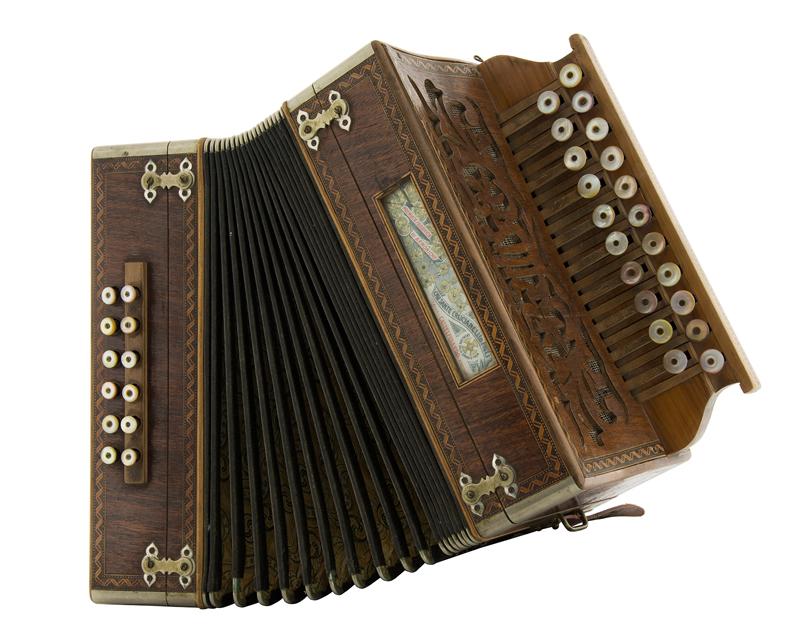 Figure 1: Diatonic button accordion. Maker: Santa Crucianelli (Cav.) &
Figli, ca. 1925-1935, Castelfidardo, Italy, Arne B. Larson Collection,
Vermillion, South Dakota, 1979. National Museum of Music, Object number:
01290.
Figure 1: Diatonic button accordion. Maker: Santa Crucianelli (Cav.) &
Figli, ca. 1925-1935, Castelfidardo, Italy, Arne B. Larson Collection,
Vermillion, South Dakota, 1979. National Museum of Music, Object number:
01290.
This diatonic accordion reed key was recovered from the Elizabeth Rawlings site during
archaeological survey conducted for the Wallville Project, funded by the National
Park Service African American Civil Rights grant (Figure 2). The Rawlings were a
Black family living at the southern end of Mackall Road in Calvert County, Maryland.
In 1903, Edward Rawlings purchased 7.25 acres from Isaac Bowen and his wife Elizabeth
Mackall Bowen (Calvert County Land Records, GWD 3, 459). Shortly after the purchase,
Rawlings sold 2.75 acres of the same parcel to his sister, Sarah Elizabeth Rawlings
and her then husband, George W. Washington (Calvert County Land Records, GWD 4, 245).
Federal census records show Elizabeth and her family living in the area into the
1940s, although a 1938 aerial photograph suggests the house has been torn down
by that time.
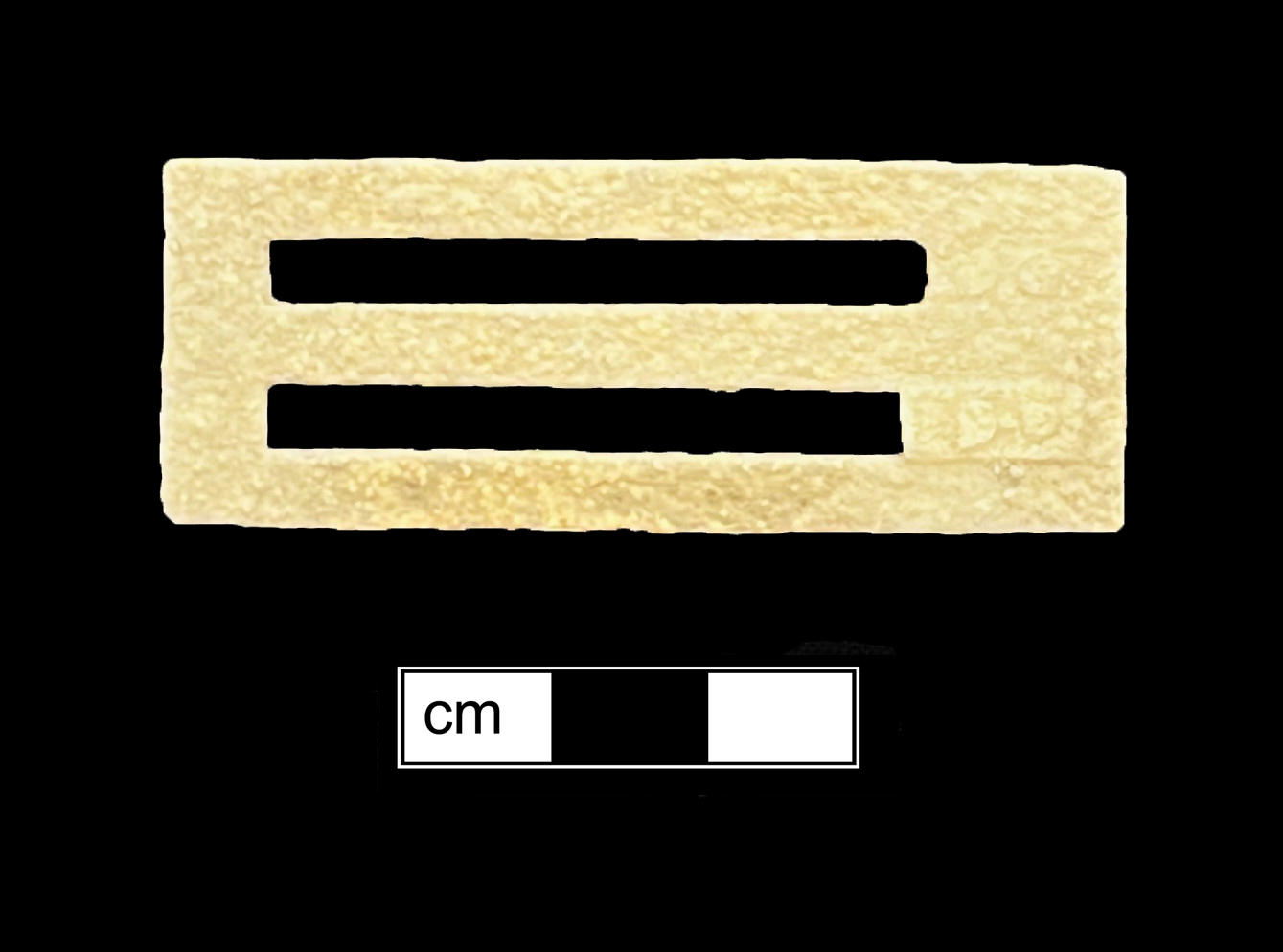 Figure 2: Diatonic Accordion Reed Key.
Archaeological survey identified two midden areas separated by a high point where the
house likely once stood. On the northeastern side of the slope were larger artifacts
including cast iron stove parts, buckets, and enamelware vessels associated with the
abandonment of the house. The southern side of the slope, however, had a dense
midden layer with large quantities of oyster shell and other domestic artifacts such
as glass, ceramic, and metal (Figure 3). This southern midden is where the
accordion reed key was recovered and includes material that accumulated while the
house was occupied. The two broken reeds on the key suggest that it was probably
thrown out with other trash when the reeds broke, and it had to be replaced with
a new key.
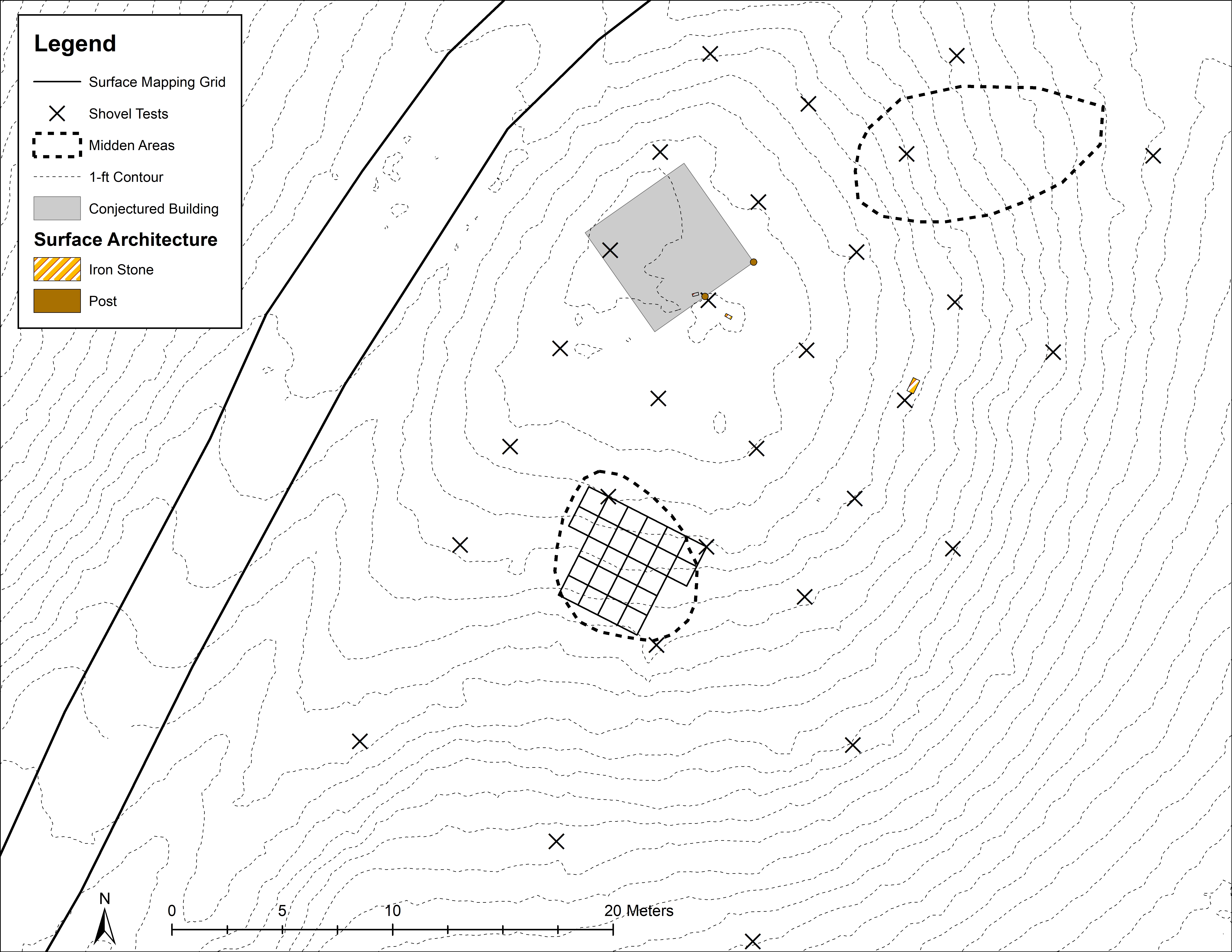 Figure 3: Eliz. Rawlings Site Map.