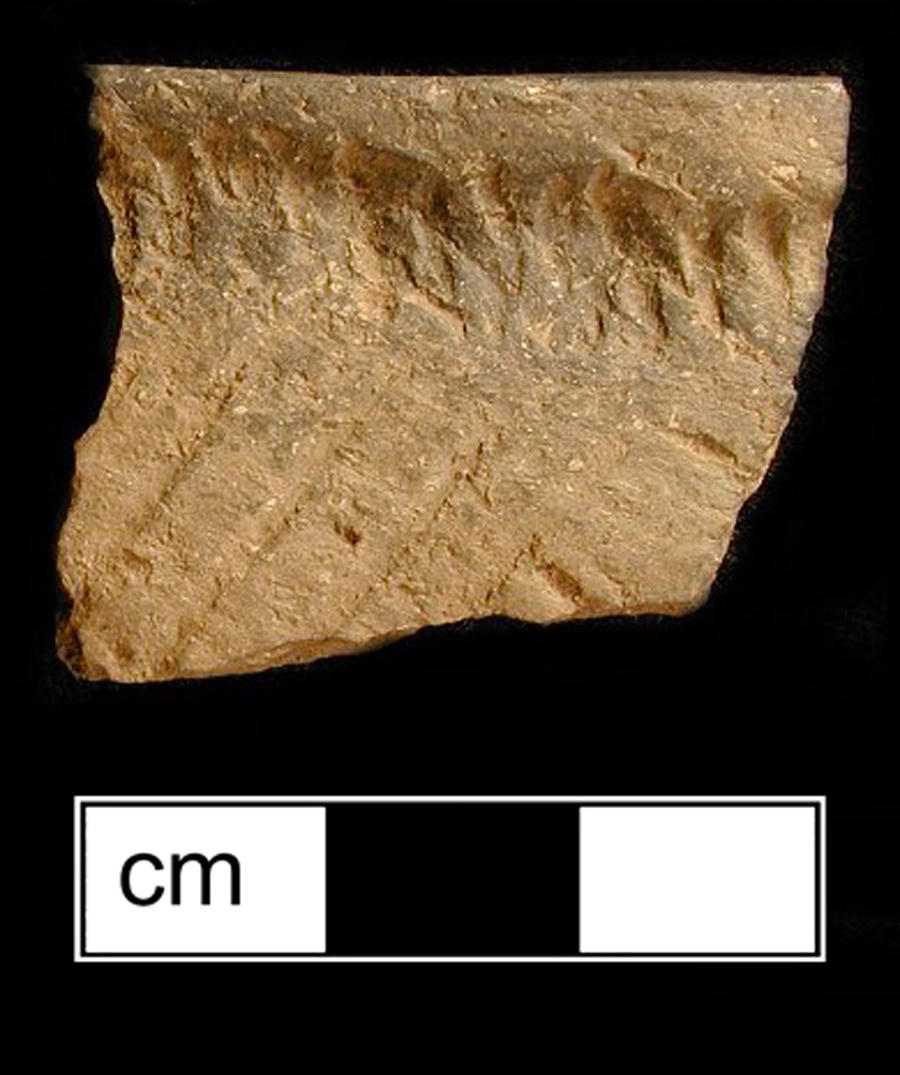
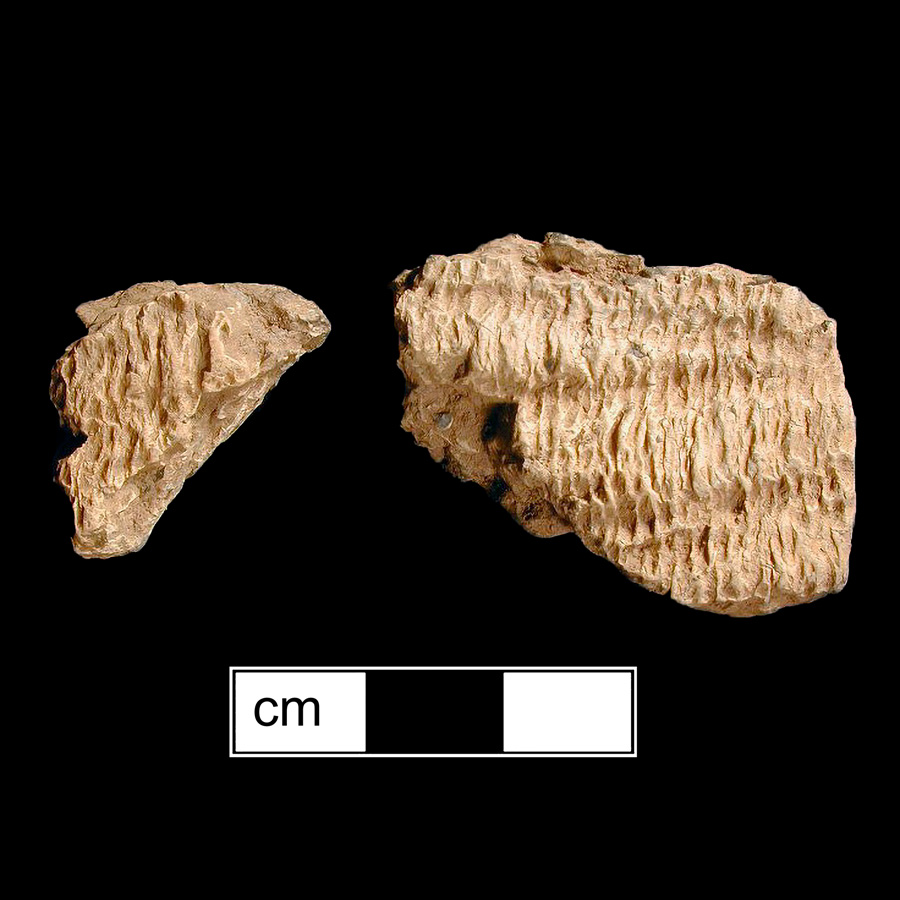
Herman Barton Village (18AG3)
Site History
The Herman Barton Village (18AG3) is a Late Woodland/Contact Period village site, located on the north branch of the Potomac River in Allegany County, Maryland. It is one of the principal sites within a cluster of multi-component precontact sites situated on an upper terrace along the river. The Maryland Historical Trust holds an easement on the property, which is owned by the Archaeological Conservancy.
Archaeological Investigations
The Herman Barton Village Site was one of the first aboriginal village sites to be investigated in western Maryland. This site was discovered in 1958 during site survey work in the Upper Potomac Valley and has been extensively studied by archaeologists since that time.
In 1960, Henry Wright excavated at the site, digging a 5 × 10 foot cut in the riverbank and excavating the soil in arbitrary 5-inch intervals within natural soil horizons. Two precontact period features and artifact concentrations (over 800 pottery sherds, grinding stones, triangular points) were located within the strata cut to a depth 30 inches below the ground surface.
In 1987, a Phase II survey consisting of auger borings and a single 1 × 1 meter test unit was conducted. The results of this testing led to a large, multi-year project carried out by archaeologists and students at Towson University. Excavations from 1993-1998 were conducted with the purpose of defining the extent of protohistoric occupations and their relation to an adjacent Luray (Keyser) phase village. Twenty-two features (not including postmolds) were mapped prior to 1997 and most were excavated. The features include several pits, hearths, trenches, middens, and stains. Numerous postmolds/holes were excavated, including a palisade (with associated trench) that surrounds the Luray/Keyser focus occupation.
In 2000, deep test excavations began to be conducted to reveal the sub-plowzone components at the site. In 2003, the Archaeological Conservancy purchased the site with the assistance of the MHT, and a broad excavation effort was initiated to better define the boundaries of the various site occupations and to determine where some of the more significant archaeological deposits were located.
In general, the Towson University work at Barton has revealed it to be a multi-component prehistoric and Contact period site, forming a significant part of what has come to be called the "Barton Complex." The Barton Complex is a cluster of archaeological sites situated on two river terraces on the Potomac River's North Branch. The site complex spans a 12,000-year time frame from Paleoindian (Clovis) to early Historic times, i.e. the period of initial European contact with inhabitants of the region. Evidence of the latter includes finds of European glass trade beads, copper and brass ornaments, and Susquehannock pottery.
Excavations by Towson have revealed: 1) middens and bell-shaped pits associated with Contact Period (Susquehannock) occupation towards the northern end of the site, with evidence for a palisade, 2) a Late Woodland (Keyser phase, ca. AD 1450) village enclosed by a palisade trench (roughly 100m across), 3) earlier Late Woodland (Page phase) unenclosed settlements distributed across the upper terrace, 4) indications of Middle Woodland occupation on the lower terrace, and 5) much deeper Archaic and possibly Paleoindian period occupation.
Decades of research at the Barton site (18AG3) reveal a multi-component prehistoric and Contact period site, revealing potentially 12,000 years of human occupation in western Maryland. Intact cultural features, evidence of multiple (and spatially discrete) village areas, and deep chronology make this site one of the most important in the state, only a fraction of which has been fully excavated. It should be considered a significant archaeological resource.
References
2007 Archaeobotany of the Late Woodland and Contact Periods at the Barton Site (18AG3), Allegany County, Maryland. Master’s thesis.
2002 Faunal Remains from Cultural Features at the Barton Site, 18AG3: Historical Conjuncture and the Examination of Faunal Remains. Master’s thesis, Catholic University of America, Washington, D.C.
1997 Protohistoric Occupations at the Barton Site (18Ag3), Allegany County, Maryland: A Preliminary Report. On file at the Maryland Historical Trust, Crownsville.
2001 Late Woodland Ceramics and Native Populations of the Upper Potomac Valley. Journal of Middle Atlantic Archaeology 17:15-36.
2004 The Chesapeake Hinterlands: Contact Period Archaeology in the Upper Potomac Valley. In Indian and European Contact in Context: The Mid-Atlantic Region, University Press of Florida/Society for Historical Archaeology, pp. 74-97.
1992 Test Excavations at the Barton Complex Sites, Allegany County, Maryland. Maryland Archeology 28(1):1-12.
2003 Material Culture of the Contact Period in the Upper Potomac Valley: Chronological and Cultural Implications. Archaeology of Eastern North America 31:151-177.
1963 Herman Barton Village Site (18-Ag-3): A Stratified Late Ceramic Site in the Upper Potomac Valley. West Virginia Archeologist 15:9-20.
Associated Artifacts
Clemson Island
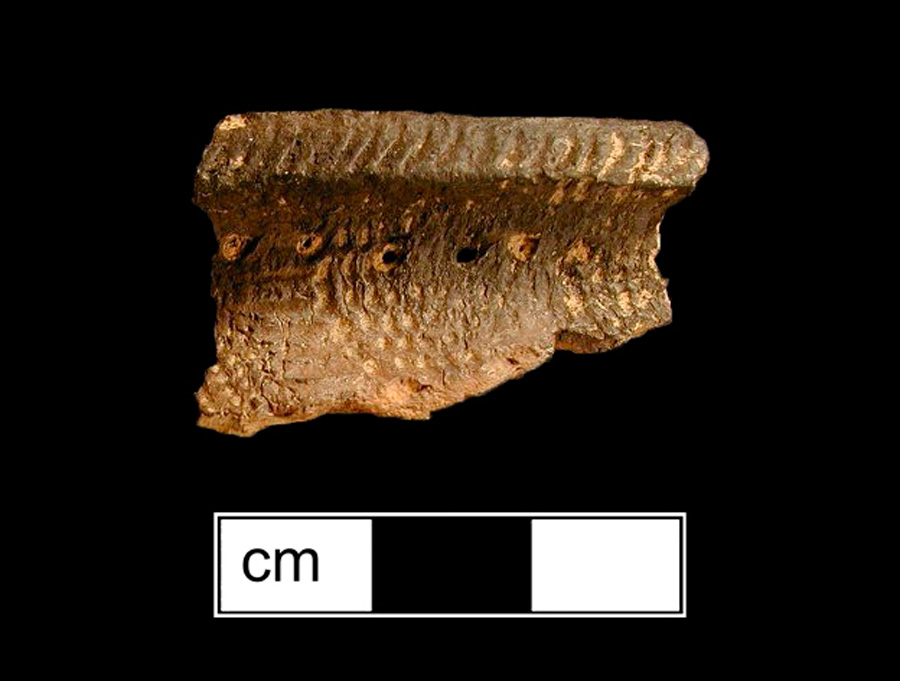
Clemson Island
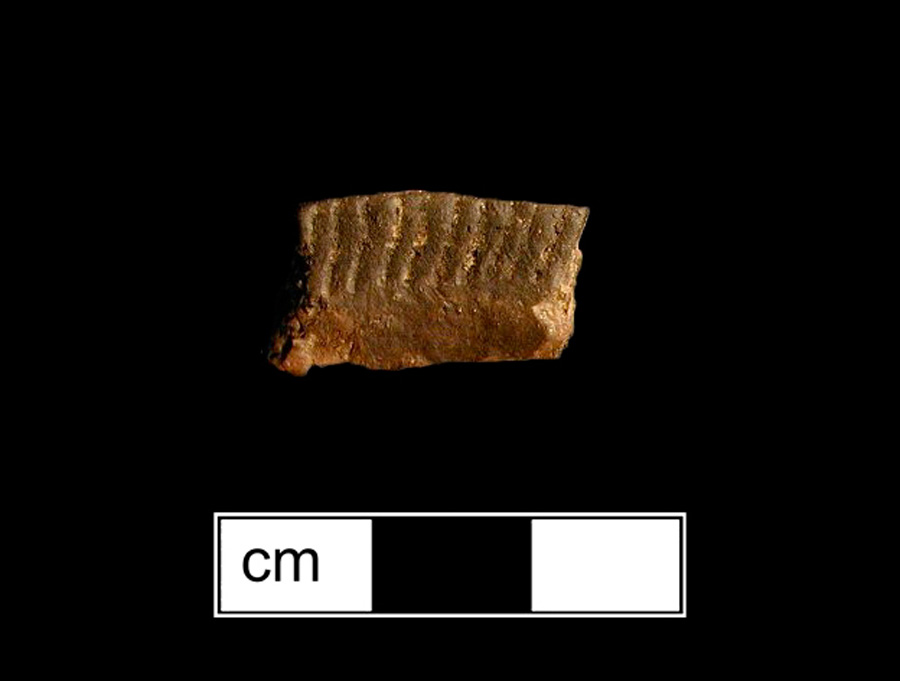
Clemson Island
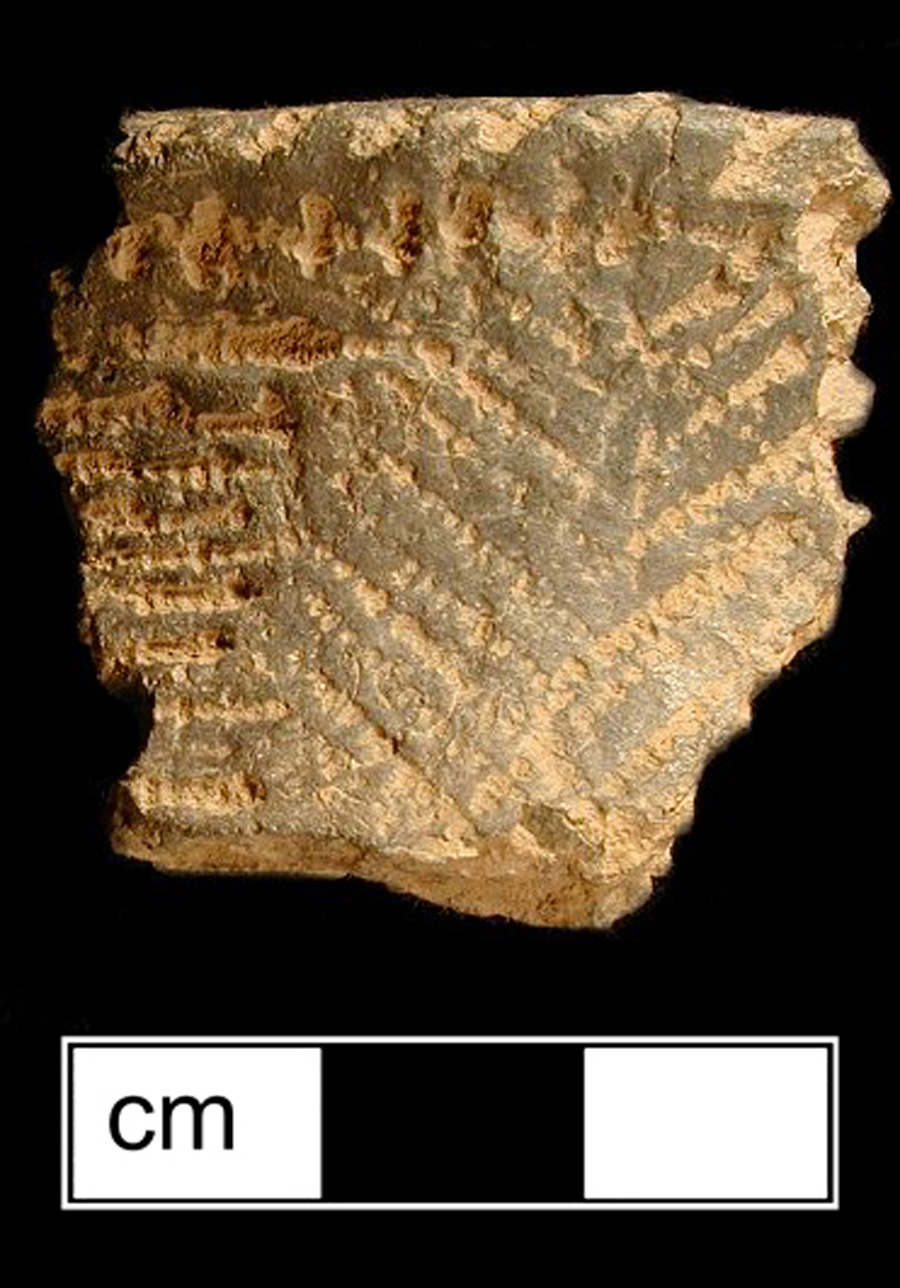
Susquehannock