Historic Ceramics
Historic ceramics are divided into three categories based on clay types used and firing temperatures.
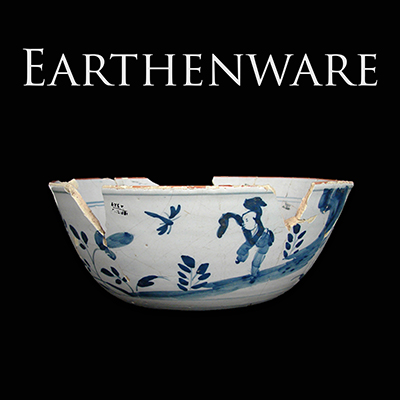
Earthenware – Earthenware is fired at the lowest temperatures, ranging from 900 degrees to 1050 degrees Celsius. This pottery is porous and requires glazing on at least one surface to hold liquids. Earthenwares fired at a low temperature have a soft, porous paste, generally ranging from buff to yellow to pink to red to gray in color.
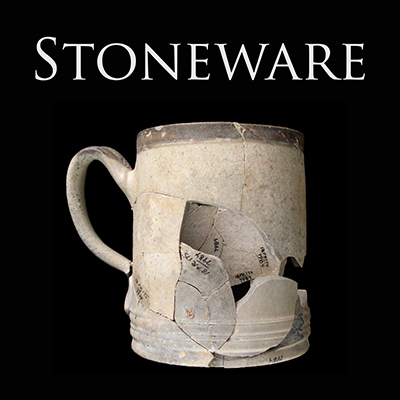
Stoneware – Stoneware pottery is fired at temperatures between 1200 degrees to 1300 degrees Celsius, resulting in a ware that is non-porous (vitrified) and stone-like. Paste color generally ranges from white to gray to tan. While stoneware is impervious to liquids and does not need to be glazed, it often is, with salt-glazing being the most prevalent method used.
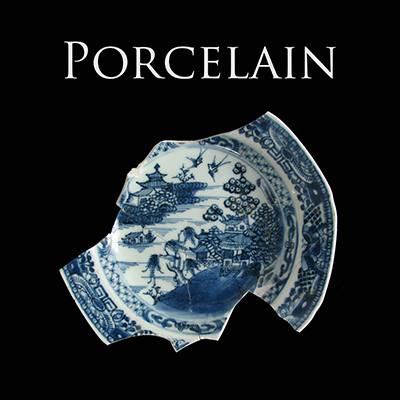
Porcelain – Porcelain is a variety of dense, highly vitrified, translucent white-bodied ceramic produced from specialized white clays that can withstand firing temperatures over 1300° C. There are three types of porcelain: hard paste, soft paste and bone china.