Big Holly Branch (18AN20)
Site History
The Big Holly Branch site (18AN20) is a multi-component site consisting of an Archaic period base camp, and a Late Woodland short-term camp. The site is located on Holly Branch in Anne Arundel County, Maryland.
Archaeological Investigations
This site was initially identified in 1905 by Talbot D. Jones, an active avocational archaeologist. Jones graduated from Johns Hopkins University in 1899 and his collection and field notes were donated to Johns Hopkins. The Division of Archeology at the Maryland Geological Survey analyzed the Jones collection in 1980. The collection is curated by the MAC Lab at JPPM, although it is currently still owned by JHU. The T.D. Jones Collection includes 62 artifacts from this site. Artifacts collected from the site by Jones during the 1890s included a muller, mortar, a pestle, a bannerstone, and numerous axes.
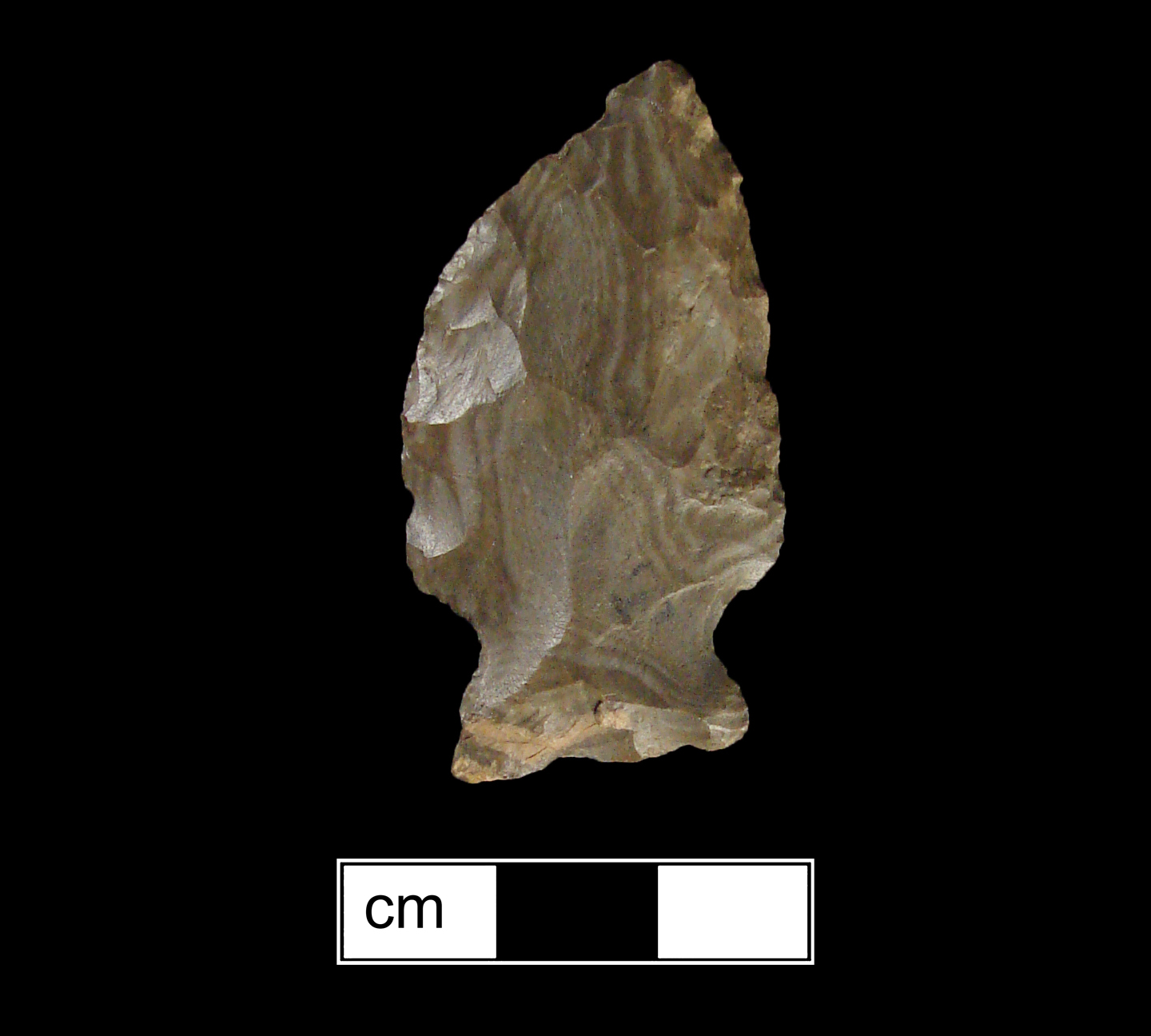
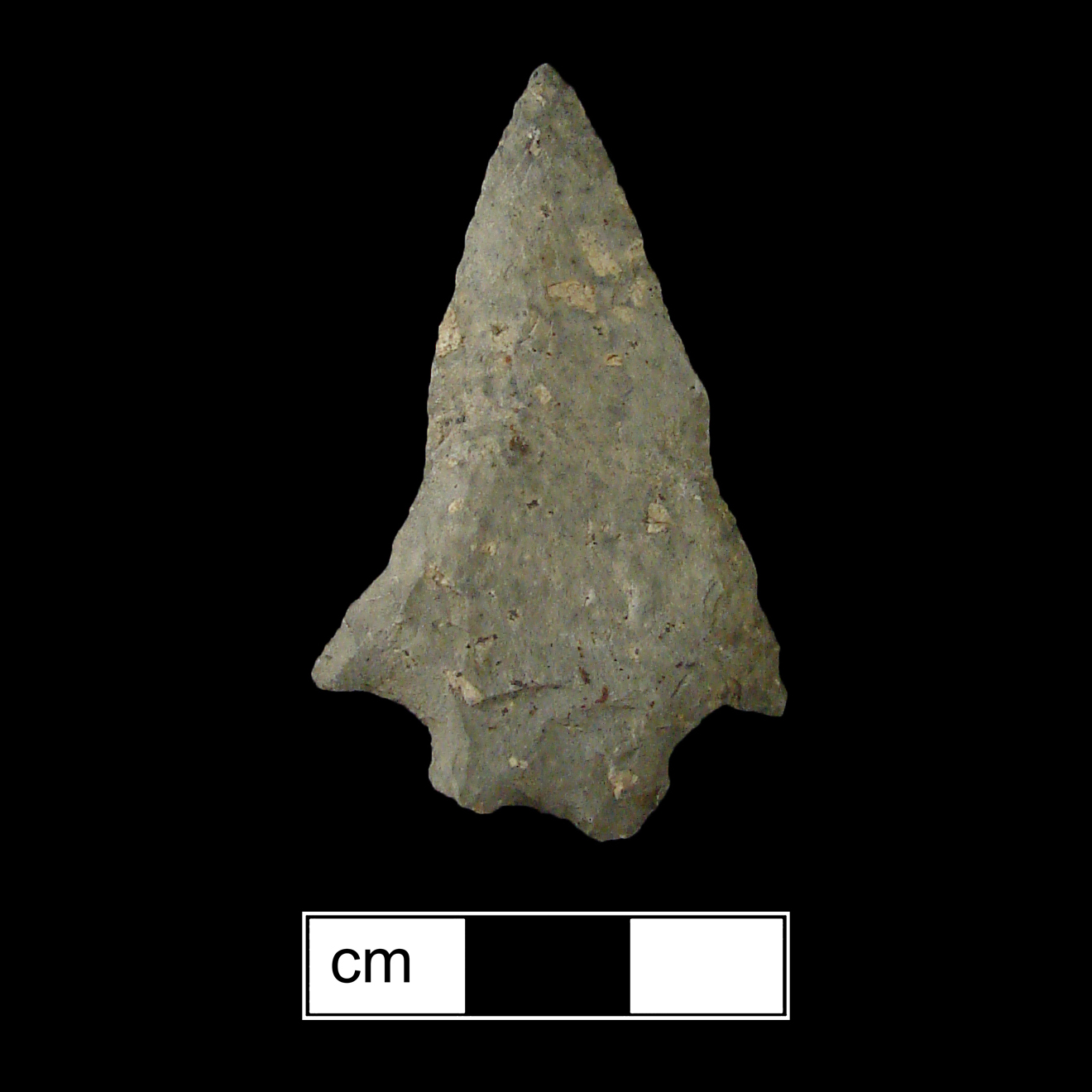
The site was visited in 1969 by Tyler Bastian, A&M Wilkes, and E. Gibbs. Bastian completed a site form in 1970, as did archaeologist Wayne Clark later that same year. Clark's trip included a controlled surface collection. Material collected by Clark in 1970 included 7 spearpoints, 27 arrowheads, 15 birdpoints, 4 Late Woodland pottery, a hammerstone, an oval scraper.
Big Holly Branch Site appeared to have been the largest site on the lower Patapsco River. The material reported by Mr. Stearns along with the artifacts found by Clark indicate that the site was predominantly an Archaic occupation, but prehistoric ceramic sherds suggest a Woodland occupation as well. Of Clark's lithic artifacts collected, 65% were of quartz, and the rest of rhyolite and chert. Most of the points were stemmed although two triangular points were recovered.
References
1978 T.D. Jones Collection Notes 1892-1908. (Maryland Geological Survey) MHT # BA 2.
1949 "Some Indian Village Sites of the Lower Patapsco River". Proceedings of the Natural History Society of Maryland, No. 10. MHT # AN 20A (Site #20).