99 East Street (James Holliday House) (18AP116)
Site History
99 East Street is located in the Historic District of Annapolis and is a two-story, single family, brick Federal-style building. It is situated in an urban neighborhood approximately 100 meters from State Circle and 250 meters from City Dock.
The house at 99 East Street was built around 1820 and, since 1850, has been owned by the family of James Holliday, a free African American man who also owned 101 East Street. James Holliday (born c. 1809) was freed in 1819 and worked for nearly 40 years as a messenger for the Naval Academy superintendent. He began the job in 1845, bought 99 East Street five years later, and lived there until his death in 1882. The house is still owned by descendants.
Archaeological Investigations
The Archaeology in Annapolis Project excavated two test units in December of 2009 in order to determine if there was intact archaeological stratigraphy at the site prior to planning further excavations at the location. The work showed that the site was intact, with stratified deposits extending at least two feet below the ground surface, with 19th-, 20th- and 21st-century yard scatter deposits and features.
Between 2010 and 2012, the University of Maryland College Park conducted their Field School in Urban Archaeology at the site. Two 5 × 5 ft. units were placed in the backyard of the house in the summer of 2010, yielding thousands of household artifacts and faunal bone. In the summer of 2011, 3 additional units (2 measuring 4 × 5 ft. in the backyard and 1 5 × 5 ft. unit in the basement). Thousands of artifacts, including a revolver, a Spanish coin from 1789 (with punched hole, possibly worn as pendant), animal bones, glass marbles, a toy soldier, and a half-wood/half-bone domino, were found. Finally, in June of 2012, three final units were placed at the site, (one 5 × 5 ft. unit in the basement, one 4 × 4 ft. unit in the basement, and one 4 × 4 ft. unit in the backyard). Over five thousand artifacts were recovered in these three units, including bottles, ceramics, buttons, marbles, slate pencils, straight pins, thimbles, and animal bones.
In addition to stratified midden deposits dating from the 19th to the 21st centuries, features excavated at the site include a barrel privy in use in the second half of the 19th century, a late 18th-century cat burial, a semi-circular brick feature interpreted as a garden feature, an early 20th-century brick patio, and the corner of a foundation wall of an unidentified structure.
References
2011 Phase II Archaeological Testing at the James Holliday House on East Street (18AP116), Annapolis, Maryland, 2010-2012. Electronic resource available at https://api.drum.lib.umd.edu/server/api/core/bitstreams/0c45b421-9398-43be-a208-5e48259030eb/content.
Associated Artifacts
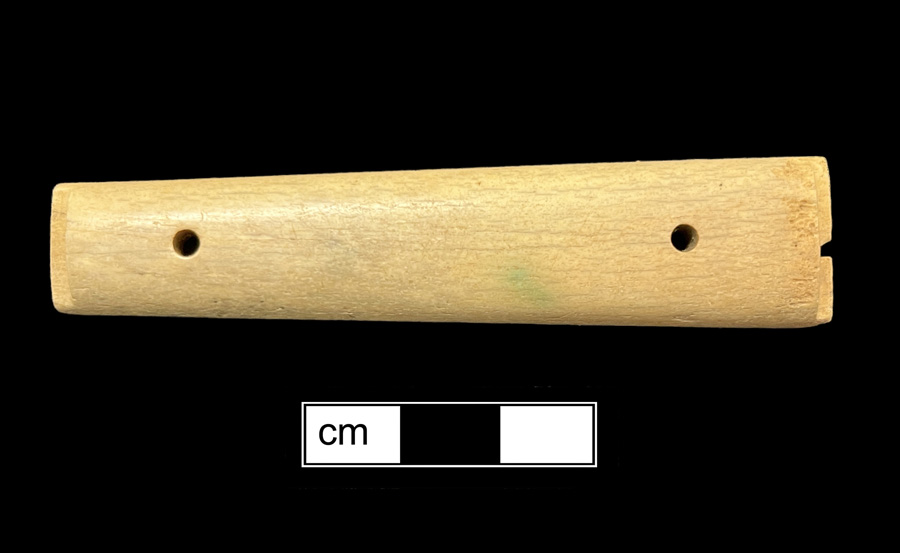
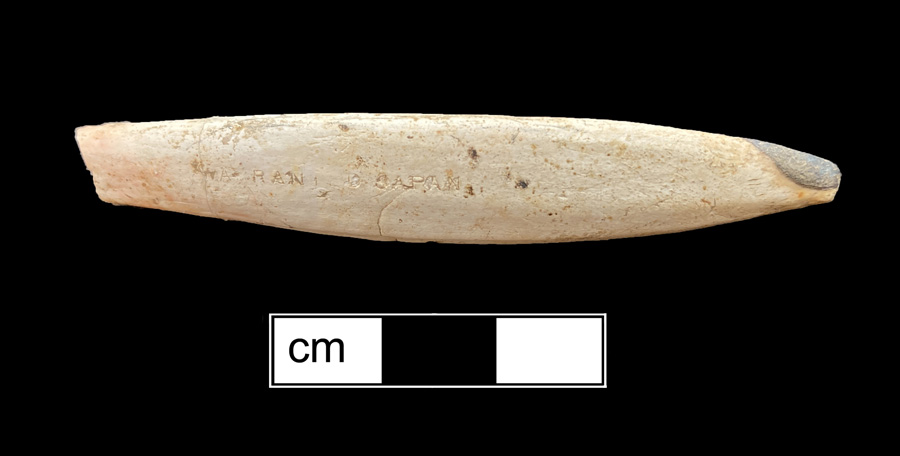
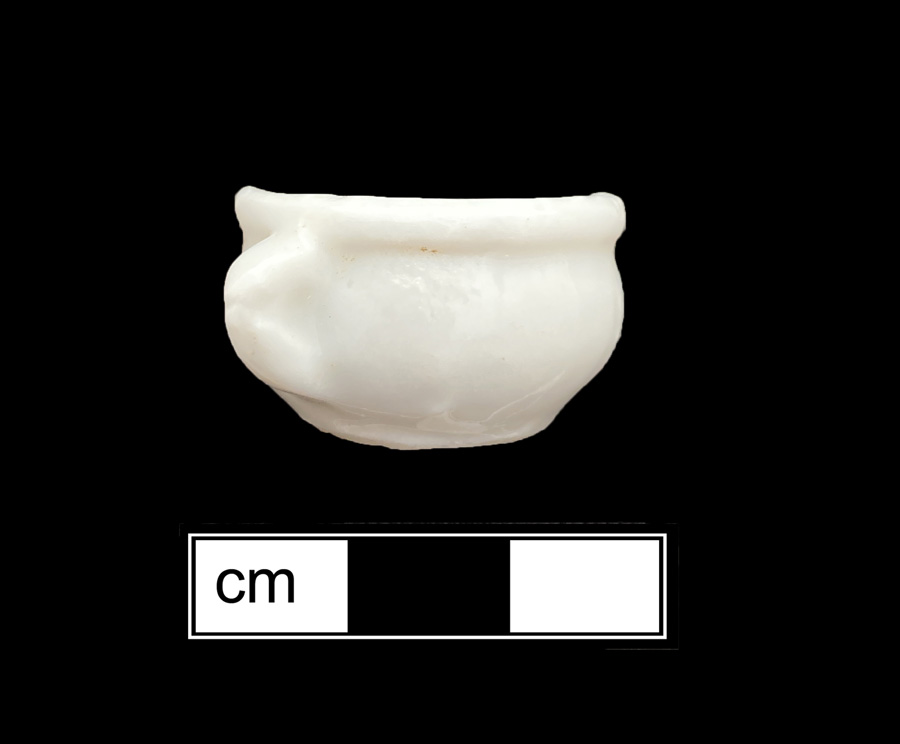
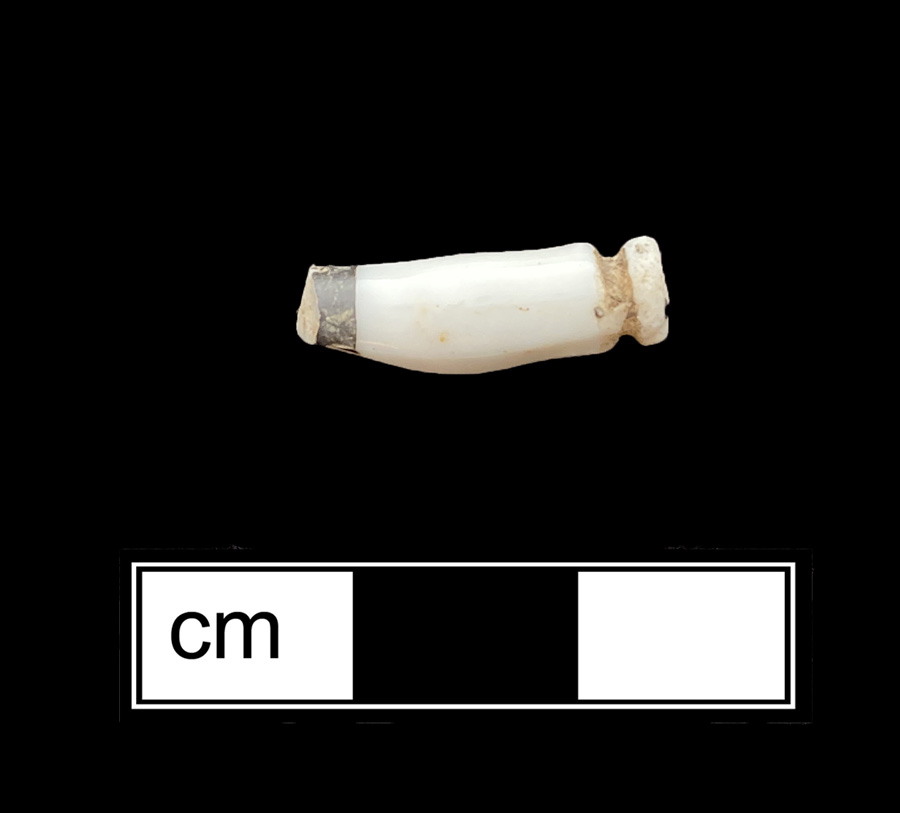
Toys and Games