USNA Buchanan Road (18AP82)
Site History
The area of the US Naval Academy (USNA) campus designated 18AP82 lies within property owned by Walter Dulaney in the 18th century. As early as 1726, portions of the area were parceled and sold as part of the Annapolis "New Town," attracting such inhabitants as the carpenters Simon Duff and James Walker. The area seems to have been home to several people in the carpentry and tailoring trades.
In the mid-1750s, Walter Dulaney acquired Duff and Walker’s lots along with surrounding acreage. Dulaney’s house was described as a two-story brick home with two brick wings and a single-story frame stable in the 1798 tax records. Dulaney died in 1773, but his widow Mary Dulaney lived in the home until her death in 1801. Their son advertised the house for rent at that time.
In 1808 the US Army acquired the property and built Fort Severn as hostilities with the British increased ahead of the War of 1812. The Dulaney home served as the quarters for the Fort's commanding officer, and subsequently the superintendents of the Naval Academy after the installation transferred to the Navy in 1845. Construction of a c.1854 gatehouse impacted 18AP82, but expansion of the USNA led to its demolition by 1879, so it was short-lived.
Archaeological Investigations
Site 18AP82 was identified when archaeology was conducted ahead of a water line placement project on the US Naval Academy campus. Phase I investigations identified 18AP82 as an area at the southern end of Buchanan Road with intact features associated with c. 1854 Naval Academy gatehouse, road surfaces associated with Fort Severn, and structural features and deposits from the pre-military domestic occupation of the property. Phase II investigations determined that the portion of the site to be impacted warranted data recovery and Phase III excavations followed.
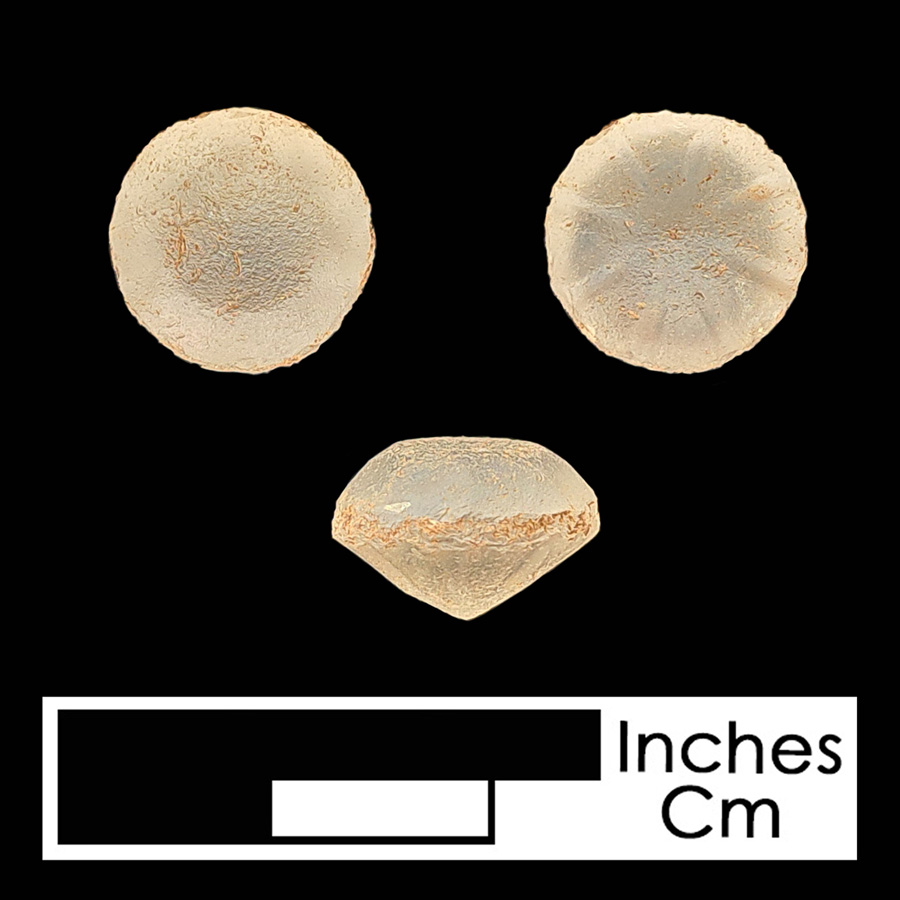
Excavations revealed a robbed 18th-century house foundation that had been filled with midden debris from the surrounding yard. This appeared to be an 18th-century domestic structure which was probably still occupied when the Army bought the property in 1808. Artifacts included 18th- and early 19th-century ceramics, vessel glass, and bone, as well as craft-related debris, such as straight pins and copper and lead fragments. Archaeologists interpreted the latter as evidence of a carpenter, tailor, or similar craftsmen in the vicinity, but they could not narrow down the resident(s) associated with this structure with any degree of certainty.
18AP82 also revealed several road surfaces attributed to the Fort Severn occupation based on their stratigraphic location and the recovery of Army buttons from the surfaces. Subsequent USNA activities are also represented at the site, including the foundation of the 1854 gate house at the south end of Buchanan Road, a later 19th-century stairway and planting, and road surfaces from the mid- to late-19th century.
References
1998 Archeological Investigations Related to the Replacement of the HTW Piping, Including Sites 18AP81 and 18AP82, United States Naval Academy, Annapolis, Maryland. R. Christopher Goodwin & Associates, Inc. MHT # AP 77.