North Pearl Street (18BC162)
Feature 2-03, UMB Block 25, 200 Block of North Pearl Street
Site History
This block was settled initially in the beginning of the 19th century, and saw its peak periods of development between around 1825 and the beginning of the 20th century. The block contained a mixture of residential, commercial and industrial development.
Bernard Zell, a manufacturer of soap, lived on the block at 214 North Pearl Street from 1803 to 1833. He was a partner in Zell and Doyle, a soap manufactory located on an adjacent property. Prior to the soap business, Zell had been a butcher in a shop of Paca Street. He resided in a two story brick house that was documented as an improvement on the property when it was sold at public auction in 1835, after his death (Child 2007:71). It is likely that Zell constructed this house.
Archaeological Investigations
In 2006, R. Christopher Goodwin and Associates conducted a Phase I study of approximately .5 acre on Block 25. Most of the buildings on this lot had been demolished by the mid-20th century to create a parking lot for a bakery and the archaeological work found that this demolition had greatly disturbed any subsurface archaeological remains.
The only undisturbed feature that was discovered during this testing was a brick lined privy whose fill was dated to the early 19th century. This privy was in the rear yard of the dwelling formerly located at 214 North Pearl Street. The privy had been sealed with large pieces of marble, wood, a layer of brick and a layer of mortar in the mid- to late 19th century, but the fill inside the brick shaft represented the household garbage of Bernard Zell, a soap maker and one of the earliest residents of this area. He resided at this address from 1803 to 1833, the year of his death.
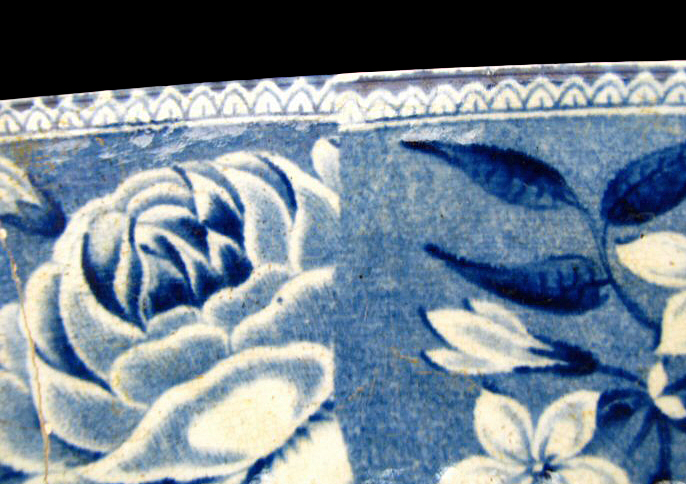
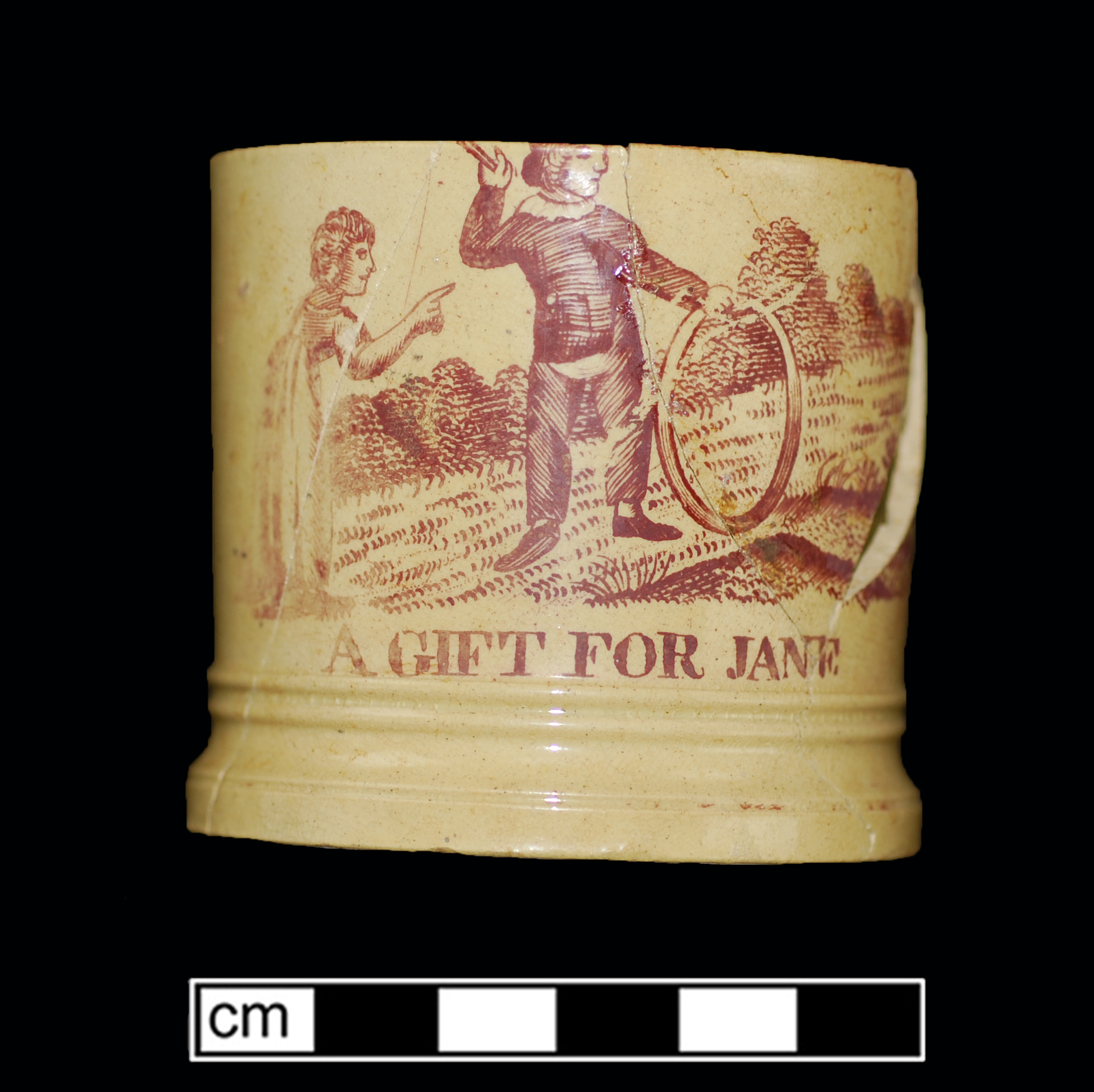
The report states that all temporally and diagnostic artifacts were retained (not sure what this means). There were a large number of reconstructable ceramic vessel represented in the privy, including two mocha pearlware canisters, a yellow ware child’s mug "A gift for Jane" and a printed pearlware jug with a Freemasonry motif (Child 2007:87). The report does a nice job with ceramic analysis. There were at least 47 glass vessels, including at least 30 table glass vessels.
Paleobotanical and faunal analysis was conducted on the Feature 2-03 privy soils.
An additional privy or privy complex, designated Feature 5-01 and 5-03, was also discovered in the testing. This feature was the base of a shaft feature that had originally contained two barrel privies at 208 Pearl Street. Dating was estimated to be 19th to mid-20th centuries and was associated with a saloon or restaurant. It appears that no mitigation of this feature took place.
References
2007 Phase I Archeological Investigations and Data Recovery of Feature 2-03, UMB Block 25 (200 Block of North Pearl Street), University of Maryland, Baltimore, Baltimore, Maryland. R. Christopher Goodwin and Associates, Inc. On file at MHT, Crownsville.
Associated Artifacts
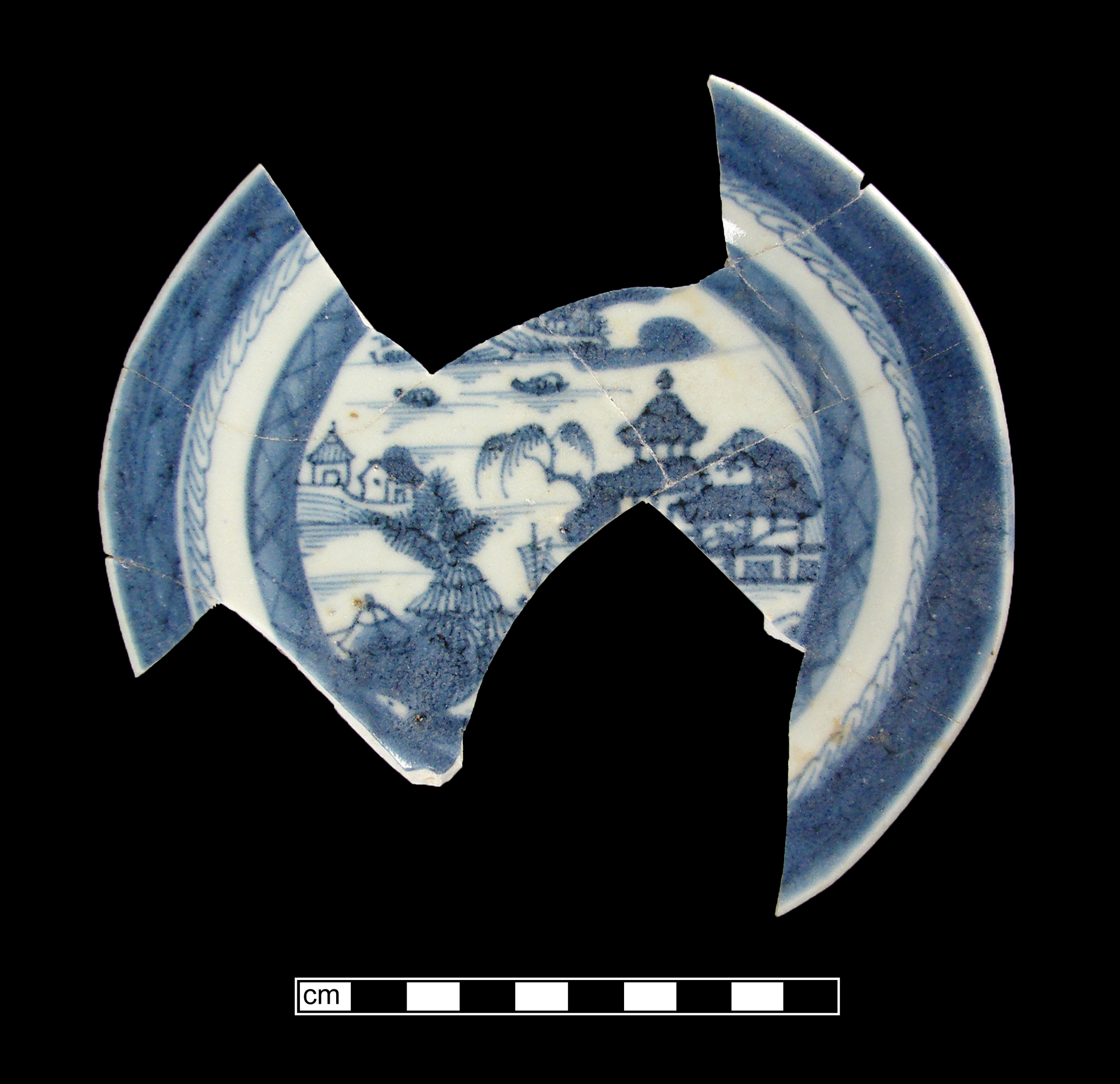
Chinese Hard-Paste Porcelain
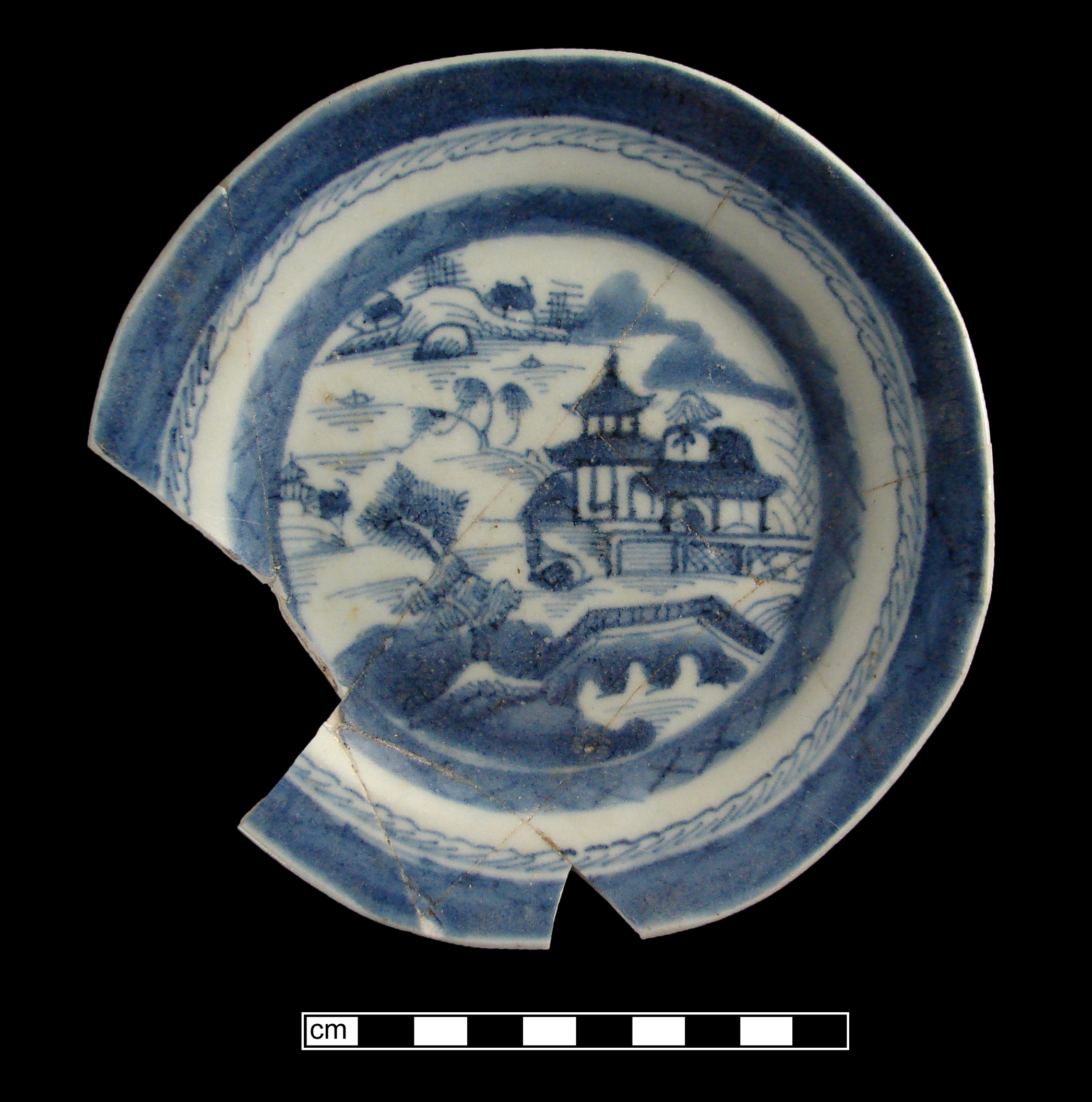
Chinese Hard-Paste Porcelain
Dipped Earthenware
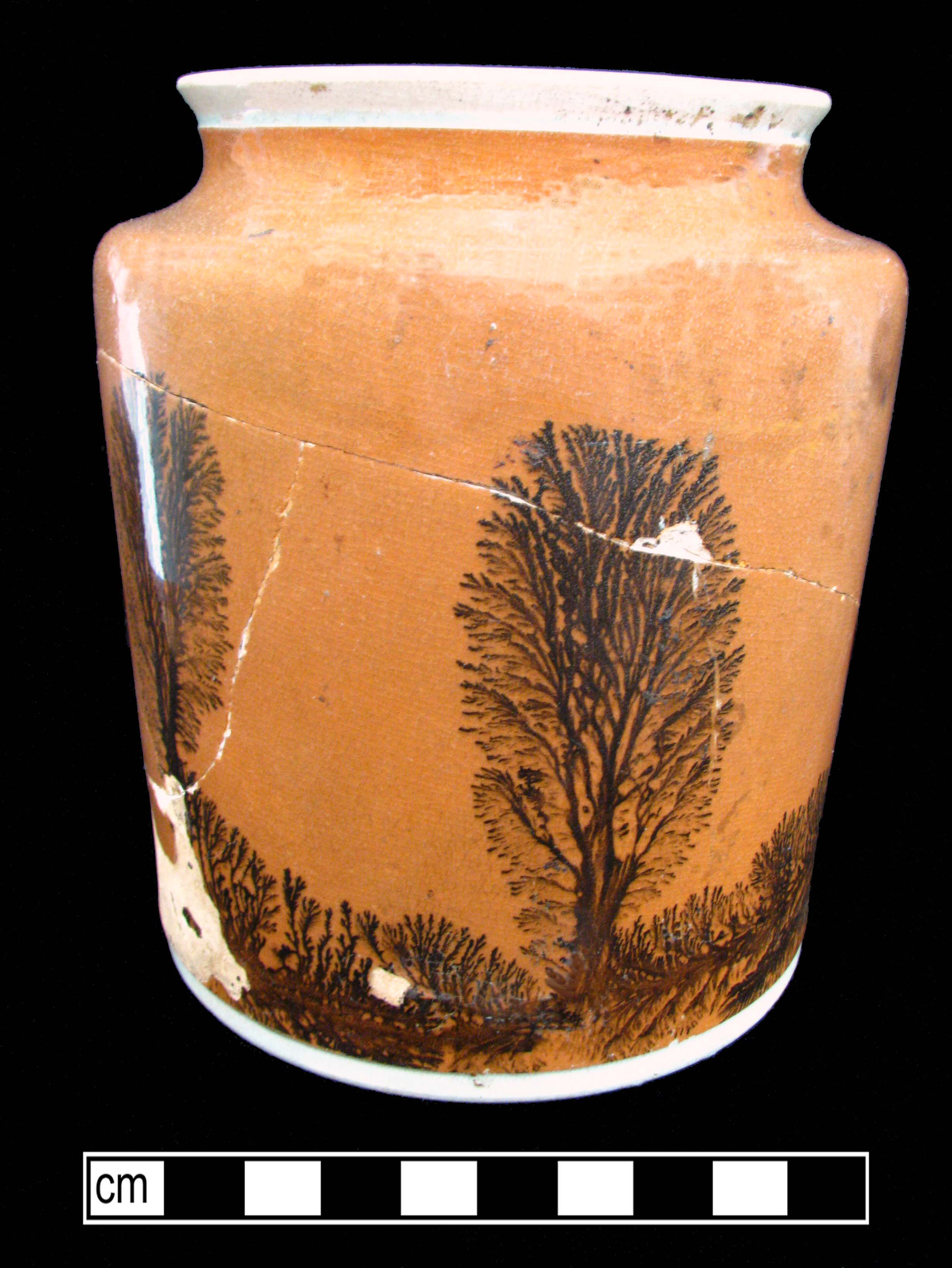
Dipped Earthenware
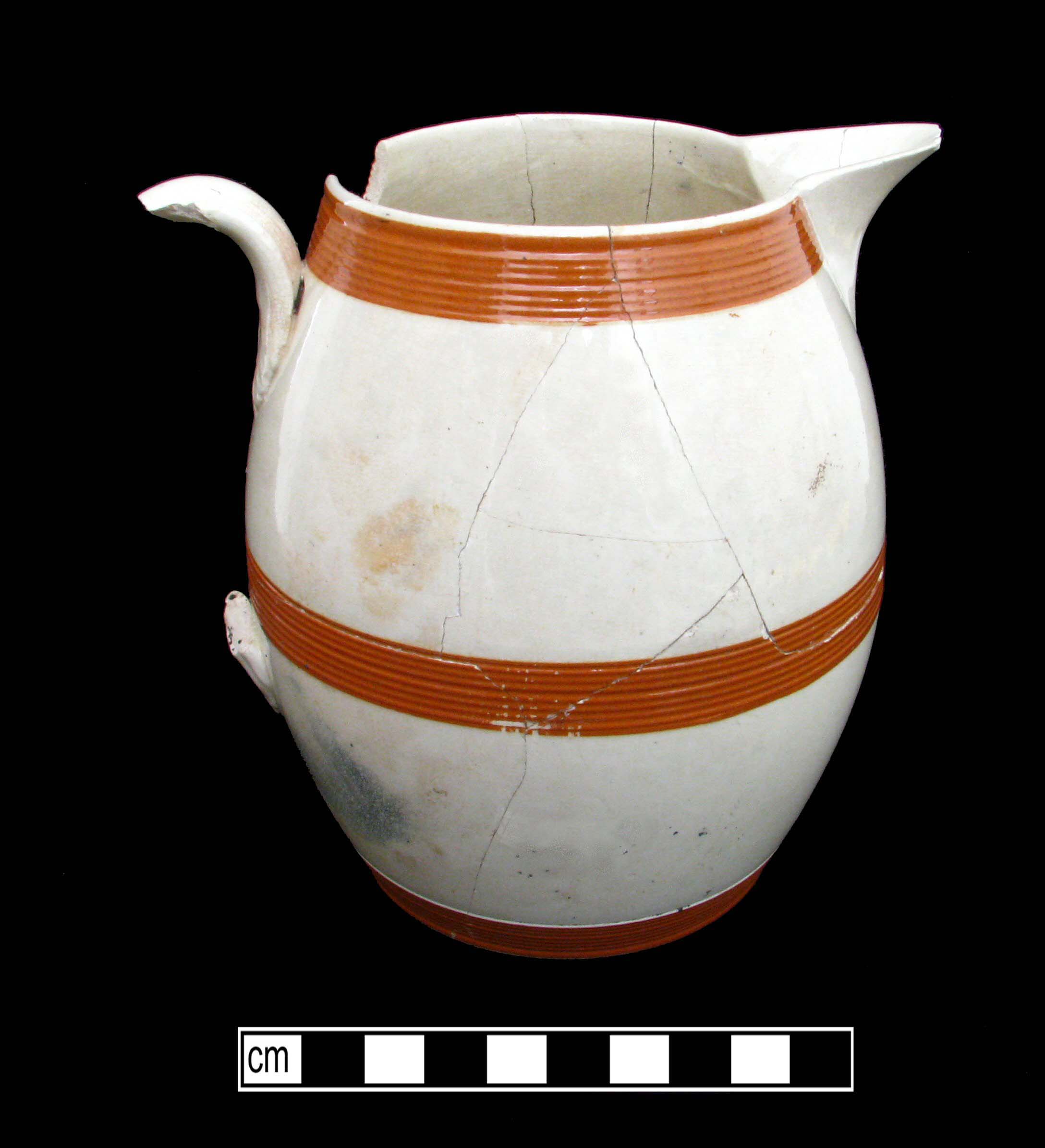
Luster Ware
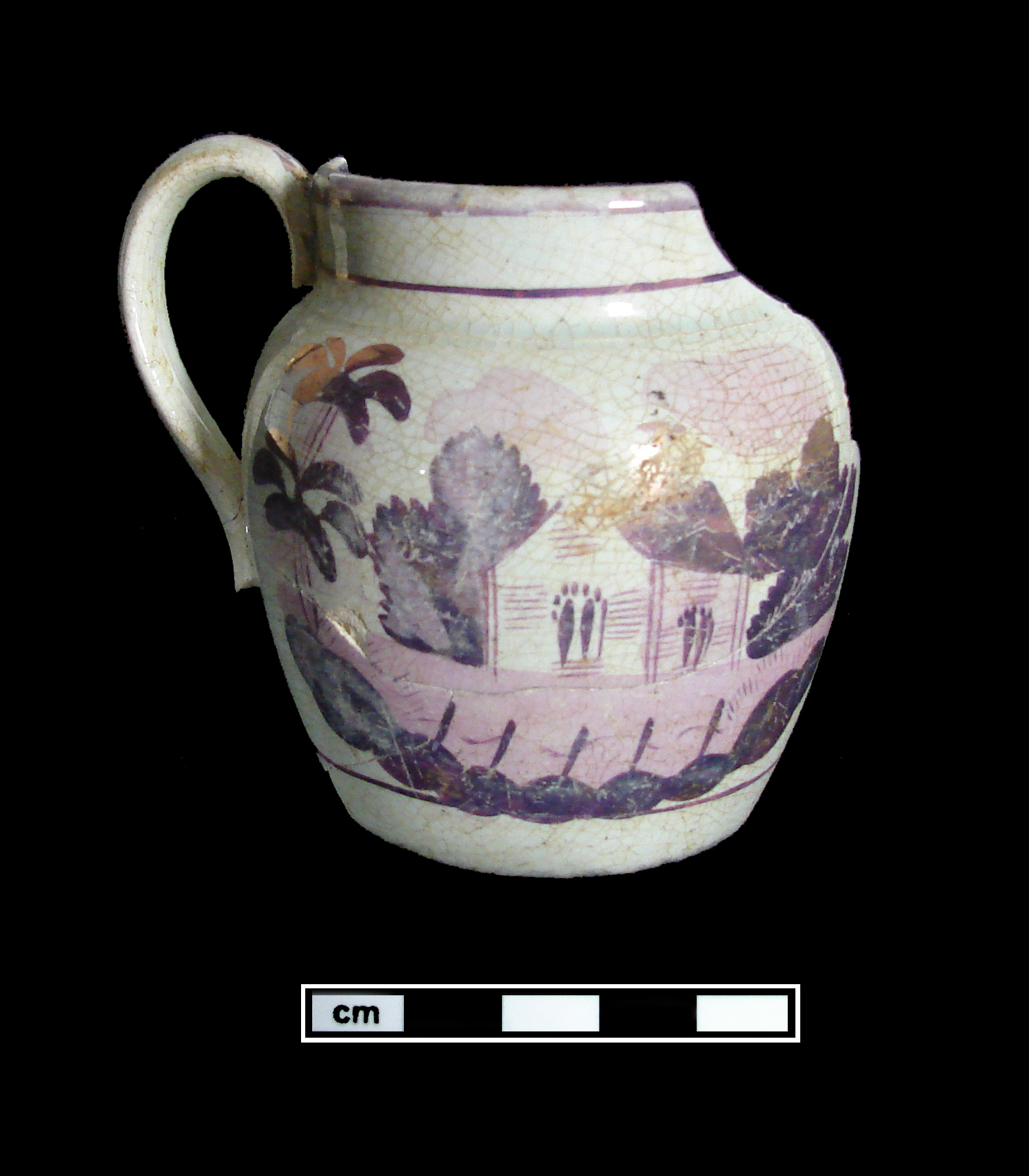
Painted Earthenware
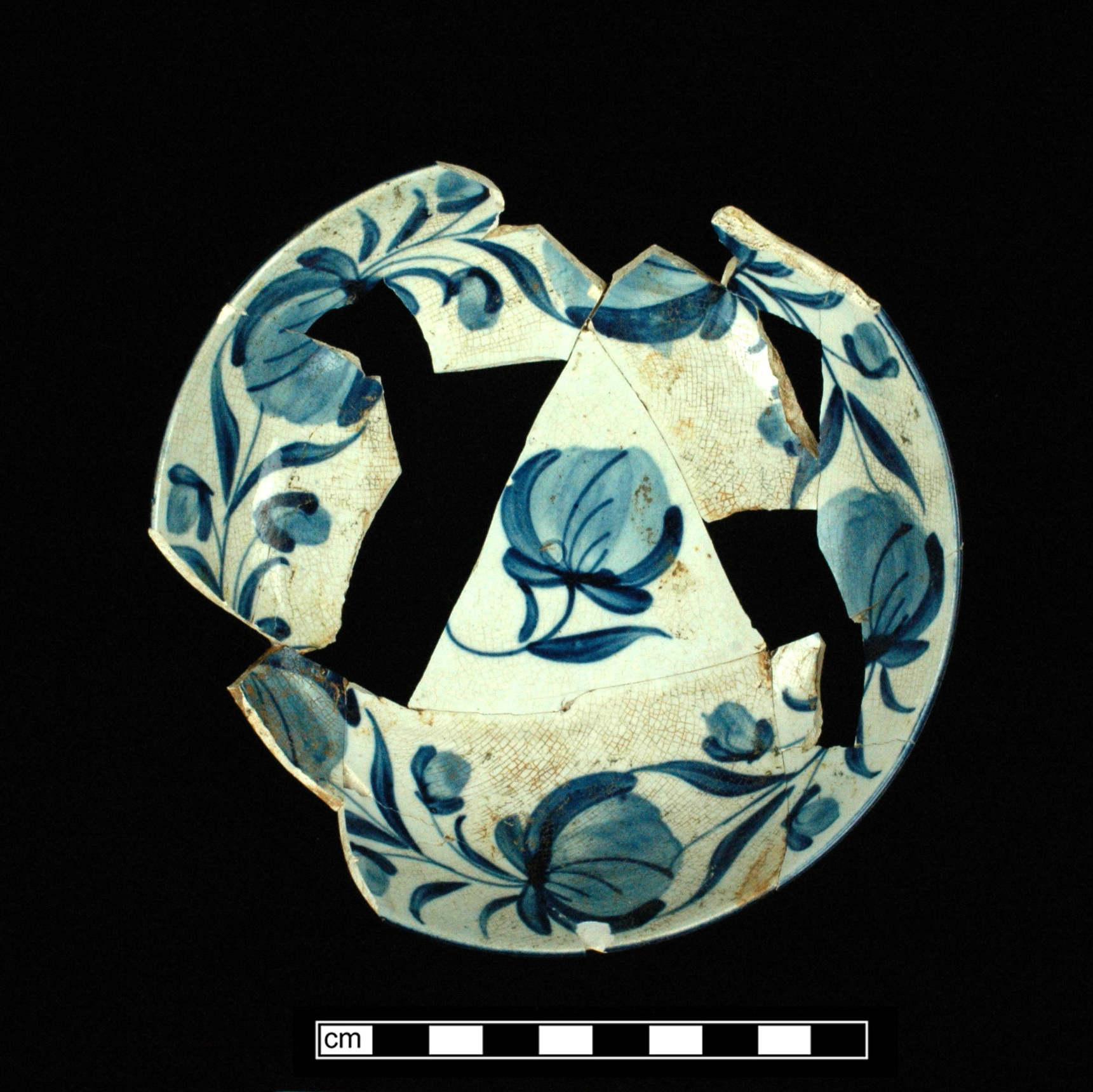
Painted Earthenware
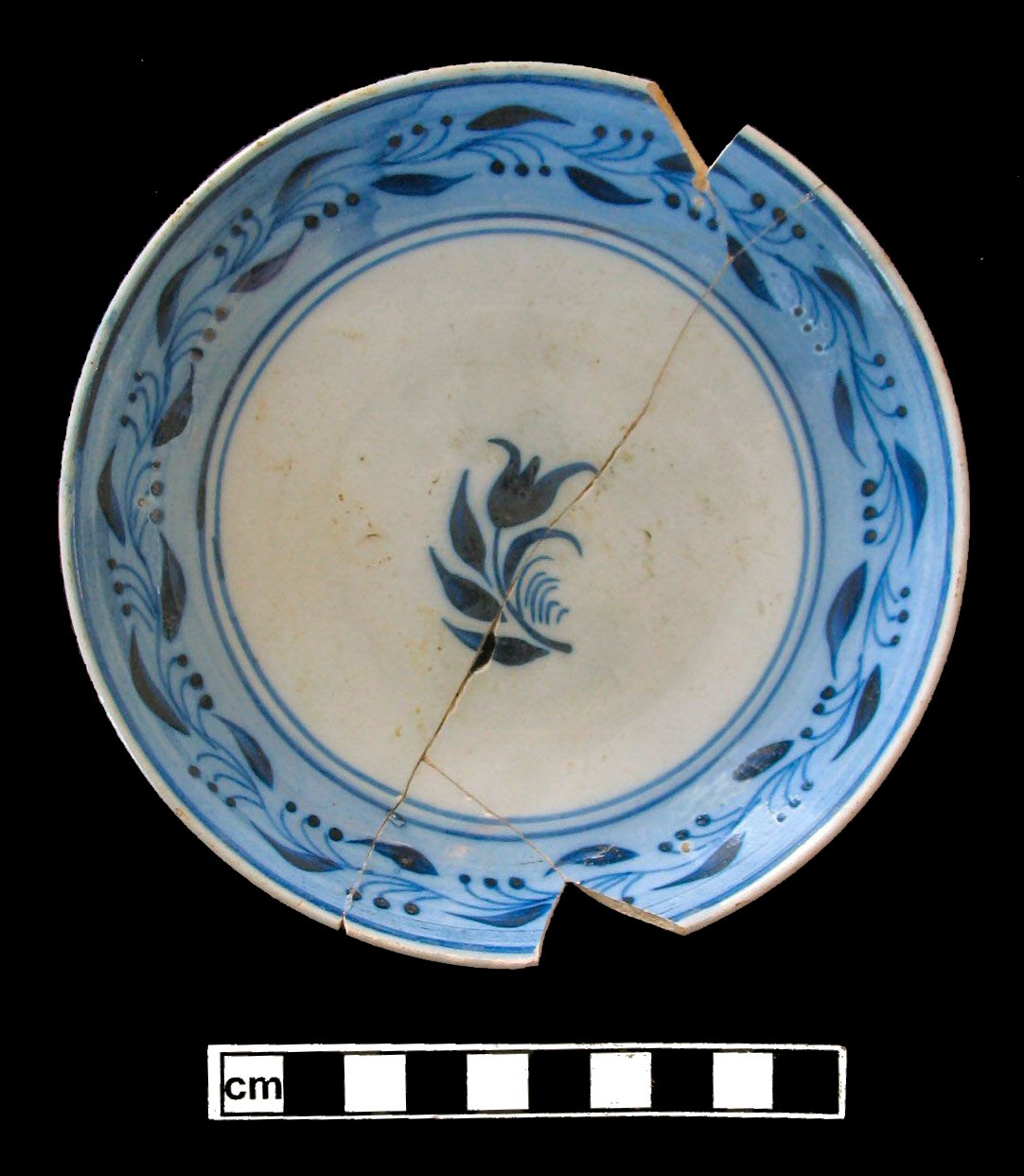
Painted Earthenware
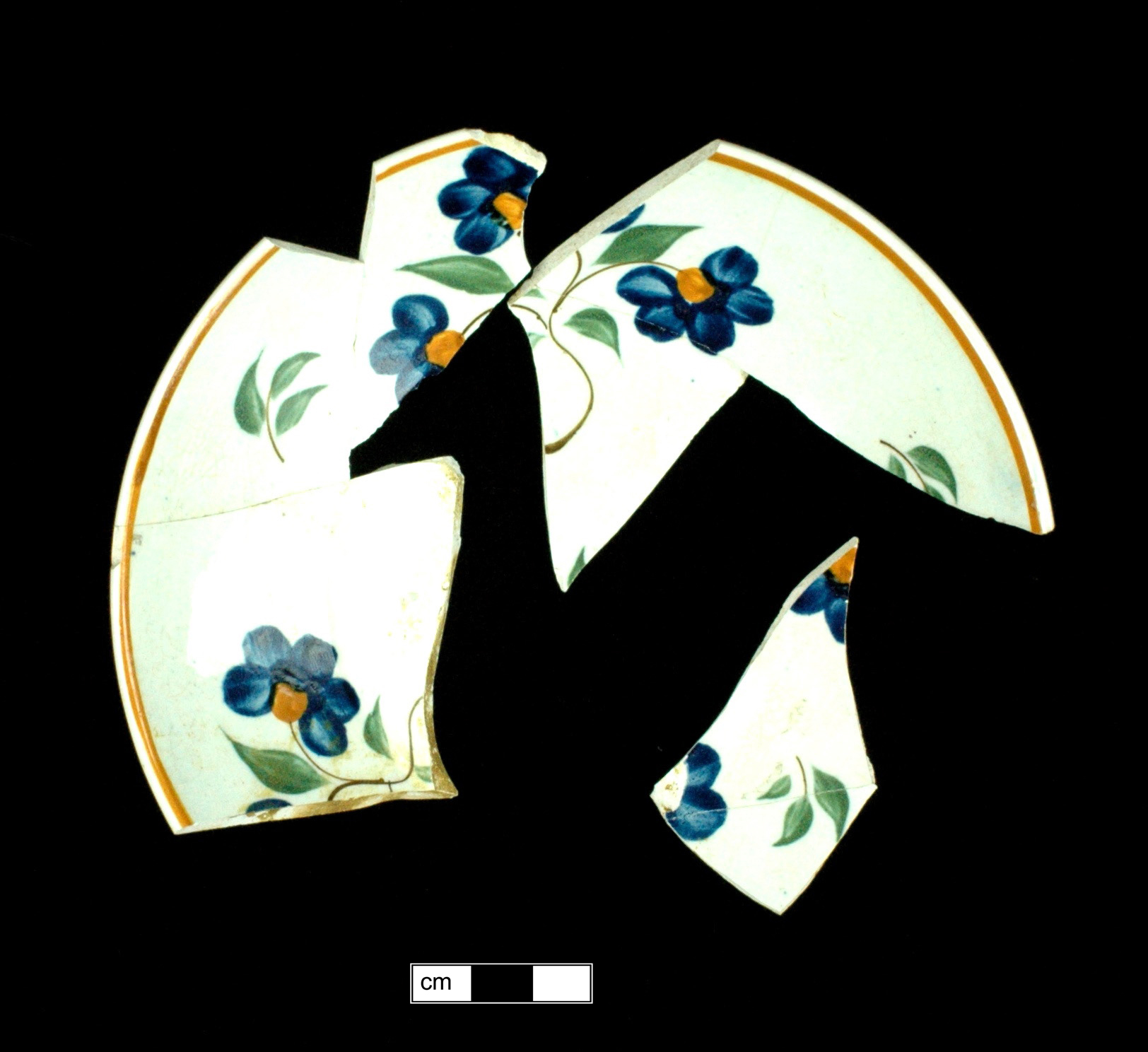
Painted Earthenware
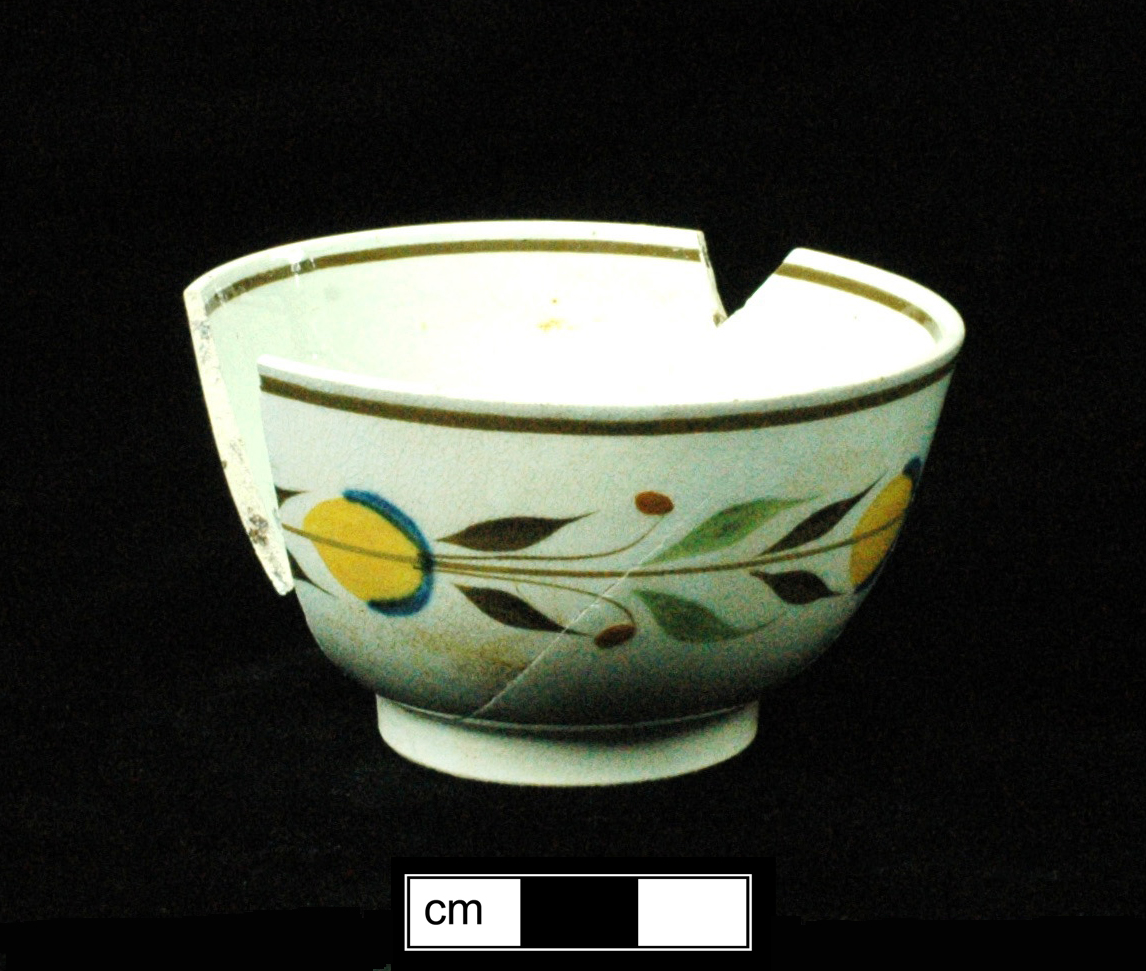
Painted Earthenware
Painted Earthenware
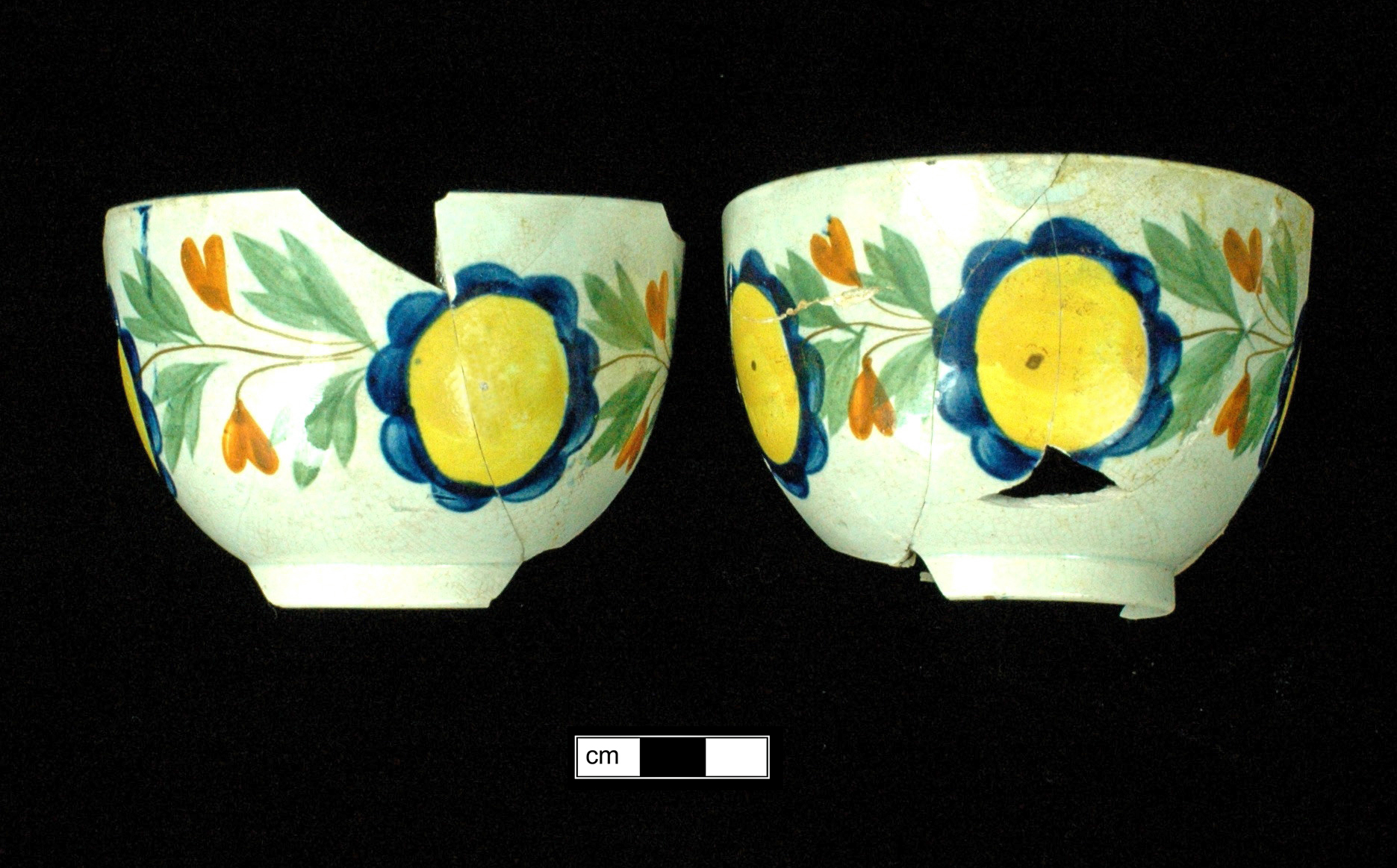
Painted Earthenware
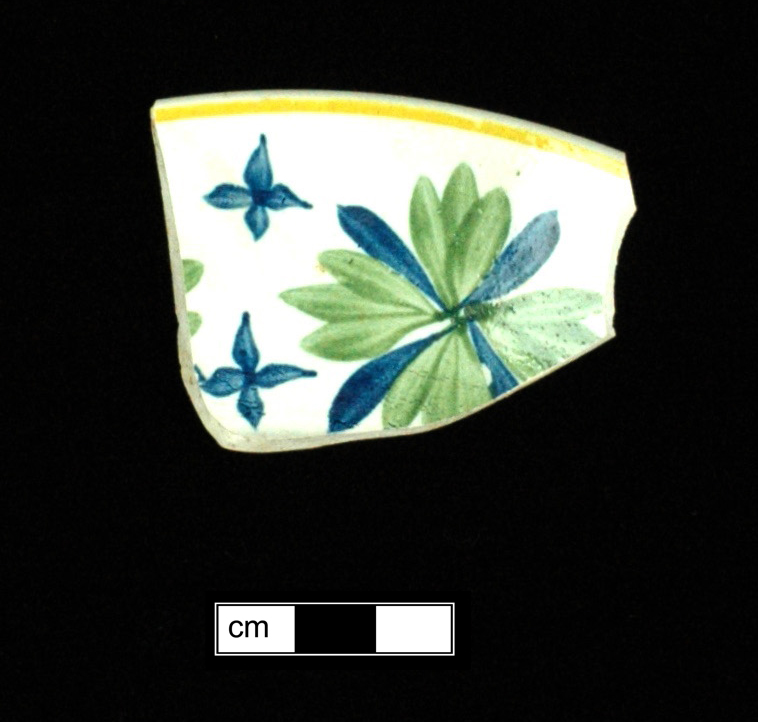
Painted Earthenware
Painted Earthenware
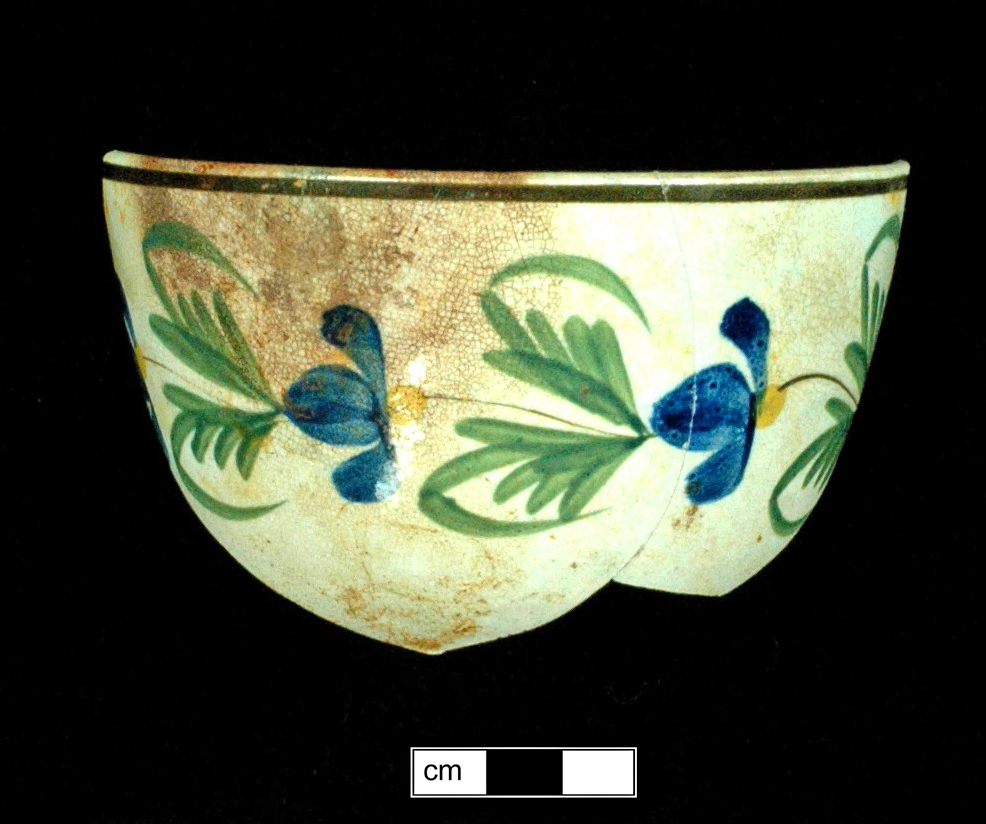
Printed Earthenware