Old Otterbein Church (18BC218)
Site History
The Old Otterbein Church (18BC218) is the site of a standing late 18th-century Georgian style United Methodist brick church and cemetery. Not only is the church the only 18th-century Georgian style church building still in use today in Baltimore City, but it is also the oldest continuously used church in the city. The site is also the location of a Middle to Late Archaic lithic scatter.
The land was first procured in 1771 by members of the German Reformed Church in Baltimore City for the purposes of building a new church. The current standing sanctuary was designed and built by local carpenter Jacob Small, Sr. between 1785-1786. Over time, the congregation separated from the German Reformed Church and formally became the Church of the United Brethren in Christ in 1800 under Bishop Otterbein and Bishop Martin Boehm's direction. Church oral history dictates that Bishop Otterbein's four-room cabin was located near the sanctuary.
Archaeological Investigations
Due to its status as a Maryland Historical Trust Easement property, the current pastor of the church contacted the Maryland Historical Trust (MHT) for assistance in 2022. Parishioners who were gardening had unearthed dozens of artifacts in one of the sloped gardens on the eastern side of the church. These artifacts included ceramics dating to the mid- to late-19th century, olive green wine glass bottle sherds, and numerous pieces of brick. Later that year, archaeologists with MHT conducted a ground penetrating radar (GPR) survey in the churchyard.
The GPR survey identified several anomalies. Grid 1 and Grid 3 each showed one possible anthropogenic pit feature. Grid 2 showed seven pit features under the brick pavers of the courtyard; six of these features are possible grave shafts, and one is likely a construction-related feature. Grid 2 also showed two additional features in the meditation garden that were also suggestive of grave shafts.
MHT archaeologists elected to ground truth the anomalies in Grid 1 and Grid 3. The anomalies in Grid 2 were not excavated in order to avoid unnecessarily disturbing human remains. In 2023, archaeologists excavated one 2 x 2 meter unit over the Grid 1 anomaly, and one 2 × 2 meter unit over the anomaly in Grid 3. Only the topsoil was excavated in order to expose the tops of potential features at the subsoil interface.
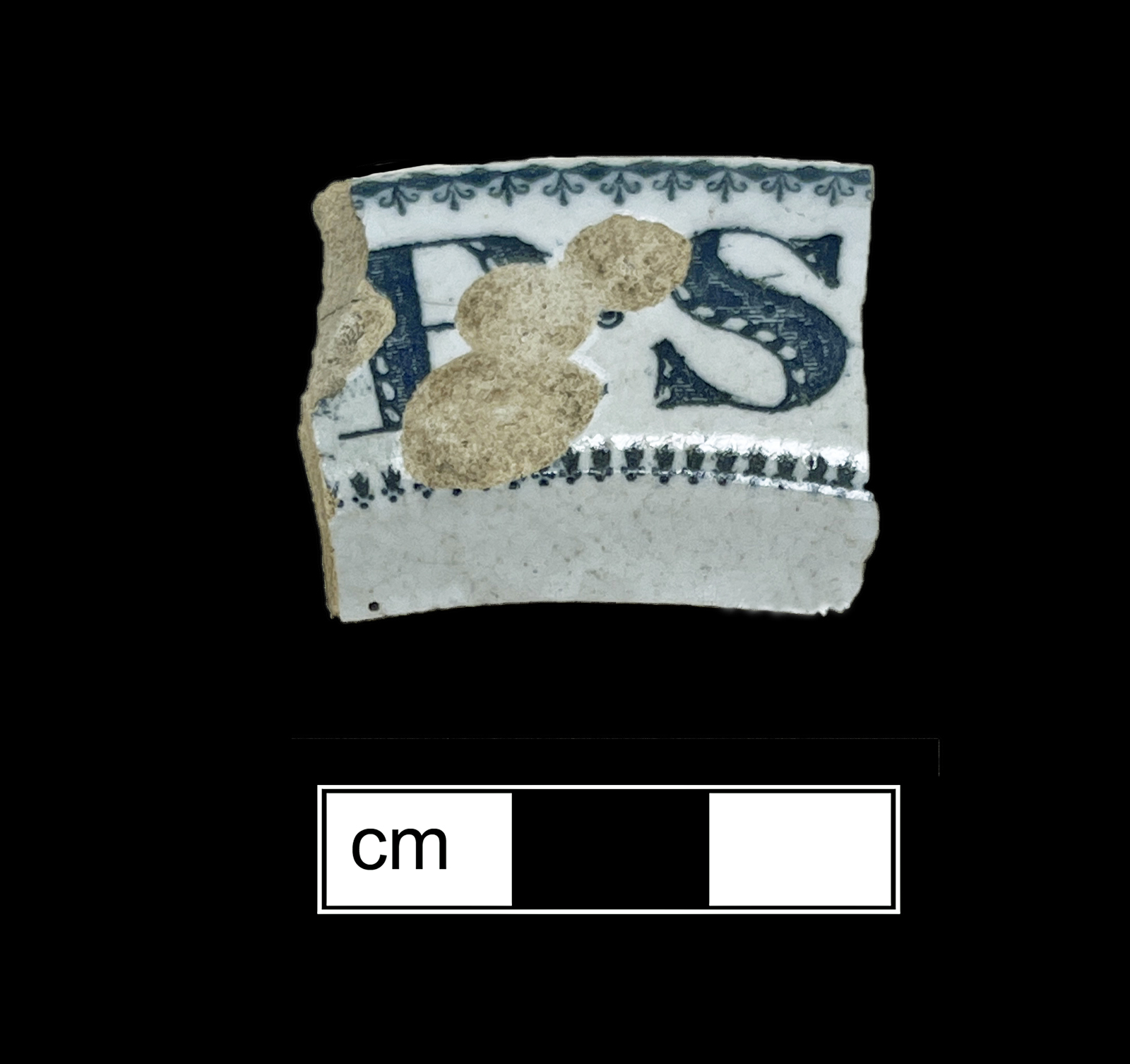
The Grid 1 anomaly appears as a rectilinear feature (Feature 1) that extended beyond the confines of the unit. Artifacts recovered include architectural remains, glass, 19th-century ceramics, a door key, marbles, graphite pencils, and a snake jewelry piece. The feature was not explored further. The Grid 3 anomaly appears to be a brick dump or midden site. Artifacts recovered include architectural remains, including whole bricks, glass, 19th-century ceramics, several quartz flakes and fire-cracked rock, and modern materials.
Overall, the GPR data and the ground truthing excavations will help the church protect and avoid impacting historic features and potential graves. Further excavation at Feature 1 may uncover information about the historic activities, both religious and domestic, that occurred on the church property. There is a possibility that the feature is related to Bishop Otterbein’s cabin, however, further work is necessary before any conclusions can be made.