Westwood Manor (18CH621)
Site History
Westwood Manor (18CH621) is a late 17th to early 18th-century house located in Charles County, Maryland. Documentary and archaeological evidence suggest that the site was occupied c. 1670-1720 and may have been used for short time as a store. Westwood Manor was patented by Dr. Thomas Gerard in 1651, and he built a house there. In 1664, the property was leased to Capt. William Boreman. In 1672, Gerard gave Westwood Manor to his son Thomas Gerard Jr., except for a 100-acre parcel which had been leased to a merchant named John Pryor. Pryor may have eventually lost his lease, because in 1677 Dr. Gerard gave as a dowry to his daughter Mary a 100-acre parcel called Westwood Lodge. It is possible that Westwood Lodge was John Pryor's leasehold. In 1708, Westwood Lodge was passed on to Mary's daughter, Mary Cheseldyne Hay. By 1682, John Pryor was keeping his store at Thomas Gerard Jr.'s house. Westwood Manor was inherited by Thomas Gerard Jr.'s brother, Justinian, in 1686. When Justinian died two years later, Westwood was left to his widow Sarah. In 1711, Sarah sold Westwood Manor to Charles Carroll of Annapolis.
Archaeological Investigations
This site was recorded in April of 1996 by Julia King and Edward Chaney of the Jefferson Patterson Park and Museum after the site was discovered by property owners Phillip and Sandra Harrison while constructing their new house. They uncovered a tiled floor cellar about 5 ft below ground surface. The tile were laid on a thin bed of mortar, below which was a 1 inch thick band of dark loam, which contained some charcoal. This would appear to be the original cellar floor. The tile appeared to cover the entire floor at the north and west end of the cellar, but no tile was evident at the south end (the floor was not uncovered at the east end). The tiled area measured approximately 15 feet north to south. The cellar continued untiled for at least 6 feet to the south, with the south edge yet to be uncovered. The entire cellar measured at least 16 by 20 ft. Evidence of 2 fireplaces, 1 of yellow brick and 1 of red brick, was also uncovered. Only a small portion of the cellar was disturbed by the construction, but there was no evidence of the foundation. There was some evidence of a bulkhead entrance at the northwest corner of the cellar.
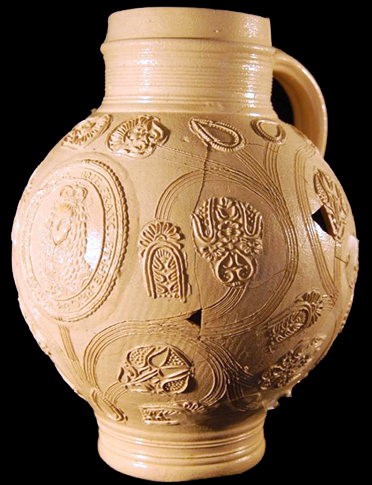
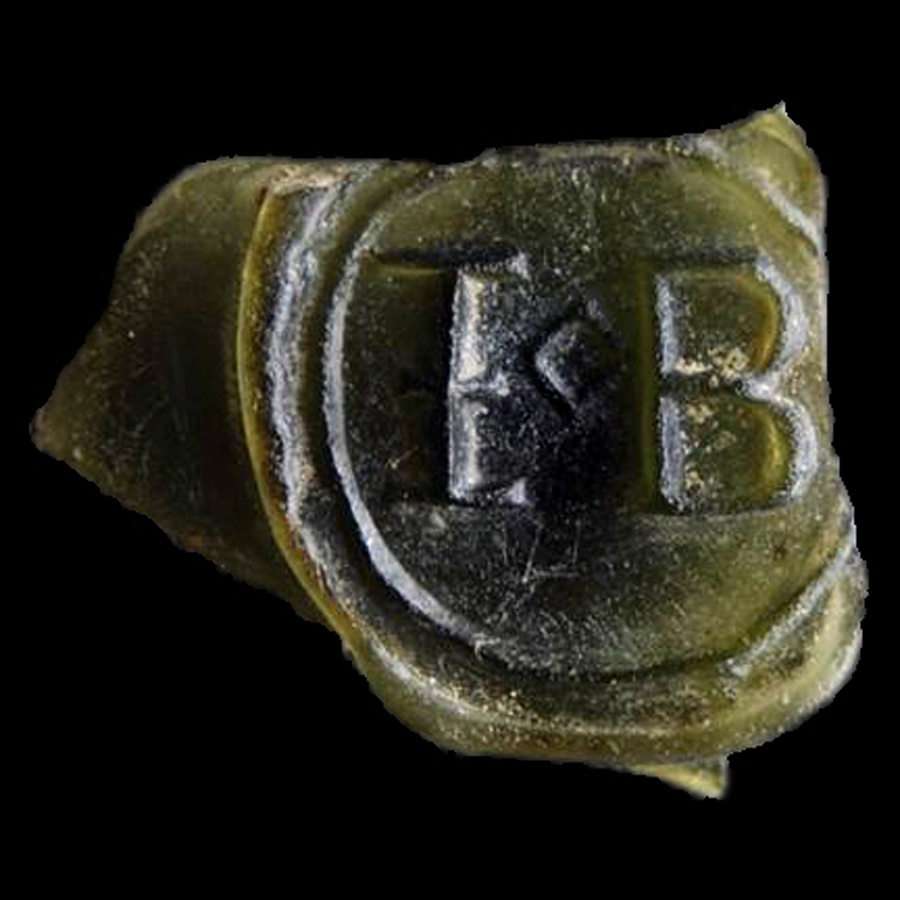
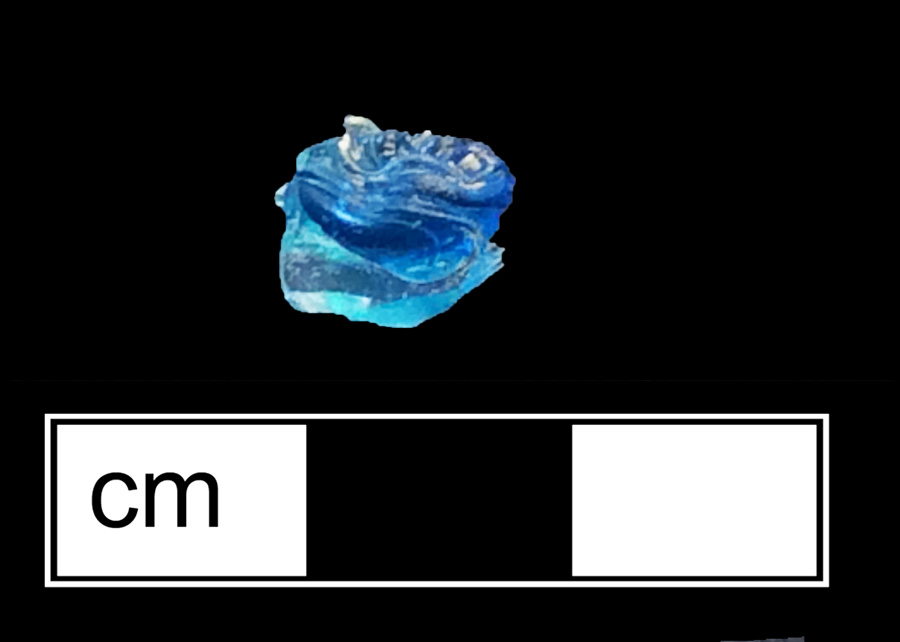
King and Chaney were able to make a cursory examination of the artifacts recovered by the Harrisons. They included a rich variety of ceramics, table and bottle glass, tobacco pipes, and metal objects, along with animal bone and oyster shell. The assemblage was notable for its high percentage of tin-glazed earthenware and Rhenish blue and gray stoneware. The glass consisted mostly of wine bottles, with some stemware and other table pieces, along with some medicine vials. The metal objects included iron and pewter knives, forks, and spoons; copper-alloy buckles; iron horse bits and a stirrup; an iron hoe; and architectural hardware such as nails, door hinges, and pintles. Other architectural artifacts included window glass and lead cames, and a piece of plaster with a whitewash finish coat. The most notable artifacts were two hockey puck-sized brass scale weights, stamped with various assay symbols. They were found together at the south end of the cellar. A small brass pan, possibly a balance pan, was found nearby. King was able to fully analyze these artifacts as part of an undergraduate class at St. Mary’s College of Maryland in 2010.
References
2010 The Westwood Manor archaeological collection: preliminary interpretations. St. Mary’s College of Maryland.
Associated Artifacts
Rhenish Stoneware