Battle Creek North/Calverton (18CV22)
Site History
Battle Creek North (18CV22) is a 17th- and early-18th-century county seat known as Calvert Town or Calverton and a precontact shell midden site. Smith's 1608 map indicates that the contact period village of Onacuck may have been located in the general vicinity and the midden may be related to this village.
Augustine Hermann shows Calverton on his late 17th-century map. The site is located on Battle Creek in Calvert County, Maryland. The town served as the seat of government within Calvert County from 1668-1725. The town was established on 20 acres of land donated by William Berry that was depicted on a plat map prepared in 1682 (Boteler and Jones) with eleven structures including a prison, a courthouse, a chapel, and several residences.
Archaeological Investigations
Avocational archaeologist Richard Stearns first found the site through boat exploration of the coast in the early 1950s. Stearns observed layers and heaps of shells from the water and recognized the site as the former location of 17th-century Calvert Town. This site was recorded by the Maryland Geological Survey in 1969 based on Stearns' description. In 1971 and 1972, limited excavations were conducted by individuals associated with Muhlenberg College in Allentown, PA. Artifacts associated with this excavation have been subsequently lost.
Archaeologist Kirsti Uunila regularly monitored erosion and site conditions at the Battle Creek North site and in 2003 observed cultural features eroding out of the bank into Battle Creek. The first was pit-like and fully exposed in profile due to coastal erosion. Bone, oyster shell, brick fragments, wrought nails and pipestem fragments were collected from the feature. In addition, three small shell pits were identified, along with a larger precontact shell midden.
In 2005, Uunila and staff at Jefferson Patterson Park and Museum investigated the archaeological potential of the area where the property owners wish to build a new house. Shovel testing at regular 25-foot intervals provided coverage of the entire house footprint and part of the driveway. Artifacts observed in the shovel tests were noted but not collected. Based on the available evidence, it appears that the proposed house sat along the outer edges of a large prehistoric shell midden and of a non-residential colonial structure.
In 2017, the Archeological Society of Maryland's (ASM) Annual Tyler Bastian Field Session began investigations of portions of the site. The investigation included the hand excavation of 10 shovel test pits as well as four larger excavation blocks. The archaeological deposits excavated during 2017 consisted almost entirely of plowzone deposits. Several features were identified, including a historic feature found eroding from the bank during the beach survey and a large rectangular soil stain with heavy brick and oyster inclusions that may represent the remains of a cellar.
In 2018, the ASM Field Session continued investigations from the previous year. Three excavation areas were revisited from the previous year’s work, and two new areas were tested. Six new features were identified, three of which contained artifacts which could be directly attributed to the occupation of the town of Calverton. Two others contained charcoal and possibly represent posts that were burned in situ. The last feature contained machine-made bottle glass which post-dates the town’s occupation. Precontact period pottery and lithics were also identified during the 2018 excavations, however, no precontact archaeological features were identified. These artifacts were few but nonetheless indicate a Woodland Period presence in the area prior to English settlement.
An analysis of artifact distributions across the site indicate that the western portion of the 2017 excavations may represent the remains of a household associated with the Tawny family. A clustering of English brown stoneware and smaller-bored tobacco pipe stems suggests the presence of a late 17th- to 18th-century structure in the central portion of the survey area. This is further supported by the presence of a feature that was interpreted as a potential cellar.
In 2020, Applied Archaeology and History Associates, Inc. conducted an archaeological investigation at portions of the Calverton site at highest risk of loss due to erosion and sea level rise. Of the ten features identified and excavated by AAHA in 2020, seven are related to the occupation of Calverton, most likely from the late 17th century and the first quarter of the 18th century. The largest and most artifact-dense features related to the occupation of Calverton represent a posthole and mold, a cellar, and a possible trash pit. The cellar and trash pit contained late 17th- and early 18th century artifacts. The posthole and mold may represent a small door or chimney related post, but additional excavation is required to see how it may relate to the cellar or other features in the vicinity. Architectural artifacts suggest the structure was probably earthfast with a small brick component and had glazed, leaded windows.
Analysis of the historical artifact assemblage recovered during the excavations provides little evidence for the occupation of Calverton after the relocation of the courthouse in 1725. It appears that the settlement was abandoned around the same time that the courthouse was moved to Prince Frederick. The results from 2017 and 2018 suggest that a sizeable portion of the site still exists and can provide important information regarding the town’s occupation and dynamics during the colonial period. Such information is important not only for Calvert County, but for Maryland and the Chesapeake region as Calverton may be the only remaining original county seat, which was abandoned after limited occupation, never reoccupied, with proven intact deposits.
References
2020 Addendum to the Report on the 2018 Tyler Bastian Field Session in Maryland Archeology at the Calverton Site (18CV22): 2020 Archaeological Investigations, Calvert County, Maryland. (Applied Archaeology and History Associates, Inc.)
2019 Report on the 2018 Tyler Bastian Field Session in Maryland Archeology at the Calverton Site (18CV22), Calvert County, Maryland. (Applied Archaeology and History Associates, Inc.) MHT # CV 138.
1985 Calverton, Calvert County Maryland: 1968-1725, Maryland Historical Magazine 80 (4):371-376.
2018 Report on the 2017 Tyler Bastian Field Session in Maryland Archeology at the Calverton Site (18CV22), Calvert County, Maryland. (Applied Archaeology and History Associates, Inc.) MHT # CV 141.
1951 Indian Site Survey of the Patuxent River, Maryland. MHT# CV 63.
1965 "Indian Village Sites of the Patuxent River" Journal of the Archaeological Society of Maryland 1:2:40-49.
1971 Unpublished site records from the Calvert Town Site. Conducted under the auspices of the Anthropology Department, Muhlenberg College, Allentown, PA 18104.
2016 Archaeological Survey of Threatened Cultural Resources, Battle Creek Shoreline, Calvert County, Maryland. (Applied Archaeology and History Associates, Inc.) MHT # CV 130.
Associated Artifacts
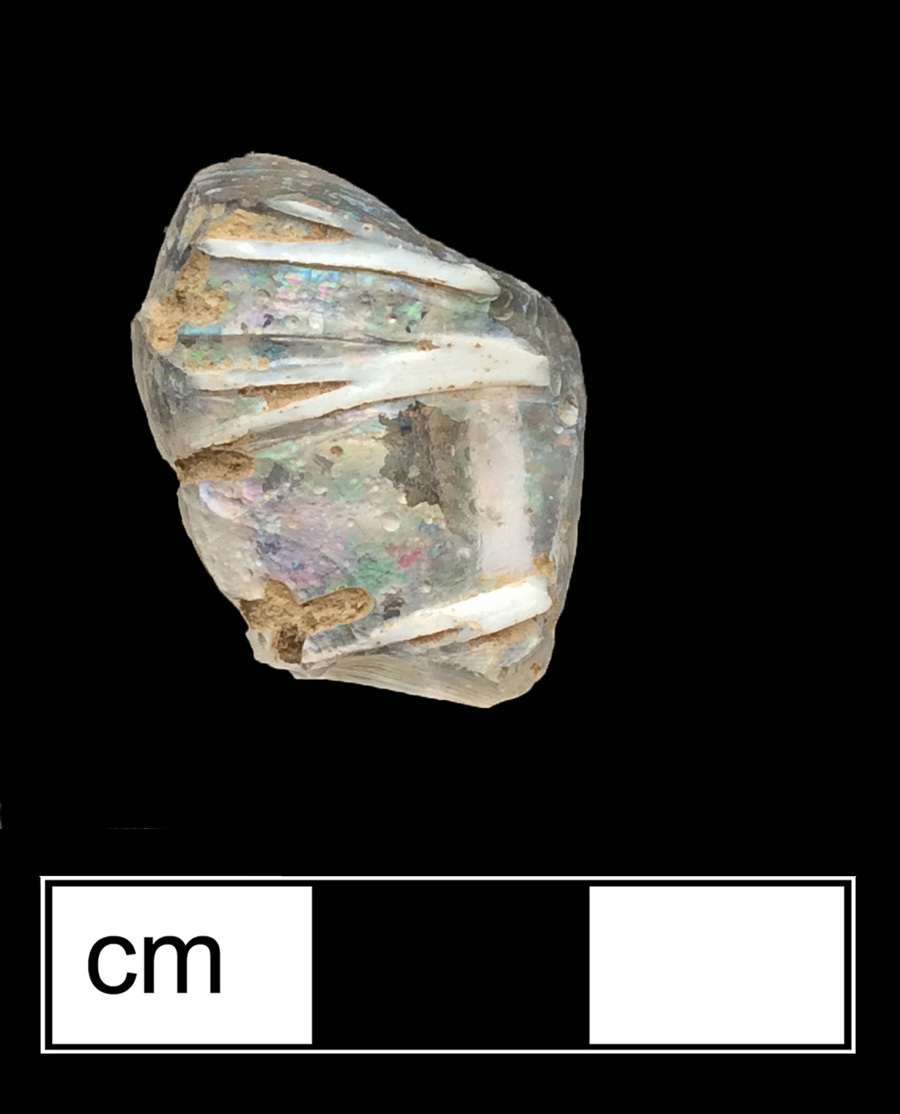
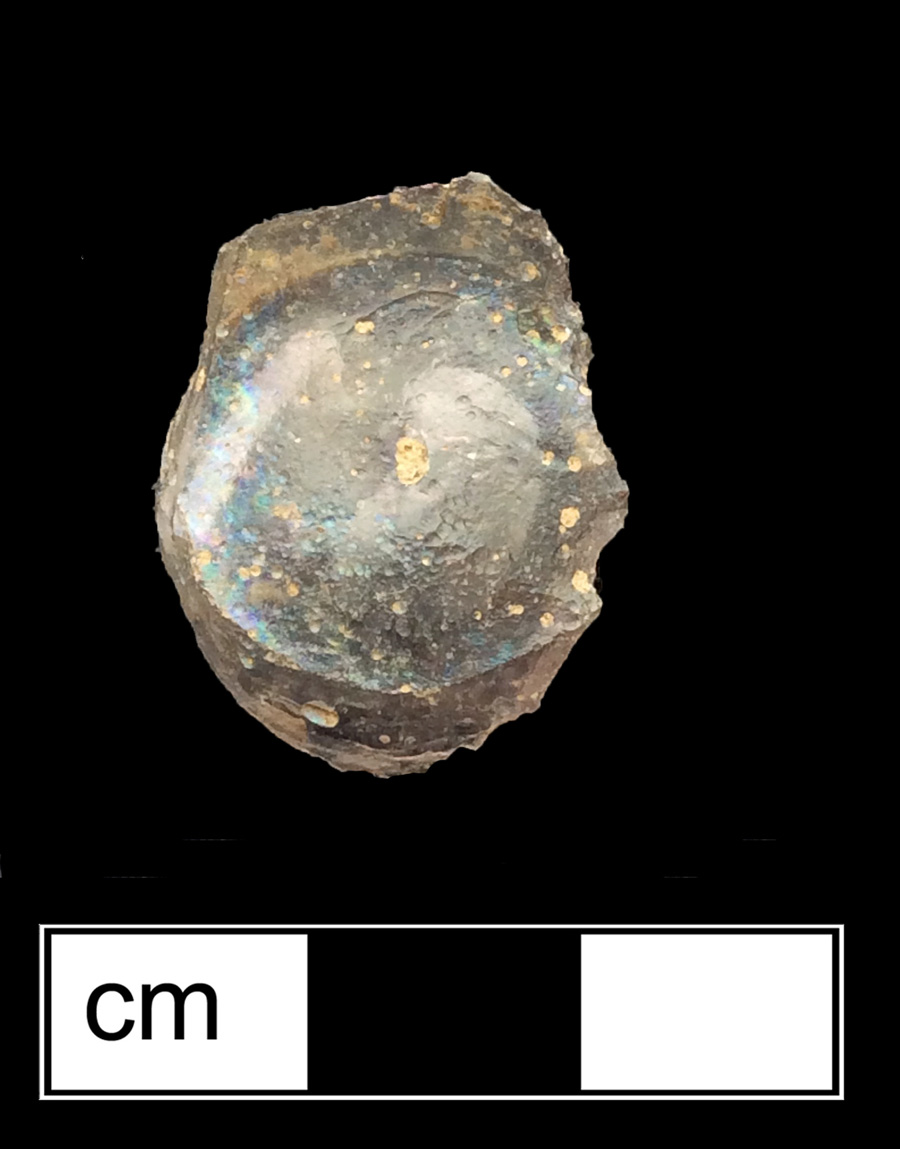
Stemmed Glasses