Monocacy (18FR100)
Site History
The Monocacy site (18FR100) is a Late Archaic and Early, Middle, and Late Woodland village, as well as an early to mid-19th-century artifact scatter located along the Potomac River in Frederick County, Maryland.
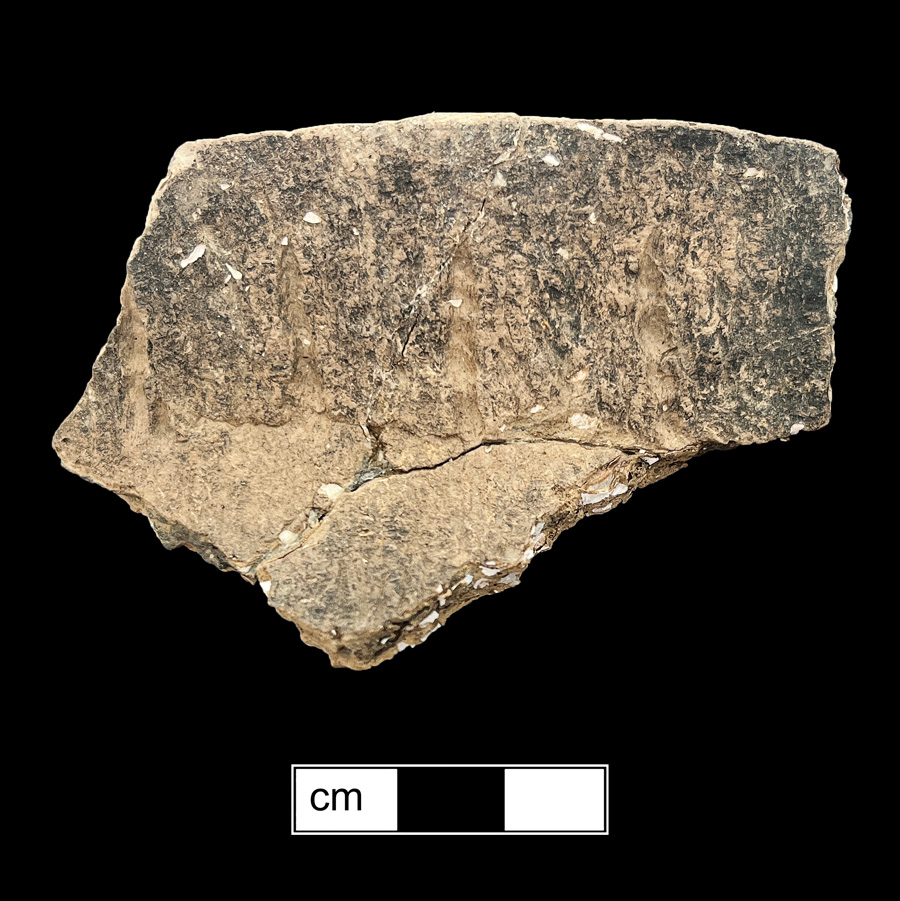
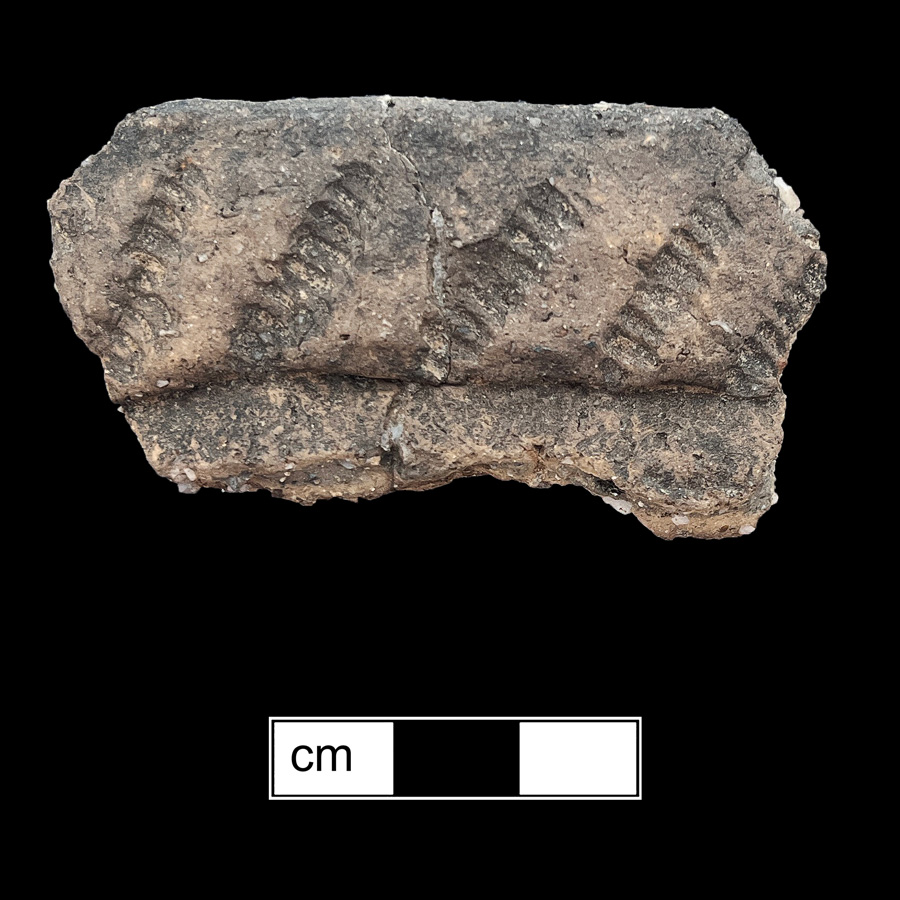
The Monocacy Site is the deepest known stratified site in Maryland. Carbon-14 dated at 950 ± 95 years old, the Monocacy site component of the Marcey Creek Phase represents the earliest dated manifestation of pottery in the Potomac River valley and is one of the earliest dated appearances of pottery anywhere in the East.
Archaeological Investigations
Between 1966 and1970, Catholic and American Universities conducted joint archaeological investigations at the Monocacy site. A 1967 report by Catholic University on the excavation of at least 10 5 × 5 foot units reported finding 131 Radford (Page?) sherds, 78 Albemarle (Shepard?) sherds, 34 Chickahominy (Keyser?) sherds, 5 Marcey Creek sherds, and 2 steatite bowl fragments. 106 of the Radford (Page?) sherds were from the same vessel. 23 points were also recovered, however, the only point types offered specifically are Yadkin and Badin. In addition, a scatter of historic artifacts was found, dating mostly to the early-mid 19th century, possibly associated with construction of the nearby C&O Canal.
Between 1978 and 1982, Donald W. Peck and Maureen Kavanagh, archaeologists with the Maryland Geological Survey, conducted a regional survey of the Monocacy River Region and relocated the site was relocated during the survey.
References
1972 The Archaeology of the Susquehanna Tradition in the Potomac Valley. University Microfilms, University Microfilms Limited, High Wycomb, 1972.
1967 18FR100, A Woodland Site in Piedmont Maryland. Quarterly Bulletin Archaeological Society of Virginia, 22 (1):26-38. (September, 1967).
1971 Early Pottery in the Potomac. Proceedings of the Middle Atlantic Archaeological Conference. The Catholic University, Washington, DC, 1971.