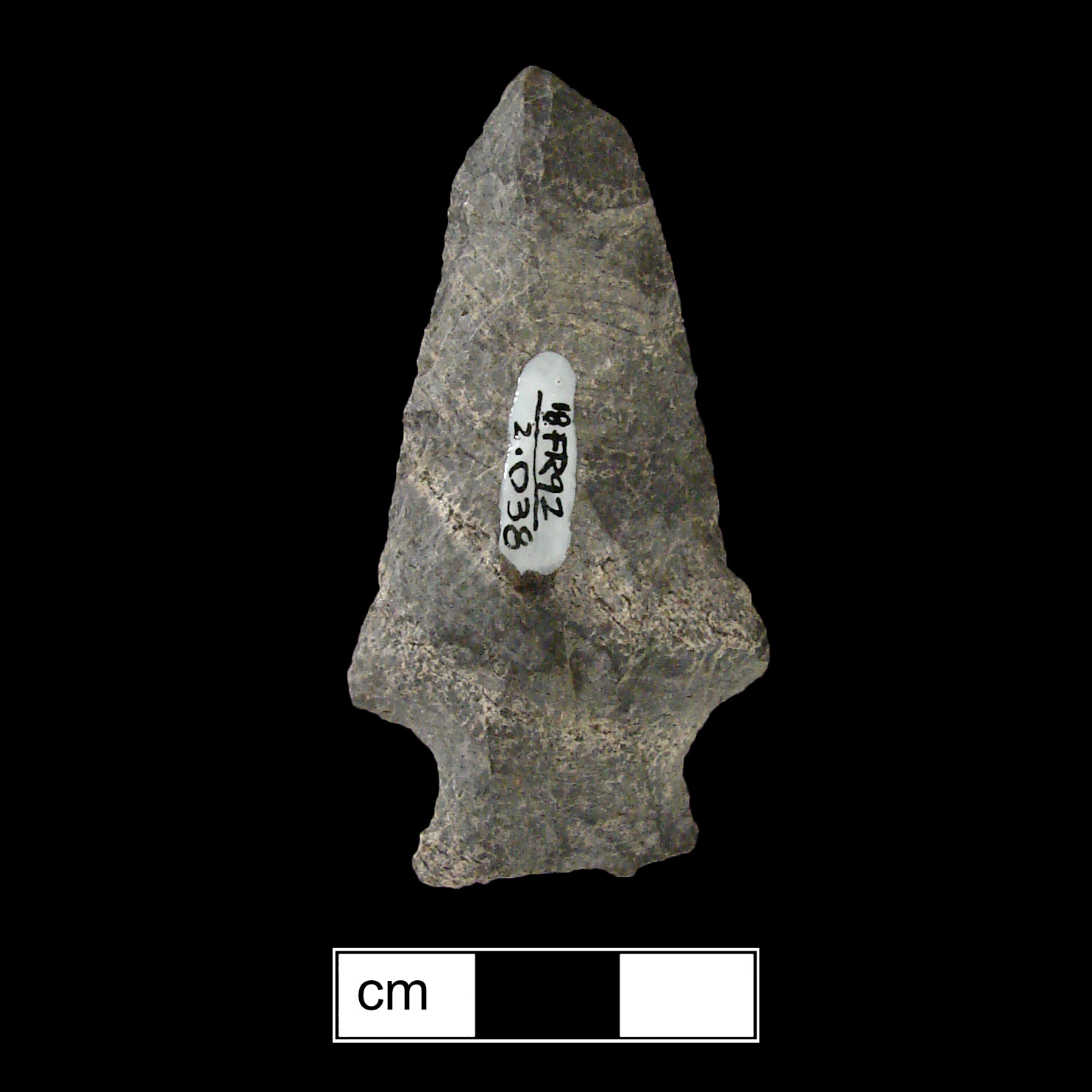
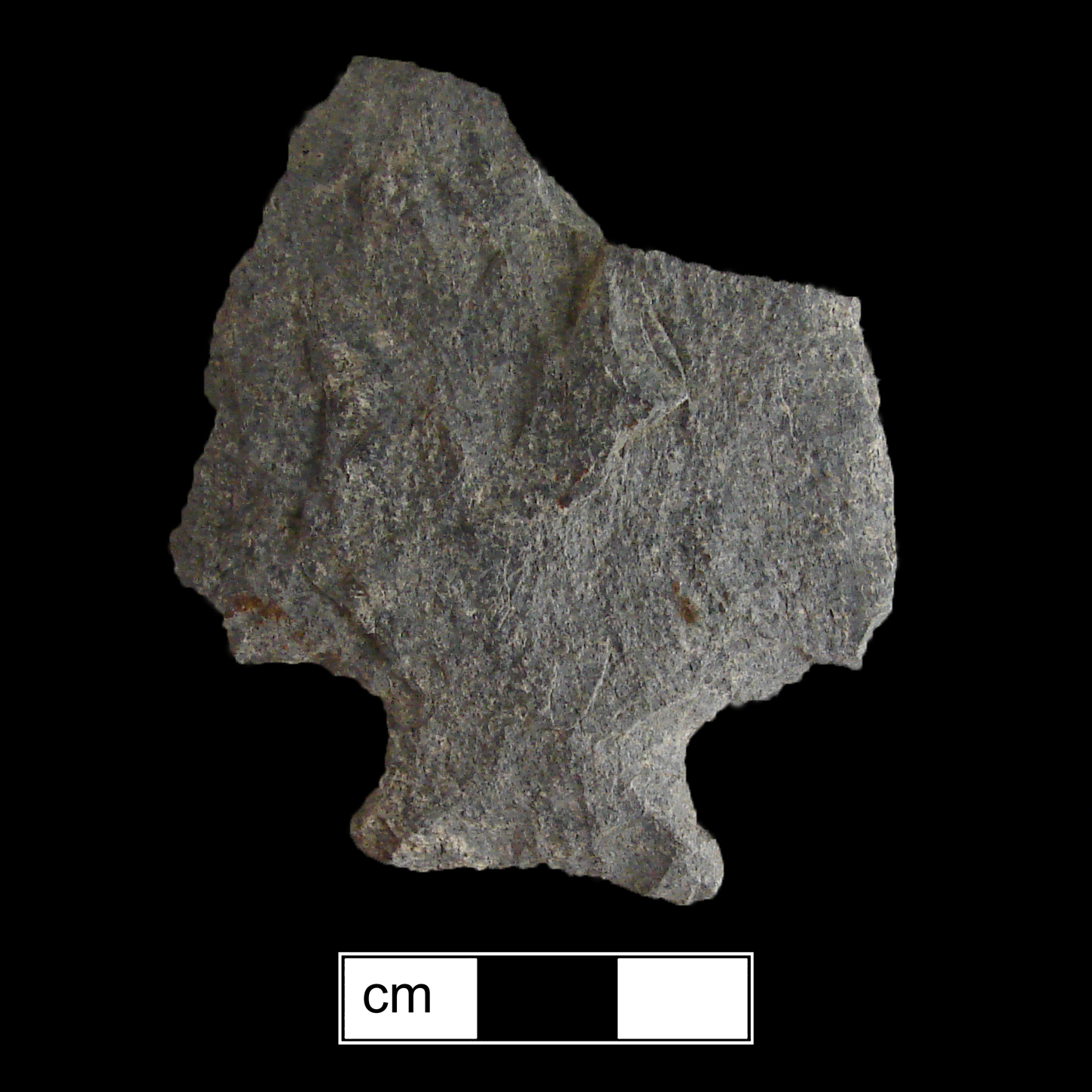
Yellow Springs (18FR92)
Site History
The Yellow Springs site (18FR92) is a Paleoindian, Early, Middle (possibly) and Late Archaic and Early and Middle Woodland short-term resource procurement located on a tributary of Tuscarora Creek, near Yellow Springs in Frederick County, Maryland.
Archaeological Investigations
The site was first reported to the Maryland Geological Survey by avocational archaeologist Spencer Geasey in 1970, who had conducted a non-systematic surface search of the site. The site was relocated by Mareen Kavanagh and Donald W. Peck during the Monocacy River regional survey, conducted between 1978 and 1982.
Geasey's collection from the site, later donated to MHT, contained steatite-tempered pottery, carved steatite, many Archaic and Transitional points, and flakes at this site. These points included 1 Hardaway side-notched, 1 Kirk corner-notched (Variant A), 1 Mountaindale, 3 Otter Creek, 1 Vosburg, 3 Brewerton eared-notched, 2 Lackawaxen, 2 Bare Island, 2 Savannah River stemmed, 2 Halifax side-notched, 2 Vernon, 1 Perkiomen, 9 Susquehanna Broadspear, 3 Dry Brook, 2 Orient fishtail, 1 Rossville, 3 Accokeek, 1 Wormans Mill, 1 Potts, 9 Selby Bay stemmed, and 2 Selby Bay side-notched points. Peck's 1978 field visit recovered 3 rhyolite flakes.
Associated Artifacts
Fishtail Types
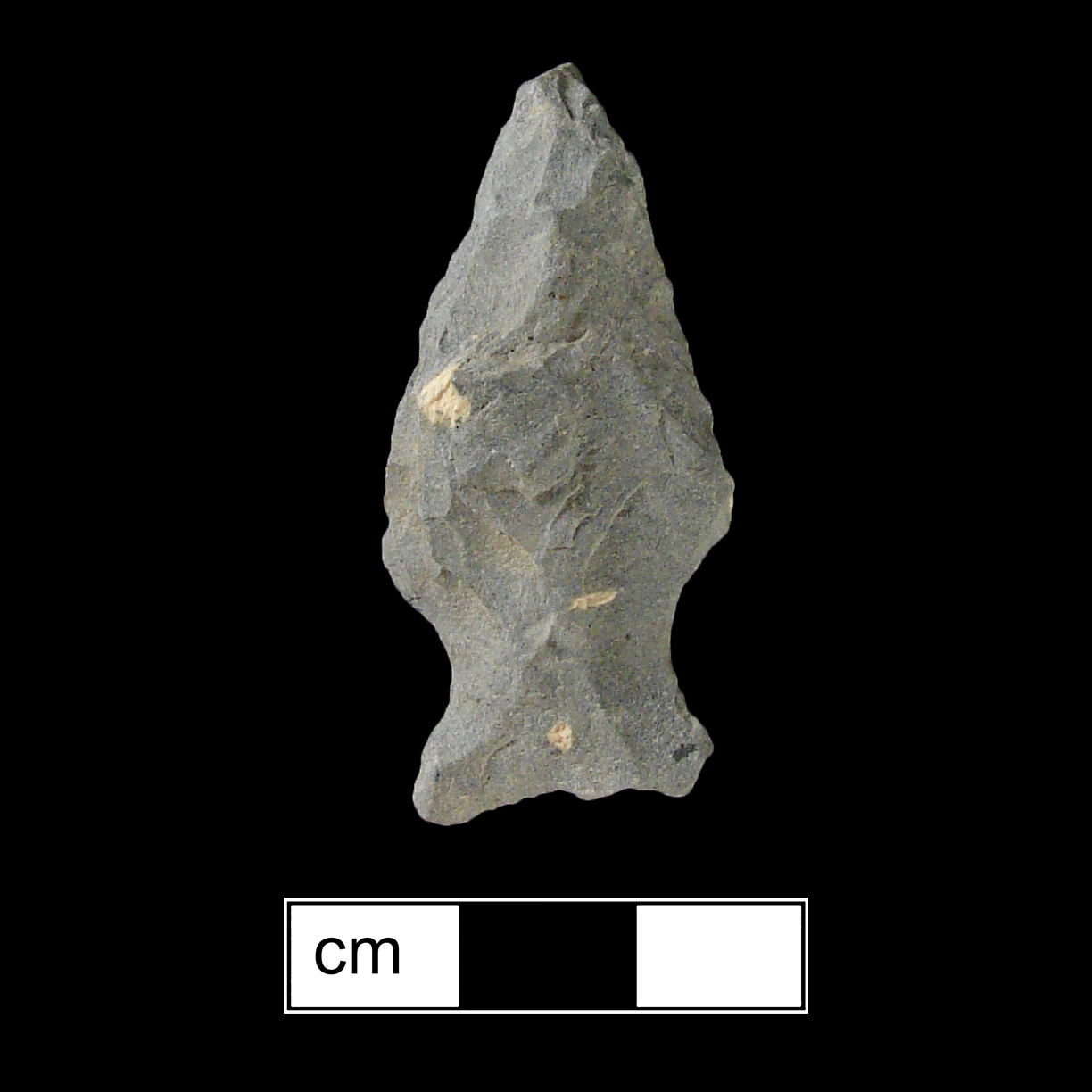
Halifax
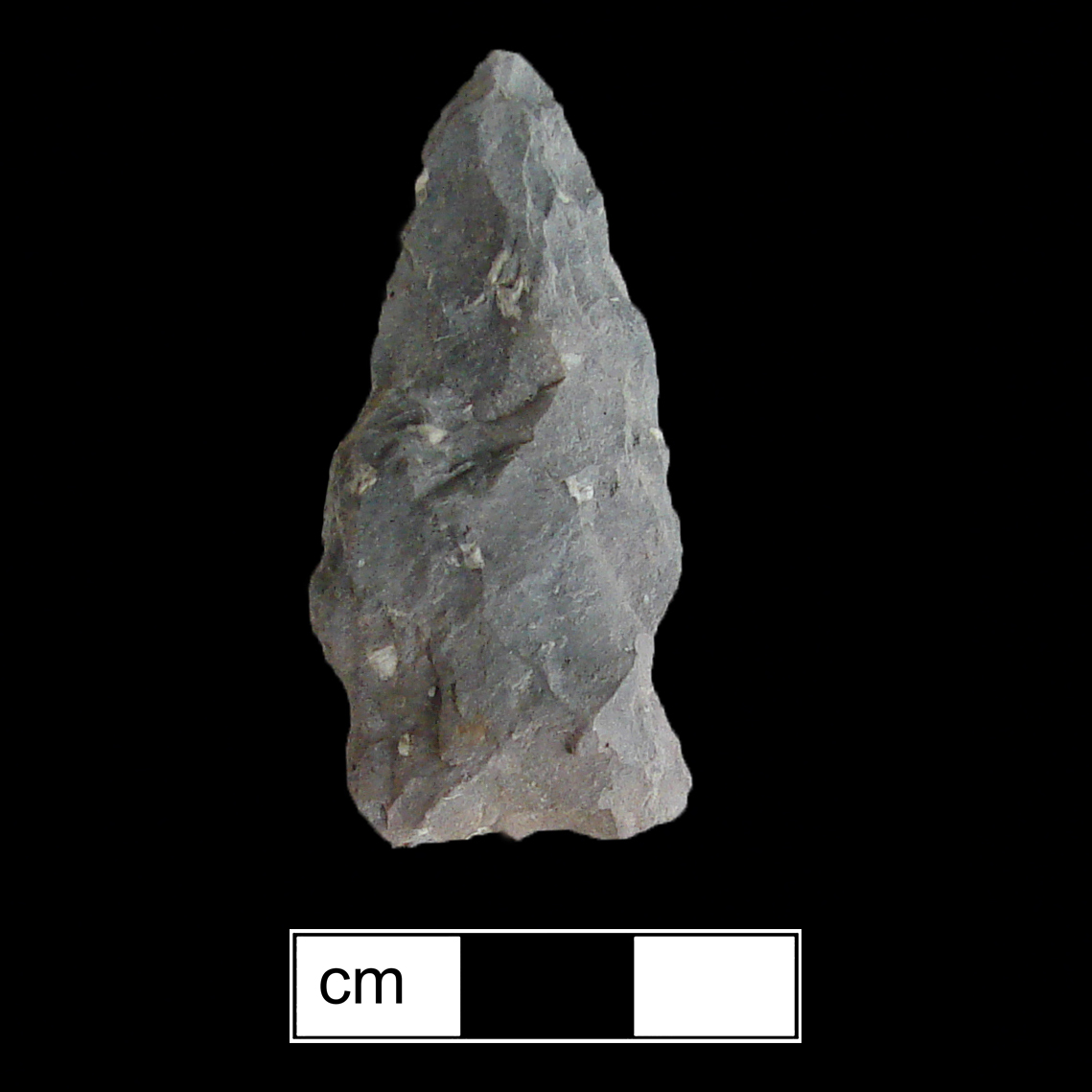
Rossville
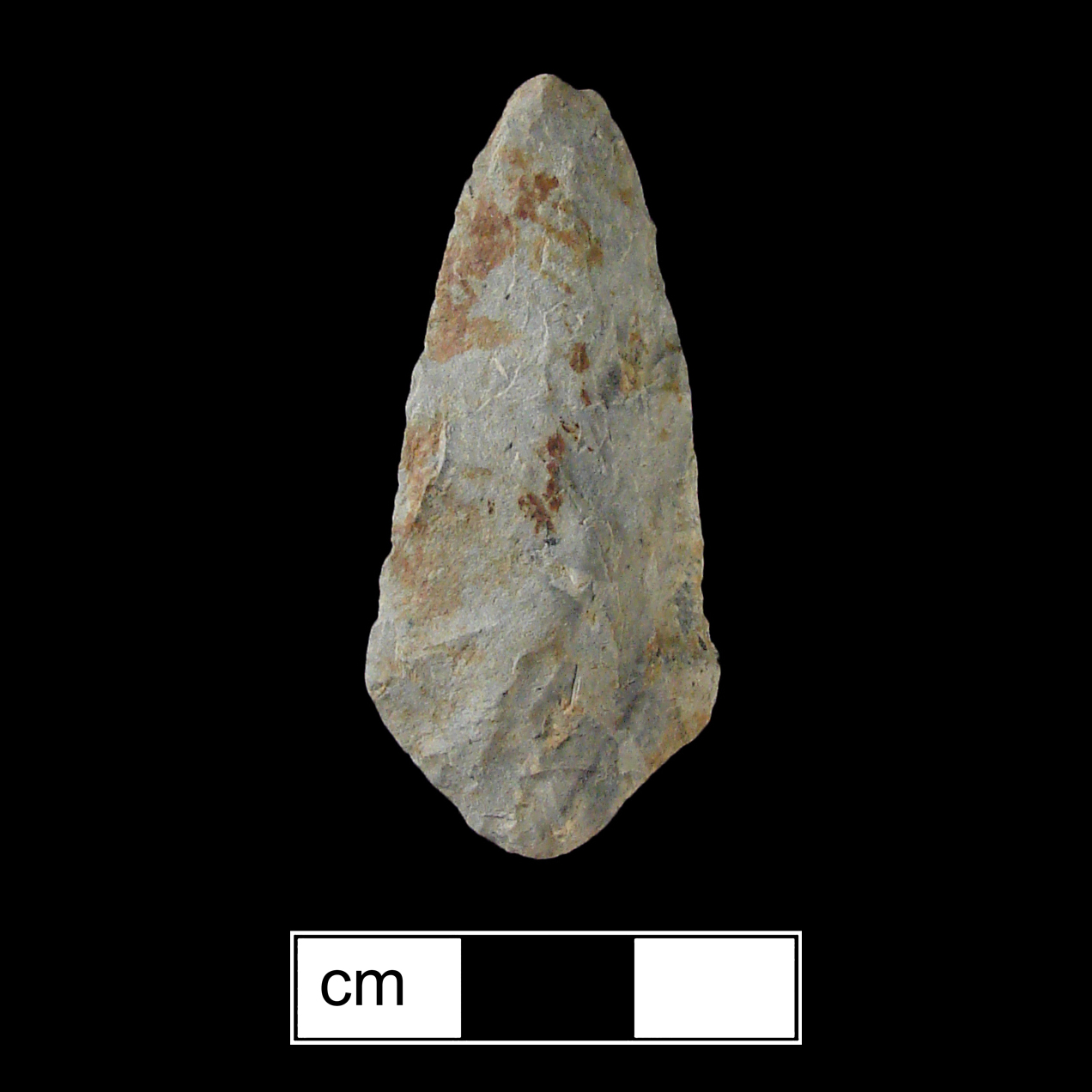
Selby Bay Fox Creek
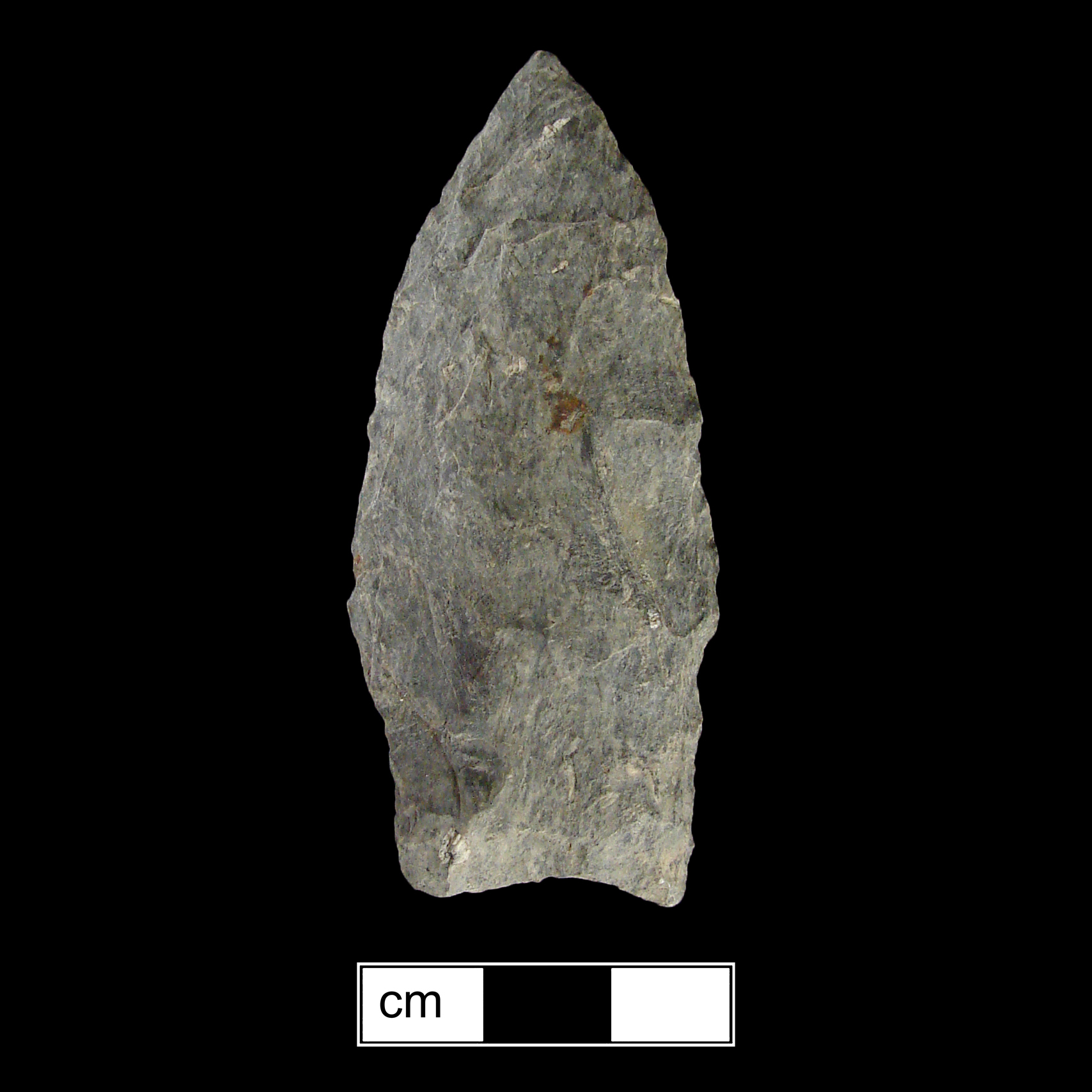
Selby Bay Fox Creek
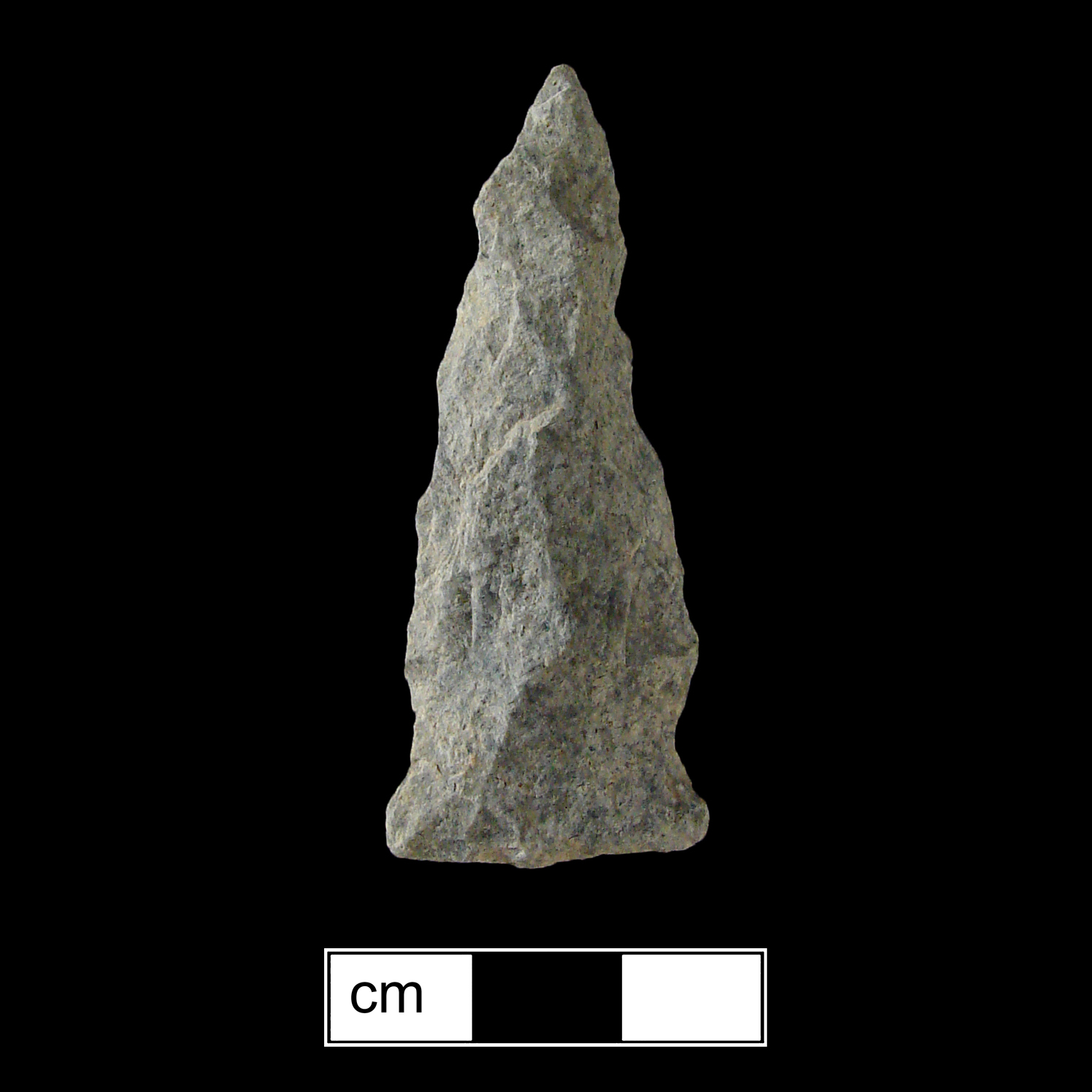
Selby Bay Fox Creek
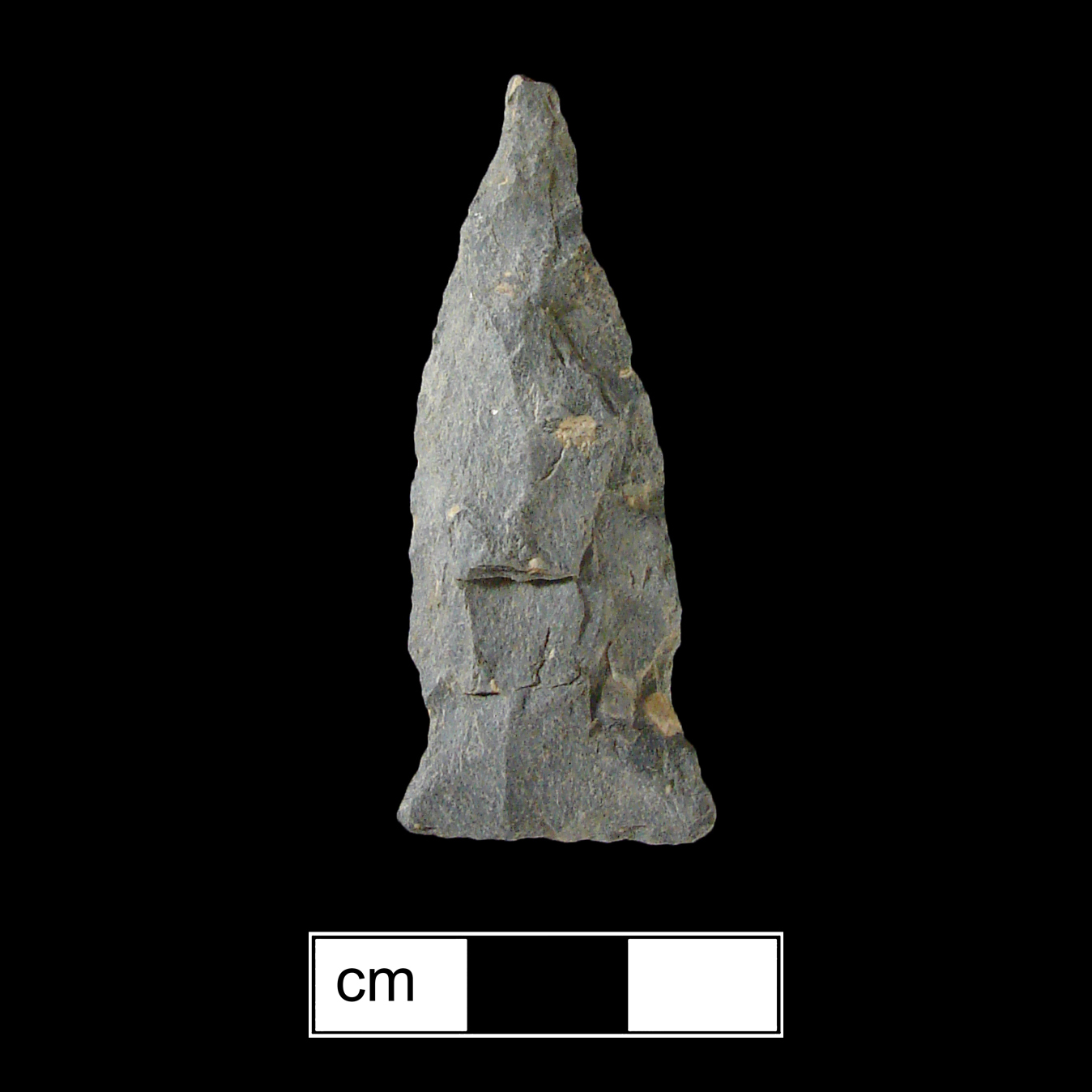
Susquehanna Broadspear