Sang Run Site (Hoye Prehistoric Indian Village Site) (18GA22)
Site History
The Sang Run site (18GA22) is a multi-component site with Archaic and Woodland occupations, and a Monongahela village located along Sang Run in Garrett County, Maryland.
Archaeological Investigations
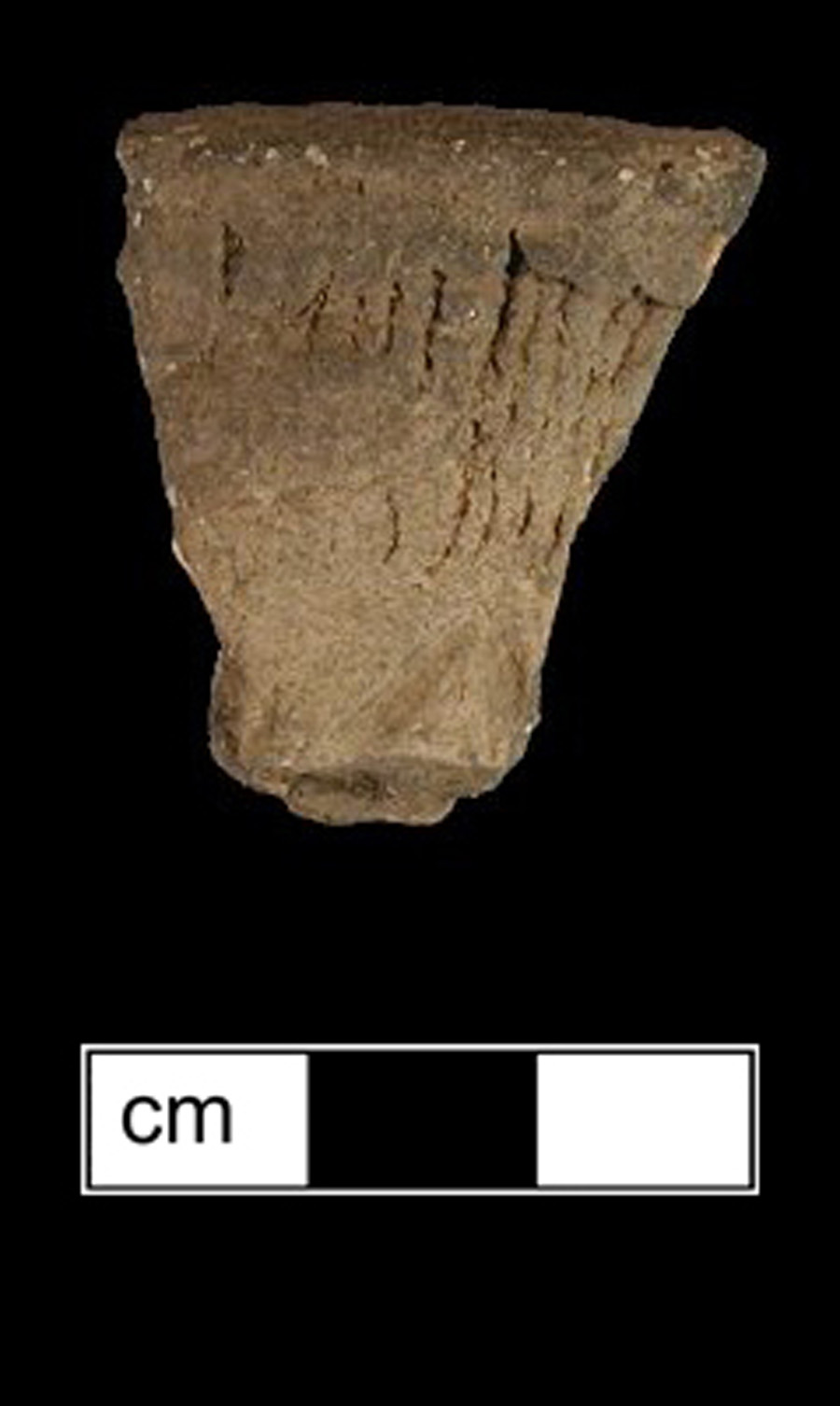
Surface collections and test excavations in 1949 and 1950 by a local amateur archaeologist and the Carnegie Museum of Pittsburgh indicate that this exceptionally well-preserved archaeological site was the location of a major village in the late precontact period, ca. AD 1000-1500. The excavations revealed firepits, storage pits, post mold patterns, and animal bone refuse. Cultivation of corn can also be inferred. The artifacts include fragments of shell and limestone tempered pottery, triangular arrow points, a channel coal pendant, and bone beads. This is the uppermost late prehistoric village known in the Youghiogheny drainage area and will be critical to studies of the prehistoric relationships between the upper Youghiogheny and Potomac watersheds.
In 1987, test excavations were conducted to more clearly define the boundaries of the site and to further sample the site. A number of test units excavated on the western portion of the site produced very few artifacts and no features. Features, including pits, post molds, and a midden were not encountered until the central portion of the site was reached. In all, eleven features were sampled from the site. Consequently, what has been now defined as the western boundary of the site corresponds rather closely with the location of the 1949-1950 excavations.
A community pattern cannot as yet be clearly ascertained on the basis of excavations conducted thus far, but preliminary indications show the presence of a small number of circular house patterns on the crest of the river terrace, lacking a surrounding palisade structure. The features (middens and pits) are representative of typical Late Woodland period patterns for the region. Faunal remains recovered from the features compare closely with assemblages from Monongahela Late Woodland sites in southwestern Pennsylvania.
Overall, the site is quite small compared to most Late Woodland sites in the region, and may perhaps have functioned as a small satellite camp with close ties to larger horticultural villages located downstream. Artifacts were primarily recovered from plowzone contexts and included limestone tempered ceramic sherds (Page Ware?), small retouched flakes, triangular projectile points, a few biface fragments, ceramic pipe sherds, and animal bone refuse.
References
1988 A Report of an Analysis of Faunal Remains from 18GA22, (Sang Run) Garrett County, Maryland. MHT# GA 17.
1989 "An Analysis of Two Faunal Samples from Sang Run site (18AG22), Garrett County, Maryland." West Virginia Archeologist 41(1):37-41 MHT# GA 20.