Dallam (18HA312)
Site History
The Dallam site, also known as Fanny’s Inheritance, represents a rural home and farm in Harford County, Maryland[PS1.1]. Josias William Dallam inherited the property in 1755, and the site was recorded as his residence in the 1798 tax records. Josias Dallam was a slaveholder who purchased surrounding land and owned other dwellings as well, presumably for tenants and to house his 22 enslaved laborers. After the death of Josias Dallam in 1820, the homestead went to his wife, but she moved to Kentucky by 1826, so the property passed to Josias' son Francis J. Dallam.
Francis Dallam's primary residence was in Baltimore, so Fanny's Inheritance, then going by the moniker "Cranberry," was either a secondary residence or tenant farm. At Francis’ death his holdings sold at auction but stayed in the family. Between 1855 and 1878, the property was owned by Edward Boothby Dallam and Henry Clay Dallam, but like with Francis Dallam, records indicate they primarily resided in Baltimore City, so the farm was either a secondary residence or rented to tenants.
In 1878 the Dallams sold the farm to William Benjamin Baker who owned a canning business, spearheaded the formation of local banks, acted as president of the Harford County telephone company, and served in several political offices, including three congressional terms from 1895 to1901. Baker was undoubtedly the most prominent citizen to have occupied the site, but like those who lived at Fanny's Inheritance (aka the Cranberry) before him, he had another house by 1896 and may have only used it as a secondary residence by that time.
Land records are unclear about when Baker left or sold the land, but it may have been c. 1900. The last civilians to live at the Cranberry were Jennie M. Hopkins and her son Frank M. Hopkins. The Hopkins family were compensated when the federal government took the land through eminent domain in 1942 to establish Aberdeen Proving Ground. The primary residence and associated outbuildings were demolished by the Army shortly thereafter.
Archaeological Investigations
Site 18HA312 was identified in August 2009 during a Phase I survey of proposed Government and Technology Enterprise Enhanced Use Leasing (G.A.T.E. EUL) areas on the U.S. Army Garrison Aberdeen Proving Ground (APG). A Phase II investigation [PS2.1] was undertaken immediately following the Phase I, and the site proved to have undisturbed evidence of the Dallam, Baker, and Hopkins occupations. Because the site was slated for development, a Phase III data recovery followed between November 2009 and January 2010.
The placement of mechanical trenches and units for the data recovery were guided by magnetometry and ground penetrating radar (GPR). About 11% of the site was mechanically stripped to reveal subsurface features and middens, and 104 test units (1 × 1 m) were hand excavated.
Three residential areas were identified. The eastern residential area has the most extensive late 18th- and early 19th-century component, though its demolition was not until the 1910s. The central and north central residential areas primarily had late 19th-century and early 20th-century artifacts and the associated structures were not demolished until the Army took over in the 1940s.
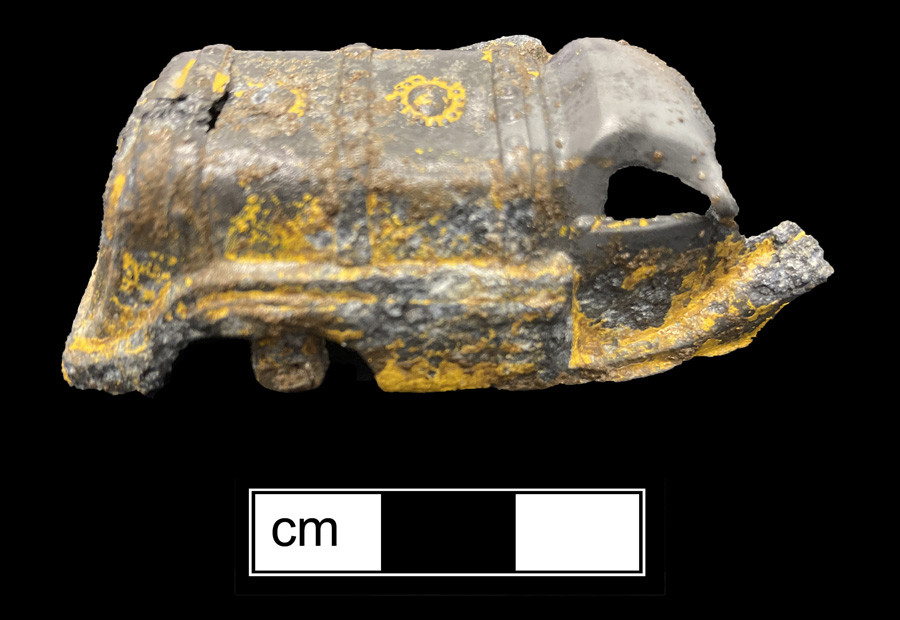
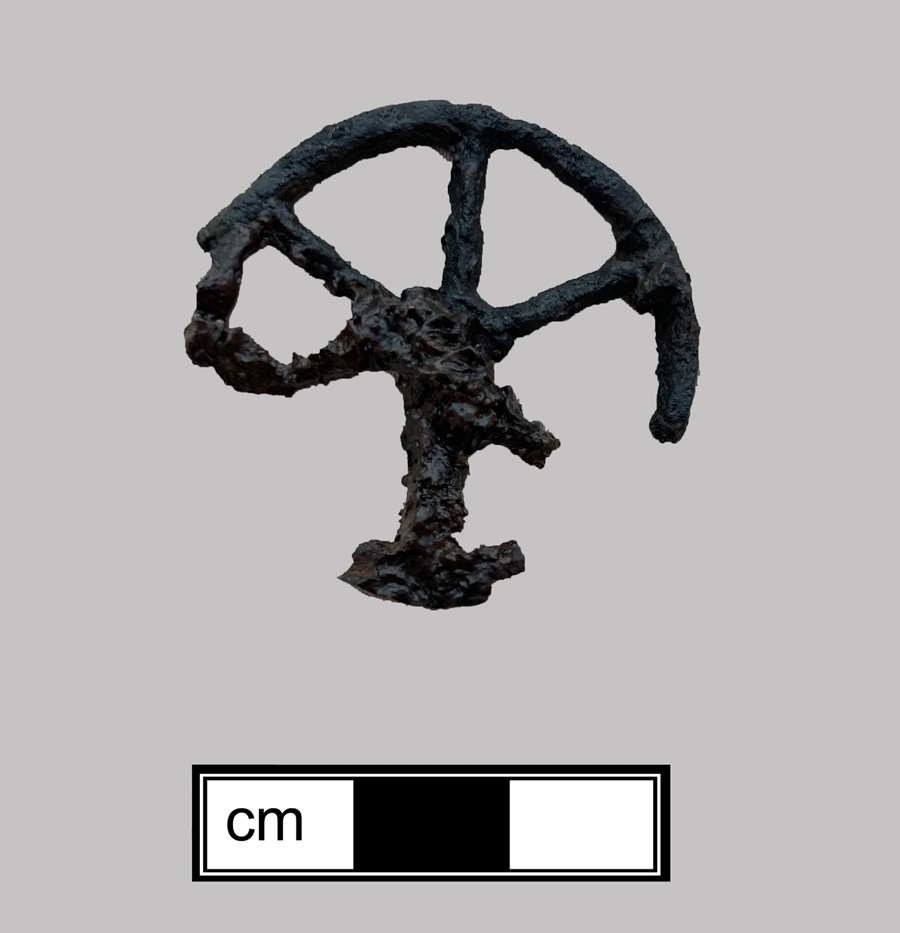
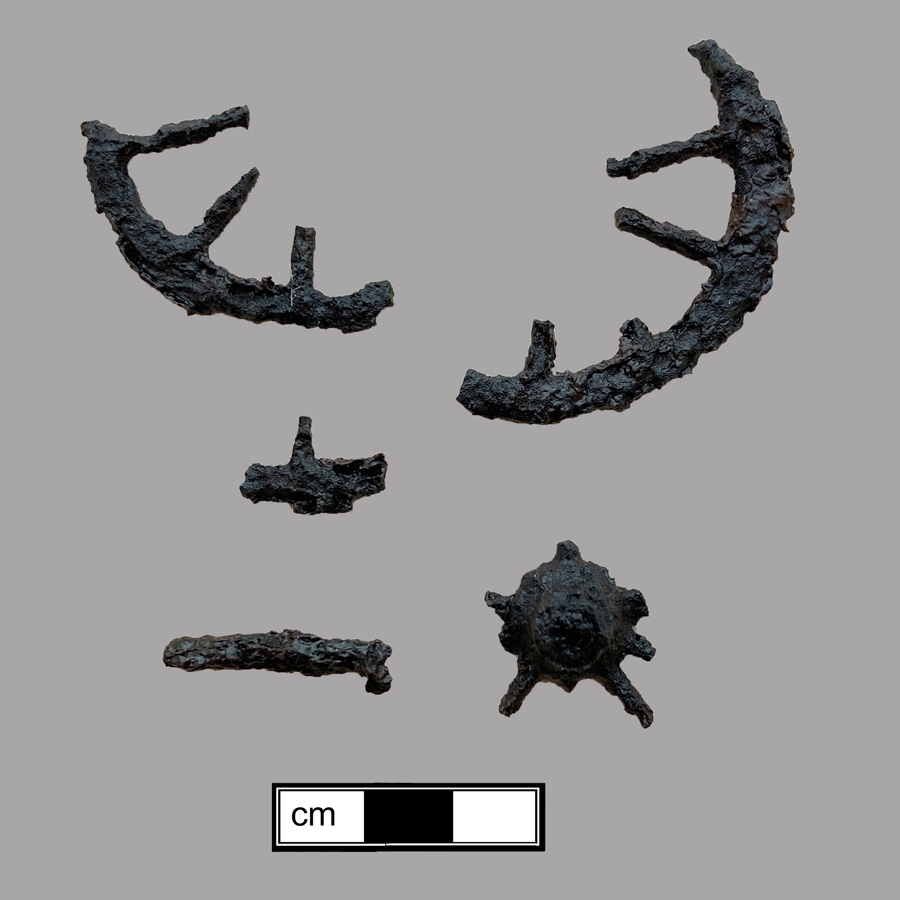
Brass plaques reading "E.B. Dallam Perrymans" were recovered, indicating that Edward Boothby Dallam had some involvement in the property despite residing in Baltimore. Another artifact of note is a medal from the 1898 Spanish American Peace Jubilee held in Washington, DC, which probably represents one of the events William Benjamin Baker would have attended as a member of Congress. Both the brass plaques and the medal were recovered in the eastern residential area, suggesting this was the primary owner's residence during the Dallam and Baker occupations.
References
2011 Phase I Archaeological Survey of the G.A.T.E Enhanced Use Leasing Area, and Phase II Archaeological Evaluation of Site 18HA312, Aberdeen Proving Ground, Harford County, Maryland. Technical report on file at the Maryland Archaeological Conservation Laboratory.
2011 Phase III Archeological Data Recovery Survey at Site 18HA312 for the G.A.T.E Enhanced Use Leasing Area, Aberdeen Proving Ground, Harford County, Maryland. R. Christopher Goodwin & Associates, Inc. MHT # HA119 (2 vols).
2024 William Benjamin Baker. https://en.wikipedia.org/wiki/William_Benjamin_Baker, accessed August 26, 2024.
Associated Artifacts
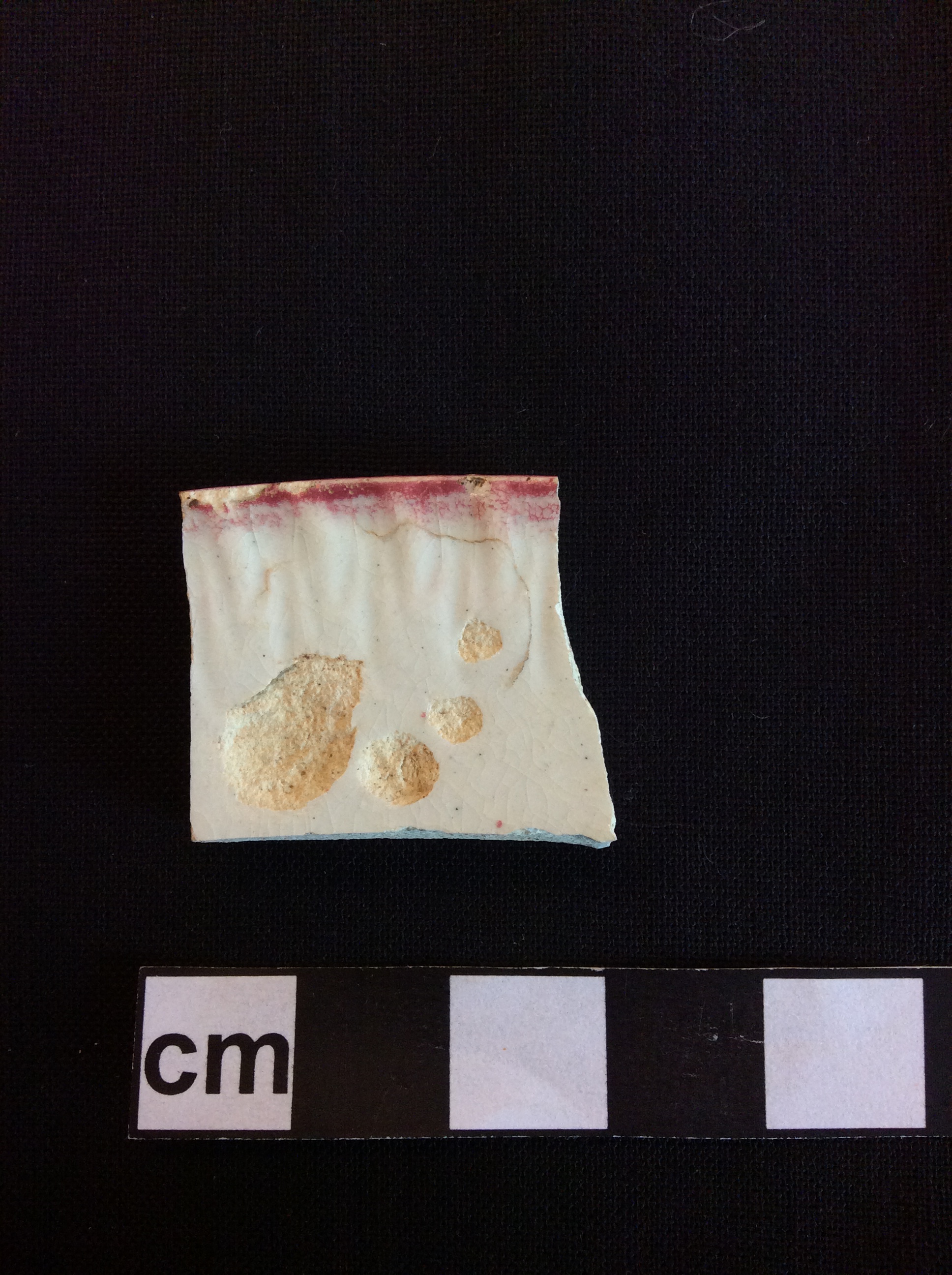
Rockingham Ware
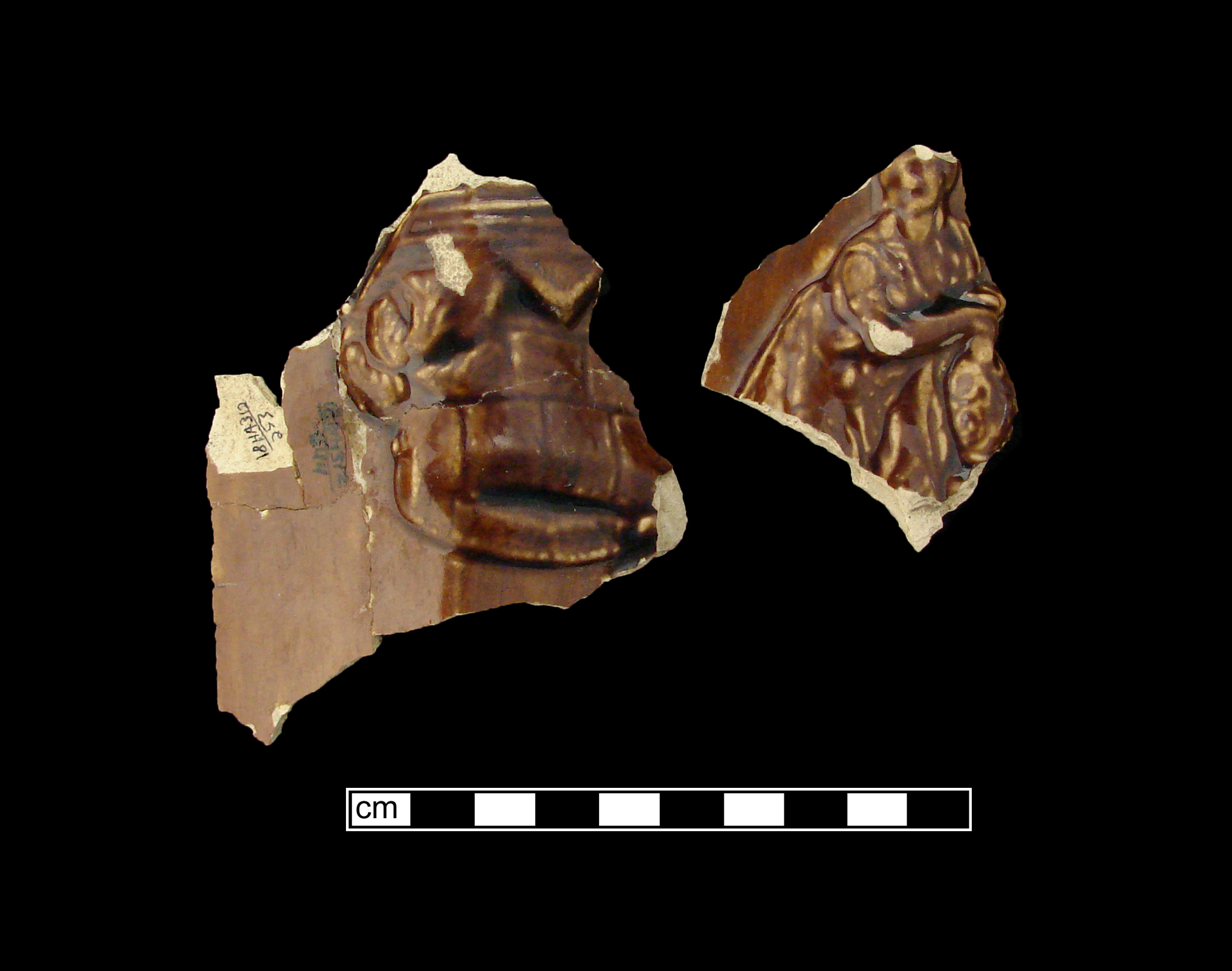
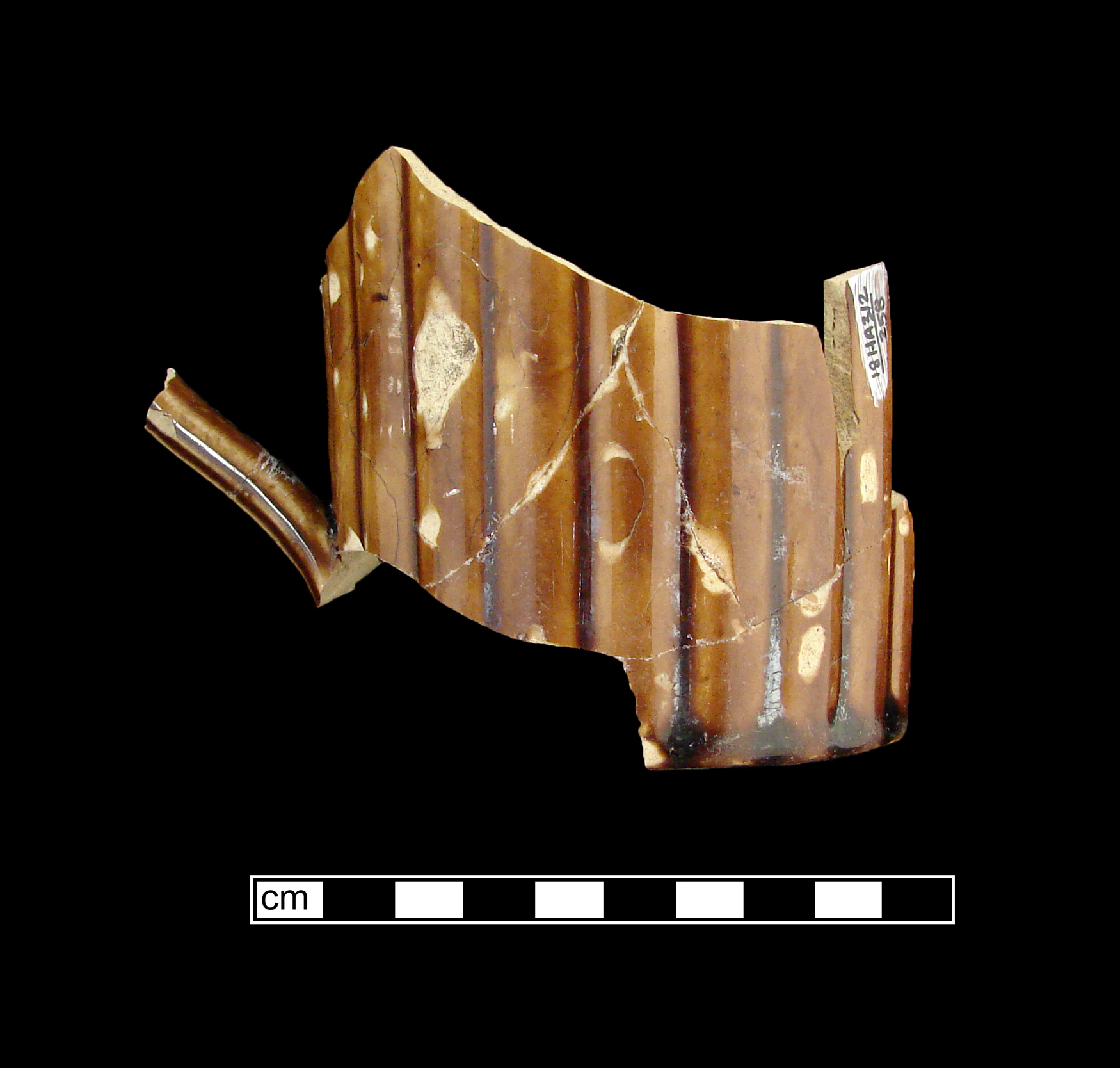
Rockingham Ware
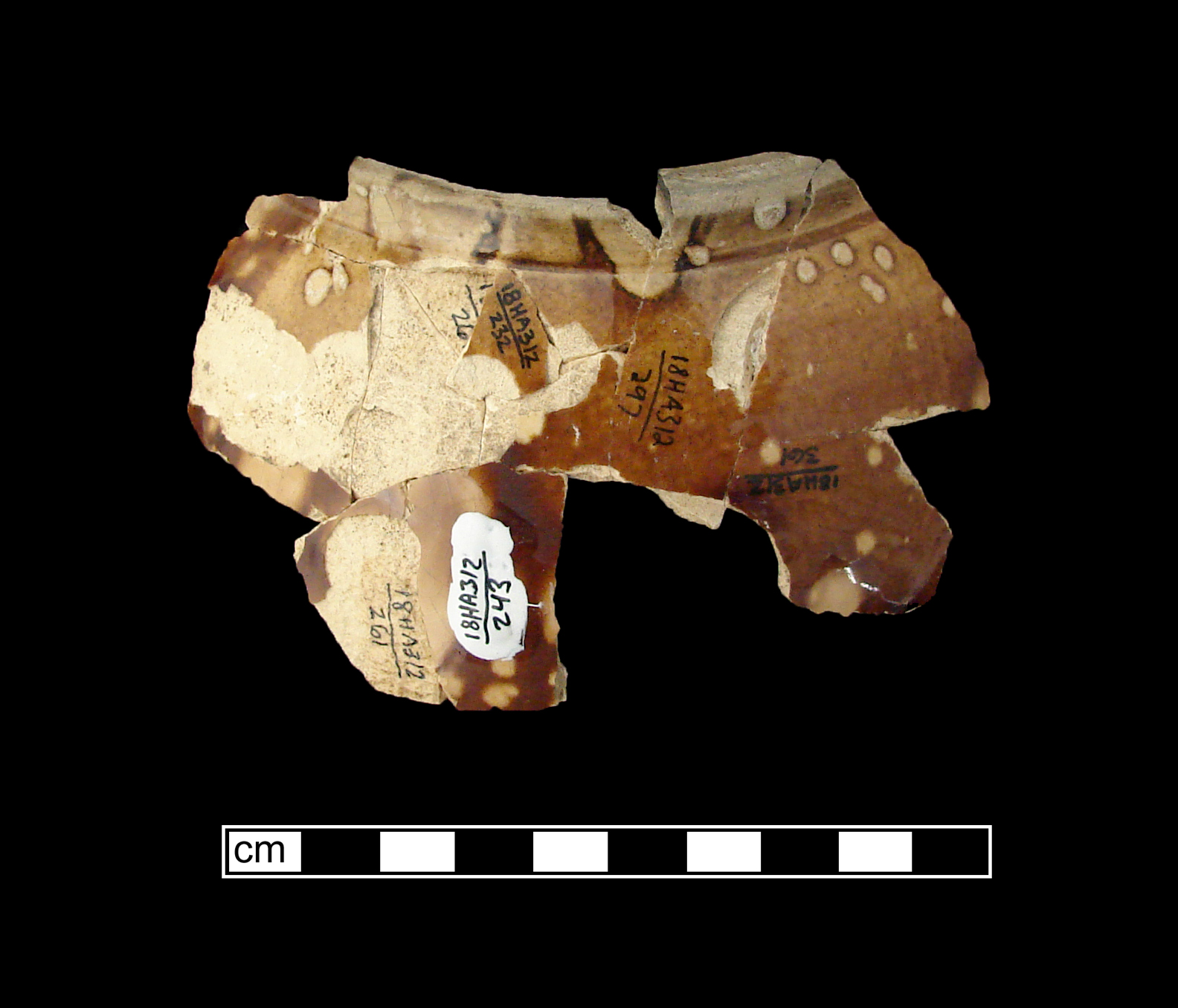
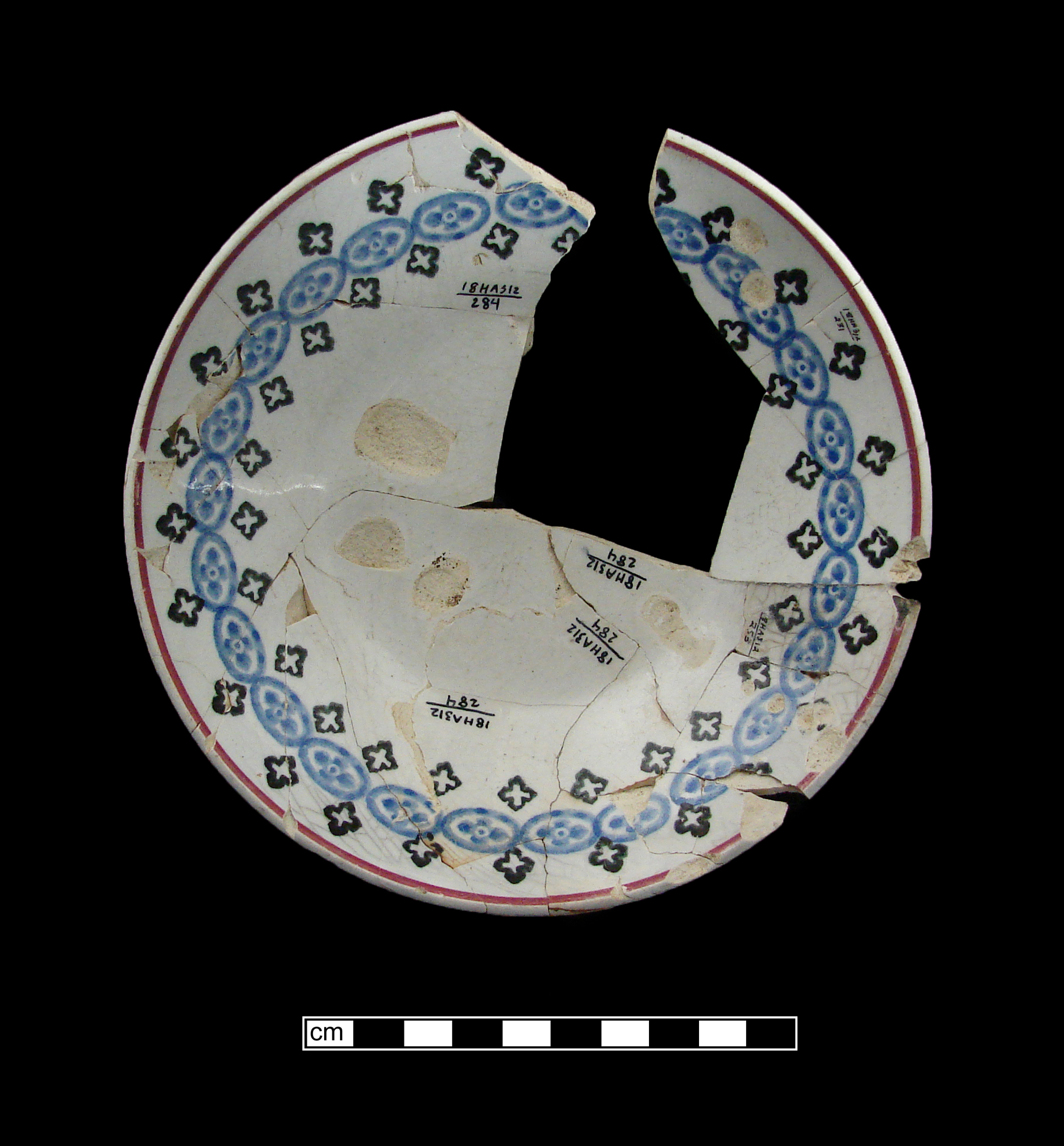
Sponge Decorated
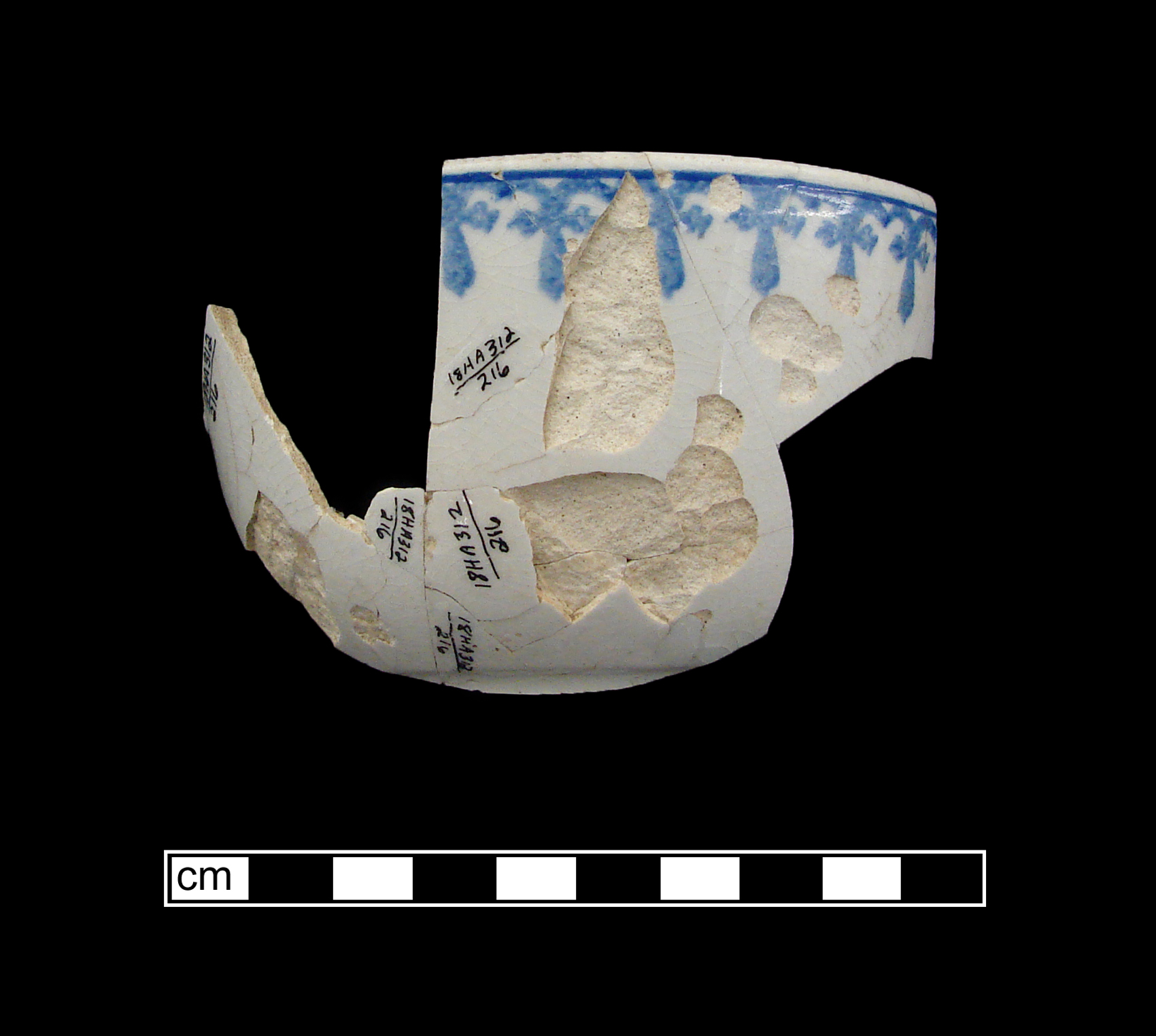
Sponge Decorated

Sponge Decorated