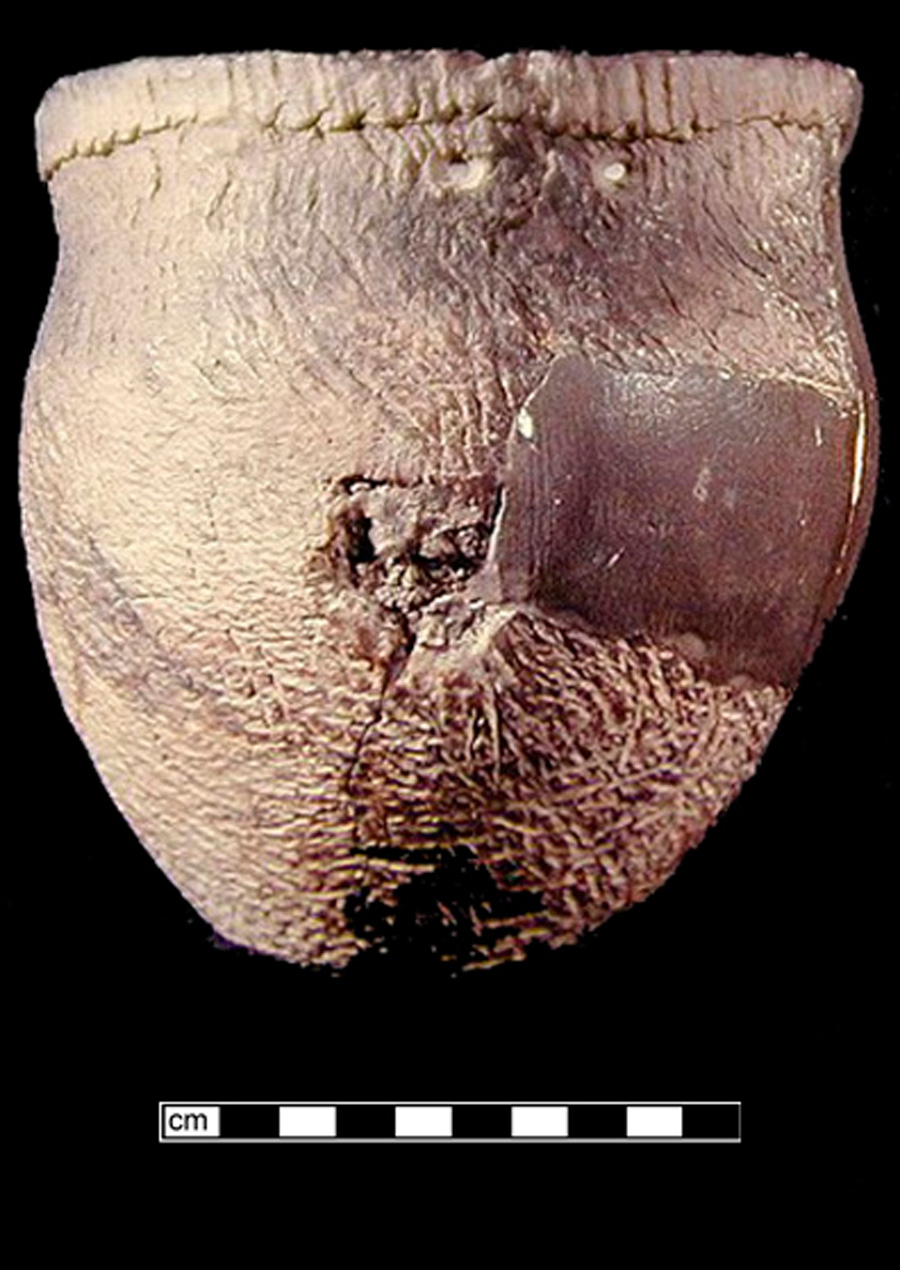
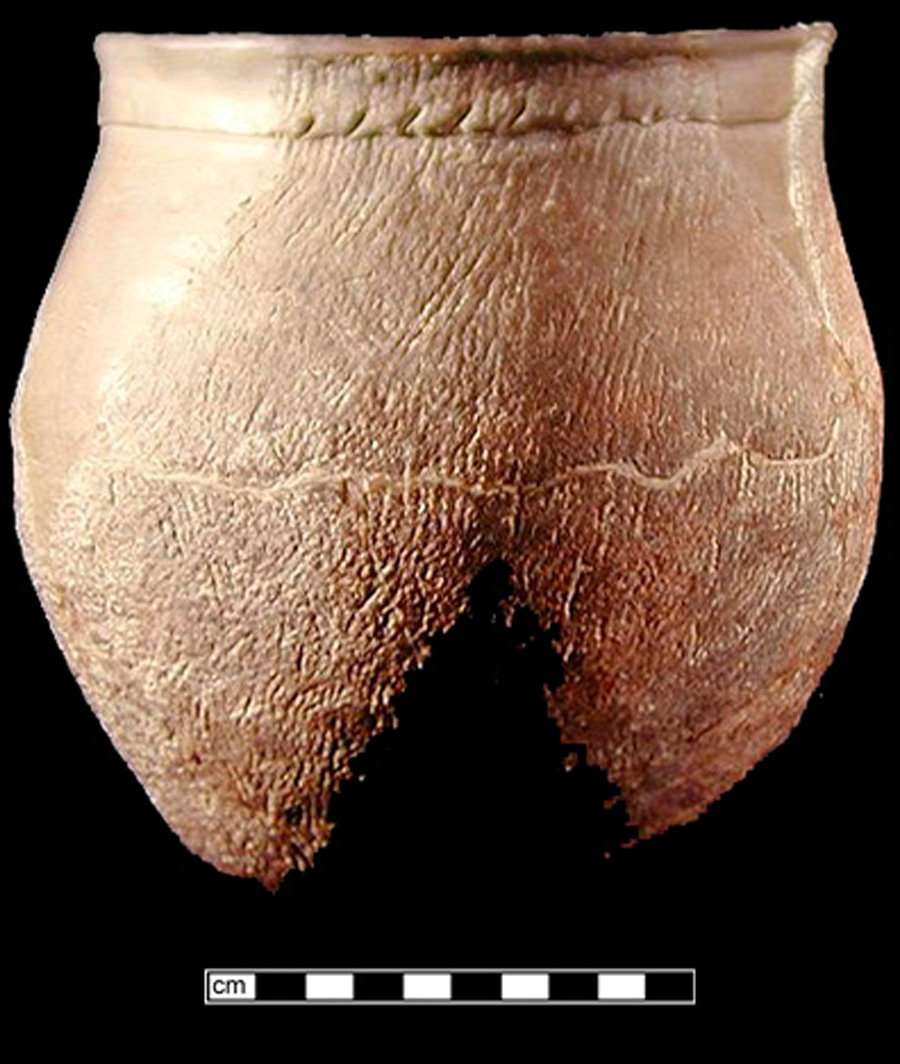
Shepard Site (18MO3)
Site History
The Shepard site (18MO3) is a Late Woodland village located on the Potomac River along the Chesapeake and Ohio canal in Montgomery County, Maryland.
Archaeological Investigations
The Shepard Site was first publicly identified by E. Ralston Goldsborough of Frederick, Maryland who reported the work of avocational archaeologists Richard G. Slattery and Hugh V. Stabler in a letter published in the Pennsylvania Archeologist in January, 1938 and in the same journal in April 1938. The archaeological work was done between 1936 and 1939.
In 1952, additional work was conducted by avocational archaeologists Nicholas Yinger and Ralph Fout of Frederick, Maryland. In 1955 a small amount of confirmatory excavation of trenches and test pits was done by and under the direction of archaeologist Howard A. MacCord.
The site is characterized by an accumulation of midden over a semi-circular 150 × 50 foot area. The most notable feature revealed in the excavations of the Shepard Site was the profusion of pits (more than 80) found randomly scattered throughout the site. In some instances, pits were found to overlap, implying some length of occupation on the site. Detailed measurements were not made of the majority of the pits, but those that were measured ranged from three to five feet in diameter, and as deep as five feet below the ground surface. Burned earth, ashes, and charcoal in some pits indicated that hearths had been cleaned and the sweepings emptied into the pits. The hypothesis is that most pits were intended initially for the storage of foods (corn, nuts, dried meat and fish, etc.) and subsequently were used as for the disposal of garbage. Postmolds were present on the site, and undoubtedly definite house patterns could be detected if a sufficiently large area were to be uncovered.
It is reasonably certain that no palisade enclosed the village, since the western edge, definitely uncovered in MacCord's excavation, disclosed no line of the large postmolds usually marking such a feature. The absence of a palisade, while viewed as "negative evidence" is considered important. Evidence of agriculture consisted of charred kernels of maize, but no other cultivated plant remains were found. Tobacco was probably grown for use in the pipes found, though the smoking of plants other than tobacco should not be ruled out.
References
1991 The Middle to Late Woodland Transition in Maryland. North American Archaeologist 12 (1):2-28.
1962 A Survey of Historic and Prehistoric Archeological Sites along the Chesapeake & Ohio Canal National Monument 1961-1962. MHT# MO 41.
1957 The Shepard Site Study: (18MO3) Montgomery Co., Md. ASM Bulletin #1, July 1957.