Crane Pen (18PR312)
Site History
Crane Pen (18PR312) is multicomponent site consisting of Early and Middle Archaic and Early, Middle, and Late Woodland camps, a Late Archaic base camp; and an 18th- to -19th- century artifact scatter located along Laurel-Bowie Road in Prince Georges County, Maryland.
Archaeological Investigations
Archaeological testing was conducted at the proposed site of a new whooping crane breeding pen in the Rare and Endangered Species section of the Patuxent Wildlife Research Center in 1986. Testing was done by National Park Service Archeologist Dana Linck, assisted by Fish and Wildlife Service Archeologist Kevin Kilcullen and others, primarily volunteers and Youth Conservation Corps participants.
The report of a precontact site (18PR162) recorded by the State Archaeologist in 1972 indicated that archaeological resources were present in the vicinity that could be affected by the construction. The initial testing did reveal one concentration of stone tool manufacturing debris, very light scatters of similar lithic debris in other locations, and evidence for historical usage of the vicinity. More intensive testing at the location of the lithic debris concentration suggested the presence there of a significant precontact period site. Because the site is apparently not the same as the one recorded in 1972, a new site designation was made --18PR312. Subsequent analysis of artifacts previously collected in the vicinity indicates the existence of two clusters, E and F, which generally correspond with the two sites. There may, however, be some degree of spatial overlap between the sites.
Shovel tests were excavated at 50-foot intervals throughout the areas slated for ground disturbances. Additional shovel tests, generally at an interval of 25 feet (i.e., between the 50-foot interval tests), were dug in most locations where lithic debris was found. Where the concentration of lithic debris was discovered, eleven 5x5 foot test units were excavated.
Of the 122 shovel tests excavated, 37 were found to contain evidence of human activity: lithic debris, reflecting precontact activities, were found exclusively in 7 shovel tests; both lithic debris and historical material were found in 11 tests; and historical material only was found in 16 tests. Nearly all of the precontact material recovered in the shovel tests consisted of quartz and quartzite flakes; one possible precontact tool fragment, of bifacially flaked quartzite, was also found. Most of the historical material consisted of brick fragments, coal, cinders, and pieces of lime and limestone. The most distinctive historical artifacts were a blue transfer-printed whiteware fragment, several small green bottle fragments, white clay pipe fragments, and fragments of wrought iron and machine-cut nails.
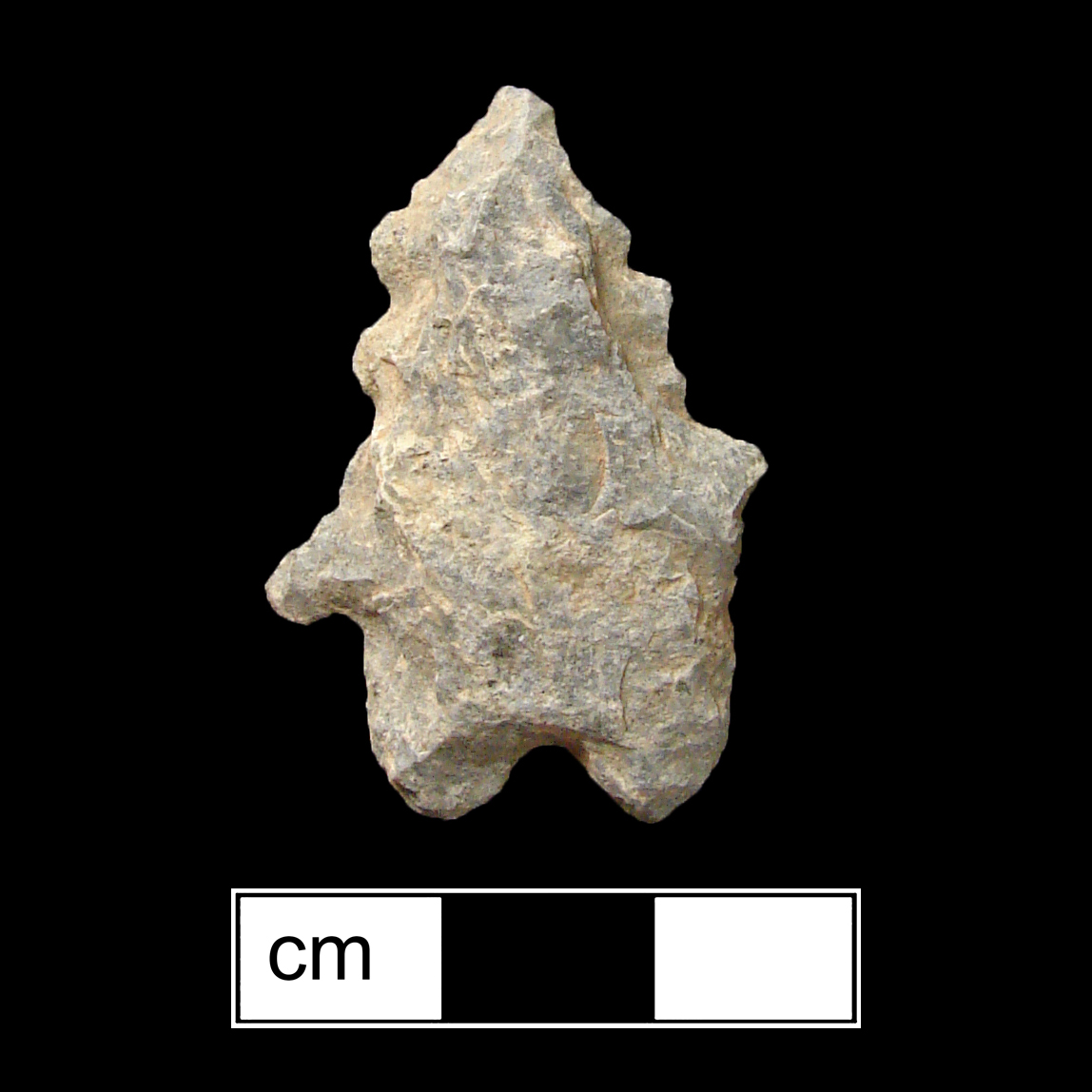
The eleven test units excavated where the concentration of precontact material was found yielded larger amounts of artifacts, including a few diagnostic items: 3 Holmes points and a Rossville-like point which may date to the Early Woodland period, c. 750 B.C.-A.D.200. Also recovered were bifaces, a drill fragment, hammerstones, and pottery (not typable), as well as large amounts of quartz and quartzite debris and of fire-cracked rock. Rhyolite flakes were present but uncommon, as were flakes of argillite and local "ironstone." A few historic artifacts were also recovered.
References
1991 Phase I Cultural Resource Survey, Site 12, Patuxent Wildlife Research Center, Prince George's County, Maryland. (Louis Berger & Associates) MHT # PR 133. [This project area was actually about 300 meters ESE of 18PR312.].
1987 Archeological Overview and Assessment, Patuxent Wildlife Research Center, Maryland. (United States DoI/Fish & Wildlife Service and NPS) MHT # PR 90.
2013 Comparative Study of Prehistoric Settlements on the Patuxent River (Lost Towns Project) MHT # AN 642..