Old Chapel Field (18ST233)
Period of significance is c. 1637-1660.
Site History
Site 18ST233, Old Chapel Field, is located aboard the Naval Air Station Patuxent River's Webster Field Annex in St. Inigoes, Maryland. In 1637, Jesuit missionaries purchased the property in St. Inigoes to raise tobacco and other crops. These Jesuits were among the original investors in the Maryland colonial enterprise, and their initial goal in settling in Maryland was the conversion of local American Indians. The plantation was not itself a mission, but rather a working farm intended to support the Jesuit missionary efforts elsewhere in Maryland.
Old Chapel Field (18ST233) represents the earliest center of activity for a plantation that would continue as a Jesuit settlement for the next two centuries. By the end of the 17th century, however, the residential core of this settlement had moved across a ravine from 18ST233 to the Fly/St. Inigoes Manor House site (18ST329/330), saving the earliest occupational deposits from disturbance by later development.
Block excavations at 18ST233 revealed several features indicative of an earthfast structure and associated borrow pit. Above left: A view of the exposed borrow pit during excavation. Above right: A profile of the borrow pit, including an intrusive post hole and post mold that was filled with brick when the post was pulled. From Sperling and Galke 2001.
Archaeology
A series of studies of Webster Field have been conducted by the Southern Maryland Regional Center. 18ST233 was identified in 1977 by Steve Wilkie and Gail Thompson. It was later revisited during a 1981 field school, and additional phase I testing took place in 1996. In 2000, Phase II testing of 18ST233 focused on areas identified as having high concentrations of artifacts during the shovel test surveys. Twenty test units were excavated to subsoil and several of these exposed features. Features include grave shafts from a 17th-century cemetery, a pit feature laden with oyster shell, and a portion of a probable earthfast structure with an associated borrow pit. The graves were not excavated, but limited testing of the shell feature and borrow pit associated with the earthfast structure confirmed the early occupation of the site. The shell-pit has tentatively been identified as a shell-rendering kiln, but further excavation is needed to define the dimensions and function of the earthfast structure.
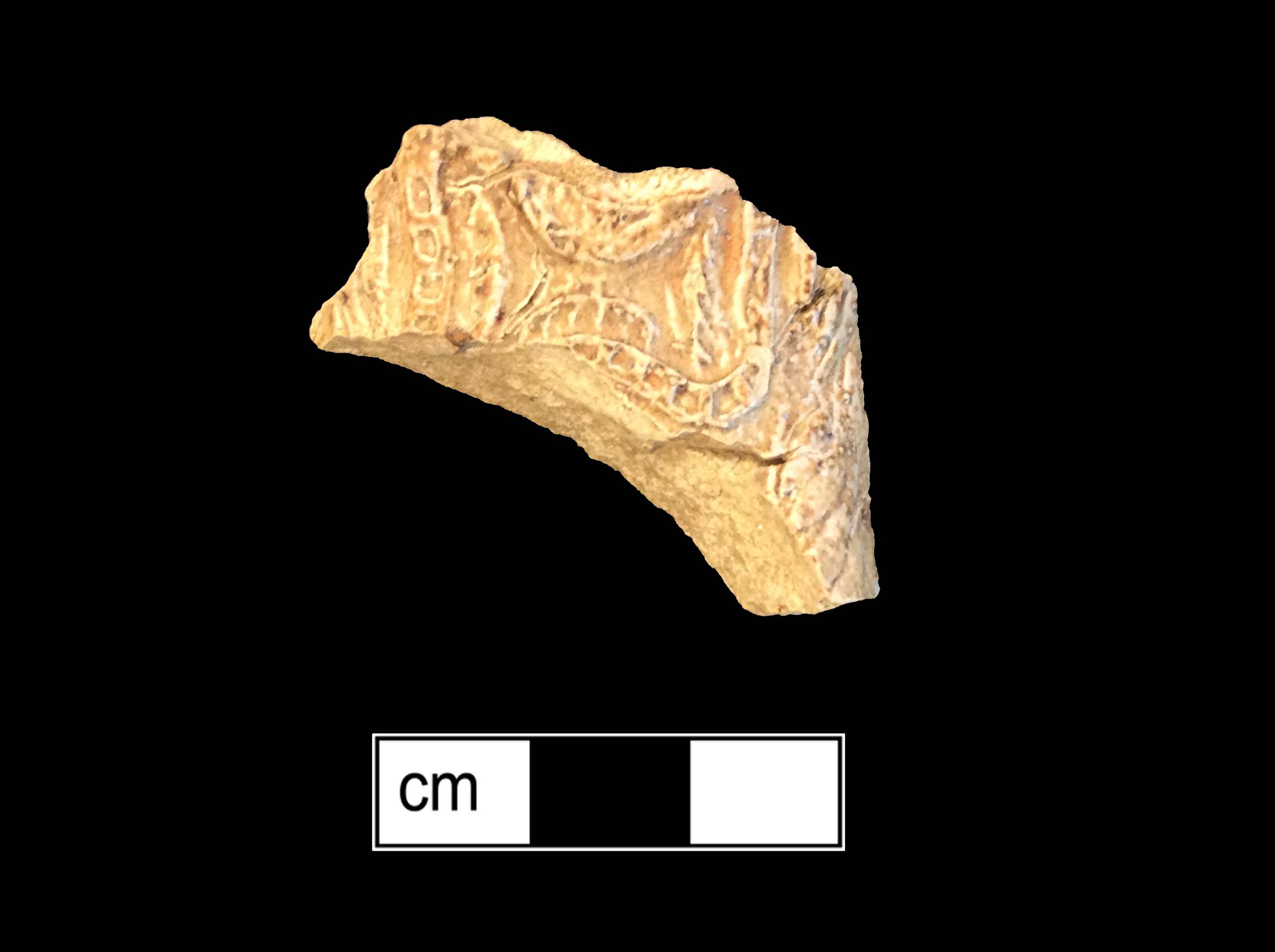
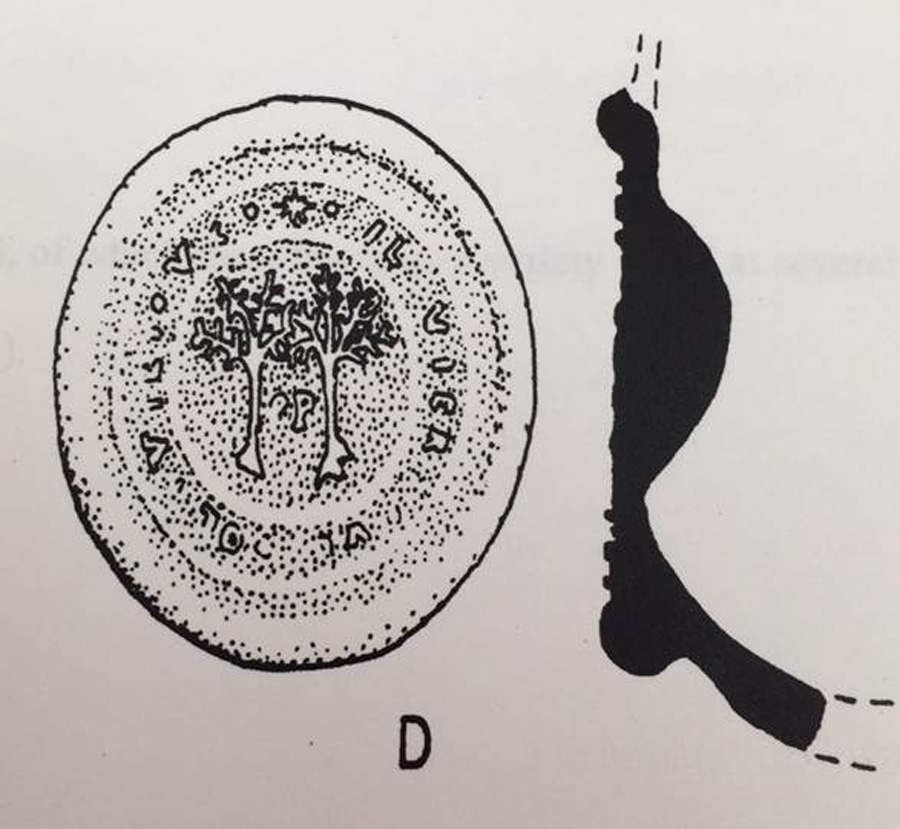
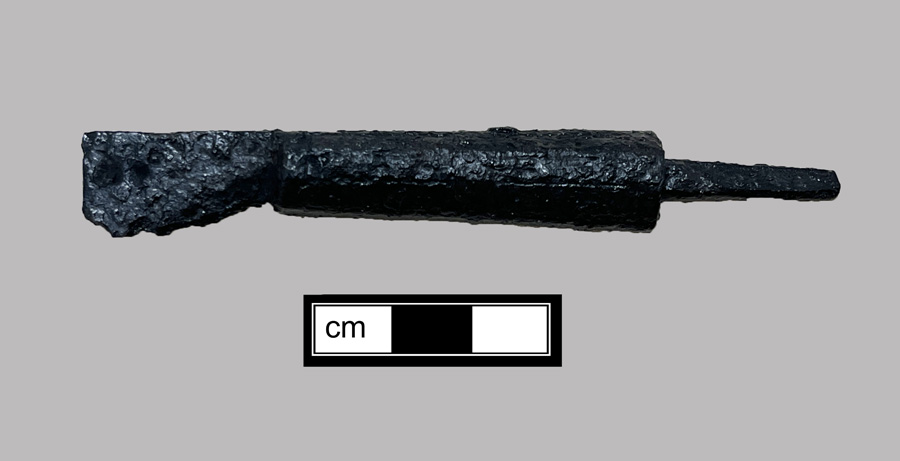
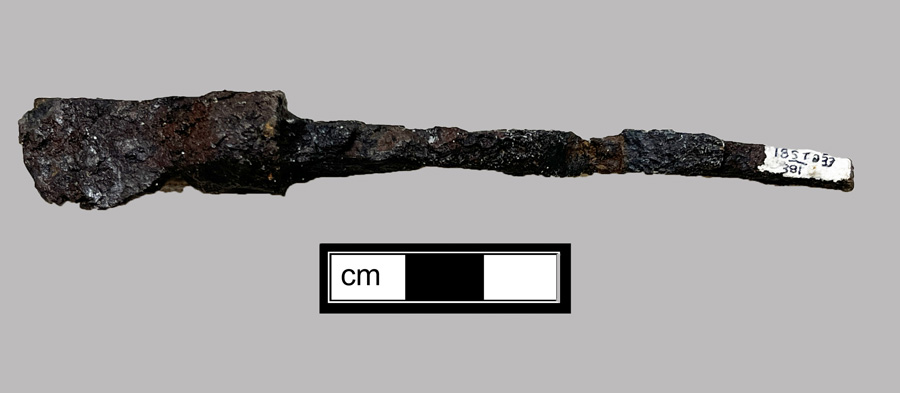
Artifacts recovered at 18ST233 are consistent with Maryland’s earliest colonial history. Glass beads, a possible copper bead, a jaw harp, locally-made tobacco pipes, and an iron knife were among the items recovered that are often considered popular trade goods intended for exchange between the colonists and the local American Indians. A coin weight and jeton found at 18ST233 might also be interpreted as possible trade goods, since copper was a desirable commodity among the local American Indians. However, these artifacts could also allude to early systems of doing math with a counter board, and verifying currency value in a location without its own official coin; both of which fit well into known cultural practices of Maryland in the early colonial period.
Tobacco pipes include locally-made pipes, agatized pipes and white-clay pipes. Locally-made pipes (n=350) far outnumbered white clay pipes (n=154). Only 44 of the white clay pipe stems had measurable bores, but the majority of these (n=24) had a bore diameter of 8/64th of an inch, which is associated with a date range between 1620 and 1650.
The 18ST233 archaeological collections are owned by the Naval District Washington, Naval Air Station Patuxent River’s Webster Field Annex, and curated by the Maryland Archaeological Conservation Laboratory.
References
2000 Phase I Archaeological Investigations Aboard Webster Field Annex NAS PAX, St. Mary’s County, Maryland. Jefferson Patterson Park and Museum Occasional Papers No. 8.
1984 Archaeological Investigations at the "Old Chapel Field" St. Inigoes, Maryland. Maryland Historical Trust Manuscript Series No. 38.
2001 Phase II Archaeological Investigations of 18ST233 and 18ST329 Aboard Webster Field Annex Naval Air Station, Patuxent River, St. Mary’s County, Maryland. Draft report on file at the Maryland Archaeological Conservation Laboratory.
1977 Prehistoric Archeological Resources in the Maryland Coastal Zone: A Management Overview.
1979 Catalog of Artifacts Collected during Maryland Coastal Zone Cultural Resource Survey of April - June 1976.
Associated Artifacts
Chinese Hard-Paste Porcelain
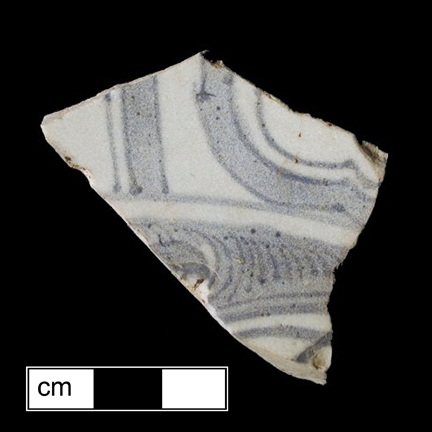
Chinese Hard-Paste Porcelain
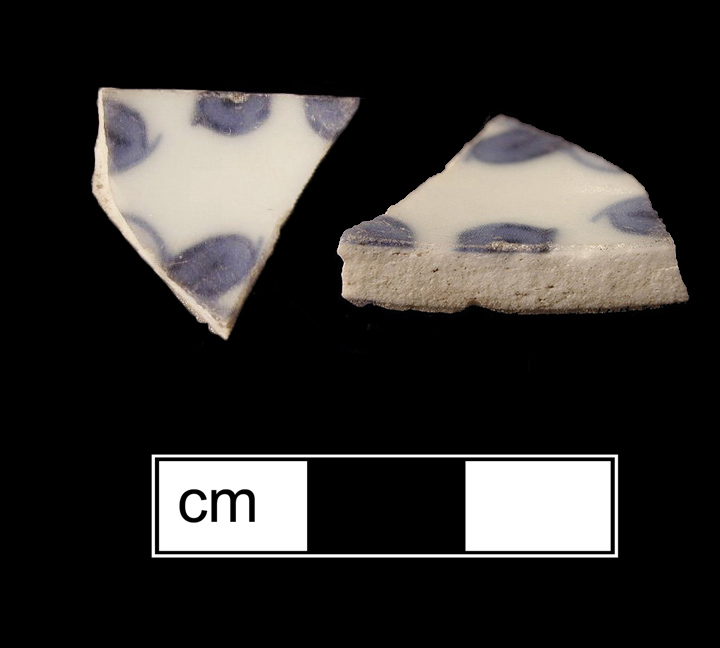
Rhenish Stoneware