Clifton (18ST794)
Site History
The Clifton (18ST794) site is an early to late Woodland artifact scatter, a 17th-century/contact period plantation, and a late 18th-early 19th-century plantation located near Avenue Branch in St. Mary’s County, Maryland. Historical evidence indicates that the site was part of the 17th-century manor of Thomas Gerrard, one of the colony’s wealthiest individuals. It is possible that the Clifton Site was a residence of Thomas Gerrard, but his landholdings were vast and he had many tenants, so this is not a certainty. If it is Gerrard's house, it may be that he stayed there only a relatively short time. Lois Carr places Gerrard’s home plantation of Mattapany close by. Gerrard lived at Mattapany from 1642 until 1664. Other family members later owned it. It is likely that the main residence building moved during this time, so the Clifton Site could be a Gerrard home.
Archaeological Investigations
This site was initially recorded in 2004 by archaeologists from Jefferson Patterson Park and Museum. The owners had been collecting artifacts from the site for a while, with 17th-century domestic material coming from the horse paddock area in bare soil patches exposed by wear from the horses' hooves. To the east of the paddock is a narrow overgrown area between a field edge and the marshes of Avenue Branch. A fox hole here revealed a concentration of oyster shell and fire cracked rock. It was not clear if the shell concentration is related to the colonial occupation here or is part of an earlier Woodland occupation. The owner's collection contains little prehistoric material. A Yeocomico or Townsend Plain sherd is present, along with two terra cotta pipe fragments, but these could represent 17th-century trade items rather than precontact occupation of the site.
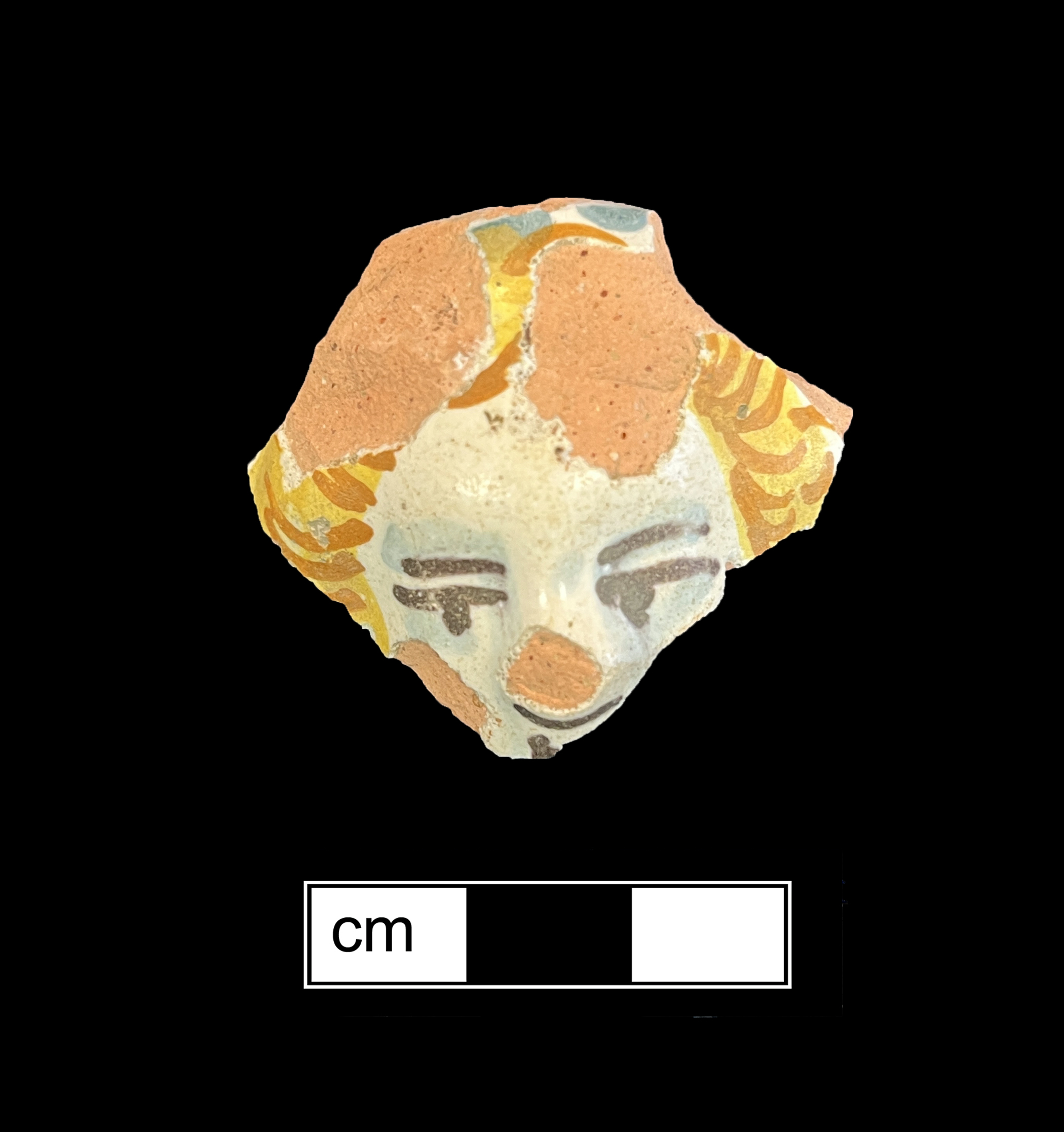
Because the site area appears to be fairly small, it is possible that the occupation here did not last a long time, or that the homelot was fenced or palisaded in a way that kept trash from being widely dispersed. Some of the artifacts found at the site suggest the residents there were people of some means. For example, an iron pike head has been recovered, along with an unusual tin glazed earthenware vessel sherd molded into a clown-like face, possibly of Italian or French origin. Other artifacts found in the horse paddock area include Rhenish Blue & Gray and Rhenish Brown stoneware, blue & white and polychrome tin glazed earthenware, large-bore white clay pipe stem and bowl fragments, terra cotta pipes, blown wine bottle glass, European flint fragments, handmade brick, bone, and oyster shell.
In 2012, a systematic shovel test survey by students from St. Mary's College of Maryland led by Dr. Julia King investigated the horse paddock to develop spatial distributions of artifacts on the 17th-century component of the site. Artifacts recovered included 2 unidentified shell tempered and 6 unidentified tempered native ceramics. Historic artifacts included pipestems, bottle glass, ceramics, brick, and nails. A total of 13 native made red clay pipes were also recovered. Ceramics include tin-glazed earthenware, North Devon gravel tempered wares, locally made Morgan Jones pottery, lead glazed earthenwares, Rhenish Brown and Rhenish Blue and Gray sstoneware, as well as 26 white refined earthenwares and a single 19th-century stoneware sherd. Nails recovered were predominantly wrought when identifiable, though 1 cut and 2 wire nails were also recovered. Of note were 5 Dutch yellow brick fragments recovered, though the brick recovered was overwhelmingly red brick. A lead seal recovered bore the inscription “VON 46” presumably for Devon or Devonshire and the year of 1646.
In 2015, a surface survey was conducted in a cultivated field across Montfort Road from the 17th-century core of the site. The boundaries of the original 18ST794 site were expanded west to include areas of overlap on the overall multi-component site. Artifacts observed (but not recovered) included both prehistoric and historic diagnostics. Though the observed prehistoric component consisted mainly of a lithic scatter, a single Piscataway or Rossville point was found, suggesting an occupation date from at least the Early Woodland period. Diagnostic historic material dated primarily to the late 18th and into the early 19th centuries.
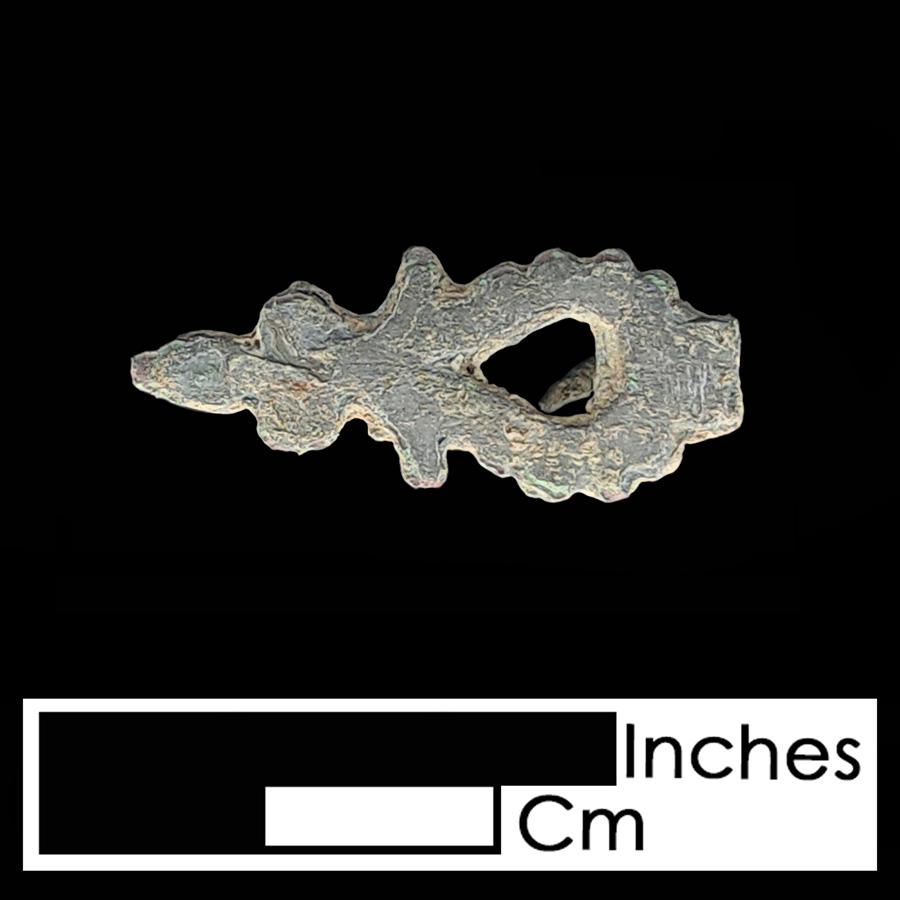
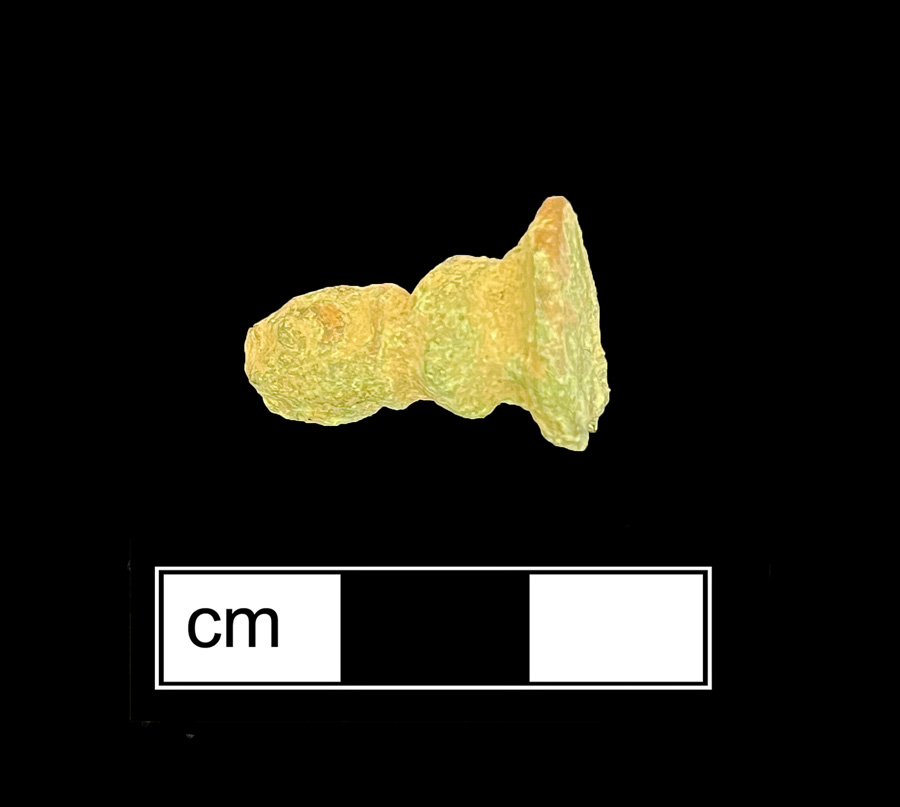
Also in 2015, six test units were excavated in the 17th-century core of the site. A number of prehistoric, contact, and historic materials were recovered. These units were excavated in conjunction with a magnetometer and ground penetrating radar survey conducted by Dr. Tim Horsley. Units were placed strategically where high concentrations of particular artifacts were found during the 2012 STP survey and in locations of interest identified by the geophysical survey. Native Ceramics recovered included types dating from the Early through Late Woodland period, such as Popes Creek or Accokeek, Potomac Creek, Moyaone, Townsend, and Yeocomico wares. Colonial ceramics included Morgan Jones ware, North Devon sgraffito, North Devon gravel tempered, Borderware/Surry ware, Rhenish Blue and Gray and Rhenish Brown stoneware, and English Brown stoneware. A total of 24 refined earthenwares were also recovered in the excavation units. As with the results from the shovel tests, nails (where identifiable) consisted of the wrought variety. In addition to red brick, other architectural elements included fragments of yellow brick, daub, plaster, and worked sandstone. Tobacco pipe bore measurements ranged from 6 to 9/64ths of an inch, with an average bore of 7.77. Small finds included a copper alloy pipe tamper, and possible copper alloy triangles.
References
2016 In Search of Thomas Gerard: Archaeological Investigations at the Clifton Site, Near Bushwood, Maryland. (St. Mary's College of Maryland) MHT # ST 277.
2015 An Assessment and Review of the Archaeological Resources of St. Mary’s County, Maryland. (St. Mary's College of Maryland) MHT # ST 273.