Oxford (18TA3)
Site History
The Oxford site (18TA3) is a multi-component site of consisting of a Late Archaic and Woodland period base camp, a shell midden, a Webb Phase (Middle Woodland) burial site, and an18th-19th century farm building on the Tred Avon River in Talbot County, Maryland. The site has been destroyed by residential construction.
Archaeological Investigations
In 1969, Chuck Fithian and Keith Staton collected from the site and reported it to the Maryland Geological Survey. Most of the artifacts, including celts and adzes were found in two adjacent plowed fields. In 1970, archaeologists Ron Thomas and Tyler Bastian, staff of the Maryland Geological Survey, visited the site and collected artifacts. A few shell concentrations were noted in the plowed field, suggestive of pit features. Artifacts from the site were analyzed by Dr. Jay Custer in 1984.
In 1993, Richard Hughes and Dennis Curry, of the Maryland Historical Trust (MHT), visited the site after being informed that human skeletal remains were eroding out of the bank. Hughes and Curry partially excavated what appeared to be three human burials that were in danger of eroding out of the bank. A yellow jasper point was found at edge of one bundle burial. The site was estimated to date to approximately A.D. 600 to A.D. 900 based on similarity to Delaware's Island Field site.
In late 1994 MHT conducted ground-penetrating radar (GPR) survey of the Oxford Site to determine the capabilities of this technology for locating precontact features, particularly grave pits. Features indicative of pits were indeed identified at the site. Human remains were found on the beach by a member of the public in 1997.
In 2001, URS conducted a Phase I of the 245-acre property, combining controlled surface collection and 38 shovel test pits at 15m intervals. The collection recovered from 18TA3 was rich in ceramics representing the Late Woodland period with smaller amounts depicting an Early Woodland and Middle Woodland component. Projectile points recovered represent Early Archaic and Middle Archaic components as well as Early through Late Woodland periods. Other material culture categories from The Oxford Site include mid- to late-stage biface fragments, flake debitage, a grooved axe, and a portion of a pestle. The majority of the diagnostic materials date to the Late Woodland period. Most of the diagnostic materials date to the Late Woodland period. If analogous to site 18TA79, located to the east, Late Woodland component marked by the Townsend ceramics was the largest occupation of the site area.
A total of 52 sherds were recovered from the surface of the site. No sherds were found from shovel test contexts. Ware types represented in the collection are Early Woodland Accokeek, Middle Woodland Mockley, and Late Woodland Townsend, with the majority belonging to the latter.
In 2004, the historic component of the site – an 18th- to 19th-century foundation – was first documented. A north and east wall of the structure's brick foundation was present. Burnt wood was located in the middle of the two walls with fragments of undeterminable glass, one piece of broken salt-glazed stoneware, and Chinese porcelain. Wall widths were estimated at between one and two feet.
References
2001 Phase I Archeological Survey at Plimhimmon Farm, Talbot County, Maryland. (URS Corporation) MHT # TA 56.
Associated Artifacts
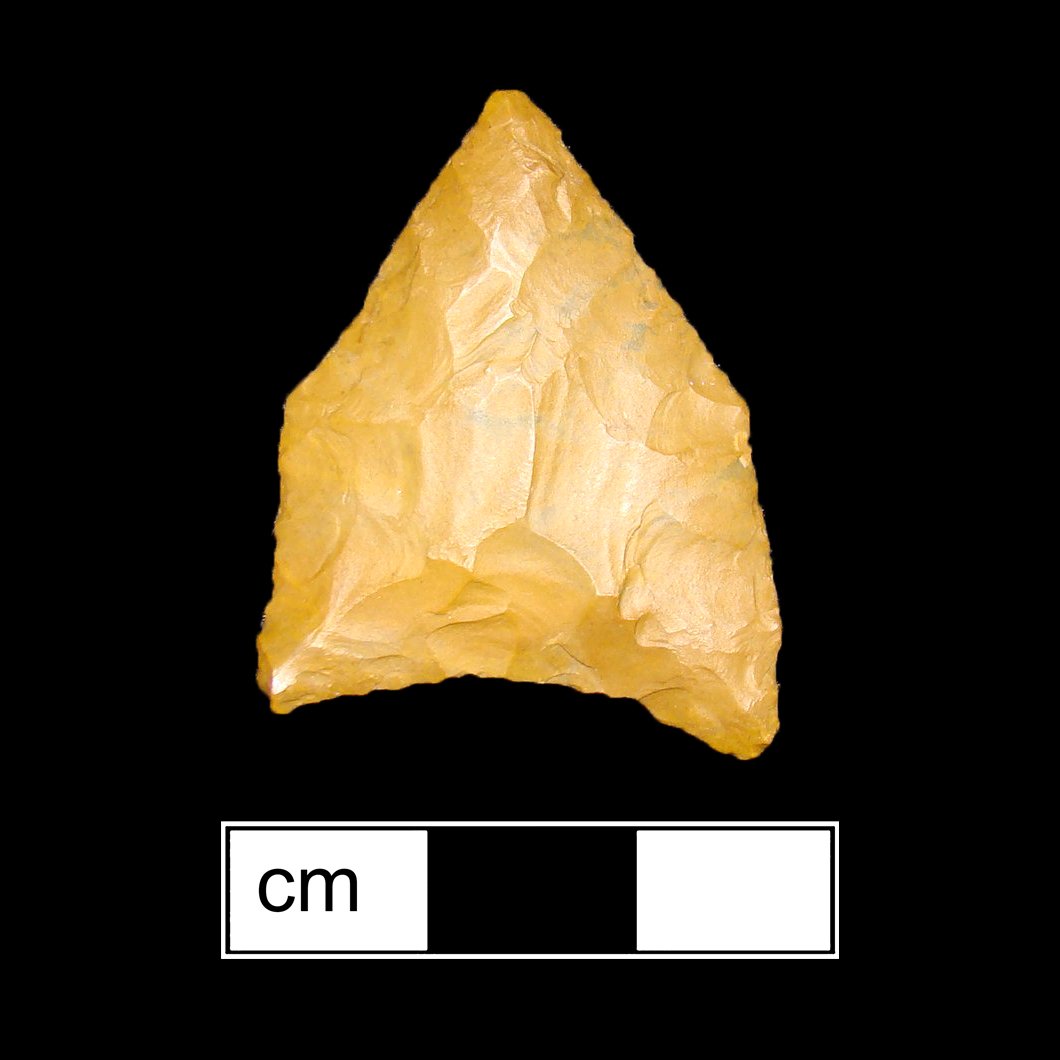
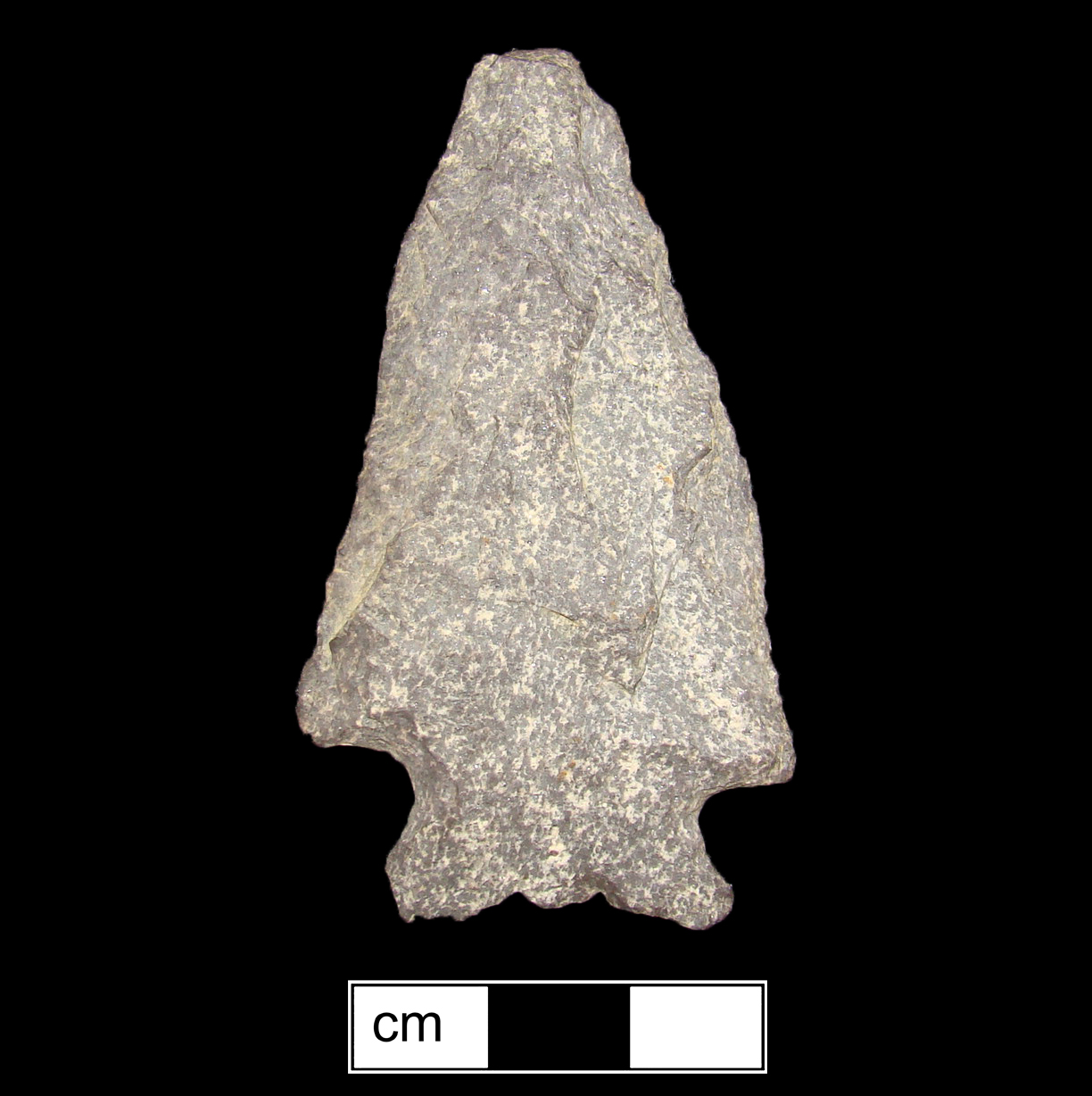
Jacks Reef Pentagonal
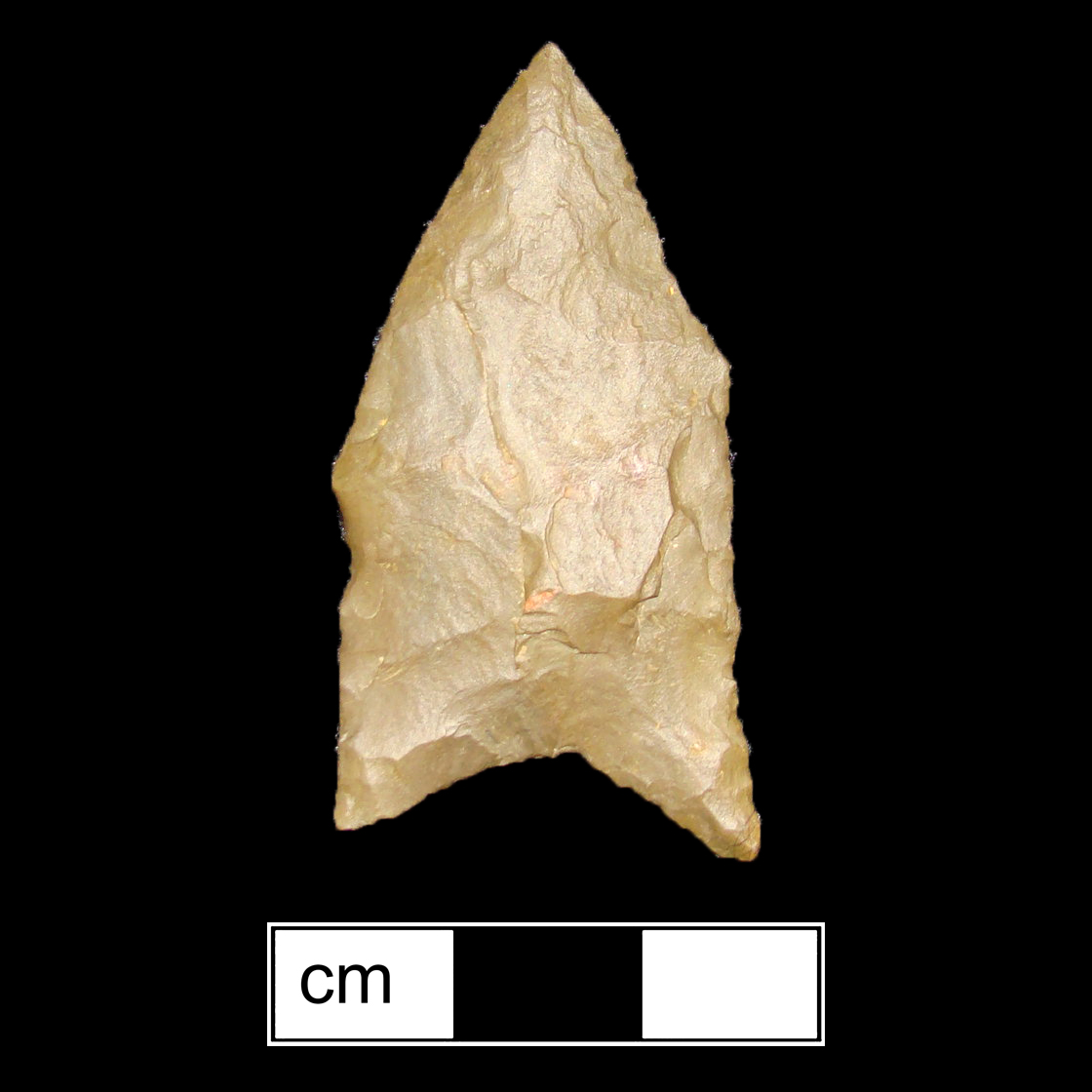
Jacks Reef Pentagonal
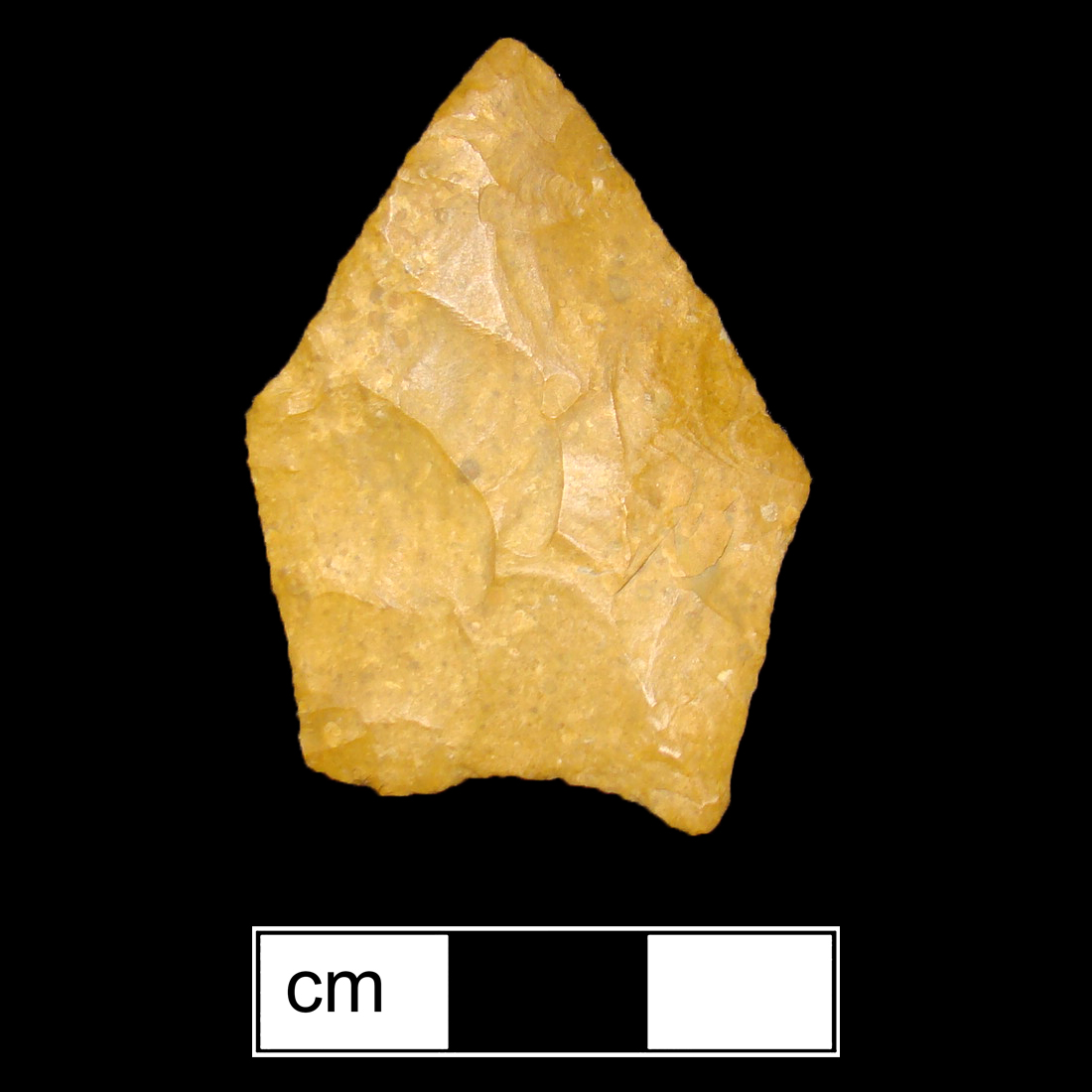
Jacks Reef Pentagonal
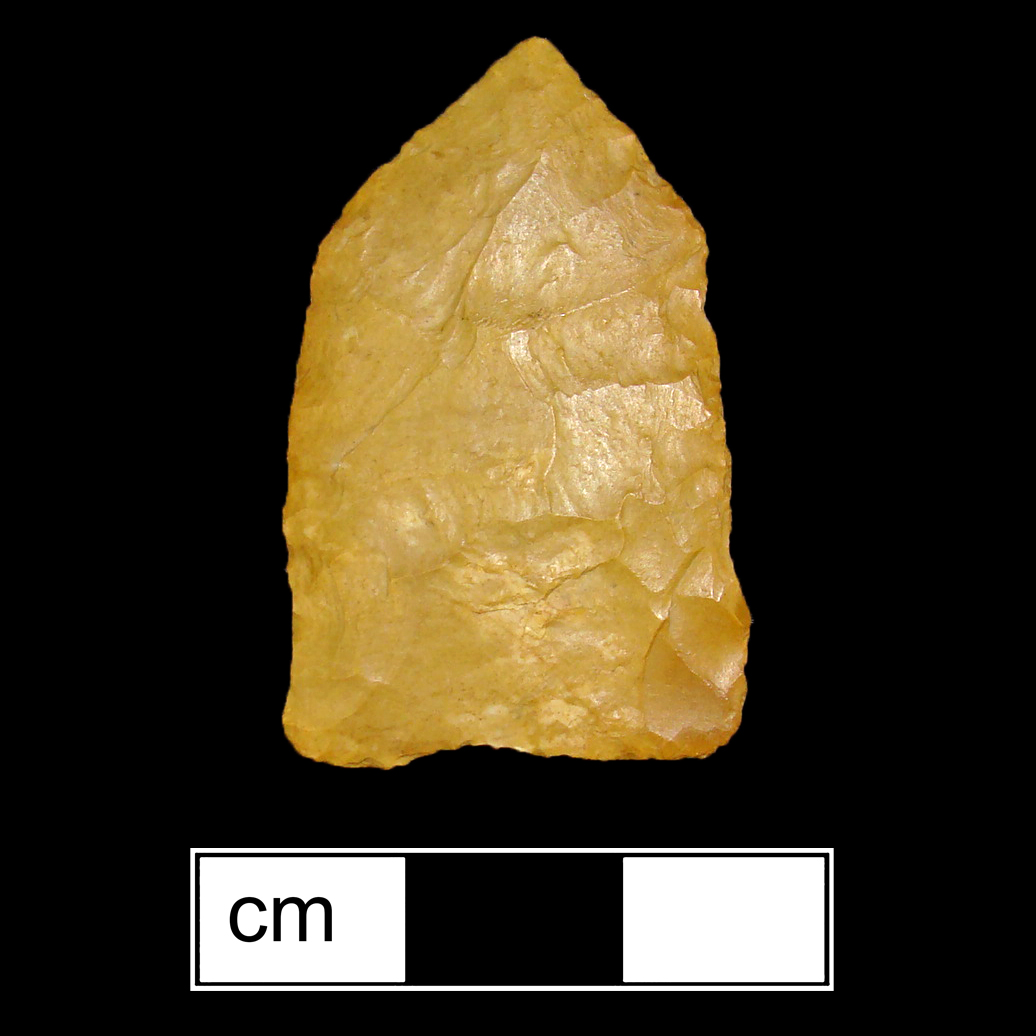
Jacks Reef Pentagonal