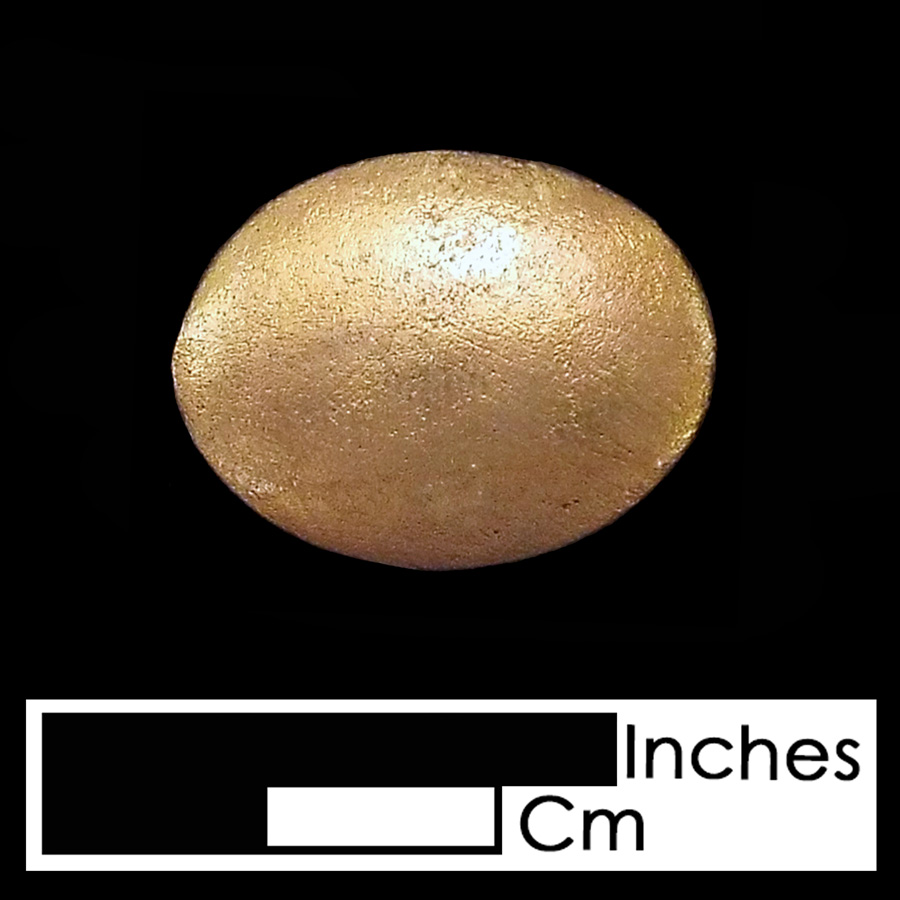
Civil War Fort (44GL200)
Site History
The Civil War Fort site (44GL200) is a Civil War period fort site located overlooking the York River on the campus of the Virginia Institute of Marine Science (VIMS) in Gloucester County, Virginia. An 1862 plan of the fort depicts the general layout, including gun emplacements and the locations of a well and a bombproof. The site is part of the Gloucester Point Archaeological District.
Archaeological Investigations
Archaeological investigations of 44GL200 were conducted by archaeologists David Hazzard and Nick Luccketti of the Virginia Division of Historic Resources in 1981. This work was done prior to construction work on the campus of VIMS.
Fragmentary remains of the10-acre fort are still visible above ground. Two portions of the fort's original five bastions survive outside the project area, and excavations pinpointed the location of a third one east of Maury Hall. Although much of the overlying fill associated with the Civil War fort had been mechanically removed, one of the extant earthworks near the point of the southeast bastion and fortification ditches was sectioned to gain information on construction techniques. Stratigraphy on the inside of the earthwork indicated the presence of a possible banquette (fire step for infantry behind a parapet) or terreplein (enlarged banquette built for artillery).
Cutting the section through the earthwork also provided a profile view of a Revolutionary War fortification ditch with an internal palisade. An earlier palisade line to a possible 17th-century bastion and postholes to a fenceline or post building were also revealed in the section. Also revealed in the section were the remains of a robber's trench to a 10 × 10 foot building. The orientation and dating of the artifacts suggested a link to the Civil War fort. The remains of a possible powder magazine were also recorded.
During the construction of a drain field, nearly 100 features were also discovered within the confines of the Civil War bastion. These features included postholes, ditches, subfloor pits, a well, trash pits and a brick structural foundation. How many of these features were associated with the fort itself was not determined.
References
2004 Uncovering Old Gloucestertown: Archaeological Survey and Data Recovery at the College of William and Mary’s Virginia Institute of Marine Science, Gloucester Point, Virginia. GL-085.