Keyser (44PA01)
Site History
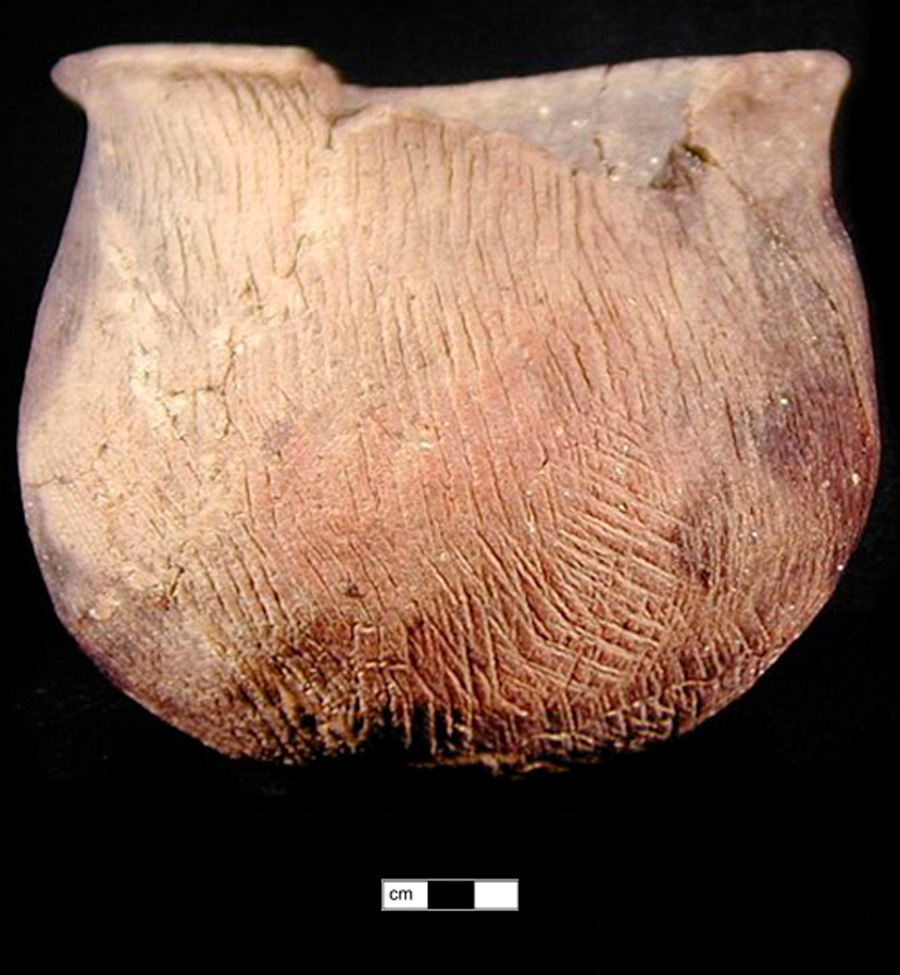
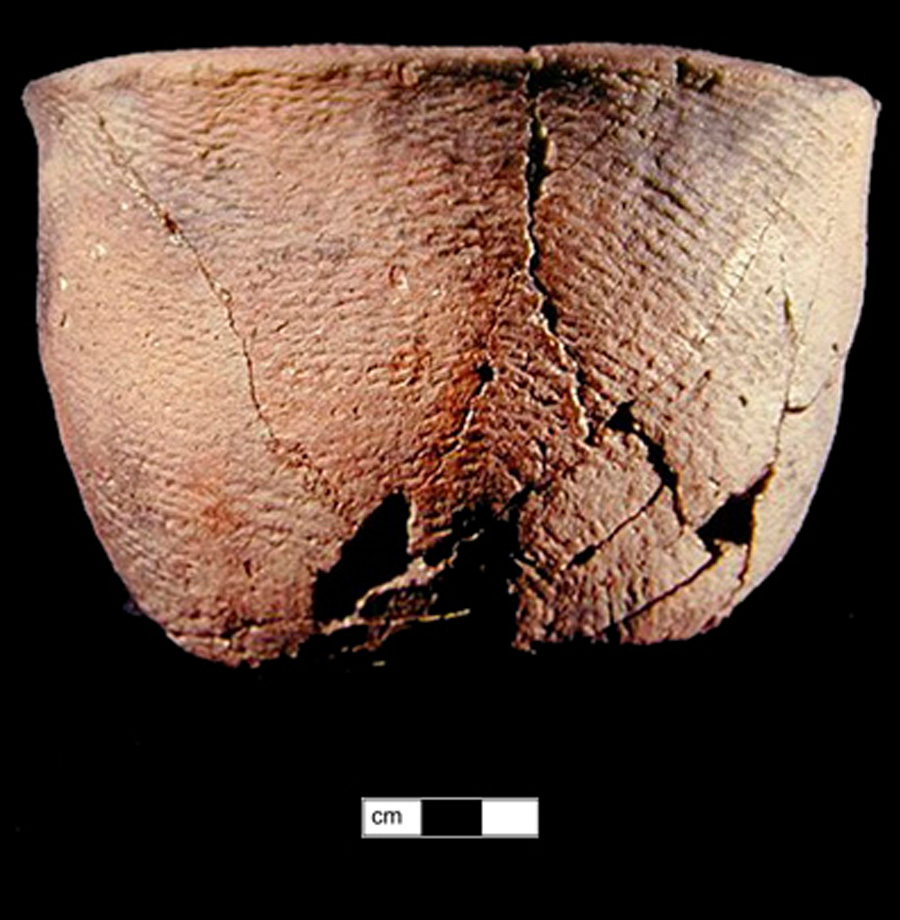
The Keyser site (44PA01) is a precontact period Early to Late Woodland site located near the South Fork of the Shenandoah River between Luray and Front Royal in Page County, Virginia. The most significant part of the site is a Late Woodland palisaded village. The Keyser Culture and Keyser Cord-Marked pottery were first defined at this site (Manson et al. 1944). The site is important because it provides data that addresses population movements, exchange relations, inter-group violence, and coalescent communities in the Shenandoah.
Archaeological Investigations
The site was first discovered by Carl Manson and archaeologist Howard MacCord in 1939. After finding pottery and animal bones on the surface of an agricultural field, the two men rented a one-acre parcel to conduct excavations. During their excavation, they uncovered remnants of a village, almost 100 refuse pits, and human burials.
In the early 2000s, Radford University and the Archaeological Society of Virginia conducted excavations at the site for five seasons. Radiocarbon dating provided dates between 1420 and 1600 for organic materials recovered at the site. The excavations recovered three major types of pottery wares: Potomac Creek, Page wares associated with the Mason Island peoples, and Keyser wares, associated with the Luray Complex peoples. The site also contained evidence of deer hide processing and exchange relations involving shell and copper beads (Barber 2020).
References
2020 Odocoileus Virginianus Metatarsal Beamers at Keyser Farm and Trigg Sites: Implications of Long-Distance Exchange. Journal of Middle Atlantic Archaeology.
1944 Culture of the Keyser Farm Site, Michigan Academy of Science, Arts & Letters XXIX:375-419.