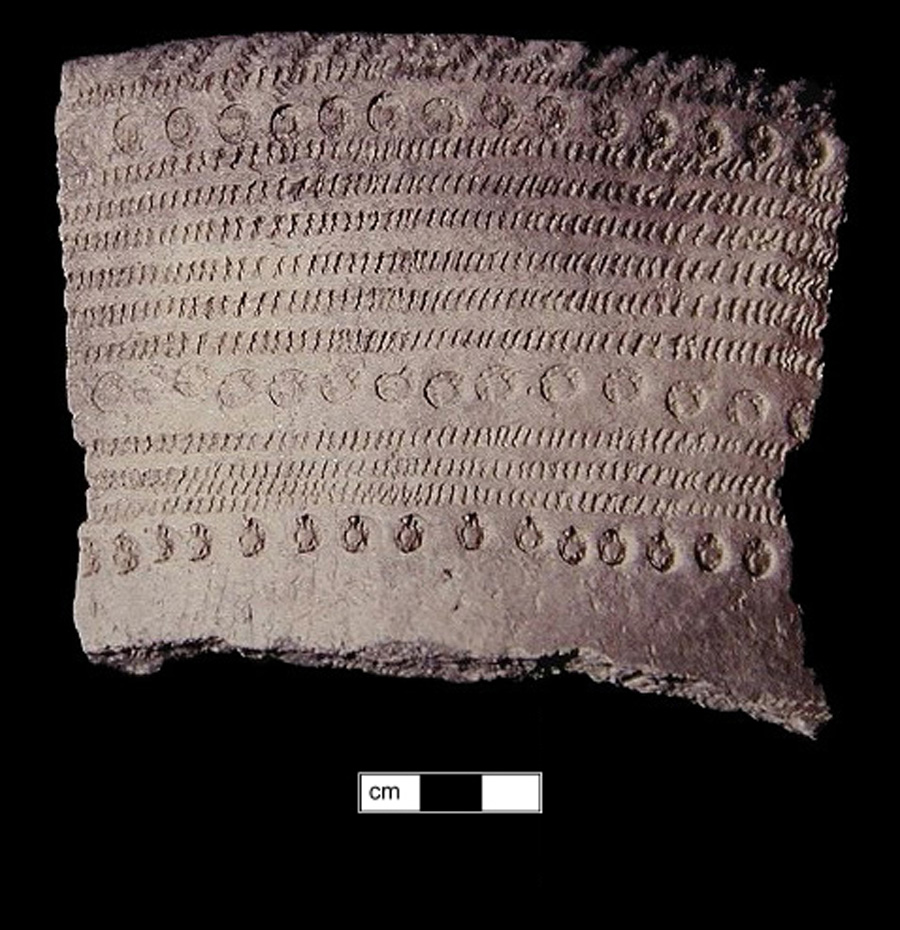
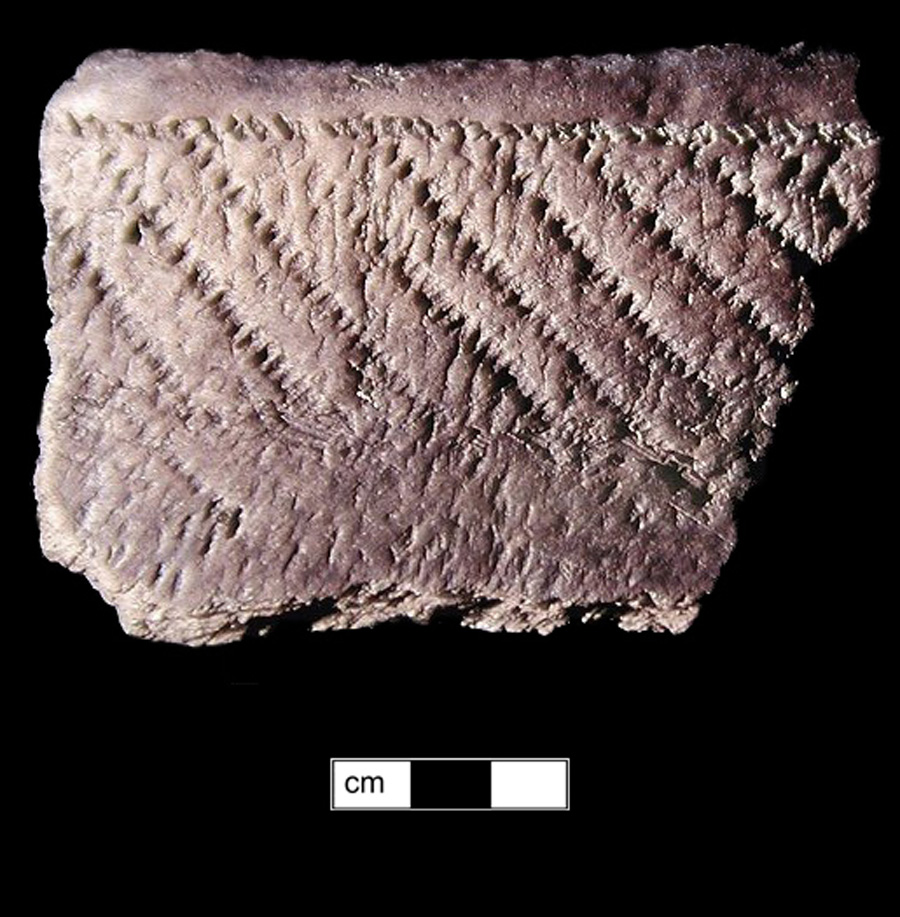
Potomac Creek (44ST2)
Site History
The Potomac Creek site (44ST2) is the name of a Patawomeck/Potowomeke village site on Potomac Creek in Stafford County, Virginia. Located atop a high bluff, the site features a circular enclosure or palisade, suggesting it was defensible fortification. The site was likely first occupied around 1300 AD and abandoned sometime just prior to European contact. Multiple palisade lines within the side indicate that during the site's occupation they were erected/replaced at different times. It has been suggested that the people who lived at the site were possibly Iroquoian Owasco immigrants from the Piedmont who were pushed to the Coastal Plain, though the site shares many similarities and parallels to sites of Algonquian-speaking people such as the Piscataway at the Accokeek Creek site (18PR8). Today the site is located within a housing development.
Archaeological Investigations
Avocational archaeologists Hugh Stabler and Richard G. Slattery first identified the site in 1934, who began initial surveys of the site. In 1935 the survey project was continued by another avocational archaeologist, Judge William J. Graham in consultation with archaeologist T. Dale Stewart of the Smithsonian Institution. Though Graham died in 1937, formal excavations were overseen by Stewart between 1938 and 1940. Additional excavations followed by Carl Manson in 1957 and Howard MacCord in 1983.
In 1996 the Virginia Department of Historic Resources hired a CRM firm, Cultural Resources, Inc. (CRI) to conduction investigations ahead of the installation of a septic drain field in area that had been previous excavated by Graham and Stewart. Archaeologists from CRI stripped plowzone over the septic area and exposed palisade, trench, ditch, hearth, and post features. Followup investigations were performed beyond the septic area by the William and Mary Center for Archaeological Research (WMCAR) later that same year. WMCAR archaeologists mapped and excavated at least 50% of the exposed features through systematic sampling, including collecting soil samples for flotation. Samples collected for radiocarbon dating produced date ranges between 1260 and 1655 AD.
A total of 24 features were identified as part of the work by WMCAR, which produced over 18,000 artifacts. Palisade related features included eight trench features (Features 3-7, 9-11) along with two palisade post lines (Features 2 and 8) and a ditch feature (Feature 1). Two extensions (Features 15 and 24) off of the ditch feature were also excavated, one of which (Feature 15) was interpreted as a borrow pit. An additional palisade trench (Feature 27) was not excavated. Other palisade related architectural features included two structural trenches (Features 21 and 23). Within the southeastern part of the site a rectilinear outline of a structure was identified as Structure 1. Other features included five refuse pits and five non-cultural features.
References
1998 The Potomac Creek Site (44ST2) Revisited. Virginia Department of Historic Resources, Research Report Series No. 10. Richmond, VA.
Associated Artifacts
Potomac Creek
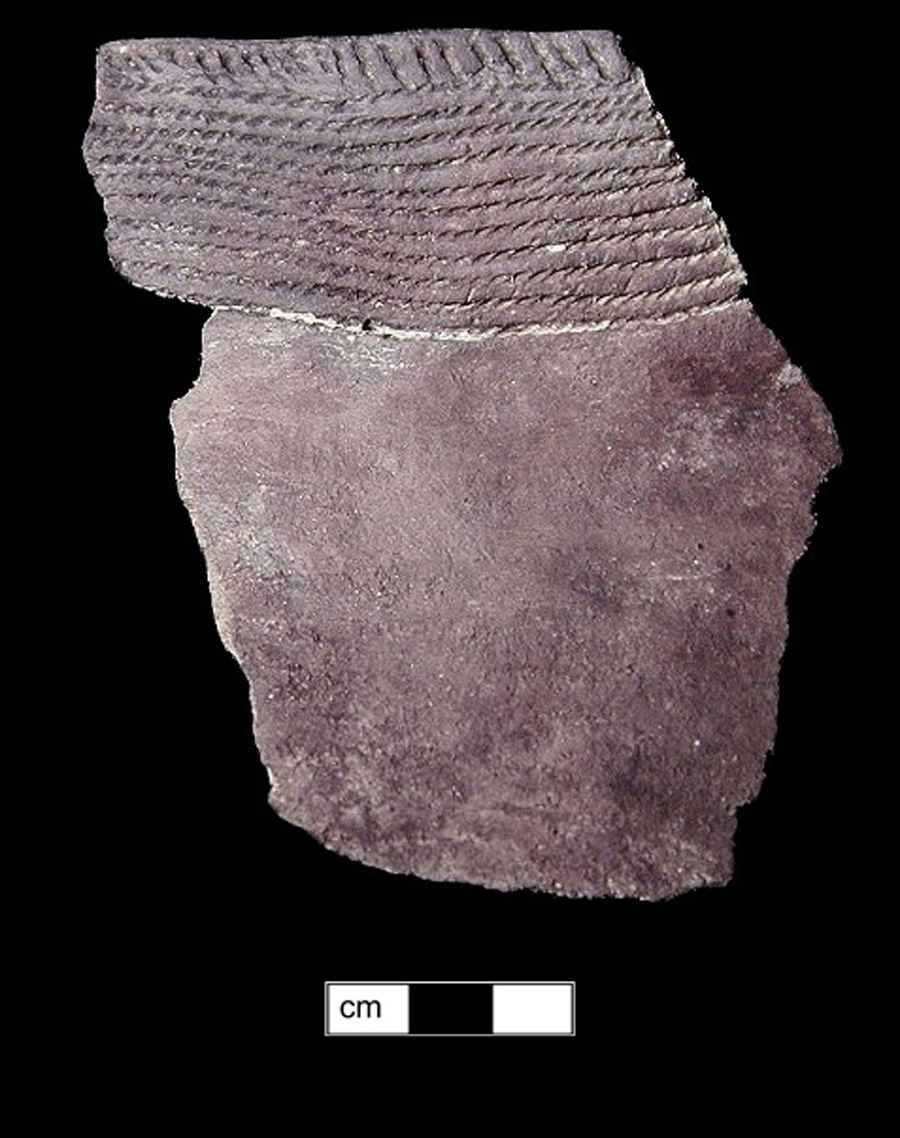
Potomac Creek
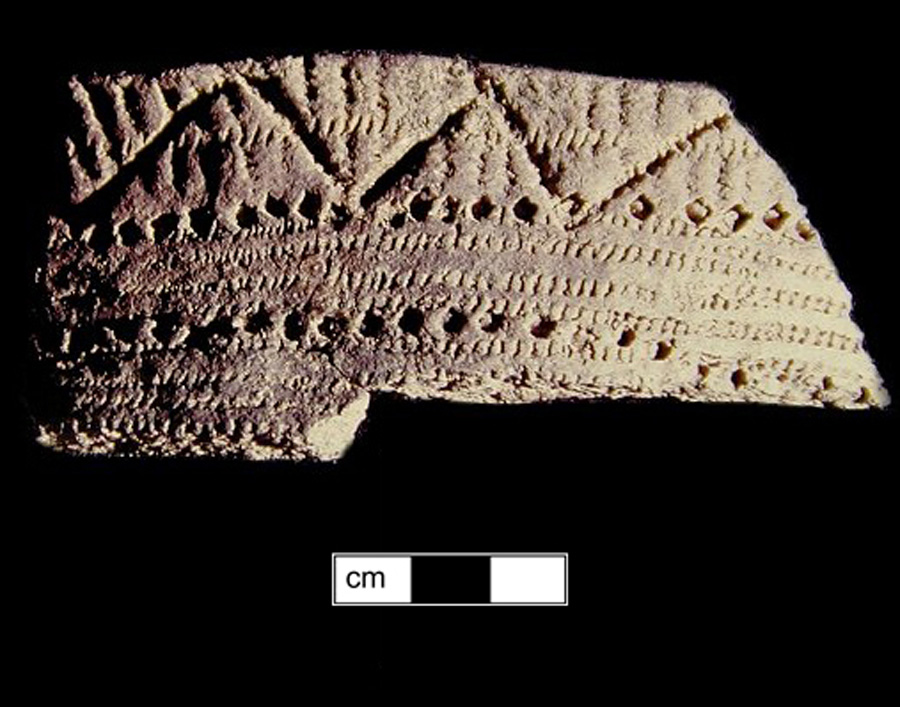
Potomac Creek
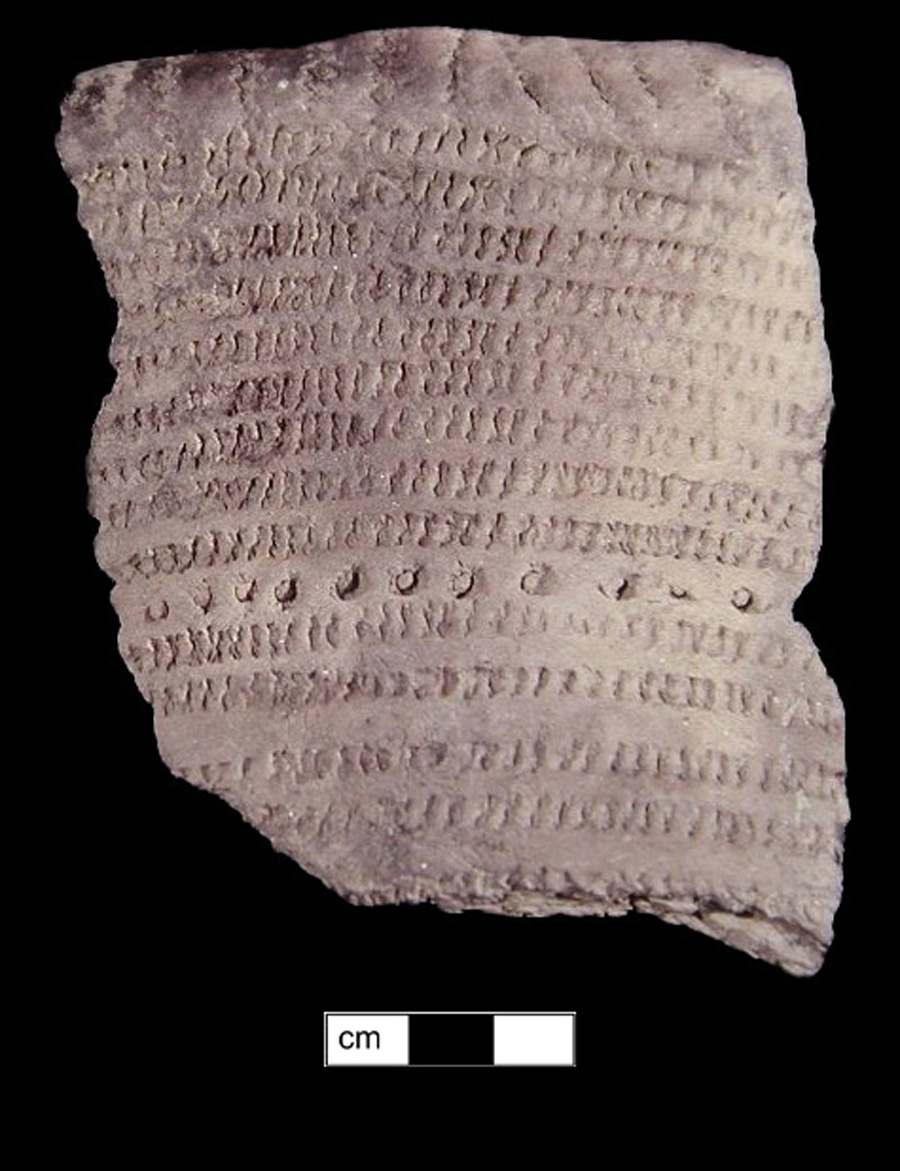
Potomac Creek