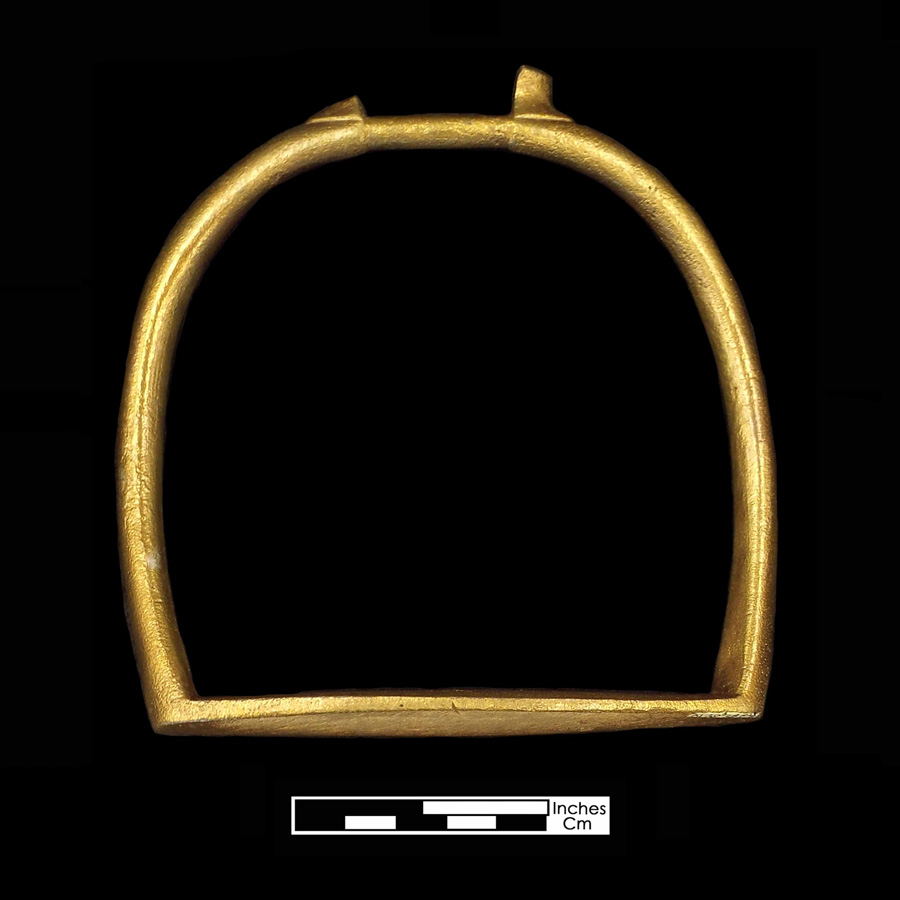
Ravenscroft (Colonial Williamsburg Foundation Block 28FA)
Site History
The Ravenscroft site is in the Historic Area of Colonial Williamsburg, at the intersection of Nicholson and Botetourt Streets. It spans two colonial period lots (nos. 267 and 268) created when the Trustees of the Town of Williamsburg divided the newly established town into half-acre parcels at the beginning of the 18th century. Prior to the establishment of Williamsburg, the land was owned by John Page, a prominent government official.
Lots 267 and 268 were purchased from the town trustees in 1713/14 by Christopher Jackson. The following year, Jackson sold Lot 268 to Thomas Ravenscroft. Dudley Digges acquired three lots (266, 267 and 268) by 1731 and appears to have leased one or more of those lots to Robert Wills, who operated a tavern there. The value of the property had increased significantly since its original purchase from the trustees, suggesting substantial improvements.
From the late 1730s to 1826, the property changed hands a number of times before coming under the ownership of the McCandlish family and in 1865 the Vest family.
Archaeological Investigations
The first Colonial Williamsburg Foundation excavations on Lots 267 and 268 took place under the direction of James Knight in 1954. Diagonal trenches were excavated across the lot, uncovering the subsurface traces of brick foundations denoting two structures – one on each of the two lots. The structure on Lot 267 measured 14 × 16 ft and contained a brick cellar whose fill was removed by Knight and his crew. Analysis of the artifacts from the cellar fill indicated that the building continued to stand until the mid- to late-eighteenth century.
The structure on Lot 268, which appeared to have been built in the early 18th century during the Ravenscroft tenure, measured 50 × 24 ft. and also contained a cellar. A kitchen or office building once stood west of the dwelling. The dwelling was destroyed by fire in the late 19th century.
Archaeological excavations were conducted by the Colonial Williamsburg Foundation at the Ravenscroft site in 1997 and early 1998 prior to reconstruction of a tenant house on Nicholson Street in the Historic Area. The plowzone was mechanically stripped, followed by excavation of intact archaeological features.
The 1998 excavations uncovered the remains of a late 17th- or early 18th-century brick foundation and cellar on Lot 267, as well as a thick refuse deposit dating from the first quarter of the 18th century. This trash deposit, which was capped with a layer of clay around 1725, was found in the ravine that transected the property. In addition to the structure, the work revealed a narrow ditch feature dating to the Middle Plantation period (pre-1699) of Williamsburg’s history. The archaeological, architectural, and documentary evidence indicate that the building on Lot 267 could have been built prior to the establishment of Williamsburg in 1699 or could have been constructed after Christopher Jackson purchased the property in 1713/14.
References
1998 The Ravenscroft Site: Archaeological Investigation of Colonial Lots 267 and 268. Colonial Williamsburg Foundation Department of Archaeological Research. Electronic resource accessed May 7, 2026 at https://research.colonialwilliamsburg.org/DigitalLibrary/view/index.cfm?doc=ResearchReports%5CRR1678.xml&highlight=.