Shields Tavern (Colonial Williamsburg Foundation Block 9)
Site History
The Shields Tavern (also sometimes known as Marot’s Ordinary) site is in the Historic Area of Colonial Williamsburg, along Duke of Gloucester Street adjacent to the reconstructed Capitol building.
The reconstructed tavern occupies colonial lot 25 and part of colonial lot 26. During the early 18th century, James Shields owned colonial lots 24 and 25, and in 1708, he sold lot 25 to Jean Marot. Marot was granted a license to run an ordinary on May 24, 1707. Although there is no record of his owning property in Williamsburg prior to his purchase of lot 24 in 1708, it is possible that he was leasing land, perhaps colonial lot 24, upon which to run an ordinary. Marot renewed his ordinary license each year until his death in 1717. Lot 25 and its associated structures operated as an ordinary by Marot and his heirs from 1708 until the middle of the 18th century.
Marot's property was willed to his wife and daughters and the inventory showed furnishings for a large establishment: 24 beds, 19 tables, more than 50 chairs, and a large supply of liquor. This inventory also mentioned other features on the property, such as the Milk house, the Iron-work in the Kitchen Chimney, and the Kitchen Shed.
Marot's widow married Timothy Sullivant and continued the ordinary at Marot's. Timothy Sullivant died around 1730, and Anne Sullivant operated the business until she "retir'd to the Country" sometime prior to August 25, 1738. After Anne Sullivant died in 1742, the estate was apparently divided between her three daughters, for, by 1745, James Shields (husband of Anne Ingles Marot) was operating an ordinary on the property. He continued on the lot until his death in 1750. Anne Shields remarried in July of 1751, to Henry Wetherburn. After her remarriage, Shield's property reverted to the Shields' son, James, who was a minor at the time. Wetherburn advertised the ordinary for rent in August of 1751, and it was leased the following month to Daniel Fisher, a tea, coffee and wine merchant from London. Fisher opened a tavern there that same month but apparently had little success with his business. Besides operating a tavern, he also ran a store there, selling coffee, tea, and wine.
Fisher was still occupying the property in April of 1754, when the east end of the house was damaged by fire. Fisher left for Philadelphia in 1755 and information about the property from 1755 to 1770 is scarce, although it is known that James Shields III owned it at this time. It is probable that the house was leased during this period. By August of 1770, James Shields had sold the property to William Goodson, merchant. Goodson indentured part of the property to John Draper, Farrier and Blacksmith and the eastern end of the house to Dr. John de Sequeyra, in 1772. These rooms adjoined a small shop occupied by Thomas Craig, and the rooms and passages above them eastward, with a small adjoining yard and all house kitchens, and shops, except Craig's shop, and half the garden and use of the well. Whether there was any of the property left for Goodson's use is not known. Goodson died in 1781, leaving the property to his wife. She died later that year, and her executors continued to rent the eastern part of the property on Duke of Gloucester Street to Dr. de Sequeyra for a number of years, as he was still there in 1790. In 1799, William Goodson, son of William Goodson offered the property on DOG street for sale. It was not sold immediately, for in 1801, taxes were still being levied on Mary Goodson's estate for the property. The original Shields Tavern burned in 1858.
Archaeological Investigations
Since the early 1950s, the Colonial Williamsburg Foundation has conducted two excavations at the Shields Tavern property. The first work took place in 1951 under the direction of James Knight. This work located foundations for the western end of Marot's Ordinary, with the eastern portion of the building located under a later standing and occupied home. This structure was removed the following year, with additional archaeological excavations beginning in March of 1952. The remainder of the tavern structure was located and recorded and cross trenching of the entire yard south of the tavern took place. Other features recorded during the 1952 work were a well, stillhouse, dairy, storehouse, two necessary houses, and two outbuildings of unknown function.
Proposed construction of an underground kitchen in preparation for converting Marot's Ordinary into a functioning fourth tavern prompted an excavation in 1985-1986. The excavation took place in the rear yard of the property. Archaeological findings from this work included separate sheet refuse layers associated with the Marot and Shields’ ownerships, a circular feature interpreted as a cock fighting ring, a dog burial, a chicken burial, a horse burial, forges associated with the Draper occupation, a well, fence lines, planting beds, walkways, work yards, and a possible stable.
Detailed analysis of ceramics, glass and other material culture, as well as faunal remains revealed evidence of tavern operations at the site throughout the 18th century.
References
1990 Archaeological Investigations of the Shields Tavern Site, Williamsburg, Virginia. Colonial Williamsburg Foundation Library Williamsburg, Virginia.
1985 Shields Tavern Archaeological Report, Block 9 Building 26B Lot 25 Originally entitled: "Marot's Ordinary, Archaeological Briefing". Colonial Williamsburg Foundation Library Research Report Series – 1141. Colonial Williamsburg Foundation Library Williamsburg, Virginia.
Associated Artifacts
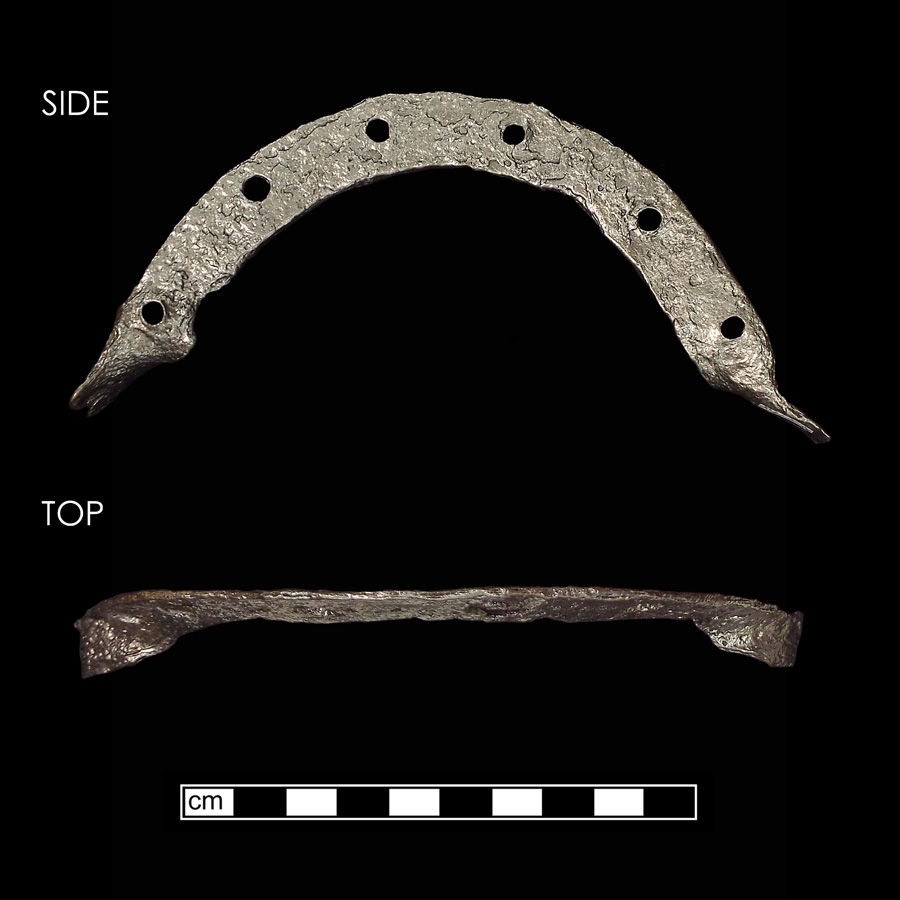
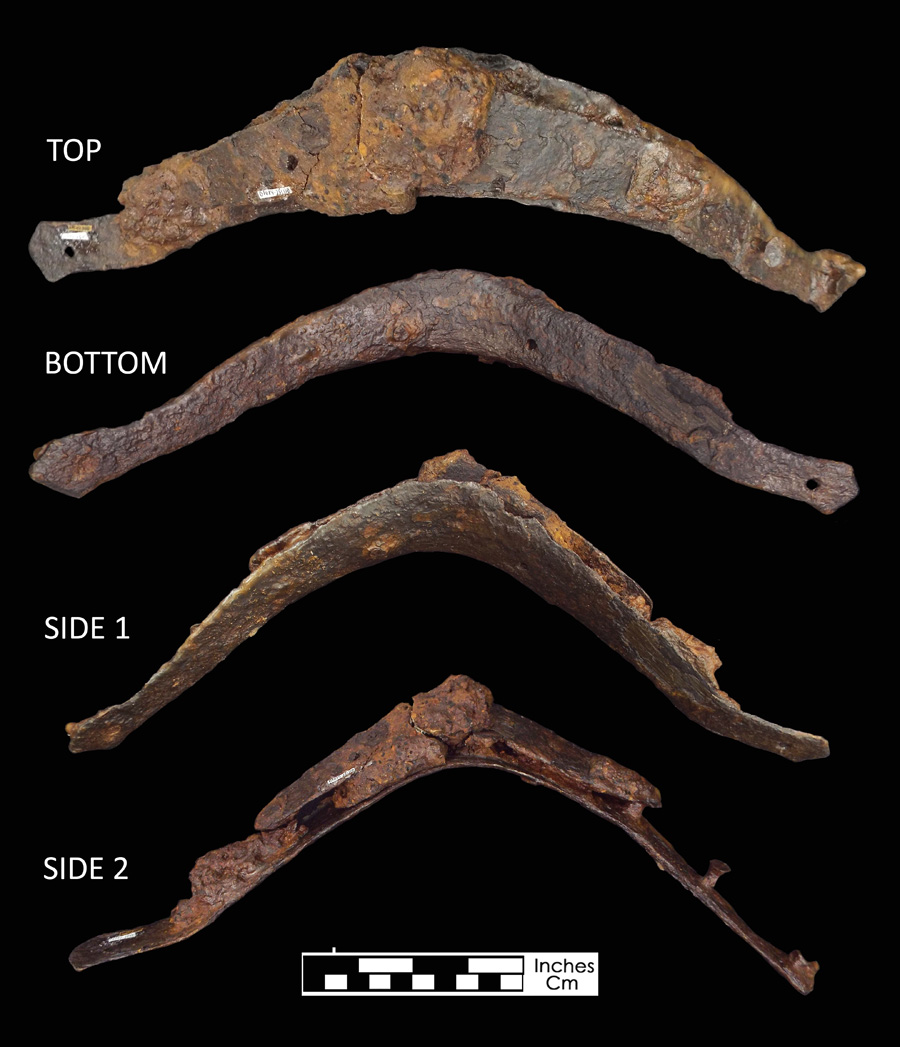
Curb Bit Bosses

Curb Bit Bosses
Curb Bit Bosses
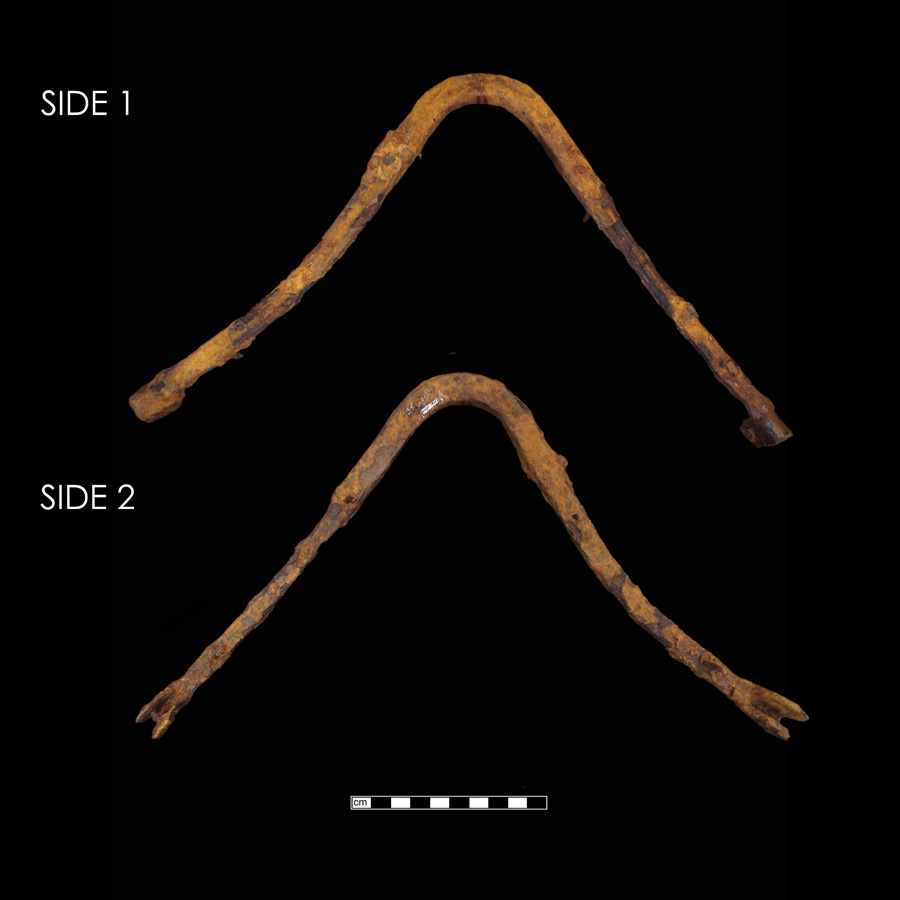
Saddles