Thomas Everard (Colonial Williamsburg Foundation Block 29)
Site History
The Thomas Everard site is in the Historic Area of Colonial Williamsburg, along Palace Green adjacent to the reconstructed Governor’s Palace. The frame dwelling house occupying the property is an original 18th century structure which has been restored by the Colonial Williamsburg Foundation.
Gunsmith John Brush purchased Lots 165 and 166 in 1717, and in compliance with the Building Act of 1705, had constructed a center-passage frame house by 1719. Upon his death in 1726, the property passed into the hands of his unmarried daughter, Elizabeth Brush, and his son-in-law, Thomas Barbar. The property passed through several hands in the years from 1727 to the 1750s, and the house was expanded and remodeled several times in the 18th century. As early as 1756, the property became the home of wealthy planter and civic leader Thomas Everard. By 1779, Everard owned lots 165, 166, and 172, purchased in 1773. As yet, no records have been found to date Everard’s purchase of Lots 165 and 166.
After Everard's death in 1781, the property was owned during the remainder of the 18th century by three men: John Stith, Dr. Isaac Hall, and Dr. James Carter. Tax records between 1820 and 1830 charge the lot and buildings to Milner Peters; from 1830-1847, Dabney Browne owned the property. Sydney Smith purchased the property in 1849 and it remained in the Smith family until W.A.R. Goodwin purchased it in 1928 for the Williamsburg Restoration, under a life-tenancy agreement with its former owners, Estelle and Cora Smith. The house was not restored until 1947/48.
Archaeological Investigations
Since the late 1940s, the Colonial Williamsburg Foundation has conducted three excavations at the Thomas Everard property. The first work took place in 1947 prior to the restoration of the house on Lots 165, 166, and 172, under the direction of James Knight. Photographs of the excavation show the cross-trenching typical of Knight's excavations around the house and in the vicinity of the various outbuildings. This work revealed the foundations of an earlier south wing, similar in size to the standing north wing. This south wing thus gave the house a U-shaped plan in the late 18th century.
The kitchen excavations occurred around the exterior foundation walls and revealed evidence that the kitchen was originally a frame structure and had been converted to a brick structure around 1750. North of the kitchen, excavations uncovered the brick foundations of an outbuilding similar in size to the kitchen and containing a large chimney on its north end. The building was interpreted as a laundry, perhaps on the basis of its large fireplace. The date of its construction is not known, but was probably around 1750 based on its similarity to the brick kitchen.
The second archaeological investigation was conducted in 1967 by Ivor Noël Hume and focused around the Brush-Everard kitchen and smokehouse. Excavation inside the kitchen revealed two brick floor sequences and several features cutting into a clay layer which represented the earliest floor in the structure. A rectangular subfloor pit filled with ashes in the early 19th century was located west of the hearth. Ashes and iron slag beneath the packed clay floor, evidence of John Brush's gunsmithing operation on the property, indicated that the kitchen was built around 1730, after Brush’s ownership. Traces of a 17th-century diagonal ditch found under the kitchen were part of either the original or the replacement palisade for Middle Plantation.
The third archaeological excavation took place between 1987 and 1989, under the direction of Patricia Samford and Meredith M. Poole. These excavations were conducted on portions of three colonial lots: Lots 164, 165, and 166. As currently reconstructed, the fence separating the Brush-Everard property (lots 165 and 166) from that of the adjacent property to the south (Lot 164) had been incorrectly located. During the 18th and 19th centuries, the property boundary was located 20' to the north, as discovered by Noël Hume's 1967 excavation around the Brush-Everard kitchen and by the discovery of a substantial fence line during the 1980s work. For that reason, two significant discoveries: five trash pits associated with apothecary Dr. George Gilmer and a 19th-century slave house occupied by Polly Valentine, related to the owners of lot 164 in the 18th and 19th centuries and not to the Everard property.
Findings from the 1987-1989 excavation on lots 165 and 166 included a large clay borrow pit, a 17th-century Middle Plantation period fence, a Brush period privy, and a ravine filled with domestic and industrial debris dating to the Brush and Everard periods of ownership.
References
1999 Archaeological Investigations at the Brush-Everard Site, Williamsburg, Virginia. Colonial Williamsburg Foundation Library Research Report Series. Colonial Williamsburg Foundation Library, Williamsburg, Virginia.<
1989 Brush-Everard House Archaeological Report, Block 29 Building 10 Lot 165-166-172. Originally entitled: "Archaeological Excavations on The Brush-Everard Property an Interim Report". Colonial Williamsburg Foundation Library Research Report Series – 1580. Colonial Williamsburg Foundation Library, Williamsburg, Virginia.
Associated Artifacts
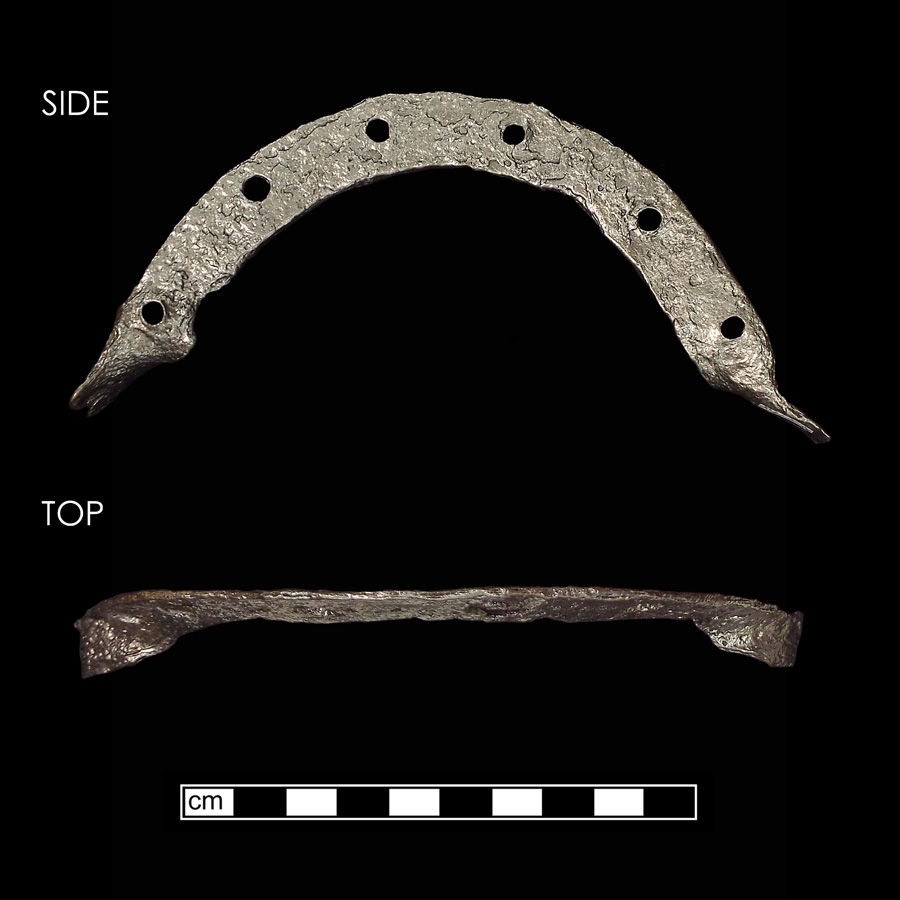
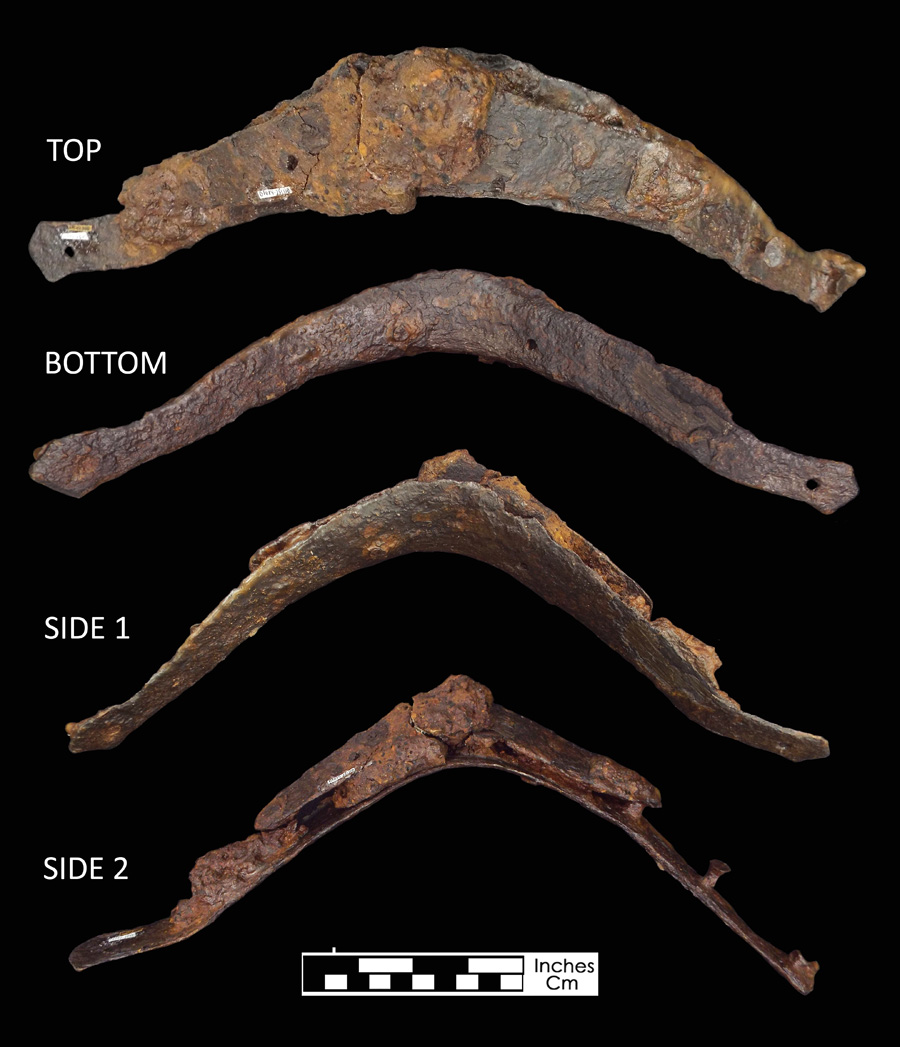
Curb Bit Bosses

Curb Bit Bosses
Curb Bit Bosses
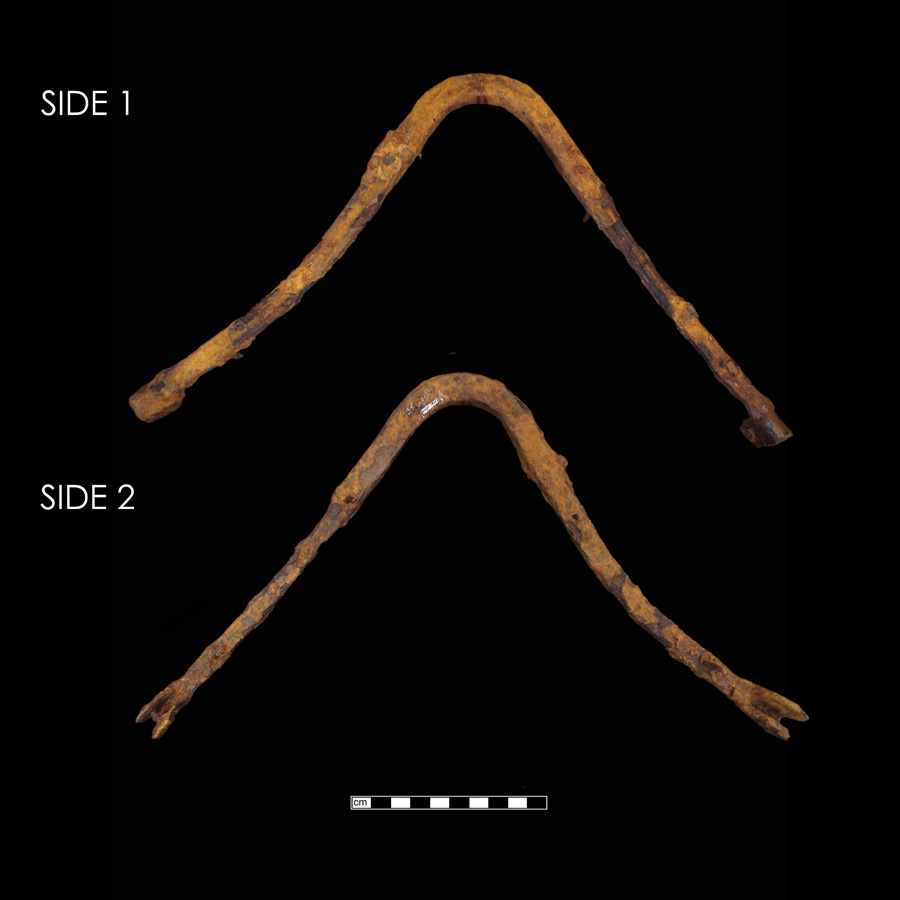
Saddles