Bellevue Housing Complex (51SW7)
Site History
Located on Joint Base Anacostia-Bolling in Washington, D.C. near the border with Prince George’s County, MD, the Bellevue Housing Complex site is a multi-component Woodland period camp site with notable intact Early Woodland features. The site had also been developed in the 1940s, where a housing complex consisting of 601 single-family housing units had been constructed, which was later re-developed in the 1990s.
Archaeological Investigations
The area around the Bellevue Housing Complex site had been frequently visited by early avocational archaeologists in the late 19th and early 20th centuries. S.V. Proudfit may have been the first to document the site in the 1880s. Proudfit roughly mapped dozens of sites in the D.C. area and had identified the southeastern bank of the Anacostia River as the location of the village of Nacotchtank (or Anacostia). Proudfit noted that the area was frequented for many years by artifact collectors.
Local avocational archaeologist William Dinwiddie examined the Bellevue Housing Complex site around 1891 – possibly in consultation with William Henry Holmes of the Bureau of American Ethnology. Dinwiddie's collection from the site is now with the Smithsonian, which included projectile points, a celt, and a schist gorget.
At the onset of World War II, the area was part of a large military housing complex, which was constructed over the site in the early 1940s. The original military housing was razed for redevelopment in the early 1990s. A Phase I shovel test survey was conducted by John Milner Associates in 1993 and 1994. During testing in yard areas intact deposits of pre-contact artifacts were beneath layers of more modern fill and plowzone. Diagnostic material from these shovel tests included Accokeek ceramics and one sherd of Potomac Creek.
Phase II testing of the site did not occur until late 2009 by the Louis Berger Group. This testing included 81 close-interval shovel tests and three test units. Features identified included at least six post molds, a hearth, and a broken ceramic vessel. Diagnostic artifacts from shovel tests consisted primarily of Accokeek cord-marked sherds.
Features within Test Unit 1 included a truncated hearth and five post molds. The posts did not form a line or any other discernable pattern. Artifacts from the test unit included Accokeek cord-marked sherds, unidentified sherds, debitage, and fire-cracked rock. A possible post mold was found in Test Unit 2, which also contained the same variety of artifacts as Test Unit 1.
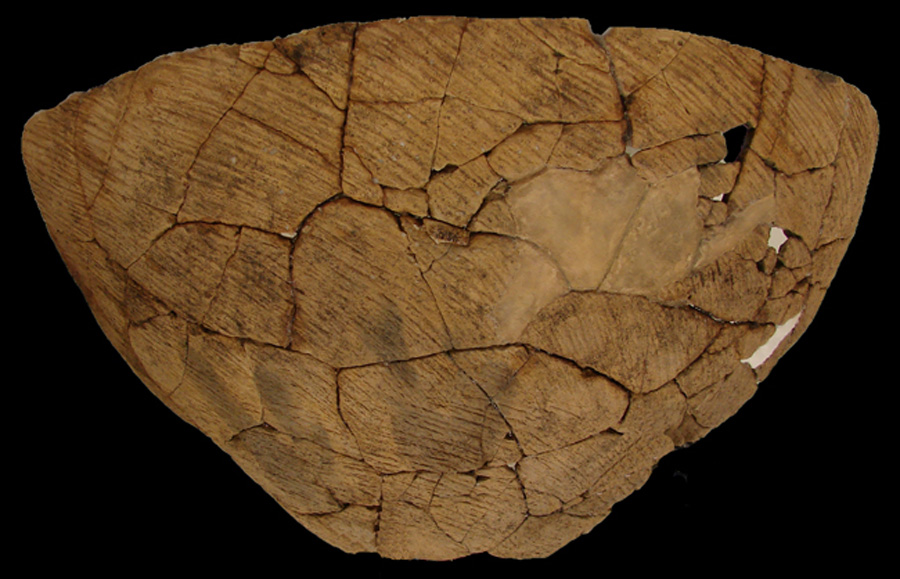
Test Unit 3 contained broken in situ Accokeek cord-marked vessel, which was designated Feature 7. Approximately 80% of the vessel was recovered from a total of 103 sherds alongside fire-cracked rock that was also collected as part of Feature 7. The vessel form had a wide-mouthed rim and conoidal base. This vessel has been reconstructed and is part of the federal collections housed at the Maryland Archaeological Conservation Lab.
References
2011 Bellevue's Telltale Hearth (51SW7): Accokeek Under the Floorboards. Paper presented the Middle Atlantic Archaeological Conference, Ocean City, MD.
2010 Archaeological Investigation of Site 51SW7 Bellevue Housing Complex Washington, D.C. Report on file, Maryland Archaeological Conservation Laboratory, St. Leonard.