Carey Farm (7K-D-3)
Site History
The Carey Farm Site (7K-D-3) is a precontact period archaeological site in central Kent County, Delaware, near Dover. The site, located on the St. Jones River, was a seasonal base camp dating to the Woodland Period. The site was listed on the National Register of Historic Places in 1977.
Archaeological Investigations
The Carey Farm Site had been the focus of limited test excavations during the 1970s and based on artifacts and pit features recorded during these excavations, the site was placed on the National Register of Historic Places.
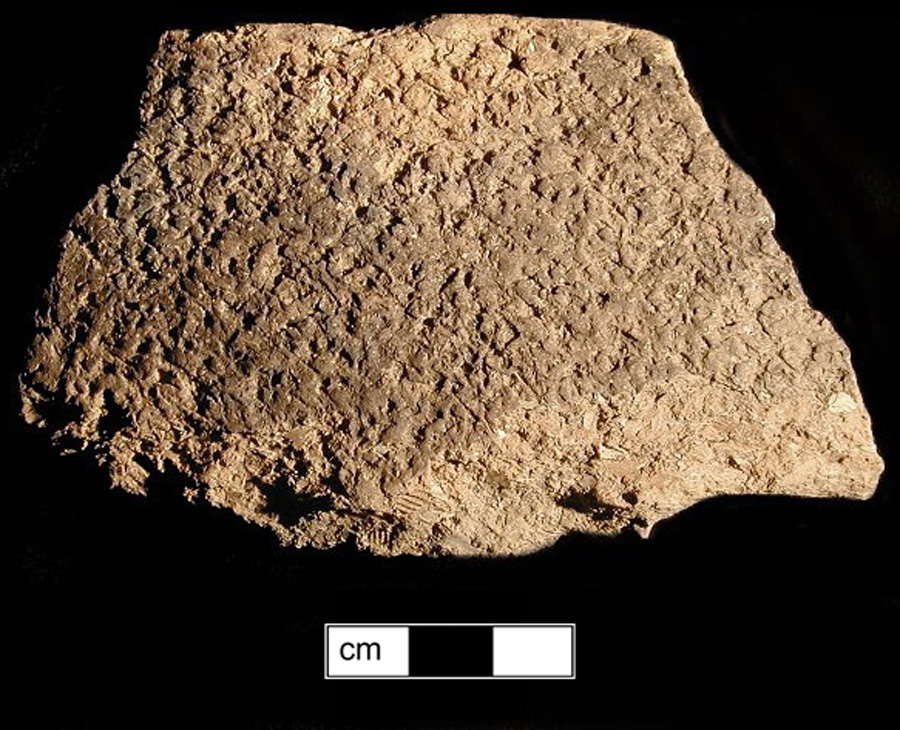
Phase III excavations at the Carey Farm site focused on understanding the site's role in regional settlement patterns, lithic and ceramic technologies, and precontact period subsistence systems. Archaeological excavations revealed numerous refuse pits, with faunal species from the pits including deer, beaver, dog, box turtle, dog, muskrat, turkey and woodchuck. The site also yielded Mockley pottery, and Fox Creek points and testing of charcoal from pit features provided a radiocarbon date of 200 A.D.
References
1989 Prehistoric Cultures of the Delmarva Peninsula: An Archaeological Study. Newark, DE: University of Delaware Press. p. 277. ISBN 9780874133202.
1996 Final Archaeological Investigations at the Carey Farm (7K-D-3) and Island Farm (7K-C-13) Sites, State Route 1 Corridor, Kent County, Delaware. DelDOT Archaeology Series No. 146.