Clyde Farm (7NC-E-6)
Site History
The Clyde Farm site (7NC-E-6) is a precontact Woodland period archaeological site in rural New Castle County, Delaware. Radiocarbon dating from charcoal samples taken from features dates occupation around 2955 ± 90 B.P.
Archaeological Investigations
The Clyde Farm site has been known to amateur and professional archaeologists since at least the 1930s. Collectors, including H. Geiger Omwake, Archibald Crozier and Joseph Wigglesworth, donated collections from the site to the University of Delaware and the Island Field Museum.
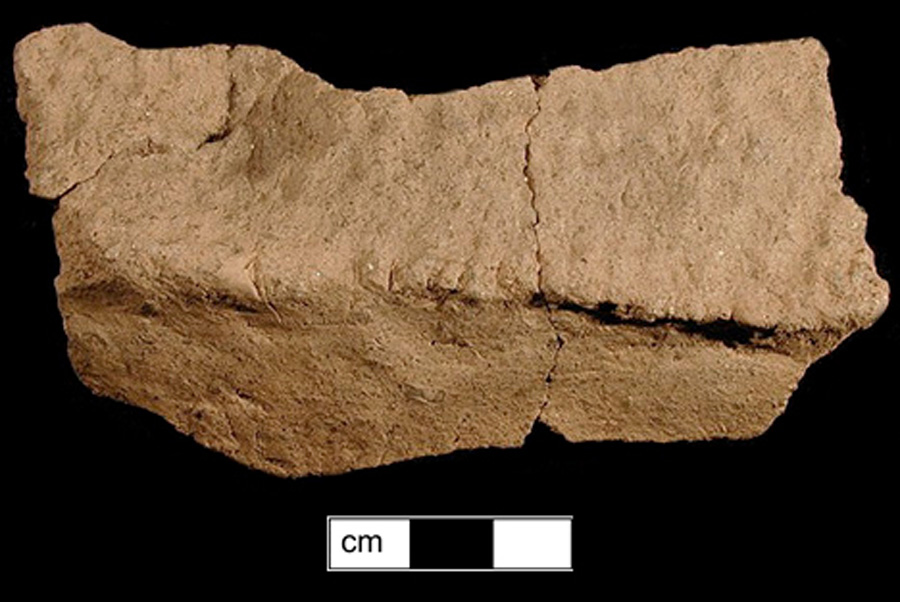
Delaware Division of Historical and Cultural Affairs archaeologists began targeted field investigations at the site starting in the 1960s and 1970s. Archaeologist Jay F. Custer of the University of Delaware conducted excavations at the site in the 1980s and 1990s. This work revealed a dense cluster of features and artifacts, including stemmed projectile points, Selden Island pottery, and lithic tools made from local quartzite and nonlocal materials like argillite.
The main features of the site were traces of a semi-subterranean pit house surrounded by storage pits and associated hearths. Radiocarbon analysis of charcoal from the pit house floor yielded a date of circa 1000 BCE, confirming occupation during the transitional Late Archaic-Early Woodland period. A lithic work area was also identified during excavations in 1984. The site was listed on the National Register of Historic Places in 1977.
References
1987 "An Early Woodland House Cluster at the Clyde Farm Site (7NC-E-6), Delaware." Journal of Field Archaeology 14 (2): 229–254.