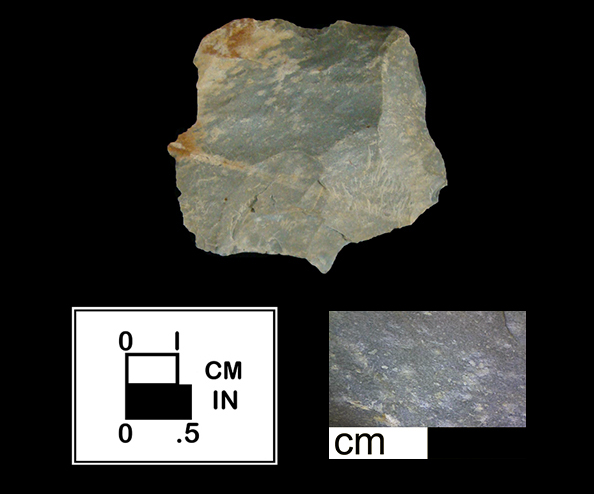
Rhyolite
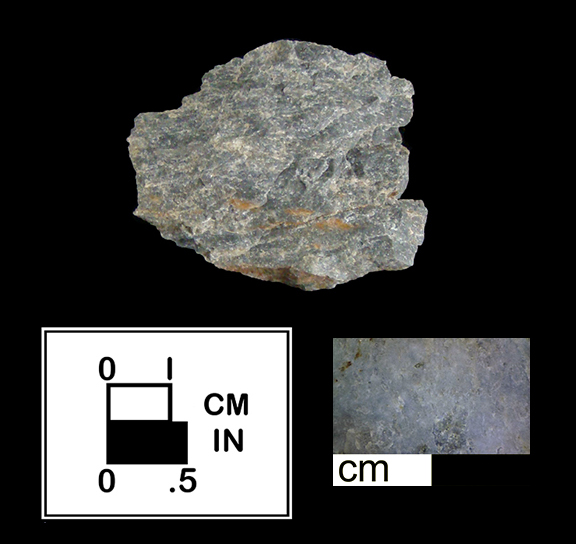
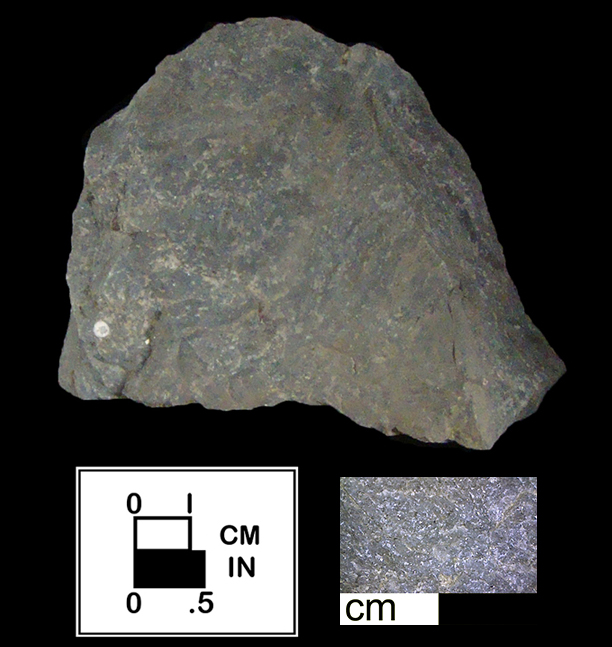
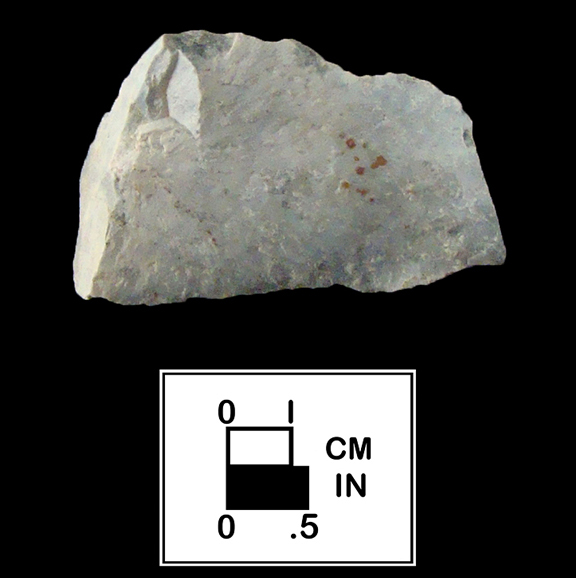
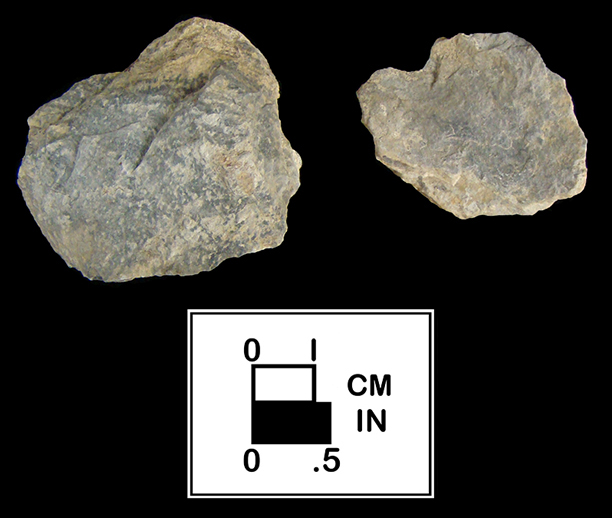
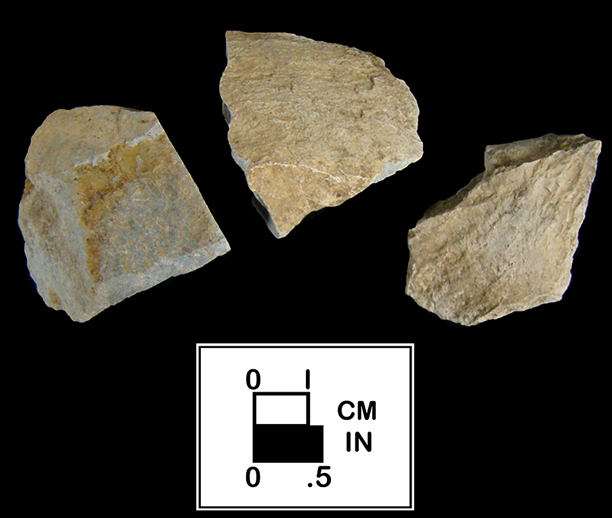
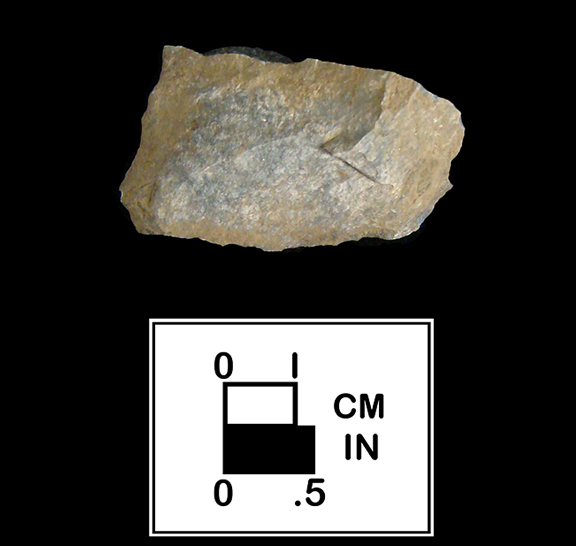
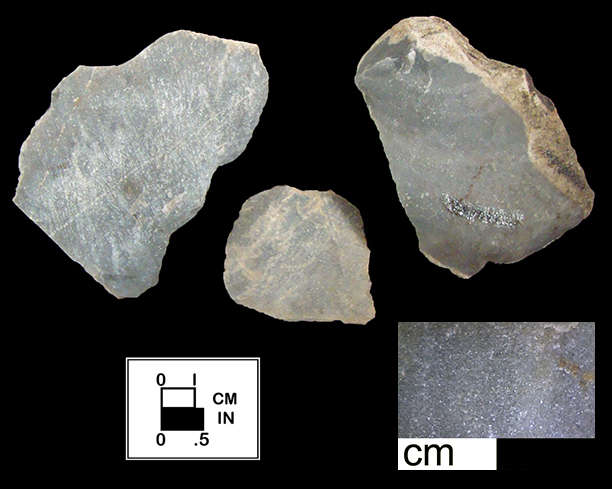
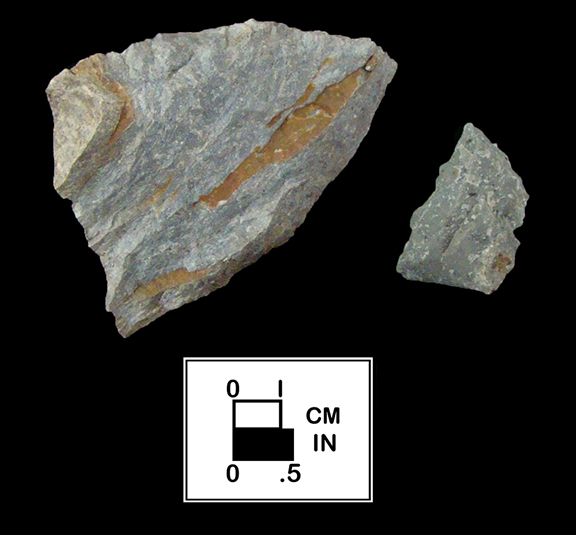
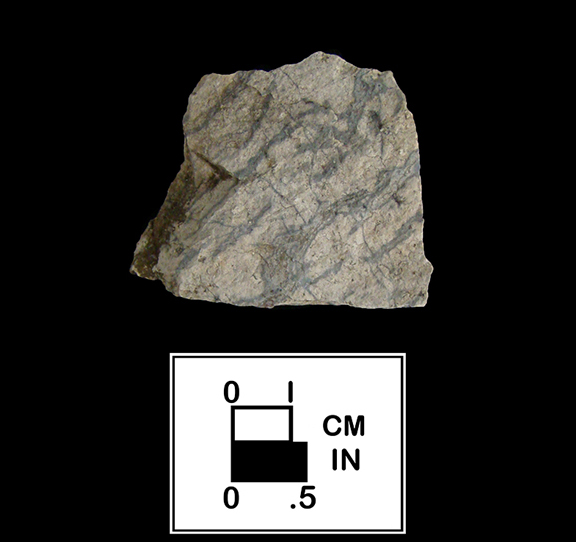
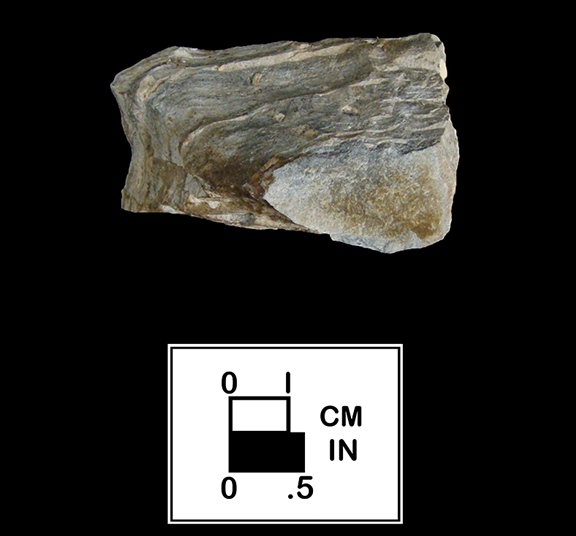
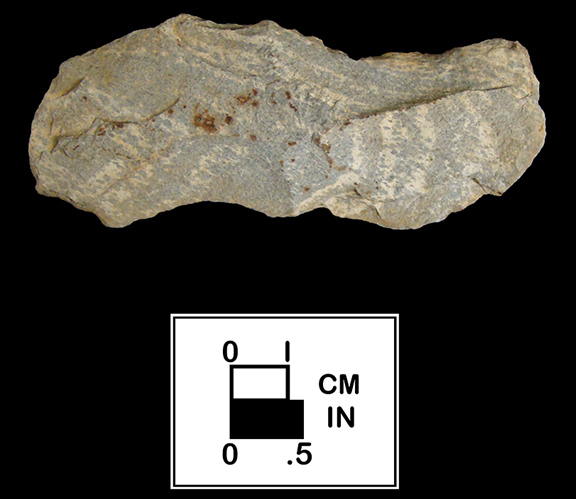
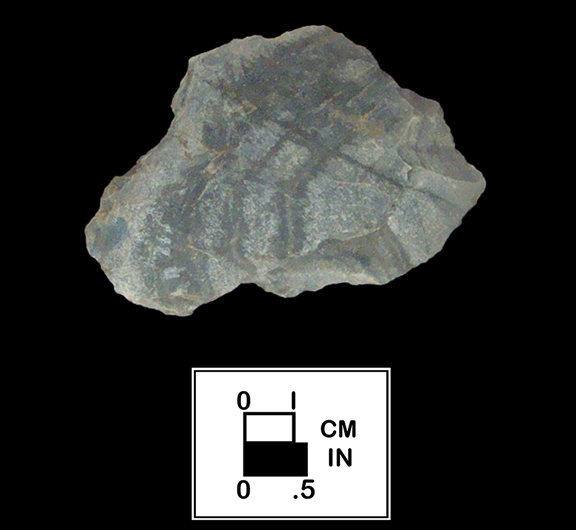
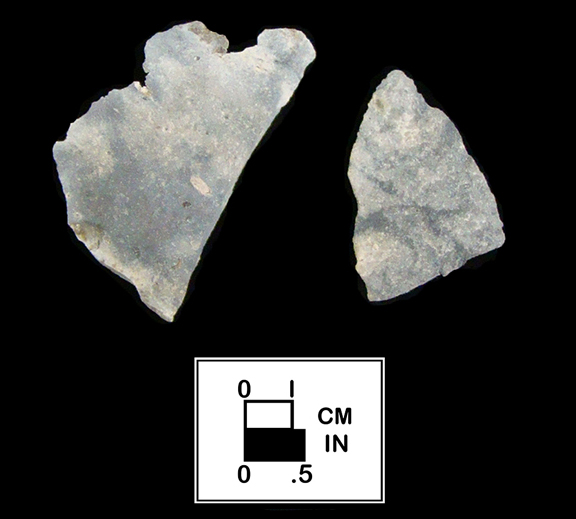
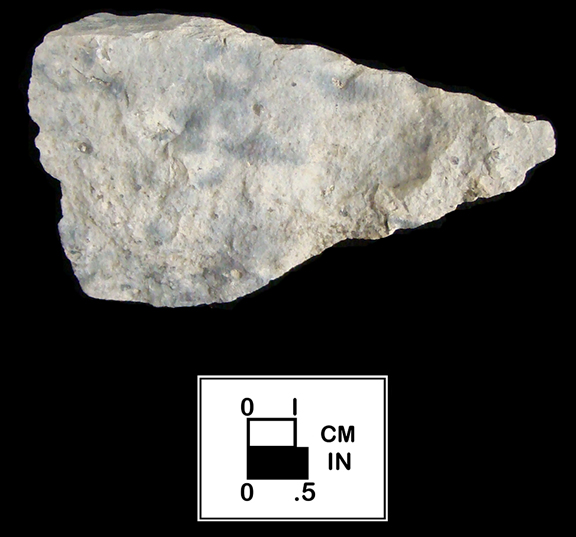
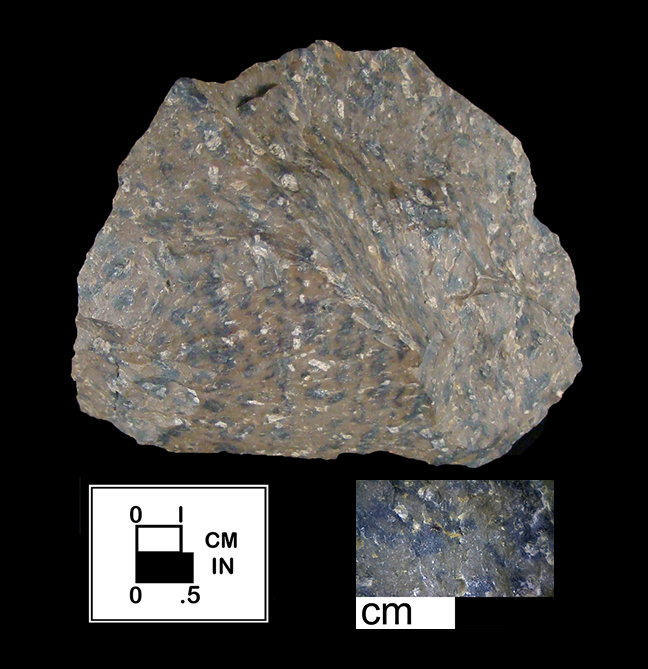
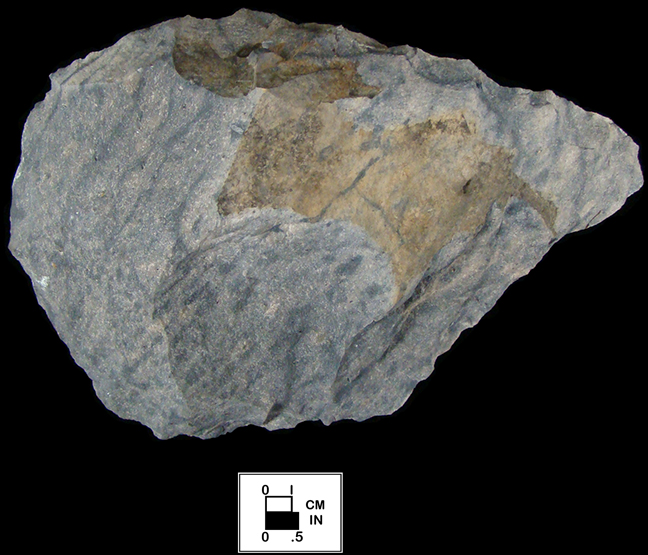
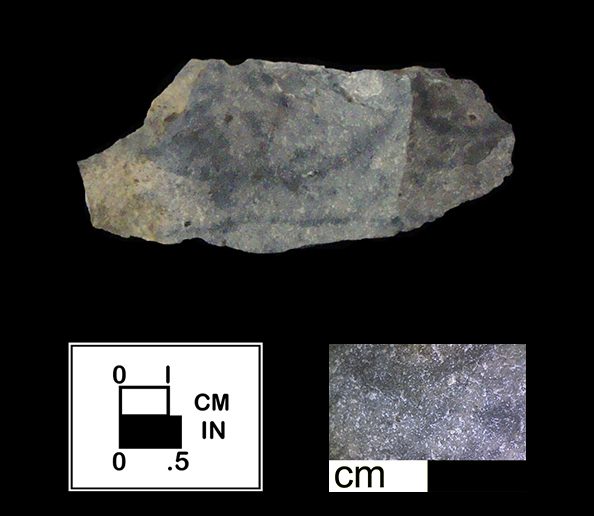
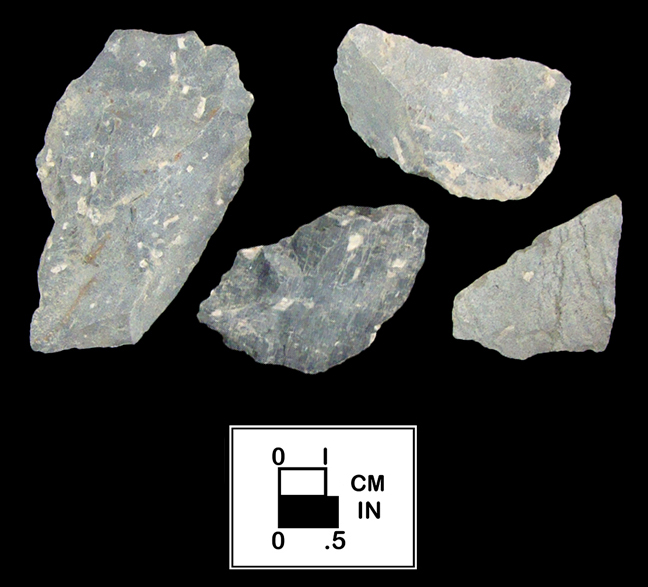
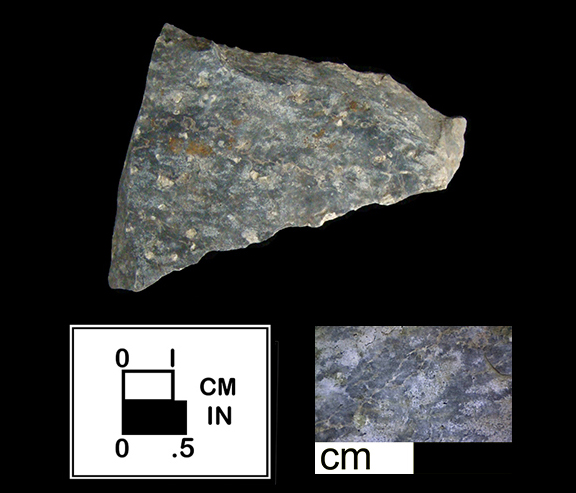
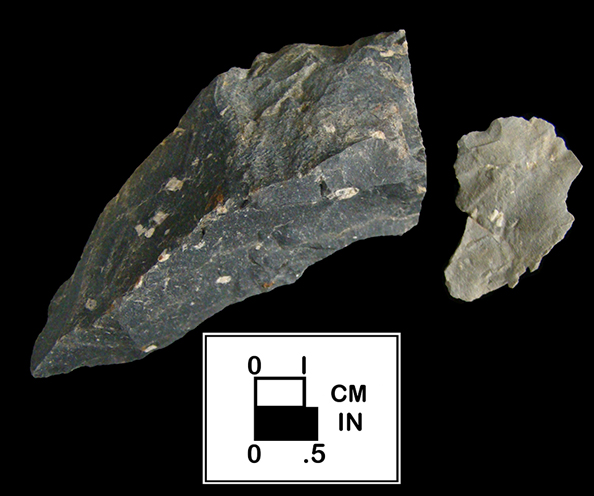
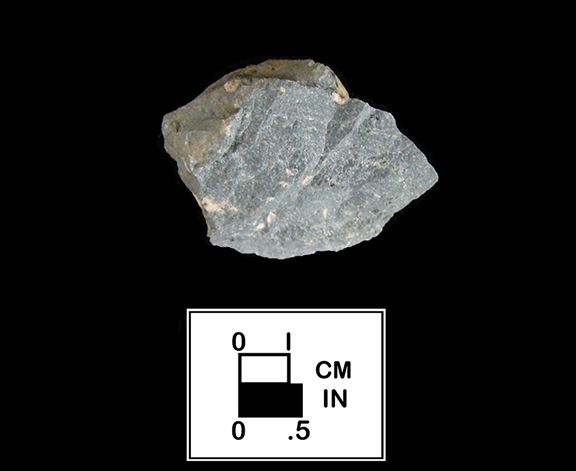
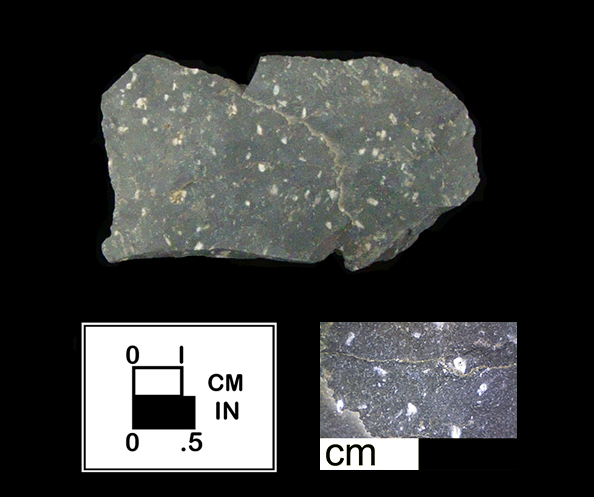
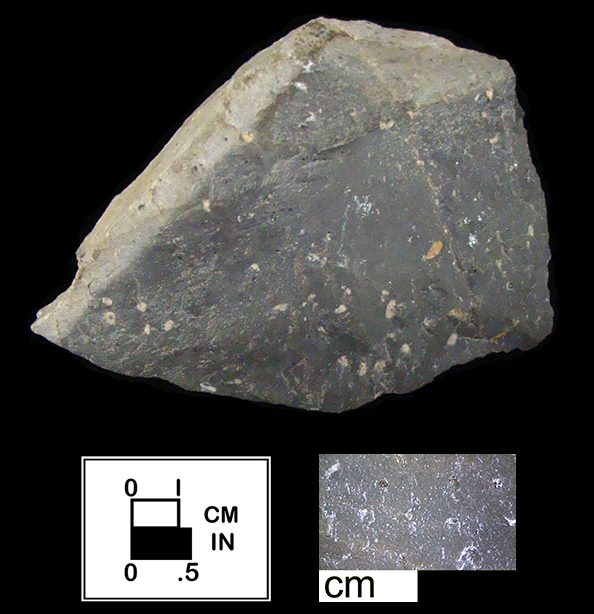
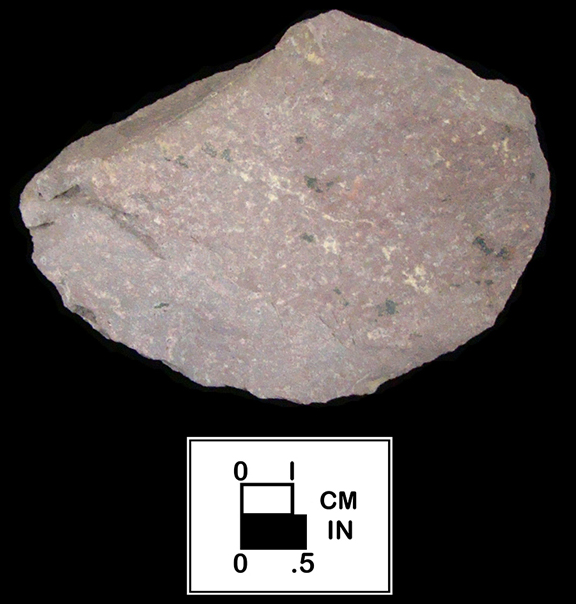
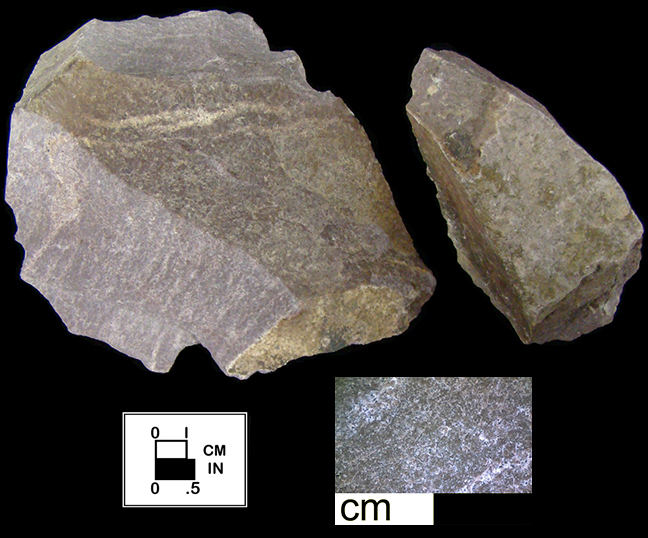
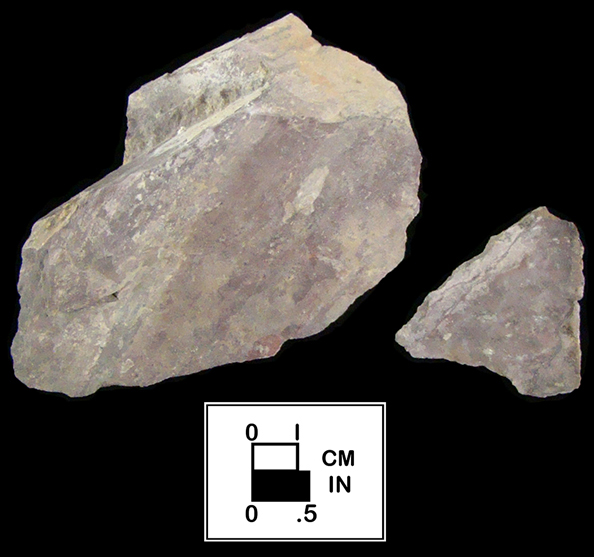
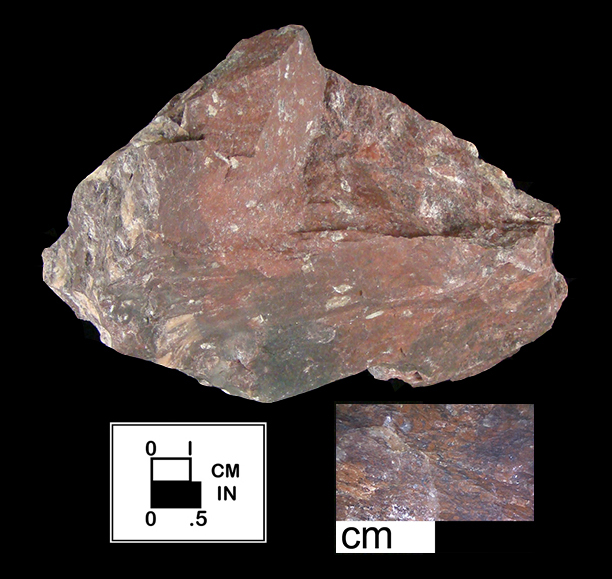
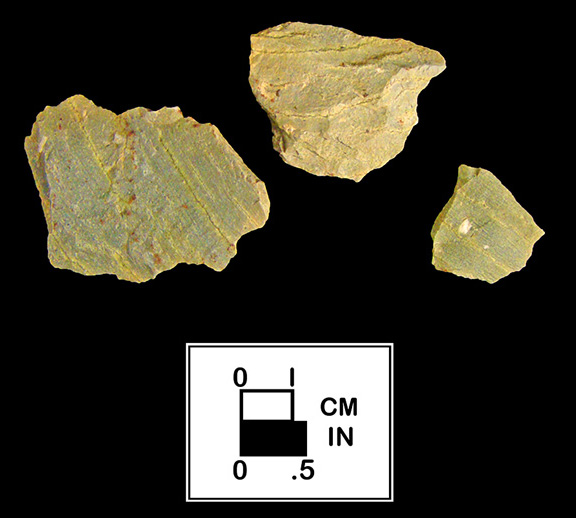
An extrusive volcanic rock. It is a microscopically fine-grained (aphanitic) material, although many rhyolites are also porphyritic, meaning scattered visible crystals known as phenocrysts are embedded in the stone (Andrefsky 1998). The material called "rhyolite" in the eastern U.S. is technically metarhyolite, a slightly metamorphosed form of rhyolite. A number of varieties outcrop in Maryland’s Frederick and Washington counties. They are most commonly dark blue-gray to black, but other colors occur as well, and weathering can result in lighter hues. Visually-distinct varieties include: 1) aphanitic; 2) porphyritic; 3) red; 4) banded; 5) mottled (Stewart 1984). Varieties 3, 4, and 5 occur both with and without phenocrysts. A greenish metarhyolite, probably from a nearby source, was found in large quantities at the Jefferson Site in Frederick County. Adams County, PA produces a mottled metarhyolite sometimes used for artifacts found in Maryland. Large outcroppings of metarhyolites also are found near Mount Rogers, VA and the Uwharrie Mountains (Morrow Mountain) of North Carolina, and other local and regional types exist. The term “Carolina Slate” is sometimes used for various similar fine-grained stones, including metarhyolite, found in the Carolina Slate Belt that runs from Virginia to Georgia (Coe 1995). Some very fine-grained metarhyolites have a chert-like appearance (Ebright n.d.).