Abrasive Decoration
Abrasive decorative techniques incorporate the removal of glass through manual means, such as cutting or engraving.
Cutting – Cutting glass is a cold decorating abrasive technique that involves decorating by hand using rotating metal or stone wheels and grit to cut patterns in the glass. There is generally a texture difference between the cut and uncut areas of the glass for vessels made prior to the 20th century (Jones 2000:174). Motifs on cut glass tend to be geometric and based on straight line cuts, like panels, facets, flutes, diamonds and fans.
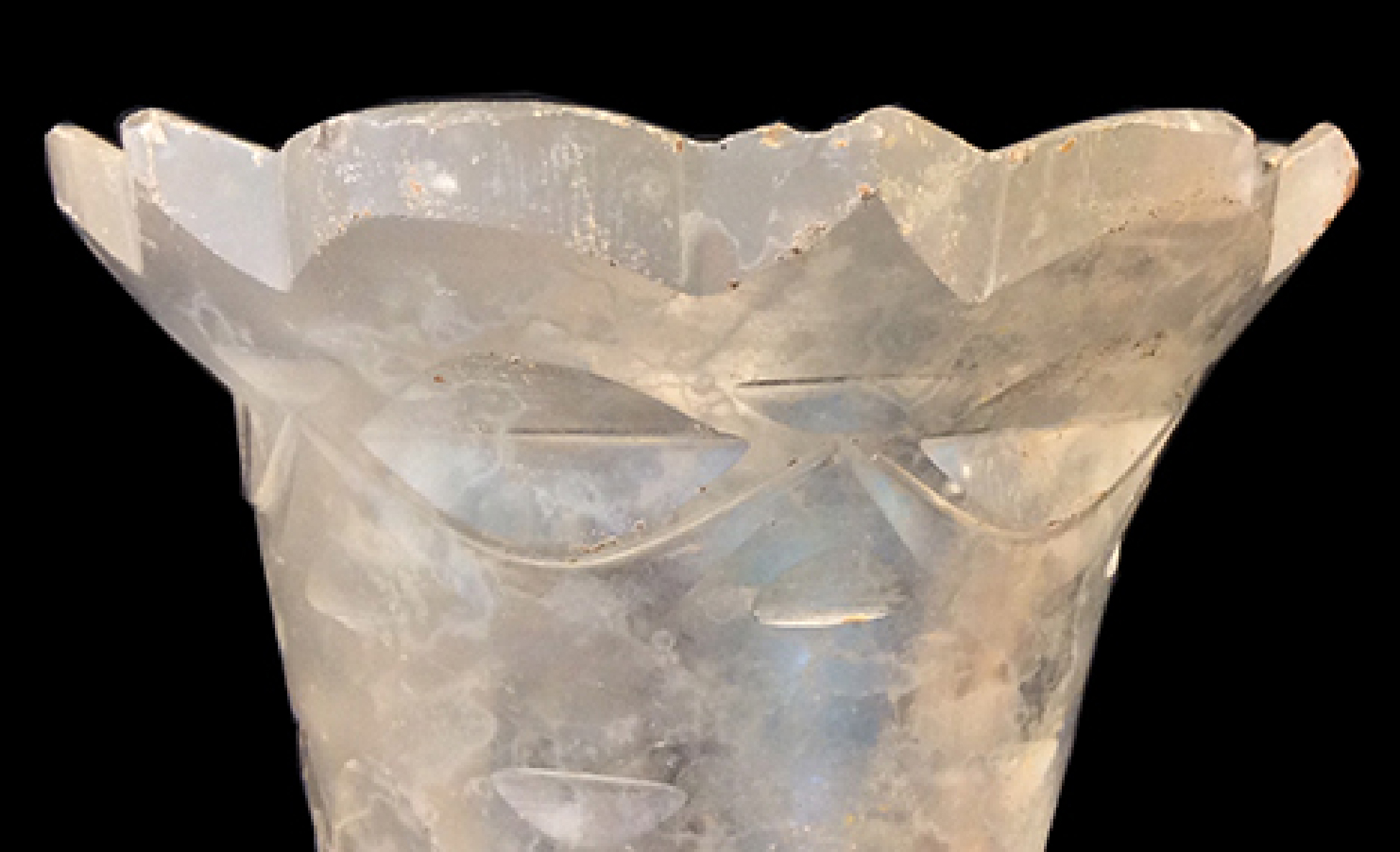
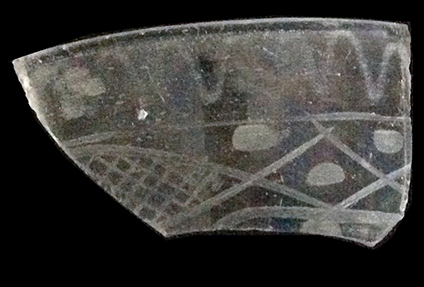
Engraving – In this abrasive technique, designs are scratched or stippled into the glass surface using diamond point or copper wheels and abrasives. The engraved area usually has a frosted appearance. Engraving is often used to decorate the borders of tumblers and the bodies of decanters. Although an ancient technique, wheel engraving on English glass began around 1725 (Bickerton 1986:30). Engraving employed smaller wheels than those used for cutting glass and were thus capable of producing a wider range of motifs. The engraving method of decorating glass lent itself to the use of curved lines in the engraved motifs.
References
2000 A Guide to Dating Glass Tableware, 1800 to 1940. Studies in Material Culture Research. Edited by Karlis Karklins. Society for Historical Archaeology.