Stemmed Glasses
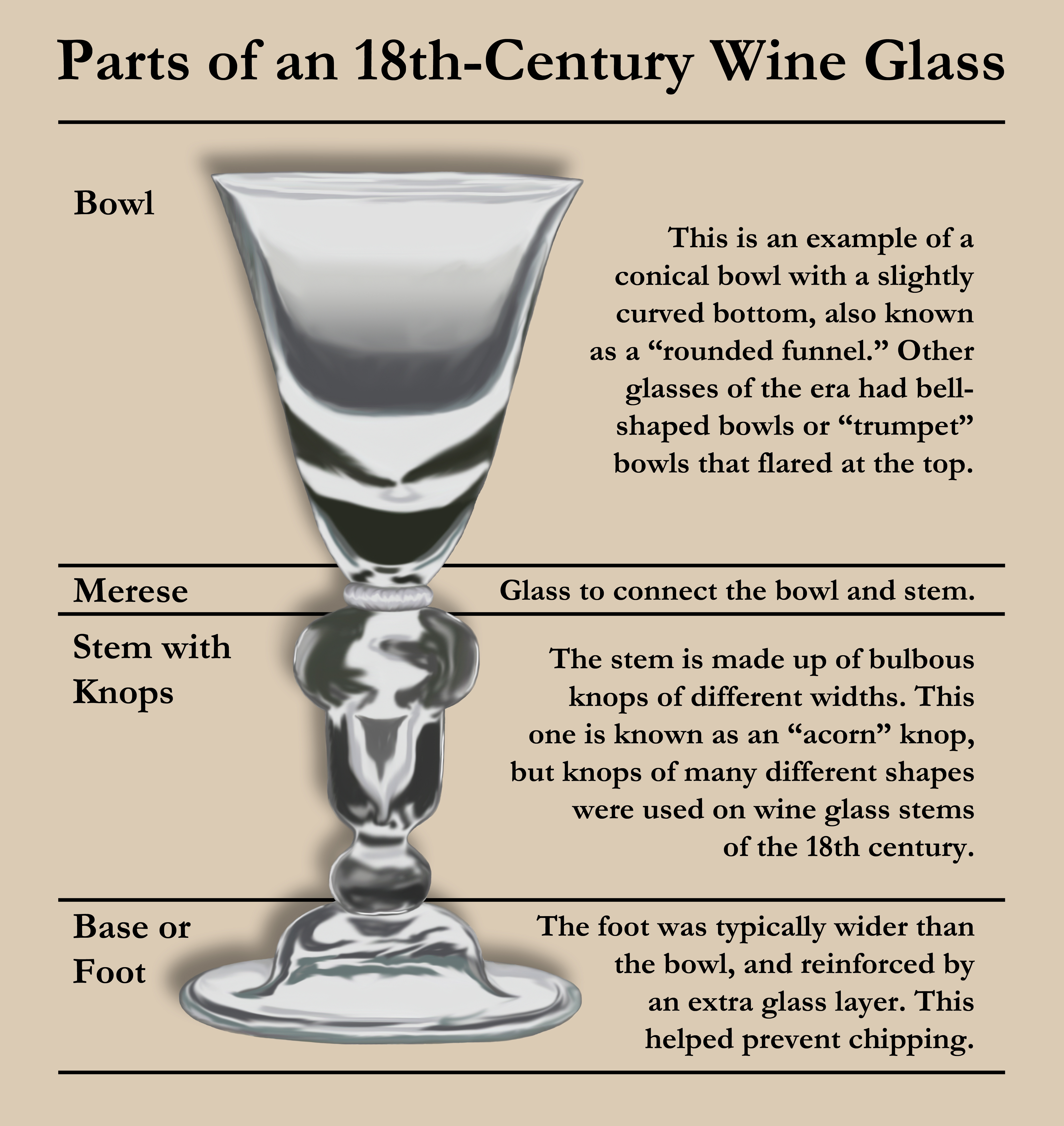
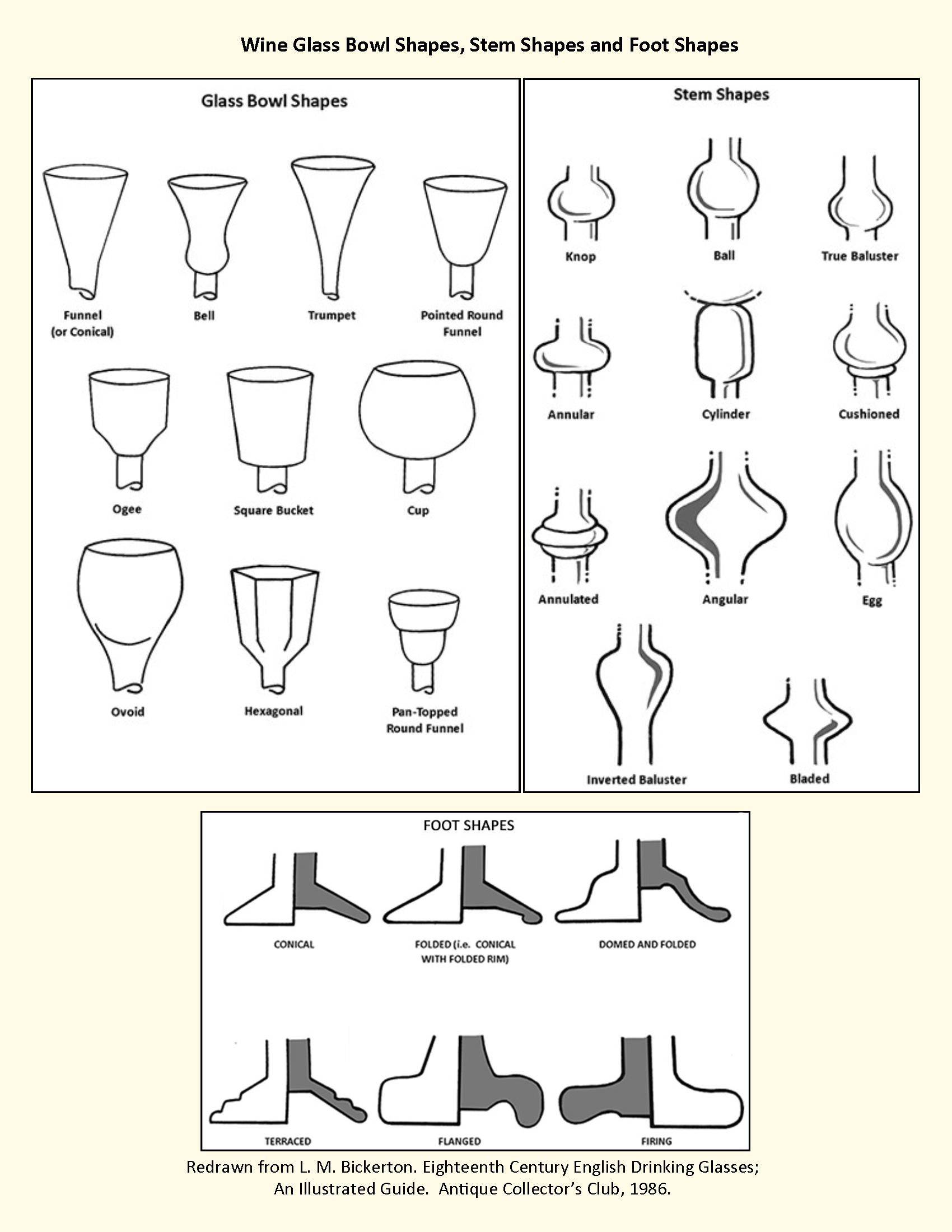
Stemware is a general term used for glass vessels that have a foot and a bowl joined by a stem. Stemmed glasses were used for a variety of purposes, from wine to dessert, and the bowl shape and other characteristics can be used to help determine function. Stem and bowl shapes, as well as characteristics of the foot can assist in dating the vessel as well. The stems of English glasses changed more over time than bowls or feet, so the stem is the best indicator of dating (Bickerton 1986:12). Folded feet (a foot rim folded back on itself) disappeared around 1740 (Bickerton 1986:13).
Table 1. Dating English Stemmed Glasses
| Stem Formation | Date Range | Comments |
|---|---|---|
| Heavy balusters | c. 1685-1710 | Large, heavy knops, conical bowls, rarely engraved |
| Balusters | c. 1710-1735 | Smaller knops in variety of shapes, coupled with bell, thistle and trumpet bowls |
| Balustroids | c. 1725-1760 | Knops and balusters separated by elongated sections of plain stem |
| Molded pedestal stems | c. 1715-1765 | 4, 6 or 8-sided stem tapering to the foot |
| Plain stems | c. 1730-1775 | Usually paired with trumpet shaped bowls, sometimes "tear" of air in stem |
| Air twist stems | c. 1745-1770 | Formed from air trapped in stem during production, drawn and twisted to form shape |
| Opaque twist stems | c. 1755-1780 | Use of opaque white glass rods in the interior of the stem to create thread-like patterns, drawn and twisted |
| Facet cut stems | c. 1760-1810 | Cut multi-sided diamond or hexagonal stems |
| After Bickerton 1986. | ||
References
1986 Eighteenth Century English Drinking Glasses; An Illustrated Guide. Antique Collector’s Club, Woodbridge Suffolk.