Other Forms
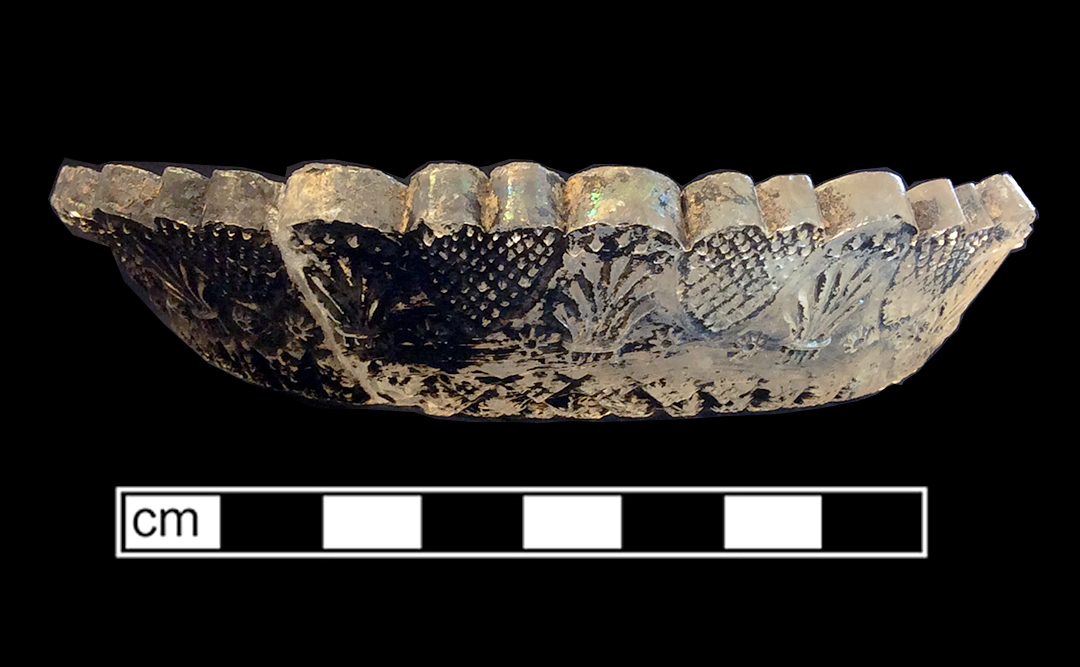
Bowls – Hollow vessels that varied in size and shape for holding various items.
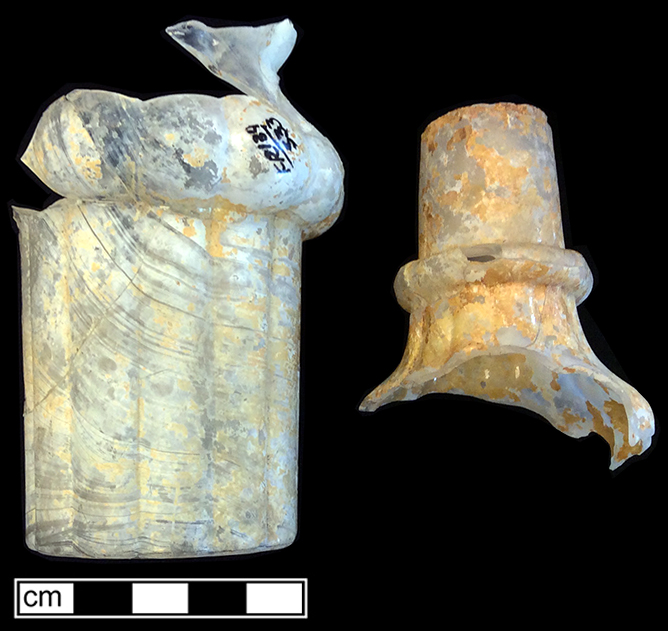
Cruet/Castor – Small bottles used at the table for condiments. Often grouped in a stand; in the mid-19th to early 20th centuries, the bodies were often shaped to fit into ring holders in the stand (Jones and Sulllivan 1985:133). Cruets were stoppered, with a pouring lip and held liquids; cruets were more likely to have a handle. Castors (also spelled caster) had perforated tops for shaking sugar, pepper, etc.
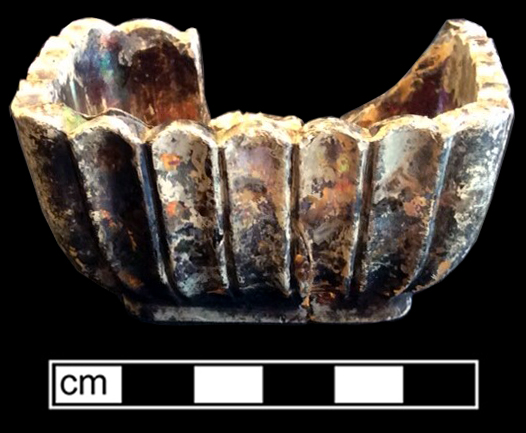
Salts – Small, open dishes common until the 1870s, when they began to be replaced by salt shakers, which were first introduced in the late 1850s. Salts were also made in individual sizes.
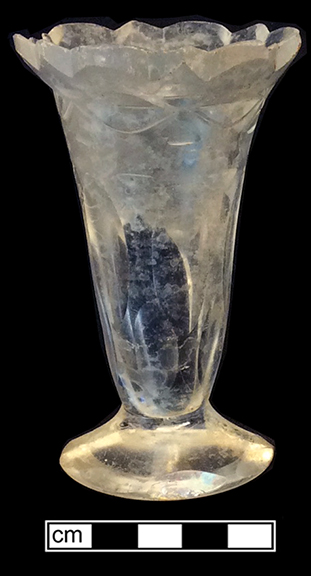
Dessert Glass – Individual serving vessels for syllabub, jellies or custards. Dessert glasses also included handled cups with feet, small shallow dishes, and stemmed glasses (Jones and Sulllivan 1985:134).
Compote – "A dish, usually with a stem and a base, and sometimes with a cover, for serving compote (fruits cooked in syrup), or a smaller dish of similar form used for individual servings" (All About Glass/Corning Museum of Glass).
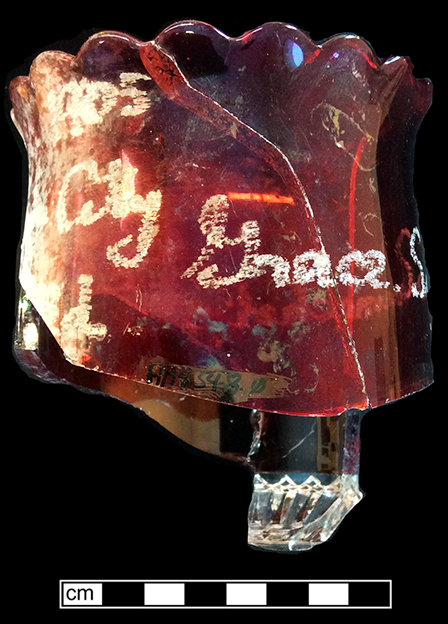
Spooners or Spoon Holder – Used to hold teaspoons on the table. It may or may not be footed, but often it will have a scalloped rim. Spooners often came as part of a set consisting of butter dish, cream jug, and sugar dish.
References
n.d. https://allaboutglass.cmog.org/. (This website has an extensive glass dictionary and thousands of photographs).
1985 The Parks Canada Glass Glossary for the Description of Containers, Tableware, Flat Glass, and Closures. With contributions by George L. Miller, E. Ann Smith, Jane E. Harris and Kevin Lunn. Parks Canada, Quebec.