Astbury Type
Defining Attributes
Thinly potted earthenware with a dense, dull-red body and a ginger colored lead glaze. Decorated by engine turning or with white clay sprig-molding.1
Chronology
Fine red earthenwares appear by the early-to-mid 1720s, and decline in production after 1750. This ware is a good time-marker for the second quarter of the 18th century (Noël Hume 1970).
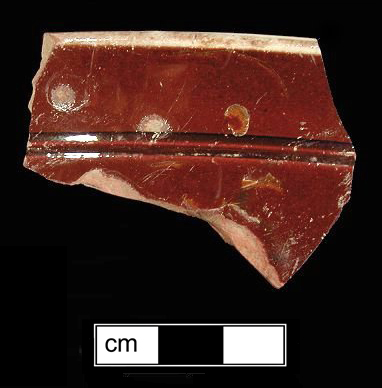
Figure 1. Astbury-type bowl.
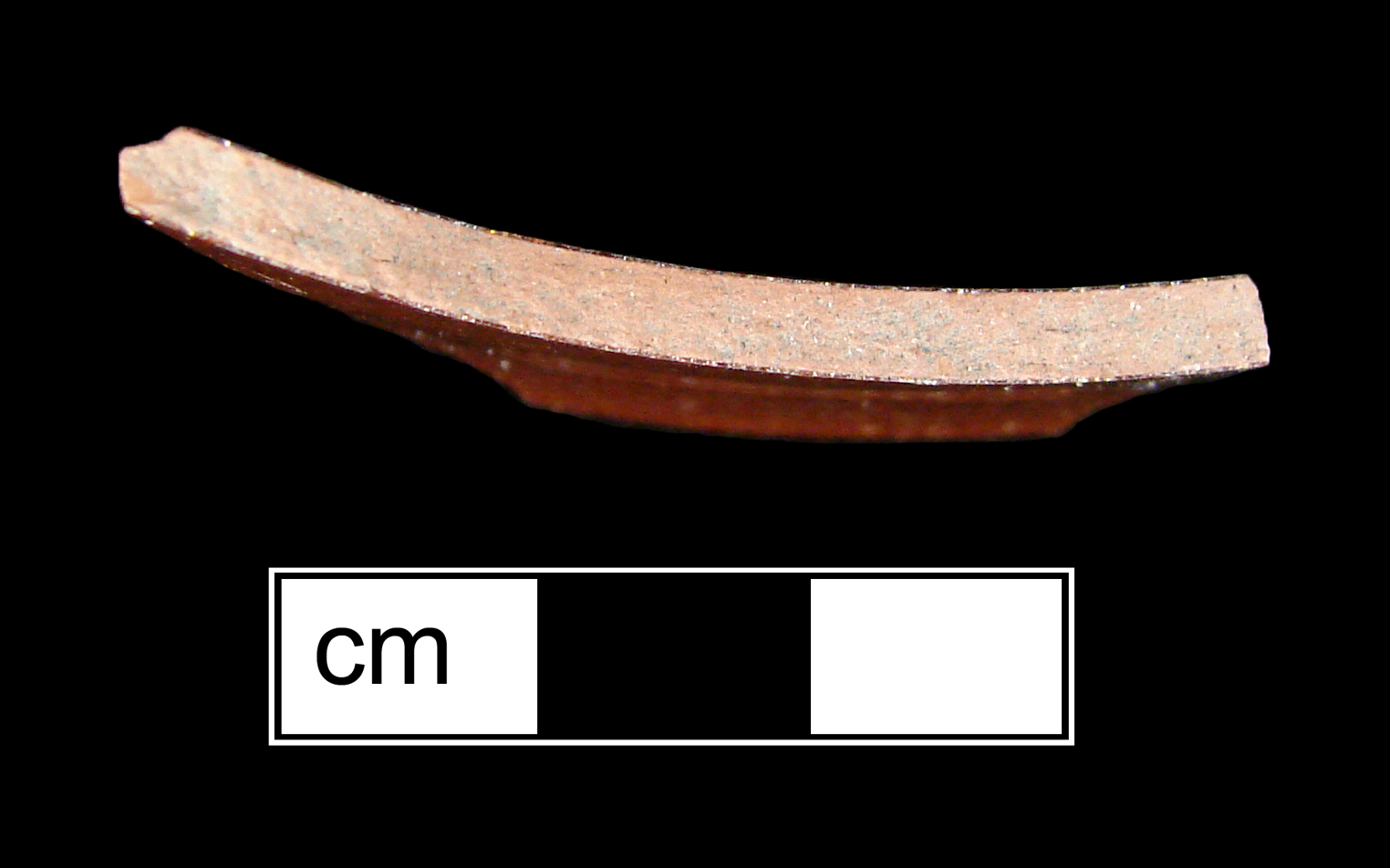
Figure 2. Astbury-type earthenware paste shot.
Description
Fabric
A finely-grained, homogenous earthenware body, with a high-fired red paste.
Glaze
Lead glaze producing a ginger to light-chocolate brown surface color.
Decoration
Vessels can be plain, decorated with white slip bands around the rim, or sprig-molded in white pipe clay with animals, flowers, and royal arms (Noël Hume 1970:70; Poole 1995:54). Some pots were slip cast in molds, producing raised decorative panels with human and animal figures or floral motifs, or were painted with gold enamel on the body (Barker and Halfpenny 1990:23-30).
Form
Forms include teapots and cups, bowls, and coffee pots.
Footnotes
1 Fine red earthenwares are commonly named Astbury Ware after the potter John Astbury (1686–1743), but many other potters in Staffordshire also made this ceramic, so "Astbury-type" is a more appropriate name. However, others have suggested that even "Astbury-type" is misleading, since there is no firm evidence that John Astbury made this ware, and thus names like "fine red earthenware" are preferred (Barker and Halfpenny 1990.)
References
1990 Unearthing Staffordshire: Towards a New Understanding of 18th Century Ceramics. City of Stoke-on-Trent Museum and Art Gallery, Stoke-on-Trent, England.
1970 A Guide to Artifacts of Colonial America. Alfred A. Knopf, New York, NY.
1995 English Pottery. Fitzwilliam Museum Handbooks. Cambridge University Press, Cambridge.