North Devon Sgraffito
Defining Attributes
A yellow lead glazed coarse earthenware with a reddish pink to orange paste that can have a grey core. North Devon sgraffito ware is identified by its incised slip decoration of brown motifs on a yellow background.1 A North Devon plain slip-coated variety has been found identified at Jamestown (Watkins 1960; Outlaw 2002) and on a few 17th-century sites in Maryland (Hornum et al. 2000; Davis et al. 1999), but could be indistinguishable from sgrafitto at the sherd level.
Chronology
Grant (1983:131-132) states that “by the early 17th century, plain and decorated slipwares were being made” in North Devon.2 Sgraffito has been recovered in an early 1620s context at Martin’s Hundred in Virginia (Outlaw 2002), but on Maryland archaeological sites, North Devon sgraffito wares have so far dated to the second half of the 17th century. North Devon slip decorated earthenware “reached its peak in the third quarter of the 17th century” (Outlaw 2002). Towards the end of the 17th century, North Devon sgrafitto was eclipsed by the growing preference for blue and white tablewares, such as the tin-glazed wares made in England and the Netherlands. Flatware vessel forms (dishes, plates) were no longer manufactured after about 1700, but harvest jugs continued to be made into the late 19th century (Grant 1983).
Sgraffito wares are generally not found on archaeological sites after 1700 (Miller 1983; Grant 1983:13), but several matching and dated (1730) flatware pieces was found at the White Swan Tavern in Chestertown, Kent County Maryland, and may have been specially commissioned (Grant 1983:122).
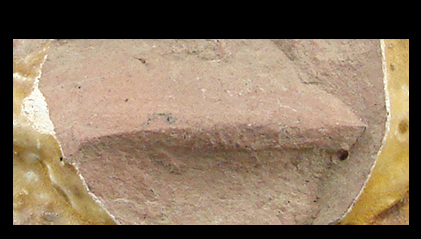
Figure 1. North Devon sgraffito earthenware paste shot.
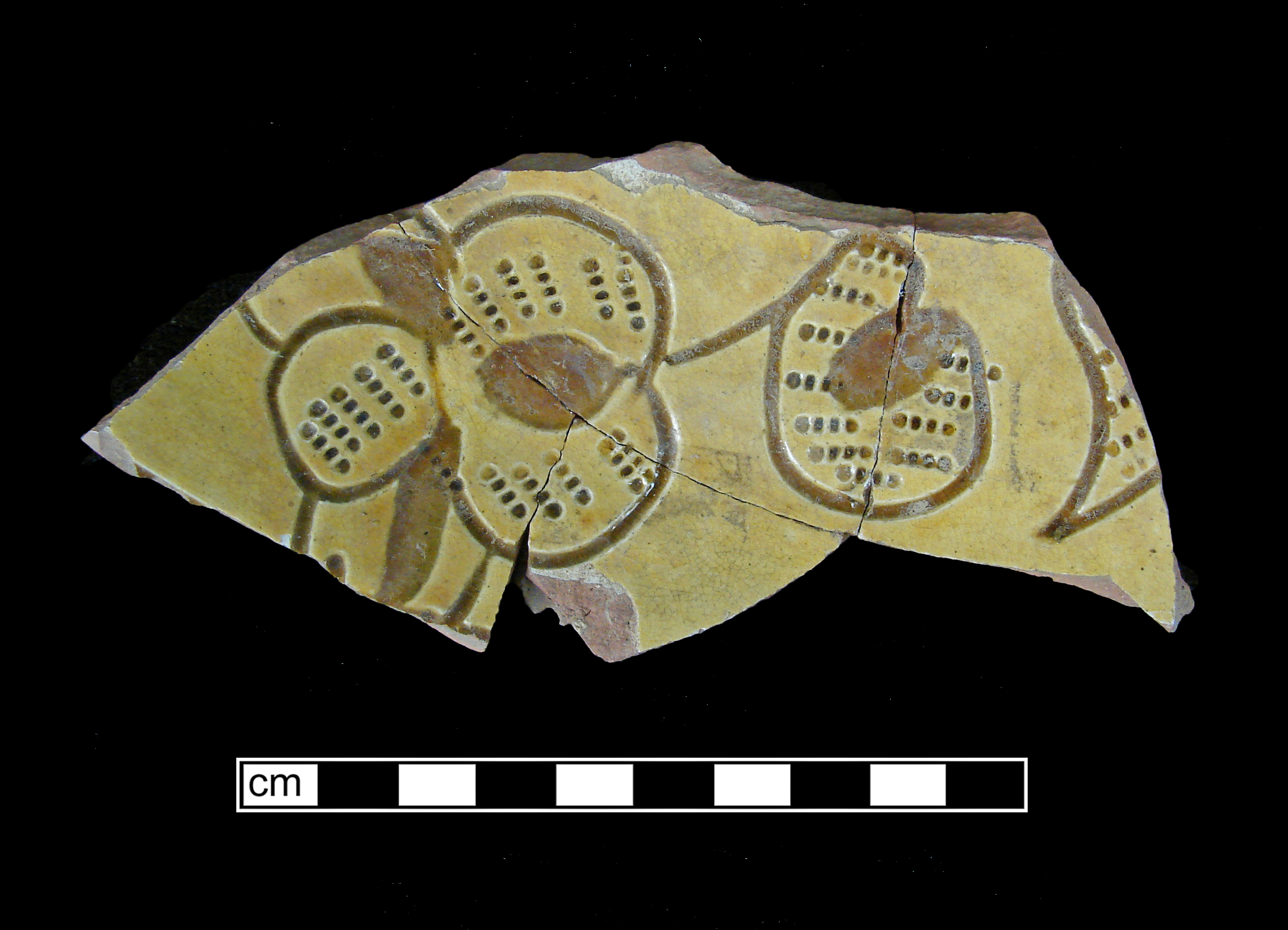
Figure 2. North Devon sgraffito earthenware dish with floral motif.
Description
Fabric
Coarse earthenware body with a pink or reddish to orange colored paste that sometimes displays a grey core resulting from reduced oxygen during firing. On many thin-bodied North Devon slip and sgraffito sherds, the body is mostly to entirely grey, with only patches of red-orange. The paste is well mixed with a fine, smooth texture and contains very fine sand particles.
Glaze
A white slip is applied to the sgraffito and plain slip-coated wares, and appears yellow below the thin lead glaze. Most vessels are glazed on just the interior.
Decoration
Sgraffito3 is decorated by incised designs that cut through a white slip, exposing the reddish body below. The white slip appears yellow underneath the lead glaze, and the incised lines are brown. Design influences on North Devon sgraffito were based on pottery imported from Spain, Italy, Portugal and the Low Countries (Grant 1983). Motifs included geometric designs that incorporated spirals, zigzags and cross-hatched rims, as well as stylized floral patterns with tulips, sunflowers, roses, daisies, pomegranates, leaves and tendrils. Hearts, animals, and people were also used, as were initials and dates, often added to presentation pieces such as chargers or posset pots.
Form
Wheel-thrown utilitarian or food consumption wares of nearly every conceivable form were manufactured, including dishes, plates, jugs, pitchers, storage jars, bowls, cooking pots, porringers, mugs, cups, chamber pots, posset pots and candlesticks. By far the most common vessel observed on Chesapeake archaeological sites are the large dishes that archaeologists sometimes call chargers. Gravel-tempered handles, for extra strength, have been observed on sgraffito mugs and jugs in the May-Hartwell collection from Jamestown, Virginia (Outlaw 2002).
Table 1 was adapted from Alison Grant’s Appendix A (1983) and lists the most commonly found North Devon sgraffito earthenware vessel forms and physical traits generally associated with each.
Table 1. North Devon Sgraffito Earthenware Physical Attributes
| Vessel Form | Gravel Temper | Gravel-free Temper | Slipped Interior | Slipped Exterior | Decoration |
|---|---|---|---|---|---|
| Dishes (platters, plates, chargers) | usually | usually | usually (if decorated, usually sgraffito) | ||
| Jugs | usually | sometimes | sometimes (if decorated, usually sgraffito and sometimes trailed slip | ||
| Bowls (pans, pancheons, basins) | usually (large vessels) | usually (small vessels) | sometimes | exceptionally (if decorated, usually sgraffito) | |
| Porringers | usually | usually | sometimes | sometimes (if decorated, usually sgraffito) | |
| Chafing dishes | usually | sometimes | sometimes (if decorated, usually sgraffito) | ||
| Chamber pots | usually | sometimes | sometimes | sometimes (if decorated, usually sgraffito and sometimes trailed slip | |
| Tankards (mugs) | usually | sometimes | sometimes (if decorated, usually sgraffito and sometimes trailed slip | ||
| Cups | usually | usually | sometimes | sometimes (if decorated, usually sgraffito and sometimes trailed slip) |
Footnotes
1 North Devon wares, manufactured throughout the 17th century, are distinctly identifiable. The extensive trade networks established by Bideford and Barnstaple merchants made this ware the most common utilitarian and dining wares in many areas of England, Ireland, the Chesapeake region, New England, and the Caribbean (Grant 1983). The utilitarian forms of this ware dominate many late 17th century sites, with North Devon gravel-tempered making up as much as 45% of some assemblages.
2 Sgraffito decorated wares very similar to North Devon wares were being produced in other parts of southwest England, for example at Donyatt, during the same time period. The glazed surfaces of Donyatt vessels, which were produced largely for a local market, sometimes display green copper oxide patches (Grigsby 1993, 2000). Since no known examples of Donyatt sgraffito have been located in the MAC Lab collections, this essay will focus only on North Devon wares.
3 There was also a tradition of using trailed slip on some coarse earthenwares produced in North Devon. This trailed slip decoration was used predominantly on hollow vessel forms, like chamberpots, mugs and jugs, but rarely on dishes (Grant 1983:61).
References
1999 Archeological Investigations at the Site of Old Baltimore Aberdeen Proving Ground, Harford County, Maryland. Report to Dynamic Corporation, Rockville, MD from R.C. Goodwin and Associates, Frederick, MD.
1983 North Devon Pottery: The Seventeenth Century. The University of Exeter, Exeter, England.
1993 English Slip-Decorated Earthenware at Williamsburg. The Colonial Williamsburg Foundation, Williamsburg, VA.
2000 The Longridge Collection of English Slipware and Delftware Volume 1. Jonathan Horne Publications, London. Contributions by Michael Archer, Margaret Macfarlane and Jonathan Horne. Jonathan Horne Publications, London.
2001 Phase III Archeological Data Recovery at Site 18ST704, Naval Air Station Patuxent River, St. Mary’s County, Maryland. Report to Tams Consultants, Inc., Arlington, Virginia from R. Christopher Goodwin & Associates, Frederick, Maryland.
1983 A Search for the “City of Saint Maries.” Report on the 1981 Excavations in St. Mary’s City, Maryland. St. Mary’s City Archaeology Series No. 1. Historic St. Mary's City Commission, St. Mary’s City, Maryland.
2002 Scratched in Clay: Seventeenth-Century North Devon Slipware at Jamestown, Virginia. In Ceramics in America 2002, Robert Hunter, editor, pp. 17-38. Chipstone Foundation, Milwaukee, WI.
1960 North Devon pottery and its Export to America in the 17th Century. Bulletin 225, United States National Museum, Washington, D.C.