Marbles
Marbles are one of the most common toys found on North American historic period archaeological sites. This essay will attempt to provide dating and identification tools for ceramic, stone and glass marbles typically found on these sites. This essay and tool is in no way intended to be a comprehensive guide to marbles, since there are many excellent published and online sources, particularly for the types of glass marbles highly sought by collectors. Table 1 provides a summary of the date ranges and characteristics of the marble types discussed in this essay. Because there is a great deal of source material for dating marbles, site summaries are not provided for this Small Finds category.
Germany was the leading manufacturer of marbles throughout the 19th century and into the 1920s (Carskadden and Gartley 1990:55). Commercial marble production began in the United States in the late 19th century, but it was not until the invention of the automatic marble making machine in 1901 that the industry there really accelerated (Randall 1971; Carskadden and Gartley 1990:55).
Table 1. Date Ranges and Characteristics of Marble Types
| Type of Marble | Date Range | Characteristics |
|---|---|---|
| CERAMIC | ||
| Earthenware Ceramic (also called Commons) | ||
| Brown-bodied earthenware | Mid 18th century to 1930s | Fired marbles range in color: red, grey, brown and tan. Generally unglazed and porous. Almost impossible to date. |
| Painted or dyed earthenware | c. 1890s to 1914 | Brown-bodied earthenware marbles painted or dyed in either solid or multiple colors (blue, red, green, yellow, etc.). Often the color is faded or partially worn away when found archaeologically. |
| Yellow ware | c. 1860-1874 | Clear glazed or unglazed marbles from a buff or yellow earthenware. Made by at least one pottery in Ohio, whose manufacture dates correspond with date range shown to the left. |
| Pipe clay (kaolin) | Began import to US from Germany in 1890s. | Manufactured from low-fired kaolin clays, chalky and white. |
| Variegated clays/Agateware | Colonial period to WWI | Incompletely mixing different color clays created the variegated appearance of agateware marbles. |
| Whiteware | c. 1880s-1910 | White bodied earthenware; usually sloppily glazed and out-of-round. |
| Stoneware | ||
| Bisque (unglazed) stoneware | c. 1600-1800 | Impermeable to liquids; often grey in color. |
| Brown or grey salt-glazed stoneware | c. 1600-1800 | Grey stoneware paste. Brown examples covered with iron oxide or manganese slip before glazing. |
| Benningtons | c. 1870-1910 | White stoneware body, colorful glazes in blues and browns, often glazed in several mottled colors, circular bare spots in glaze. |
| Variegated Clays/Jasper | Late 19th to early 20th century | Often white clay bodies variegated with blue and/or green clays. |
| Porcelain | ||
| Porcelain (Chinas) | c. 1800 to 1920 | Highly fired white clay, can be unglazed or glazed. Undecorated marbles as well as examples with painted designs. |
| Undecorated | c. 1800-1920 | Usually found in post-1870 contexts. |
| Decorated | c. 1850-1910 | See Table 2 for more refined dating. |
| STONE | ||
| Limestone | Most typical on North American archaeological sites post 1769 and through 19th century. Still being sold in North America until WWI | Usually found in natural stone colors (brown, grey, tan, white, yellow, but can be dyed different colors. Dilute acid solutions will effervesce when coming into contact with a limestone marble. |
| GLASS | ||
| Handmade Glass | c. 1846- | Distinguished from machine made by the presence of two cut-off marks on opposite sides of the marble, where it was cut from a glass rod (Randall 1971). |
| Swirl | c. 1854- | Transparent glass body with variously colored twisted glass threads and ribbons. These handmade marbles have cut off marks at opposite ends (Gartley and Carskadden 1998:127-129). |
| Sulphides | c. 1870-1920 | Transparent, usually colorless, glass body with a silvery figure encased inside the marble. Usually at least 1” diameter. |
| Codd Bottle stoppers | c. 1870-1920 | Contain mold seams; occur in light green, colorless, black or azure glass. |
| Machine-made Glass | post-1901 to present | One cut-off mark present on transitional machine-made marbles (c. 1901-1926), but completely spherical after c. 1926. |
| Dates used in the table above were taken from Carskadden and Gartley (1990) and Gartley and Carskadden (1998). | ||
Ceramic Marbles
Ceramic marbles can be divided into three primary categories based on manufacturing material: earthenware, stoneware, and porcelain.
Earthenware Marbles
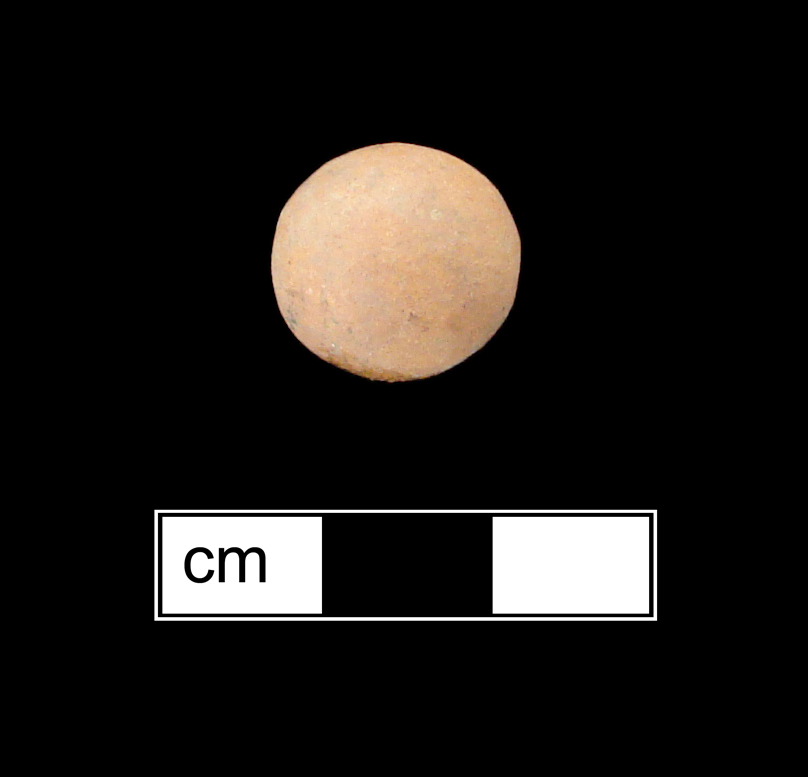
Unglazed Earthenware – Common brown-bodied earthenware marbles are made from low-fired, unglazed earthenware. Depending on impurities in the clay, these marbles can range in color from red to brown, tan or grey. A drop of water placed on a brown-bodied earthenware marble will be rapidly absorbed and this action constitutes a simple method for distinguishing it from an unglazed stoneware marble.
Commercial manufacture of unglazed earthenware marbles began in North America and Germany in the mid-18th century, although the presence of common brown-bodied earthenware marbles on archaeological sites dating several centuries earlier indicates that they were certainly produced prior to that time (Basinet n.d.). (Gartley and Carskadden 1998:52) state that common brown earthenware marbles are rare on North American archaeological sites prior to the mid-18th century, although quite common finds after this time.
Common brown earthenware marbles, which cannot be precisely dated, continued production into the 1930s (Gartley and Carskadden 1998:49). It was typical for marbles made prior to the introduction of the marble shaping machine in 1859 to not be perfectly spherical and sometimes show evidence of fingerprints (Gartley and Carskadden 1998:54). A process for painting or dying earthenware marbles was patented in 1890 by a manufacturer in Ohio (Gartley and Carskadden 1998:55).
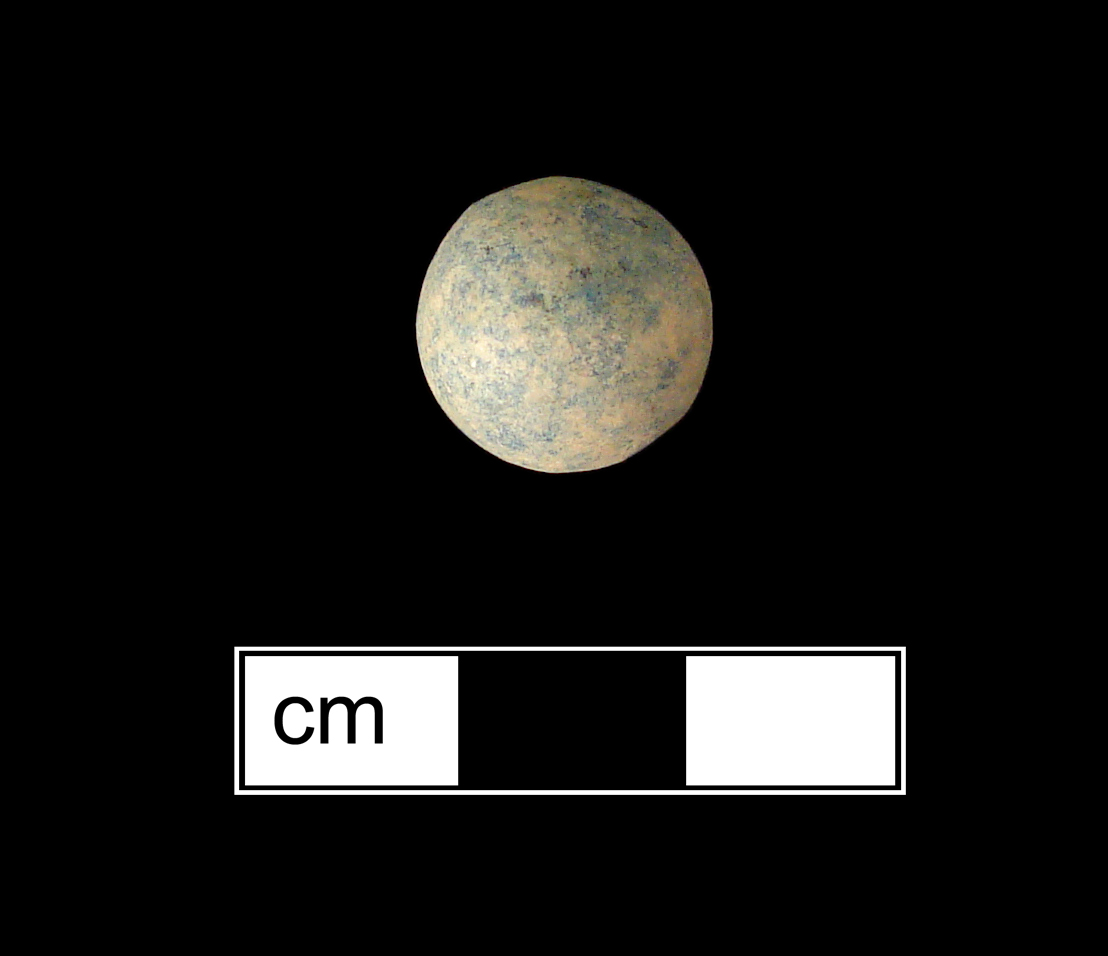
Other Earthenware Marbles – Low-fired, unglazed marbles made of kaolin clay were produced in Germany and sold in the United States, beginning in the 1890s (Carskadden and Gartley 1990:56). Agateware marbles are made from incompletely mixed clays of different colors (brown and white, white with blue or green clays are common). Like many earthenware marbles, they are difficult to date precisely, having been made in Europe from the colonial period up until World War I (Carskadden and Gartley 1990:56). Marbles were also produced with the same buff-colored clays used to manufacture yellow ware, both in glazed and unglazed varieties. At present, yellow ware marbles appear to date to the third quarter of the 19th century (Carskadden and Gartley 1990:56). Whiteware marbles, characterized by sloppy glazing and often out-of-round, were made from the 1880s into the first decade of the 20th century (Carskadden and Gartley 1990:57).
Stoneware Marbles
Bisque (Unglazed) Stoneware – Unglazed stoneware marbles are fired at a high enough temperature that they are impermeable to liquids (Gartley and Carskadden 1998:49). They are often grey in color and sometimes contain small orange inclusions. These marbles can generally be dated between circa 1600 and 1800.
Salt-Glazed Stoneware – Both brown and grey salt-glazed stoneware marbles are likely to be found on North American archaeological sites. Both types have grey stoneware paste, with a brown iron or manganese slip covering the brown salt-glazed variety. (Gartley and Carskadden 1998:39, 44) provide date ranges of circa 1600 to 1800 for both of these types, stating that brown stoneware marbles are the most commonly found marble on 17th-century European and North American archaeological sites.
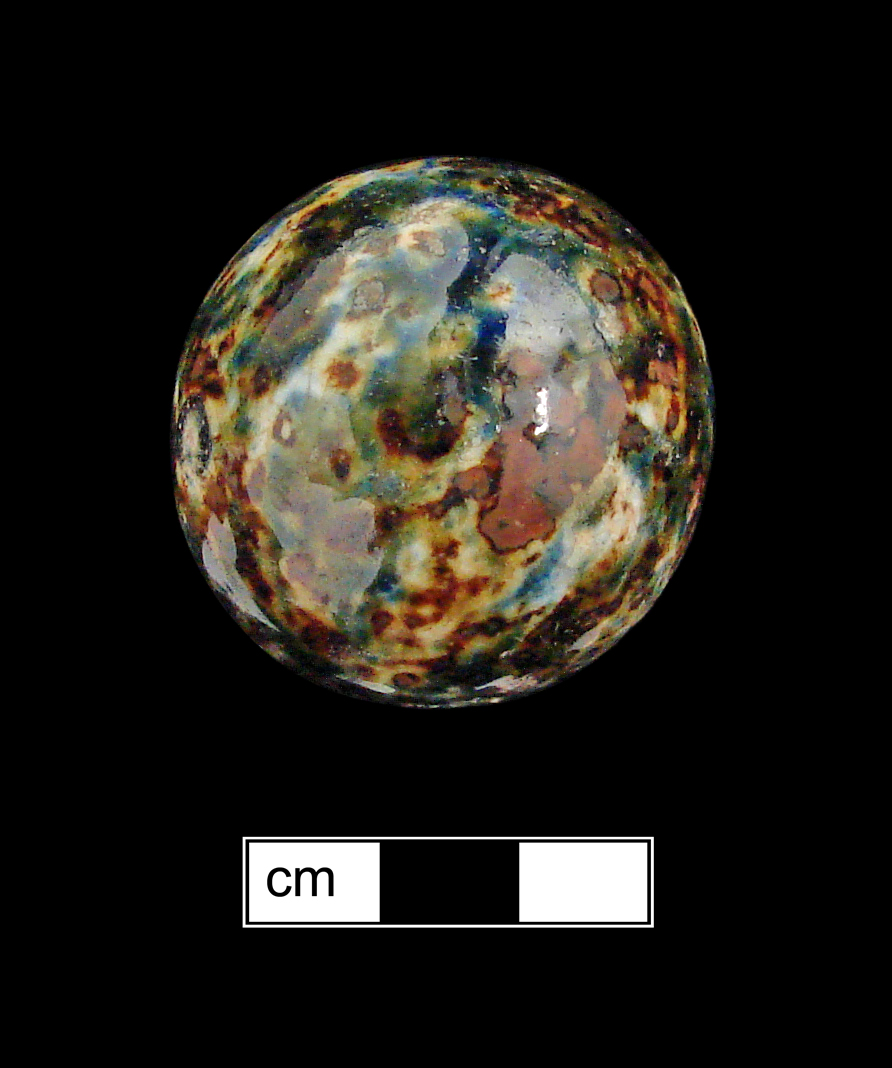
Benningtons – These white bodied stoneware marbles are finished with colorful glaze, either in a single color—generally blue, caramel or dark brown—or a mottling of brown and blue against the white marble paste. Benningtons, also known as "Bennies," were named because their glazes are reminiscent of the mottled surfaces of Rockingham pottery, some of which was produced in Bennington, Vermont. Benningtons were produced during last three decades of 19th century and first decade of 20th century (Gartley and Carskadden 1998:135), although they are not typically found in North American archaeological assemblages dating prior to the 1890s (Carskadden and Gartley 1990:57). They are typically characterized by circular bare spots in the glaze, caused by the marbles resting against one another in the kiln.
Porcelain Marbles
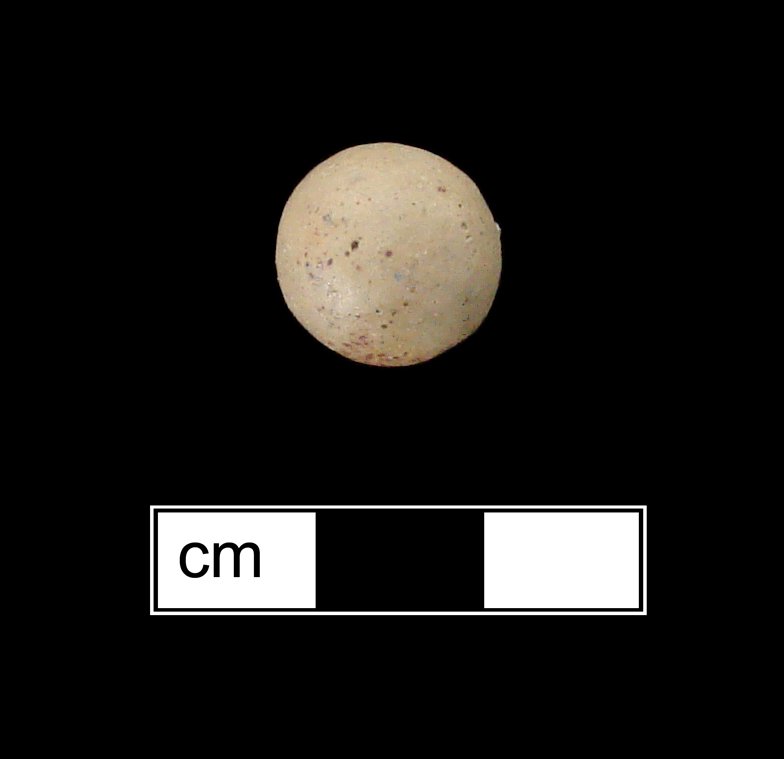
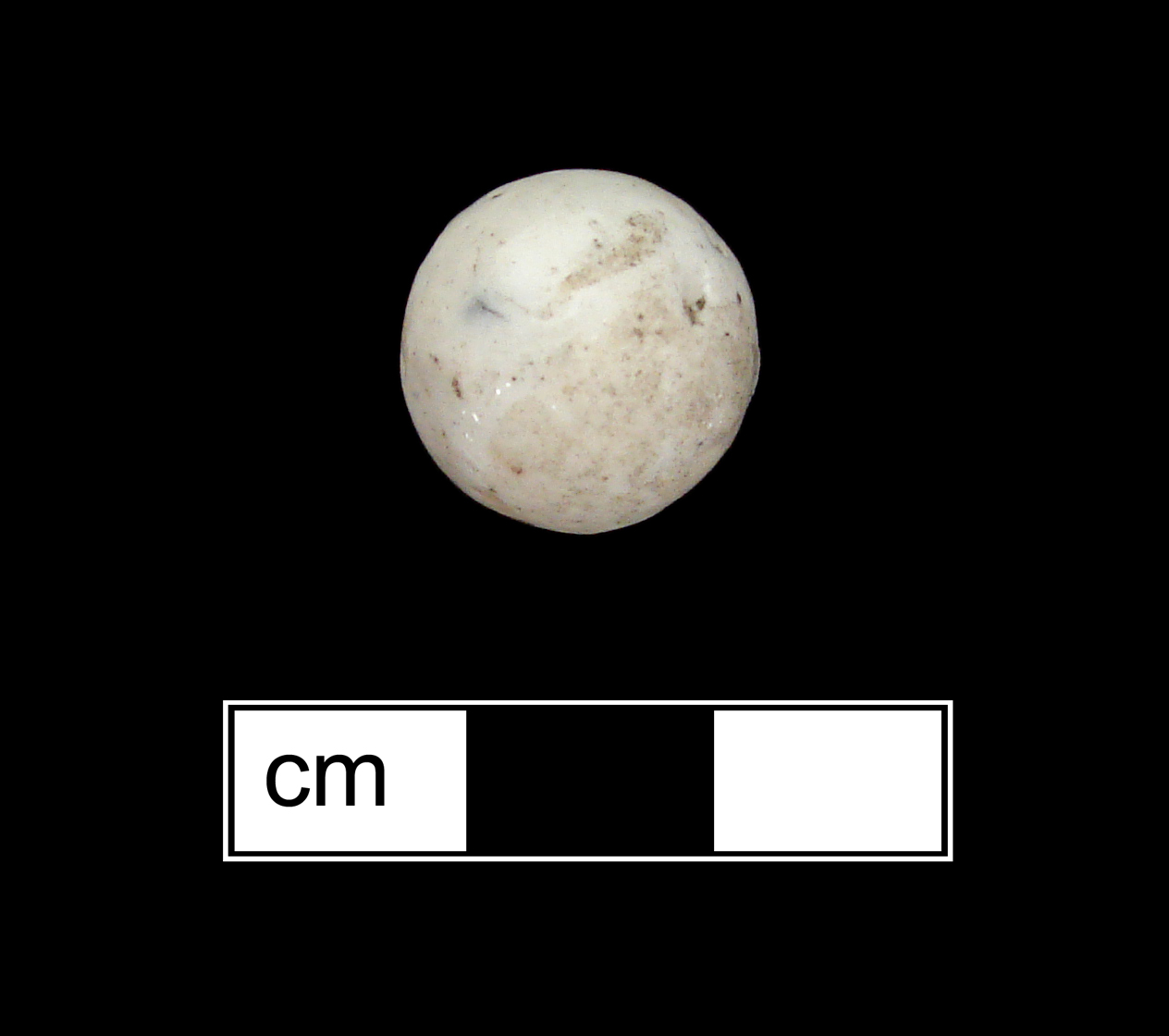
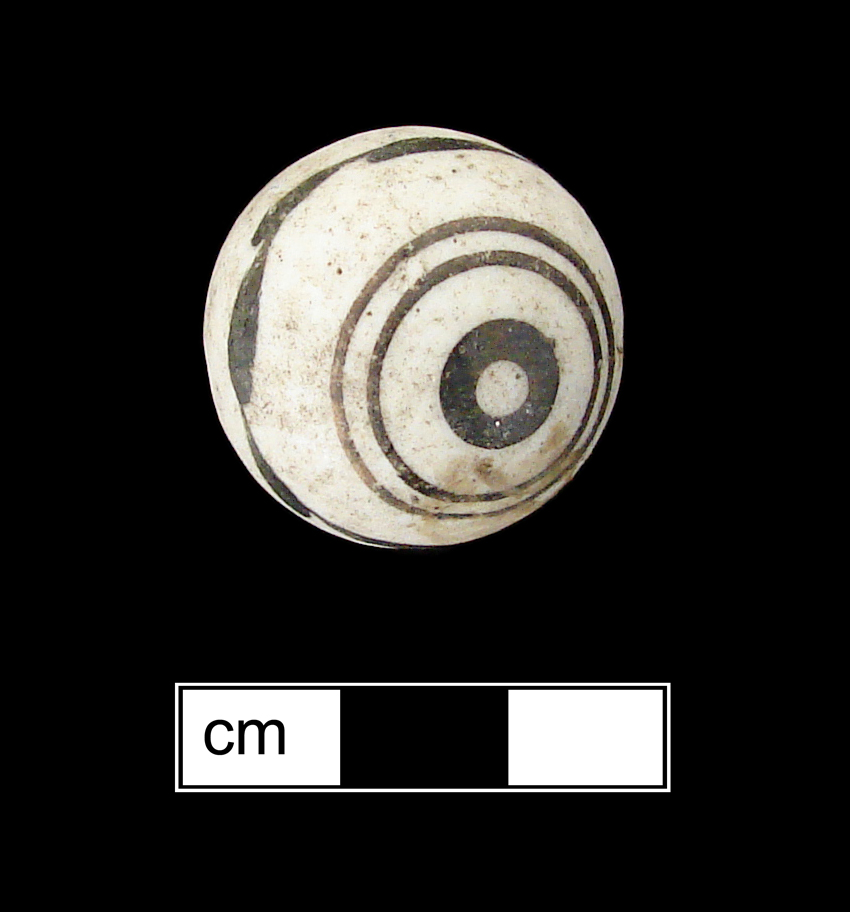
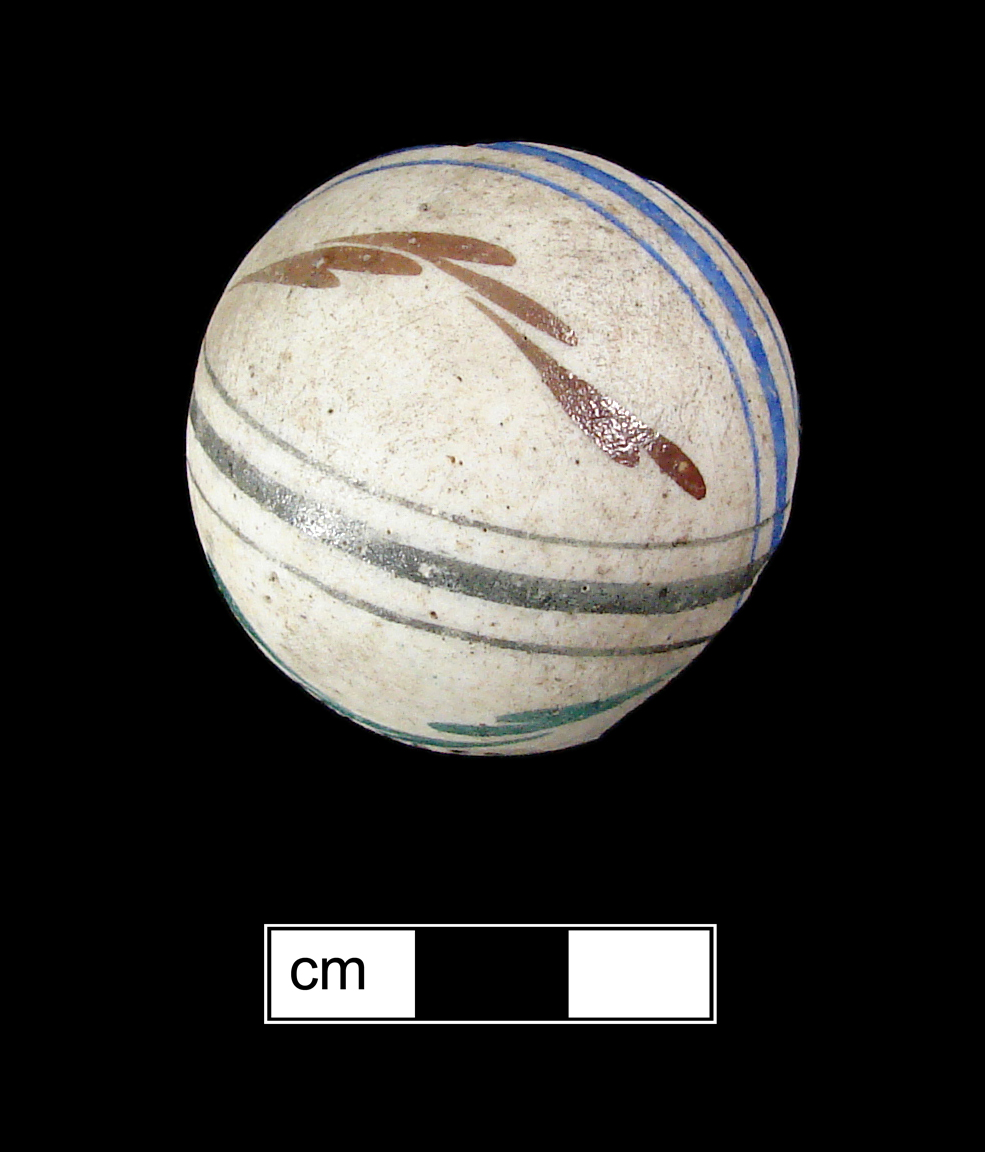
Porcelain marbles are made from highly fired kaolin/feldspar clays. Glazed or unglazed "Chinas," as they are known by collectors, are often painted using oil-based enamels in one or more colors (Carskadden and Gartley 1990:58-59). (Carskadden and Gartley 1990:67) conclude that porcelain marbles were produced between circa 1850 and 1910, with unglazed porcelain marbles more typical of the first several decades of this period.
Although produced in Germany as early as circa 1800, decorated porcelain marbles do not generally appear on North American archaeological sites before the early to mid 1850s (Carskadden and Gartley 1990:58). A study of porcelain marbles found on archaeological sites suggests that the decorative motifs, which can be classified into about a dozen categories, as well as paint colors, have chronological implications. (Carskadden and Gartley 1990) provide a detailed description of these decorative motifs and their date ranges in archaeological contexts. Table 2 briefly summarizes this data, and images associated with this essay serve as illustrations. Marbles produced in the 1850s and 1860s display a wider range of colors than marbles produced by the 1890s, which are generally restricted to black, green and orange (Carskadden and Gartley 1990:67).
Table 2. Decorative Elements on Porcelain Marbles
| Decorative Motif | Date Range of Production | Details |
|---|---|---|
| Undecorated | c. 1800-1920 | Usually found in post-1870 contexts. |
| Intersecting sets of parallel lines | c. mid 1840s-1910 | Checkered pattern of intersecting lines. Examples with wide central band flanked by narrow bands usually date c. 1850s-60s. |
| Helix | c. 1850-1910, more common in latter half of period | Single winding line around circumference of marble. Usually several helixes on one marble, forming intersecting parallel lines. |
| Bands around circumference | c. 1850 – 1870 | Single set of 2-3 parallel lines dividing marble into equal hemispheres. Usually also contains leaves, flowers, or some other decorative element. |
| Bull's Eye | 1850s-1860s (types 1 and 2); 1890s (type 3) | Sets of concentric rings; see Carskadden and Gartley (1990:62-64) for details on types. |
| Leaves | 1850-1910 | Most often seen in green, although other colors represented as well. Sometime found in combination with parallel bands. |
| Daisy Wheel | c. 1850s-1910, more common in earlier portion of period | diametrically opposed daisy-like designs, usually separated by parallel bands around circumference of marble. |
| Flowers | 1850-1910 | Carskadden and Gartley (1990:65-66) provide more detailed analysis on dating specific floral types. |
| Spirals | c. 1850s-1910 | Spiraling line beginning at one or both poles of marble and coiling down about 25% of circumference towards center of marble. |
| Dates in this table taken from Carskadden and Gartley 1990. | ||
Porcelain marbles were also manufactured and sold without any painted decoration. Although undecorated Chinas may have been imported into the United States from Germany since early in the 19th century, it is uncommon for undecorated porcelain marbles to appear in archaeological contexts before around 1870 (Gartley and Carskadden 1998:132).
Stone Marbles
Stone marbles have been produced for centuries, at least as far back as Greek and Roman times. Commercial production of stone marbles began around the 17th century in Britain and Holland, but by the 18th century, Germany had become the major center for the production of stone marbles (Randall 1971:102). Marbles were made from a number of semi-precious stones like chalcedony, agate, malachite, quartz and obsidian, and from alabaster (marble) and limestone. Of all the stone marbles, examples made of limestone appear to be the most prevalent on North American archaeological sites.
Limestone Marbles
Limestone – Limestone marbles were produced in Europe as early as the second half of the 16th century (Gartley and Carskadden 1998:91). Commercial production began in Germany in 1769 and it is likely that most limestone marbles found on North American archaeological sites postdate 1769 (Gartley and Carskadden 1998:92). Not all limestone marbles were used as toys; they sometimes served as canister shot (Basinet n.d.). Competition from the glass and ceramic marble industry was a major factor in the decline of the stone marble industry, starting in the 1870s (Randall 1971:102). The production of limestone marbles continued at a reduced rate until around the beginning of World War I (Baumann 1970).
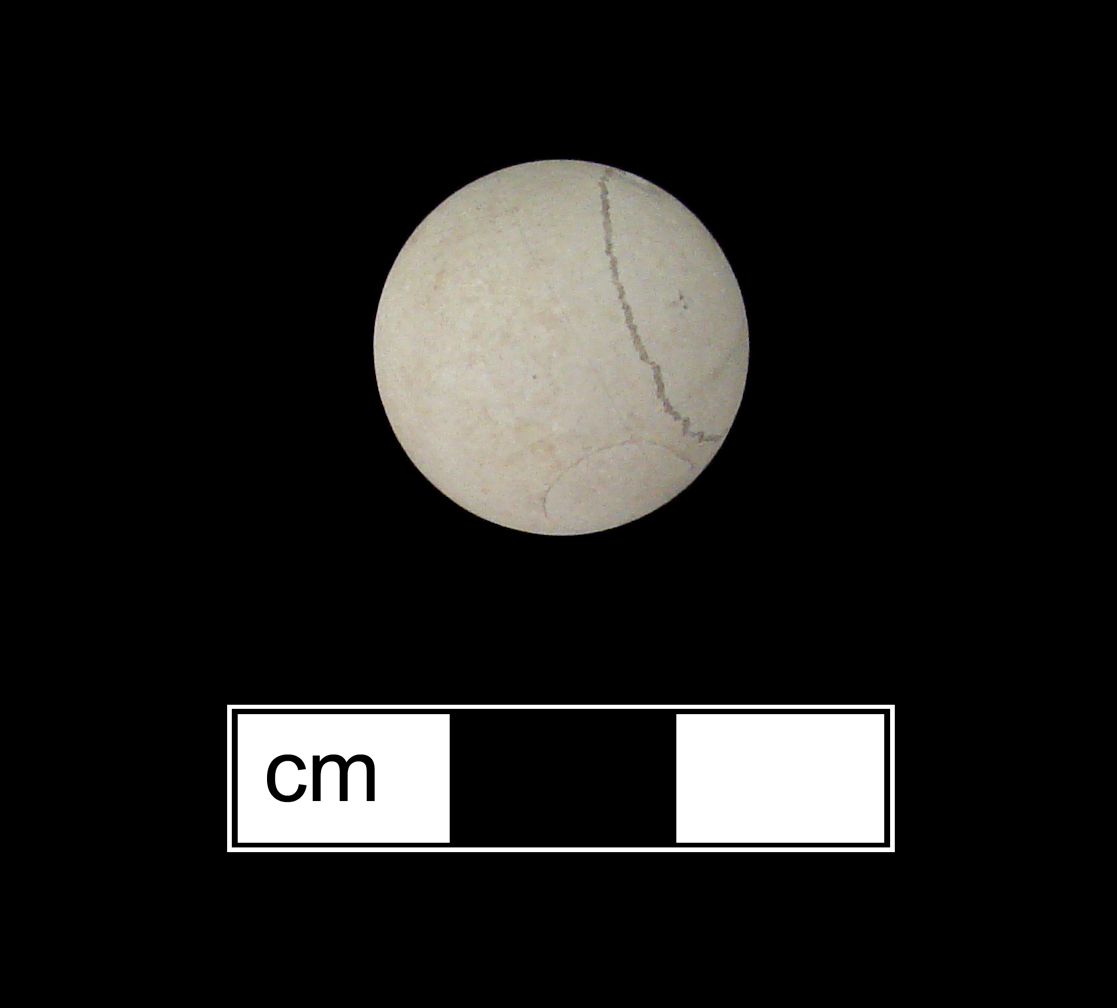
Marbles made from limestone occur in natural colors — grey, brown, tan, white and yellowish — have a smooth finish and sometimes show flat facets on one or more sides that represent remnants of the milling process whereby cubes of stone were made spherical. Limestone marbles could also be dyed different colors or banded with manganese (Gartley and Carskadden 1998:101). A limestone marble can be easily identified by placing a drop of diluted acid (10% hydrochloric acid or household vinegar) on its surface. The acid will effervesce if the marble is limestone.
Glass Marbles
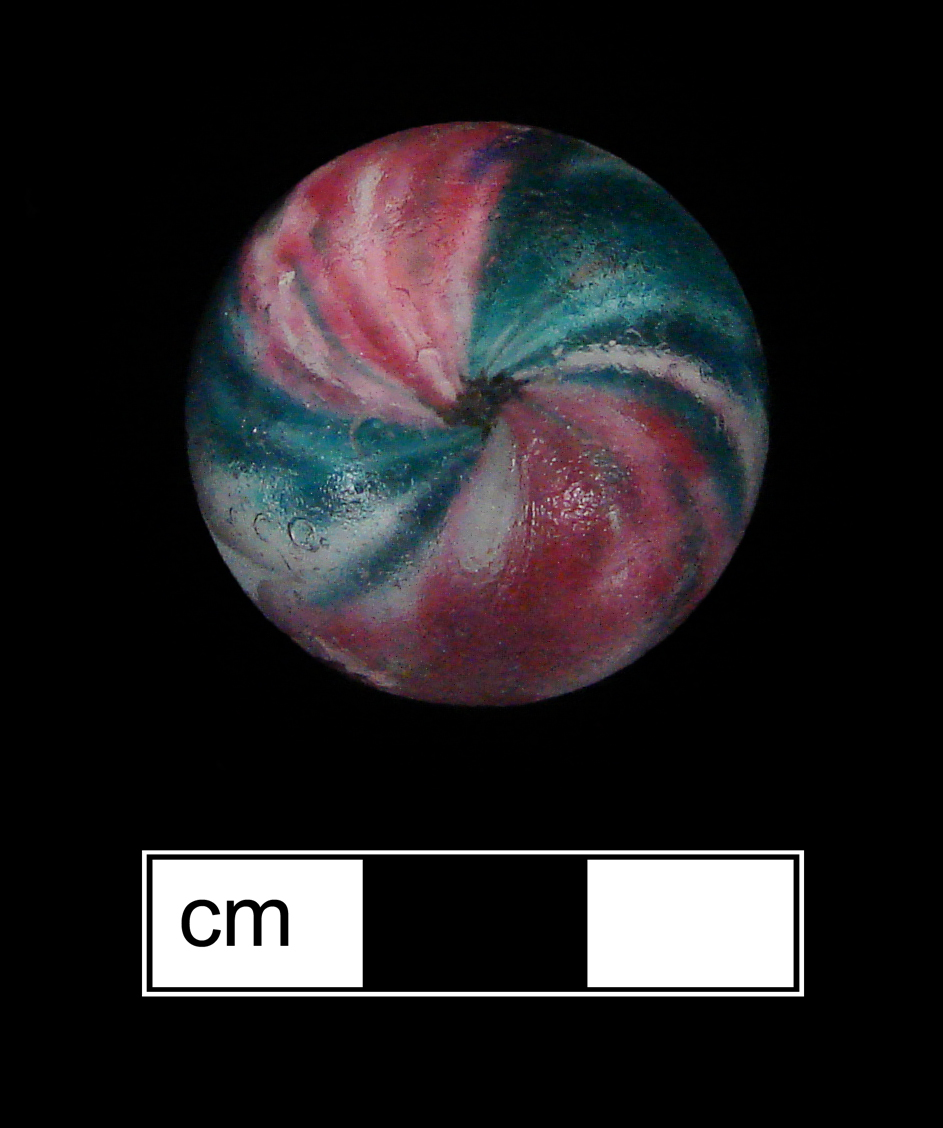
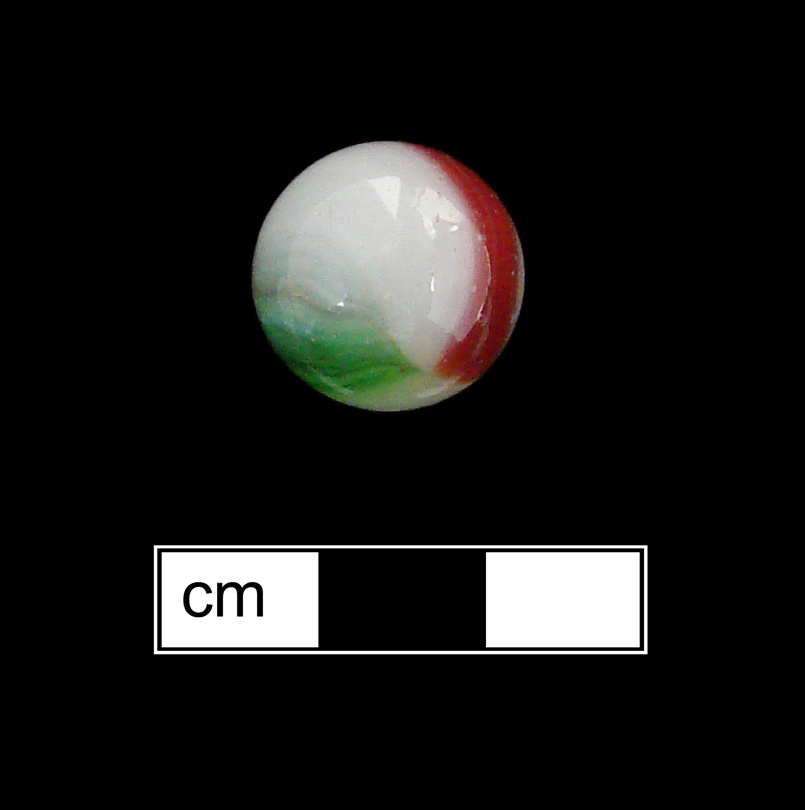
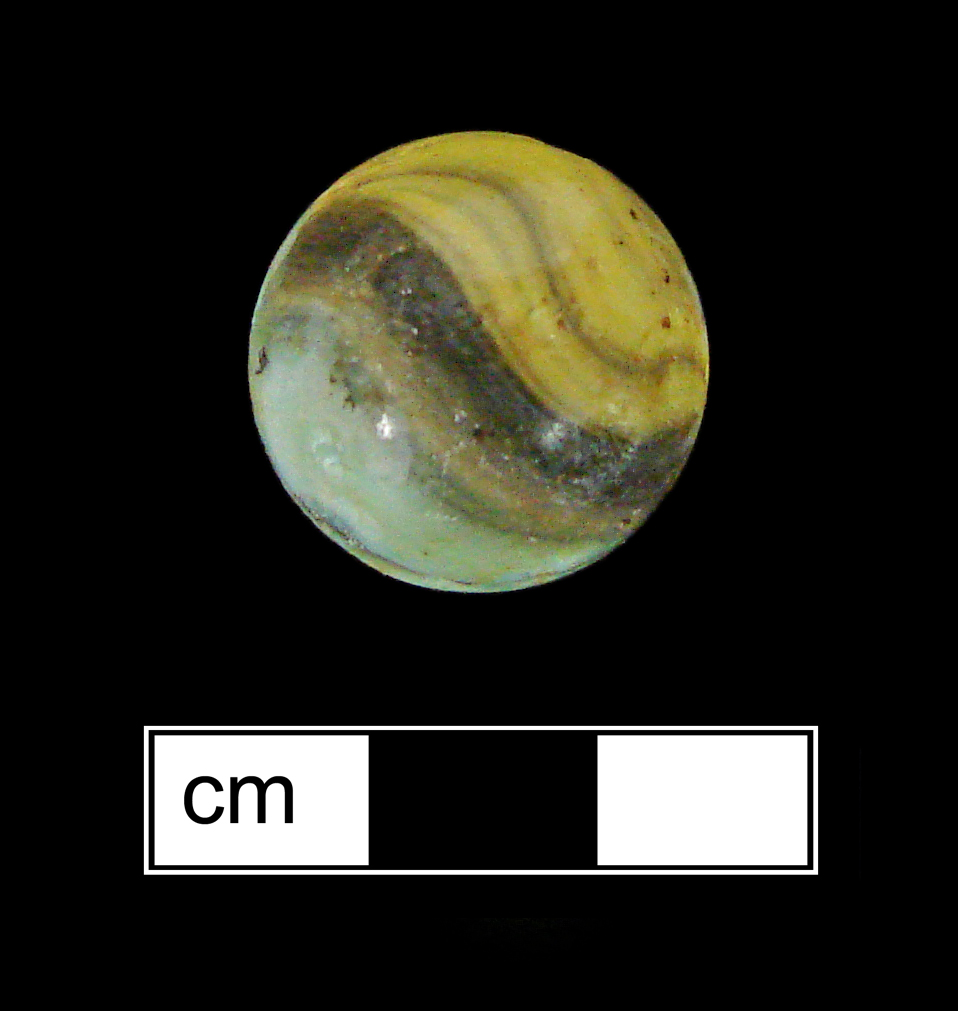
Glass marbles are generally divided into handmade and machine-made varieties. Both types occur in hundreds of varieties (Randall and Webb 1988:7), so for dating a particular variety, readers should consult published or online sources. The marbles shown on this website are assigned variety names where possible.
Handmade Glass – Production of handmade glass marbles for export began in Germany in the mid-19th century; some sources place this date at 1846 (Randall and Webb 1988:21). Production ceased around 1920, but it is likely that export into the United States ended around the beginning of World War I (Randall 1971). Glass marbles were also produced in the United States as early as 1880 (Randall 1971:104).
Handmade marbles were manufactured by cutting individual marbles from a rod of glass, shaping them with a device known as marble scissors, and using one of several processes to round and polish the final product (Randall and Webb 1988:21). Two cut-off scars are generally visible upon close examination; these marks are a characteristic of handmade marbles.
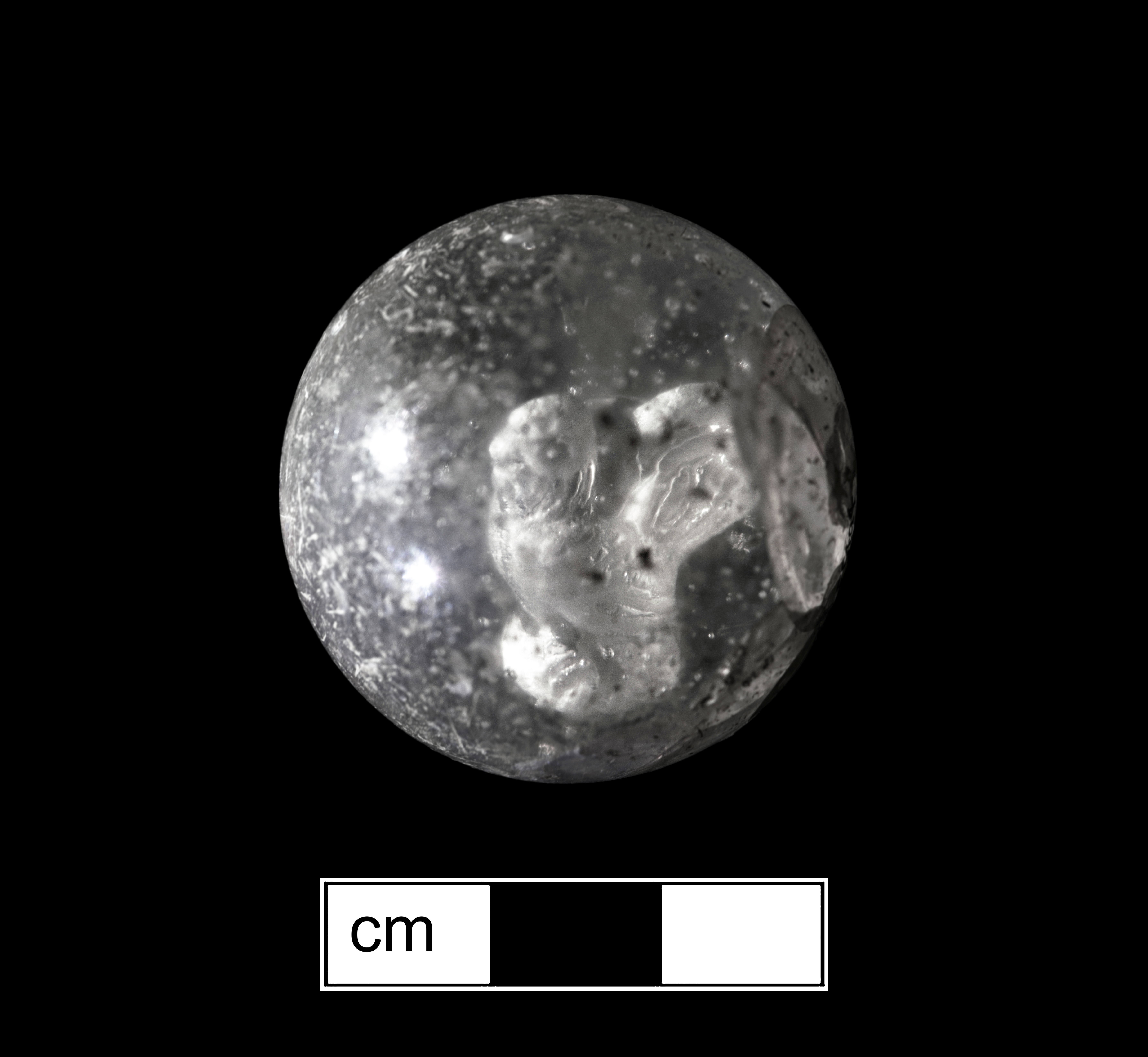
Sulphides – The distinguishing characteristic of these handmade marbles is that they contain silvery human, animal or object figurines encased within the marble. The figurines, which were sometimes highlighted with painted details, were created in a variety of wild and domestic animal species, inanimate objects, and human and religious figures. Most sulphides were made of transparent colorless glass, although rare examples use colored glass. The figurines, although silvery in appearance due to a thin layer of air particles between the figures and the glass, are actually ceramic (Block and Payne 2001:6, Block 1999). There are some slight disparities among marble scholars about the manufacture date ranges for sulphide marbles. Some sources suggest that they were manufactured in Germany and the United States between 1878 and 1926 (Jokelson 1968:67), while others believe production may have begun as early as the 1860s (Block and Payne 2001:8).
Codd Bottle Stoppers – A particular type of carbonated beverage bottle, known as the Codd Stopper bottle, used glass marbles to provide a seal for the carbonation. Codd Stopper bottles date generally between c. 1870 and 1920 (Gartley and Carskadden 1998:39), although a few beverage bottlers still use them, or variations involving a stopper ball. These stopper marbles, which could be colorless, light green, black or azure, were molded and thus the presence of mold seams can be used to distinguish them from toy marbles (Randall and Webb 1988:24).
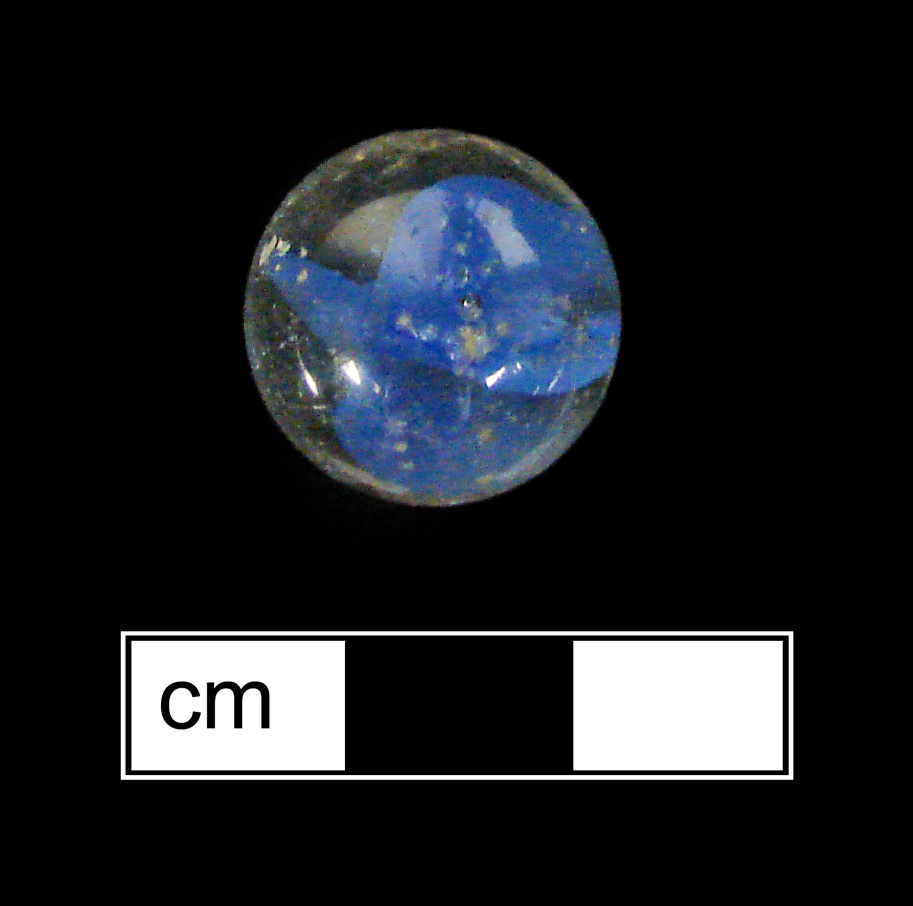
Machine Made Glass – The introduction of a marble making machine occurred in 1901 in the United States (Randall 1971:105) and by 1910, machine-made glass marbles had become readily available in the United States (Carskadden and Gartley 1990:58). Between 1901 and 1926, machine-made marbles had one cut-off mark (Randall 1971:105); after this date, they are uniformly spherical. Machine-made marbles occur in hundreds of varieties that can be dated with precision; please consult published and online sources for further information.
Online Sources for Marble Identification
http://www.blocksite.com/marble-community/marble-collectors-society-of-america/
References
n.d. Marble Alan’s Encyclopedia Marble Reference PDF Archive. Published by Michael Shamblin and available at http://www.mikesmarbles.com. Not paginated.
1970 Collecting Antique Marbles. Mid-America Book Co., Leon, Iowa.
1999 Marbles Illustrated; Prices at Auction. Schiffer Publishing, Atglen, Pennsylvania.
2001 Sulphide Marbles. Schiffer Publishing, Atglen, Pennsylvania.
1990 A Preliminary Seriation of 19th-Century Decorated Porcelain Marbles. Historical Archaeology 24(2):55-69.
1998 Colonial Period and Early 19th-Century Children’s Toy Marbles; History and Identification for the Archaeologist and Collector. The Muskingum Valley Archaeological Survey, Zanesville, Ohio.
1968 Sulphides: The Art of Cameo Incrustation. Thomas Nelson and Sons, New York.
1971 Early Marbles. Historical Archaeology 5:102-105.
1988 Greenberg’s Guide to Marbles. Greenberg Publishing Company, Sykesville, Maryland.