Thimbles
Definition and Function
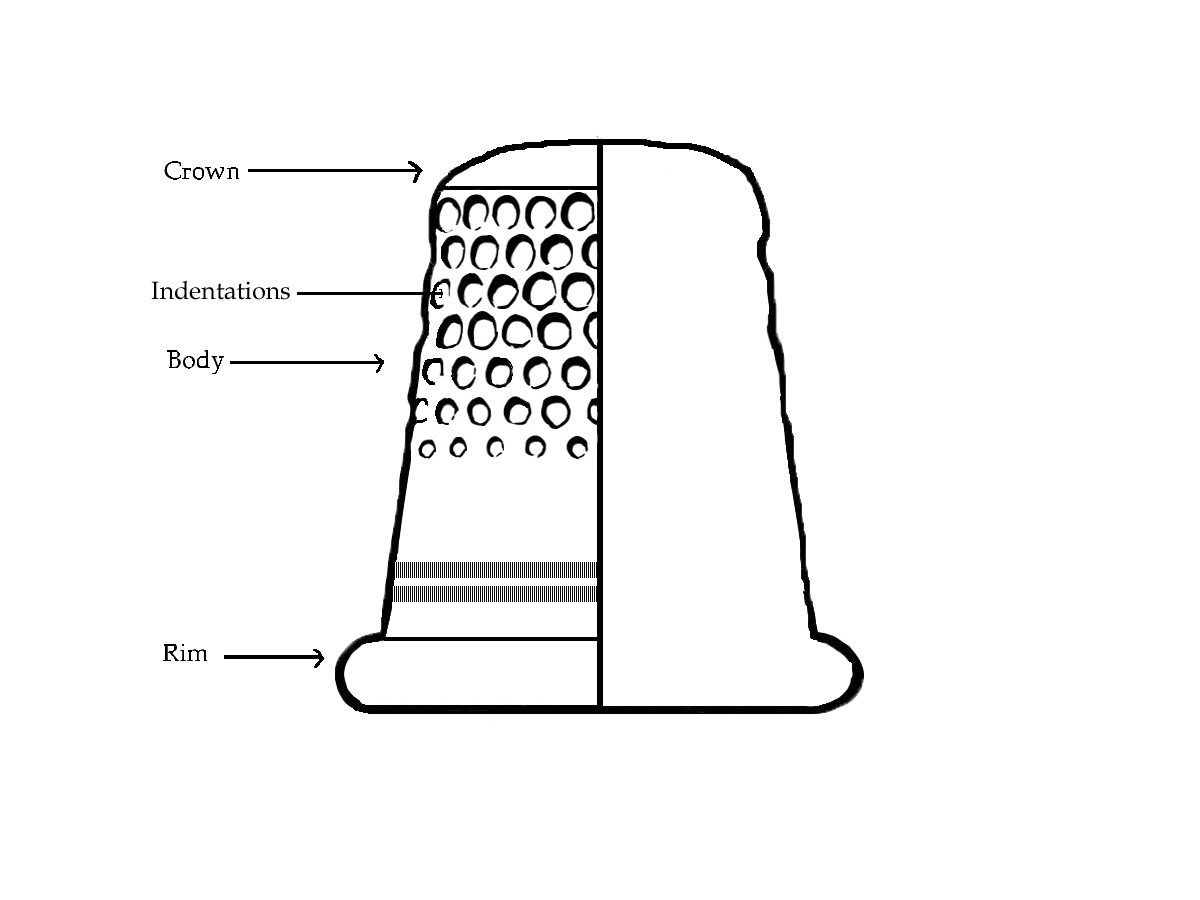
Thimbles are a sewing device used to protect the sewer's fingers from needles. Thimbles take two major forms – the more familiar closed-top version and an open top form called a thimble ring. Thimbles have been made from a variety of materials, including metals, precious stone, ivory, ceramic and plastic.
This essay and the accompanying photographed examples will focus only on thimbles made from metals—copper alloy, silver, iron and aluminum—since they are the types most commonly found on archaeological sites in the Mid-Atlantic region.1 By far, the greatest number of thimbles in the collections of the Maryland Archaeological Conservation Lab are made from copper alloy. Because they were mass-produced, easily affordable and widely distributed (Beaudry 2006:92), copper alloy thimbles tend to be the type that show up most frequently on colonial and post-colonial archaeological sites in the United States. This essay will also only address ordinary work thimbles. There are many publications and websites that deal in detail with collectible, decorative thimbles and with identifying maker’s marks. A list of some of these sources is given in the References at the end of this essay.
The earliest metal thimbles in England date to the mid-14th century (Holmes 1987). Important centers for thimble production in the colonial period were Germany, the Netherlands (Holland) and England (Holmes 1987; Deagan 2002). The English thimble-making industry, which began in the 17th century, was revolutionized in 1696, when Dutchman John Lofting patented a casting method that allowed his company to manufacture over 150,000 thimbles a month (Holmes 1985:137; McConnel 1990:24). Until the late 17th century, most copper alloy and silver thimbles used in the American colonies were made in Holland or Germany (Beaudry 2006:96). Thimble manufactories began to be established in the United States at the end of the 18th century, with a number of factories in operation by the second quarter of the 19th century (Zalkin 1988:35; Beaudry 2006:99).
Dating Metal Thimbles
Dating thimbles from physical characteristics is considered here in broad terms. Contextual information will be provided for each thimble illustrated on this website and general conclusions about dating are drawn from this contextual data, as well as information from secondary sources. For a more detailed discussion of thimbles, see Beaudry (2006). It is worth noting that since thimbles were often curated by their owners for long periods, it would not be unusual to find a thimble of earlier manufacture date in an archaeological context.
Metal thimbles were made in either one or two pieces. With two-piece thimbles, the crown or top was attached to the inside rim of the thimble body, which was either formed from a strip of metal joined into a cylinder (leaving a visible side seam) or cast in a sand mold. One-piece thimbles were produced in several ways: through stamping, casting or deep drawing.
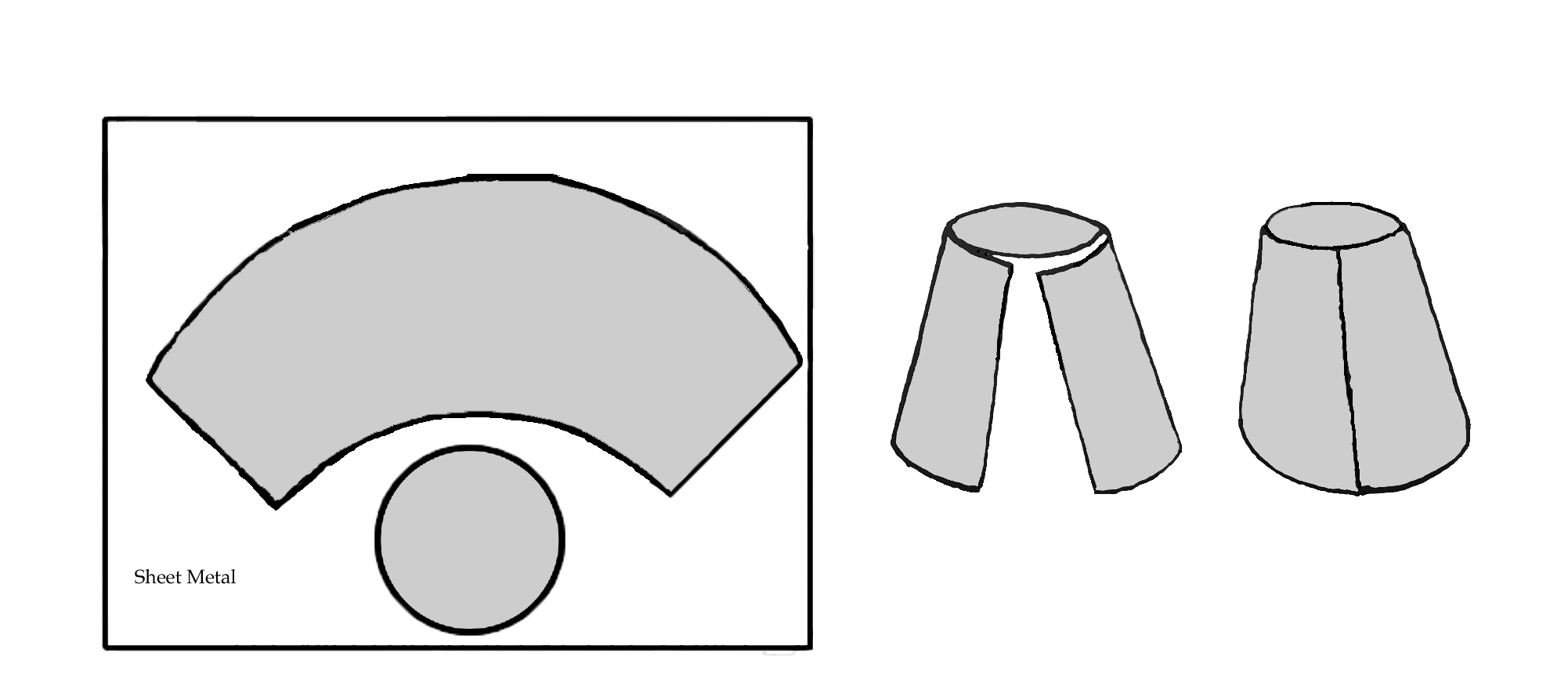
Stamped thimbles were made by hammering or pressing a sheet of metal into a die; this process could leave small tell-tale folds of metal along the rim of the thimble. Stamping as a thimble production method continued to be used by the English until the end of the 17th century, but had been largely abandoned in favor of casting by the Dutch after around 1620 (Deagan 2002:203). Cast thimbles were created by pouring molten metal into sand molds. The process of finishing cast thimbles sometimes left notches along the rim of the thimble, where it was attached to a lathe for smoothing. English and Dutch thimble manufacturers produced thimbles primarily by casting during the 18th century, with two-piece cast thimbles produced by the Dutch until around 1730 and until 1750 by the British (Deagan 2002:204; Holmes 1987:4; McConnel 1990:29). From these dates until the end of the century, one-piece cast thimbles were produced by the Dutch and the English. In the collections of the Maryland Archaeological Conservation Lab, cast thimbles found at 17th-century sites generally displayed an indention or narrow band between the body and the crown. 18th-century cast thimbles, often called “Lofting” type after Dutch manufacturer John Lofting, were characterized by waffle pattern crowns and raised rims.
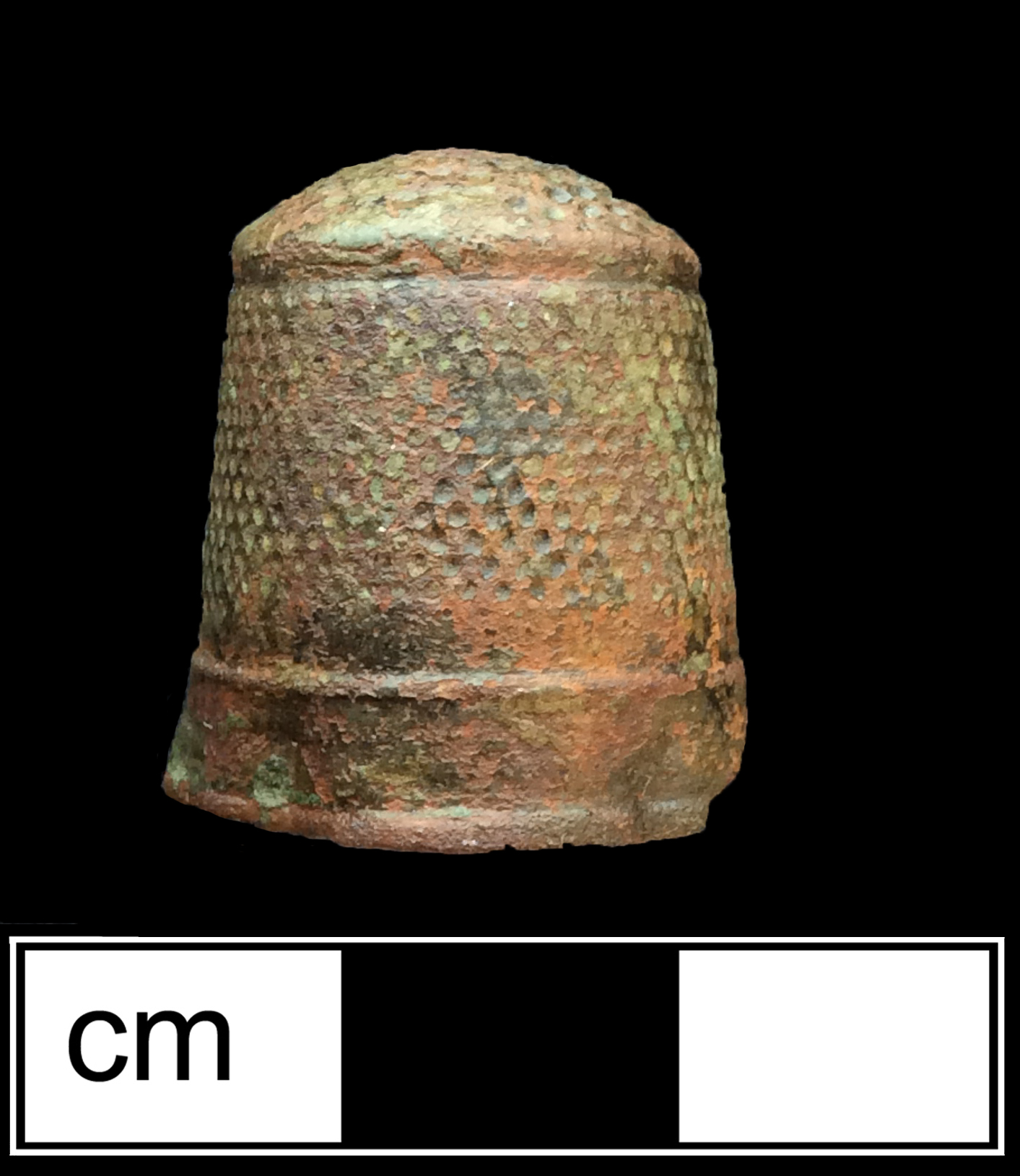
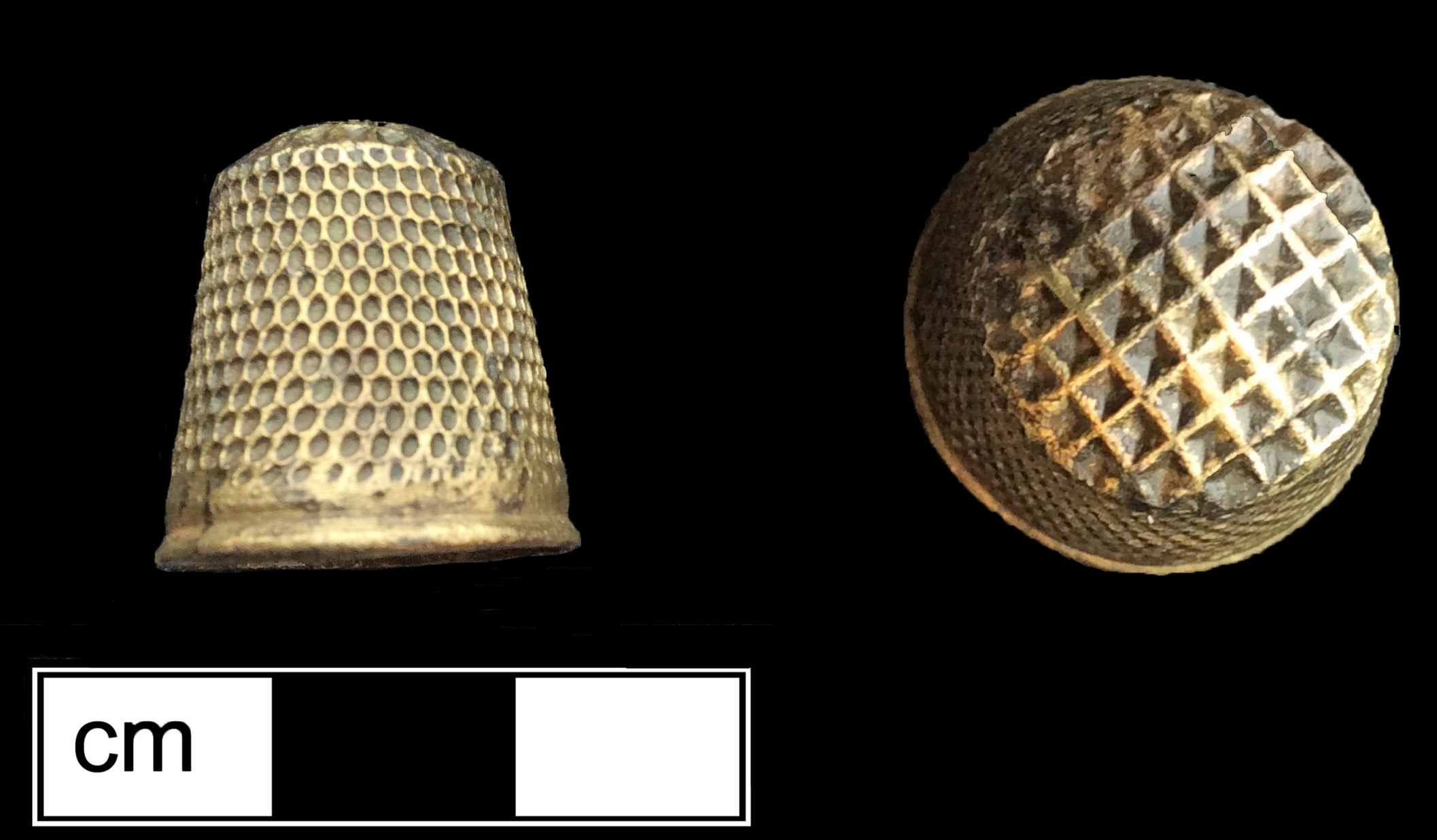
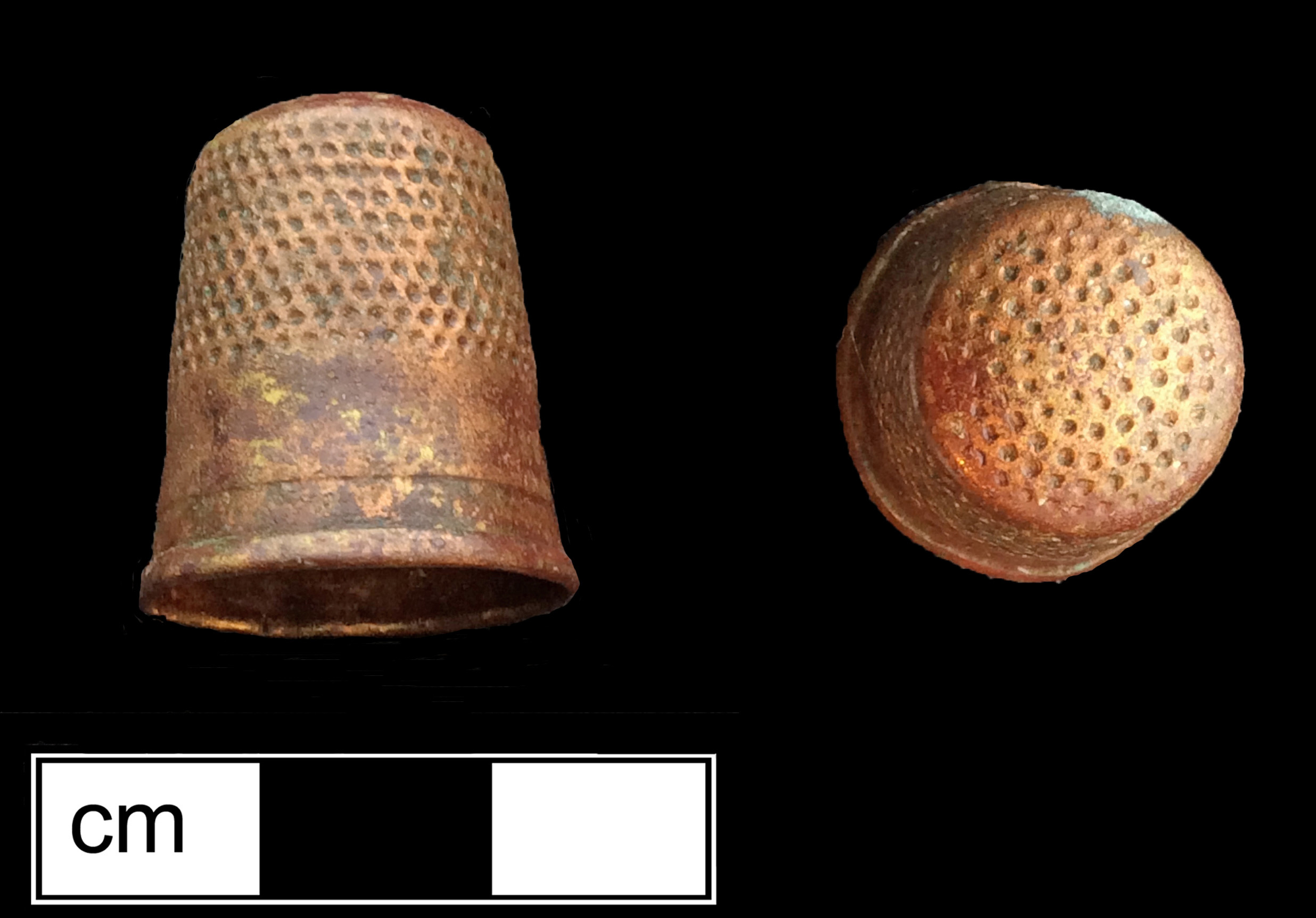
The deep drawing process, similar to the stamping process, involved punching or pressing a flat round disk of sheet metal into a series of increasingly deeper dies. While the deep drawing process was used by German thimble makers as early as the 16th century, Dutch, English and Swedish thimble makers continued using the sand casting method of thimble production into the 18th century (Beaudry 2006:95). Improvements in both the quality of sheet metal and in the deep drawing process occurred in the early fourth quarter of the 18th century (Holmes 1987:10; Beaudry 2006:101) and after that time, casting as a production method was discontinued. The deep drawing process is still used for thimble manufacture today. Deep drawn thimbles tend to be thinner bodied and lighter in weight than cast thimbles. A look inside some very lightweight deep drawn thimbles will reveal that the indentations (knurling impressions), particularly on the crown, will also be visible on the thimble interior.
The manufacture method for 17th and early 18th-century thimbles is not always easily determined from a visual inspection (Noël Hume and Noël Hume 2001:366). This is particularly true for archaeologically-recovered thimbles, where surface corrosion and patina can obscure brazing seams and interior lathe marks. Attempts at the lab to use high powered microscopy and x-radiography to determine manufacture technique generally proved inconclusive.
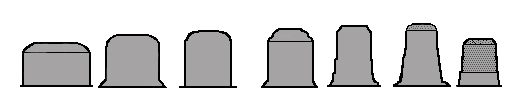
Additionally, thimble shape and height changed over time and these temporal changes often varied by country of manufacture (Beaudry 2006; Holmes 1985; McConnel 1990). Since this essay is considered a basic guide to thimble identification, the topic of thimble shape change over time will not be addressed. Here, easily identifiable physical traits, such as rim finishes, crowns and the shape of the indentations or knurlings that help stabilize the needle, will be used to guide the reader in identifying and dating thimbles. Rim shapes will be used as the primary organizing trait for copper alloy thimbles in the photographs. Other thimbles are organized by metal composition (iron, silver, aluminum). Thimble rings form their own section.
Rims – Three types of rim finishes characterize thimbles: no rims, solid projecting rims and turned rims. Cast thimbles tend to have no rims or, by the 18th century, solid projecting rims (Hill 1995:86; Holmes 1985:23). Deep drawn thimbles more typically have turned rims that were created while the unfinished thimble is spun on a lathe (Beaudry 2006:101). Turning the lowest edge of the thimble back on itself results in a turned or rolled rim, which can be either flat or rounded. Turned rims date from the 19th century onwards (Holmes 1985:23).
Crowns – 17th-century Dutch thimbles will often have an indented narrow flat band between the crown and the body of the thimble. Domed crowns were used on English and U.S. thimbles in the 19th century and flat tops began to appear on American thimbles in the 20th century (Zalkin 1988:20; Beaudry 2006:108).
Indentations – Before the invention of a mechanical impressing process known as knurling, indentations used to provide a stable, non-slip surface for the end of the needle were created individually by hand punching or drilling. The beginning date for the development of the knurling process is unclear; in his 1985 A History of Thimbles, Edwin Holmes stated the process began in the late 17th century, but in another publication dated two years later he had revised the earliest date for knurling on Dutch thimbles to 1625, with most thimbles knurled mechanically by around 1650 (Holmes 1987:10). Unlike hand indentations, mechanical indentations are evenly-spaced and sized. Although the MAC Lab collections contain thimbles from archaeological sites dating from the second half of the 17th century, none of the thimbles from these sites is hand-punched. Thus, the data from the lab collections (albeit a small sample) suggests that the earlier dates for mechanical knurling are probably more accurate. It is unlikely that a thimble with hand-punched indentations will appear on any but the very earliest archaeological sites in the Mid-Atlantic region.
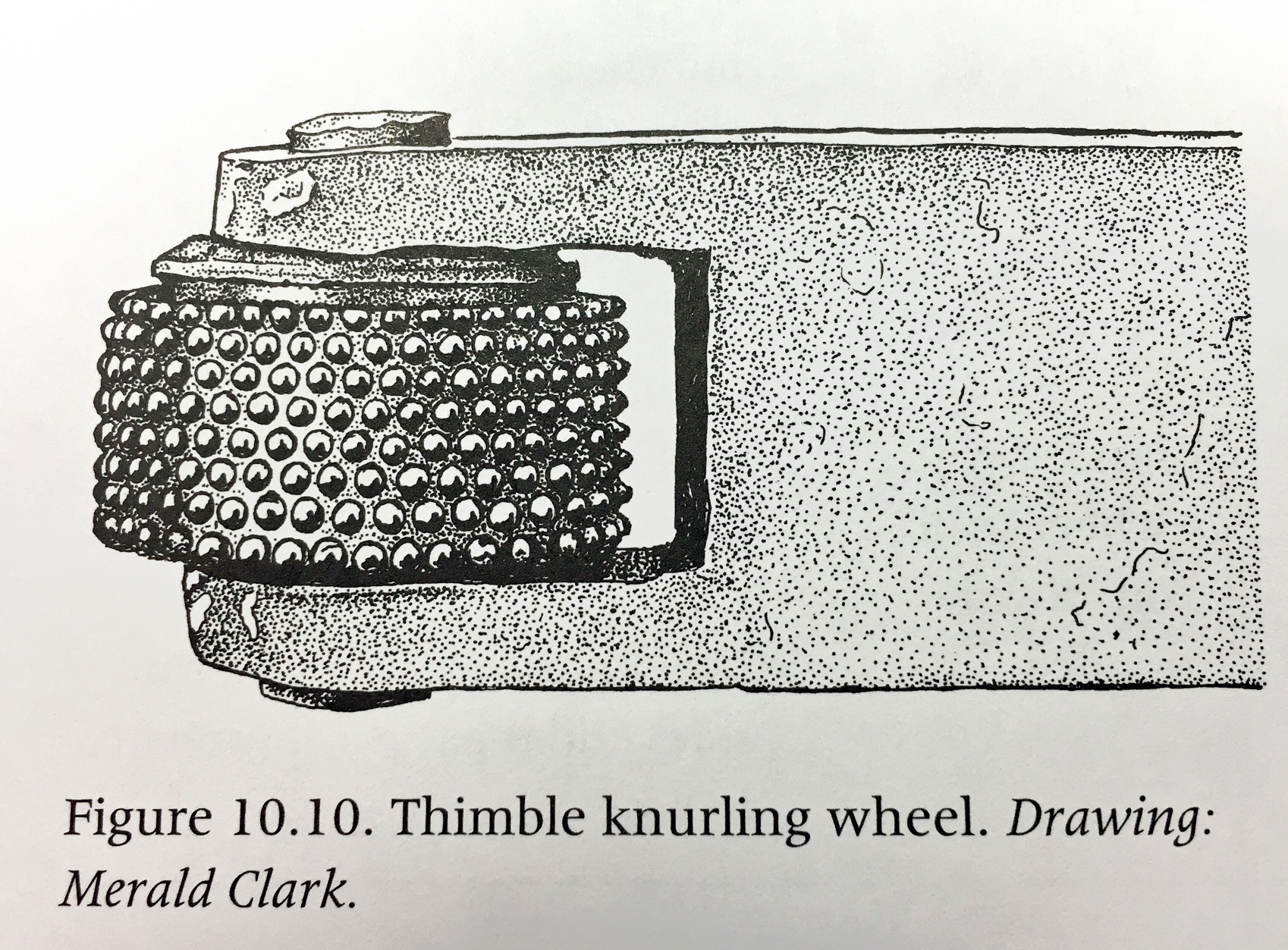
Thimbles display several types of indentations: a waffle-like grid, circles/hexagons and dots. The waffle-like grid, which looks just like it sounds, was characteristic of late 17th- and 18th-century thimbles (Sullivan 2004) and was typically used on the thimble crown (but can appear on the body as well). Hexagon-shaped and circular indentations on thimble bodies are characteristic of 18th-century thimbles (Hill 1995:89), but also appear on thimbles found on 17th-century sites.2 Smaller dots, often arranged in concentric circles on the crown and around the body, began to be used at the end of the 18th century (McConnel 1990:10). Waffle tops, usually combined with hexagonal or circular-shaped body indentations tend to be present on cast thimbles, while the smaller dots appear to be more typical of deep drawn thimbles with rolled rims. While modern thimbles have the crown and body indentations applied simultaneously by machine, the sides and crown were stamped separately before the end of the 18th century (Holmes 1985:23; Deagan 2002:205).
Size Marks – Size marks began to appear on thimbles in the late 19th century (Zalkin 1988; Beaudry 2006). Sizes were not standardized between different countries, so comparing the size mark relative to the overall size of the thimble can sometimes be used to determine the thimble's country of origin. For example, in the United States, Holland, and Germany, small thimbles were assigned low numbers, with size designation increasing as thimble size increased. This system was reversed in England. U.S. thimble sizes ran up to size 14; up to size 12 in England; and up to 10 in Germany and Holland.
User Modifications – Some thimbles in the collections of the MAC Lab display modifications by their users. Several had the sides either along the top or the base of the thimble flattened to form a square, rather than circular, circumference, presumably to create a better fit (Figure 8). Another had three holes punched into the top for ventilation (Figure 9). One thimble has what appears to be a plug of metal in the crown, added to repair a worn-out area. Three thimbles have initials scratched into the metal.
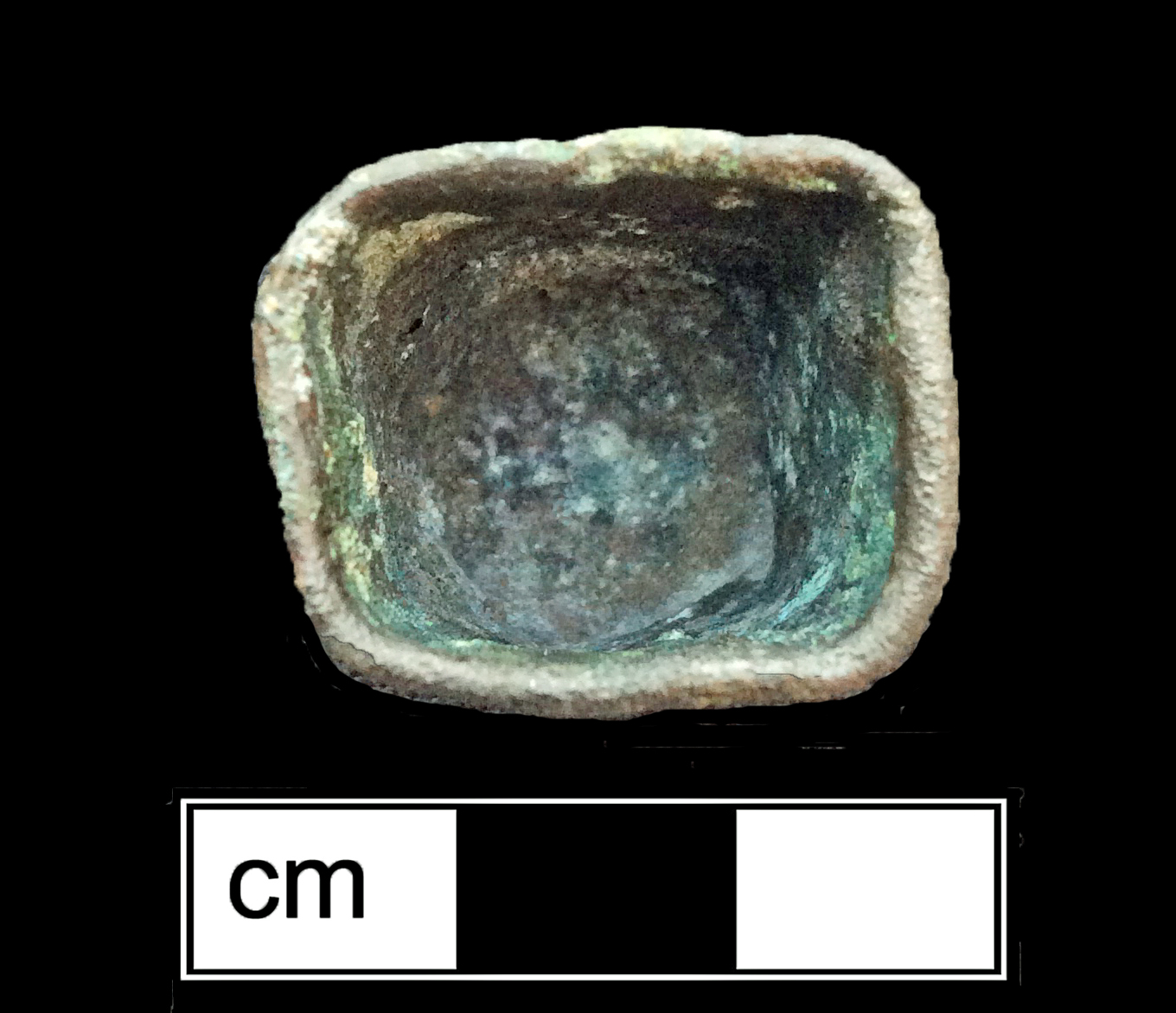
Figure 8. 18BA332 Dolfield Farm Lot 31 and 18BC27 Feature 30 Lot 324.
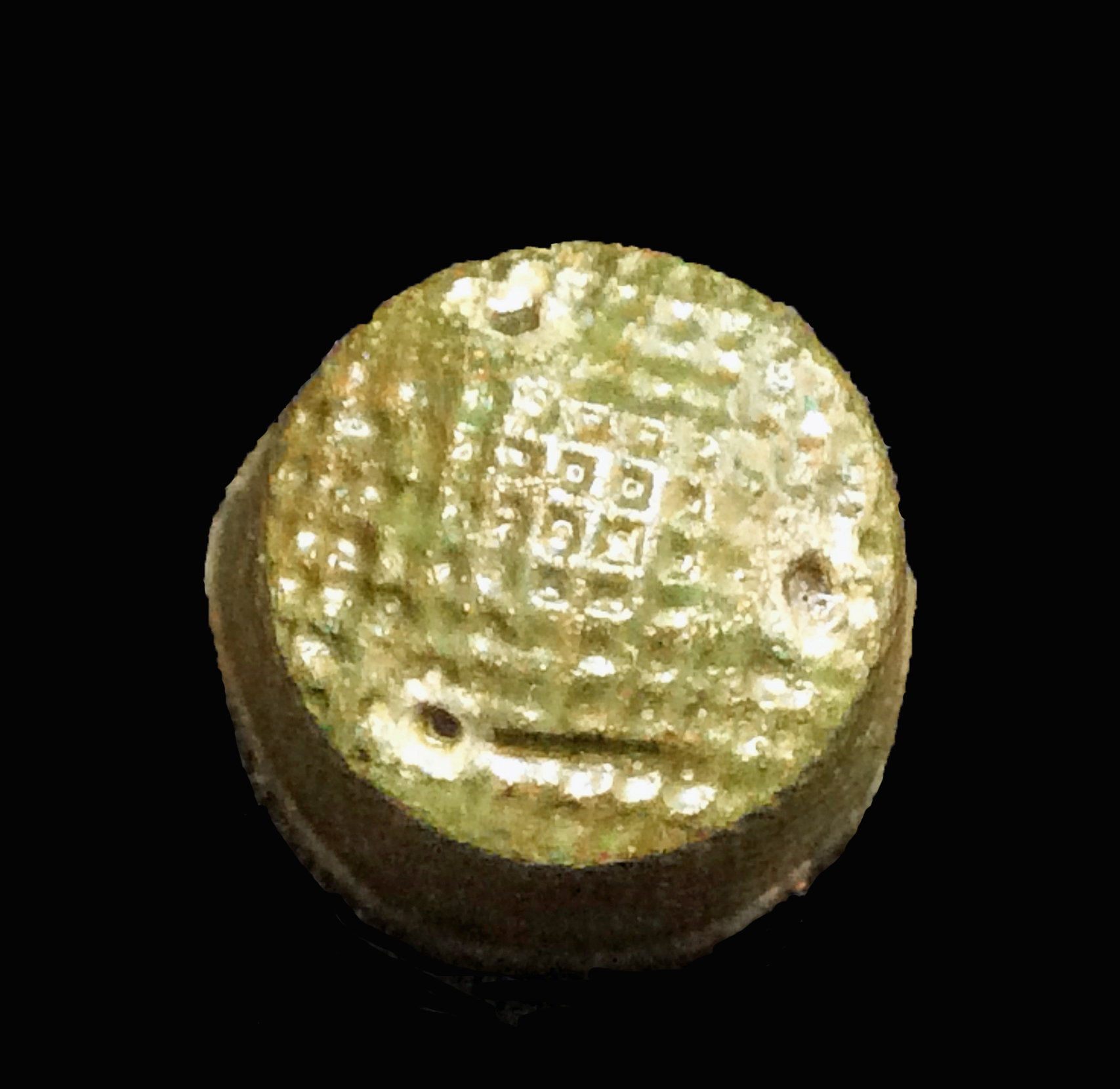
Figure 9. 18PR705 Pleasant Prospect Lot 813.
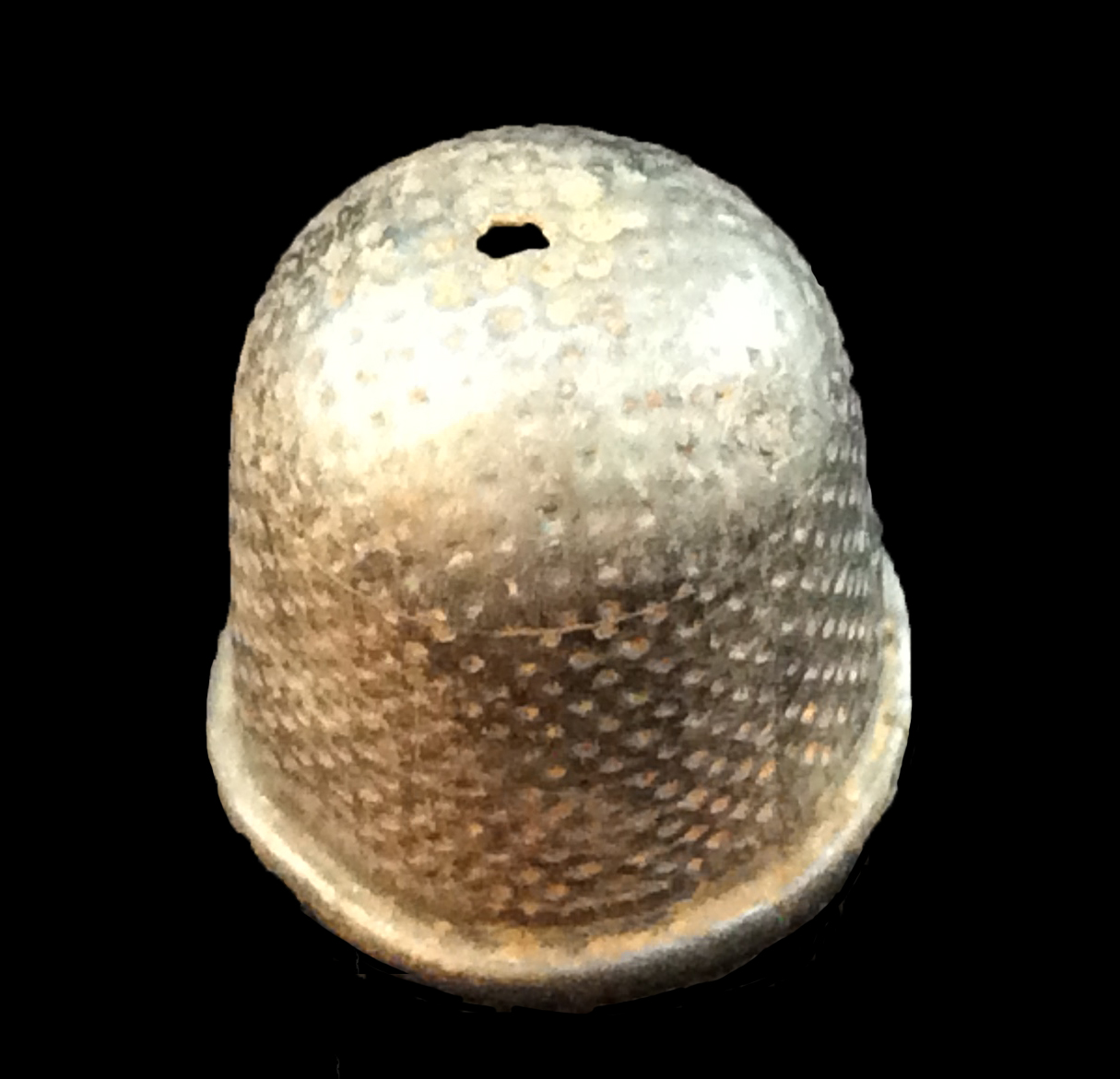
Figure 10. 18PR175 lot 9000 thimble.
Thimble Rings – Thimble rings (also called sewing rings) are ring-shaped, open top thimbles that were often used by tailors or individuals sewing heavy cloth, like canvas sails, or leather. These rings protected the side, rather than the top of the finger. The earliest thimble rings in England date to about 1450 (Holmes 1985). Thimble rings contained in the MAC Lab collections are from contexts dating to the 18th and 19th centuries.
Silver Thimbles
Silver began to be used for thimbles after the metal started arriving in Europe from the New World in the 16th century (Sullivan 2004:53). The earliest silver thimbles in the MAC Lab collection date to the late 17th century. These thimbles were constructed in two pieces, with a brazed or soldered cylindrical body joined to a separately-produced crown. In the latter part of the 18th century, silver thimbles began to be made in one piece by deep drawing (Holmes 1985:40). All silver thimbles in the MAC Lab collections are decorated.
Since silver is a soft metal, silver thimbles will often show wear on the crown; one example in the collections has a hole worn through the center of the crown (Figure 10). Silver thimbles reinforced with steel tops began to appear at the end of the 18th century (McConnel 1990:10).
Other Metals (Iron and Aluminum)
While it is less common for iron thimbles to survive archaeologically, there are several in the MAC Lab collections. If there is any doubt about a thimble’s material, the presence of iron can easily be determined using a magnet.
While pure aluminum was first extracted at the beginning of the second quarter of the 19th century, it did not become commercially cost-effective until late in the century. Lightweight aluminum thimbles were developed as advertising giveaways (McConnel 1990:143) and begin to appear in the Montgomery Ward catalog by 1895 (Montgomery Ward 1895).
All illustrations by Patricia Samford.
Footnotes
1 While some scholars generally prefer to use the term brass to describe thimbles made from a particular type of copper alloy, for the purposes of this essay, all thimbles made from mixture of copper and other metals will be designated as copper alloy.
2 Hexagons and circles are grouped together, because sometimes it can be difficult to distinguish these two shapes on thimble bodies.
References
2006 Findings: The Material Culture of Needlework and Sewing. New Haven: Yale University Press.
2002 Artifacts of the Spanish Colonies of Florida and the Caribbean 1500-1800: Volume 2: Portable Personal Possessions. Washington: Smithsonian Institution Press.
1995 Thimbles and Thimble Rings from the circum-Caribbean Region, 1500-1800: Chronology and Identification. Historical Archaeology 29(1):84-92.
1985 A History of Thimbles. Cornwall Books, New York.
1987 Early Brass Thimbles. Thimble Collector’s International July 1987:3-11.
1990 A Collector’s Guide to Thimbles. Wellfleet Books, Secaucus, NJ.
1895 Montgomery Ward & Co. Catalogue and Buyer’s Guide. No. 57, Spring and Summer 1895. Dover Publications, New York.
2001 The Archaeology of Martin’s Hundred. Part 2: Artifact Catalog. University of Pennsylvania Museum of Archaeology and Anthropology, Philadelphia and the Colonial Williamsburg Foundation, Williamsburg.
2004 Needlework Tools and Accessories: A Dutch Tradition. Woodbridge, UK: Antique Collector’s Club.
1988 Zalkin’s Handbook of Thimbles and Sewing Implements. A Complete Collector’s Guide with Current Prices. Warman Publishing Co., Inc., Willow Grove, PA.