Toys and Games
This section documents toys and game pieces in the collections of the Maryland Archaeological Conservation Laboratory. The toys and game pieces (with the exception of marbles) are divided by material type – ceramic, metal, wood and other – and each artifact has a brief description, a date range of manufacture where possible, and contextual information. In assessing the lab collection as a whole, toys do not really begin to appear consistently in the archaeological record until the second half of the 19th century. This circumstance probably has less to do with lack of playthings for children and more to do with the toys not surviving underground due to the materials (wood, leather, fabric, gesso) of which they were made. For Christmas 1759, George Washington ordered a wax doll, a bird on bellows, and a "Tunbridge Tea Sett" for his young children. Other toy types from the 18th century included marbles, rattles, rocking horses, and tin drums.
A good source for late 19th- and early 20th-century toys and game pieces are merchant's catalogs, like the Sears Roebuck and Montgomery Ward catalogs, which have been reprinted and relatively easy to purchase.
Ceramic Toys and Games
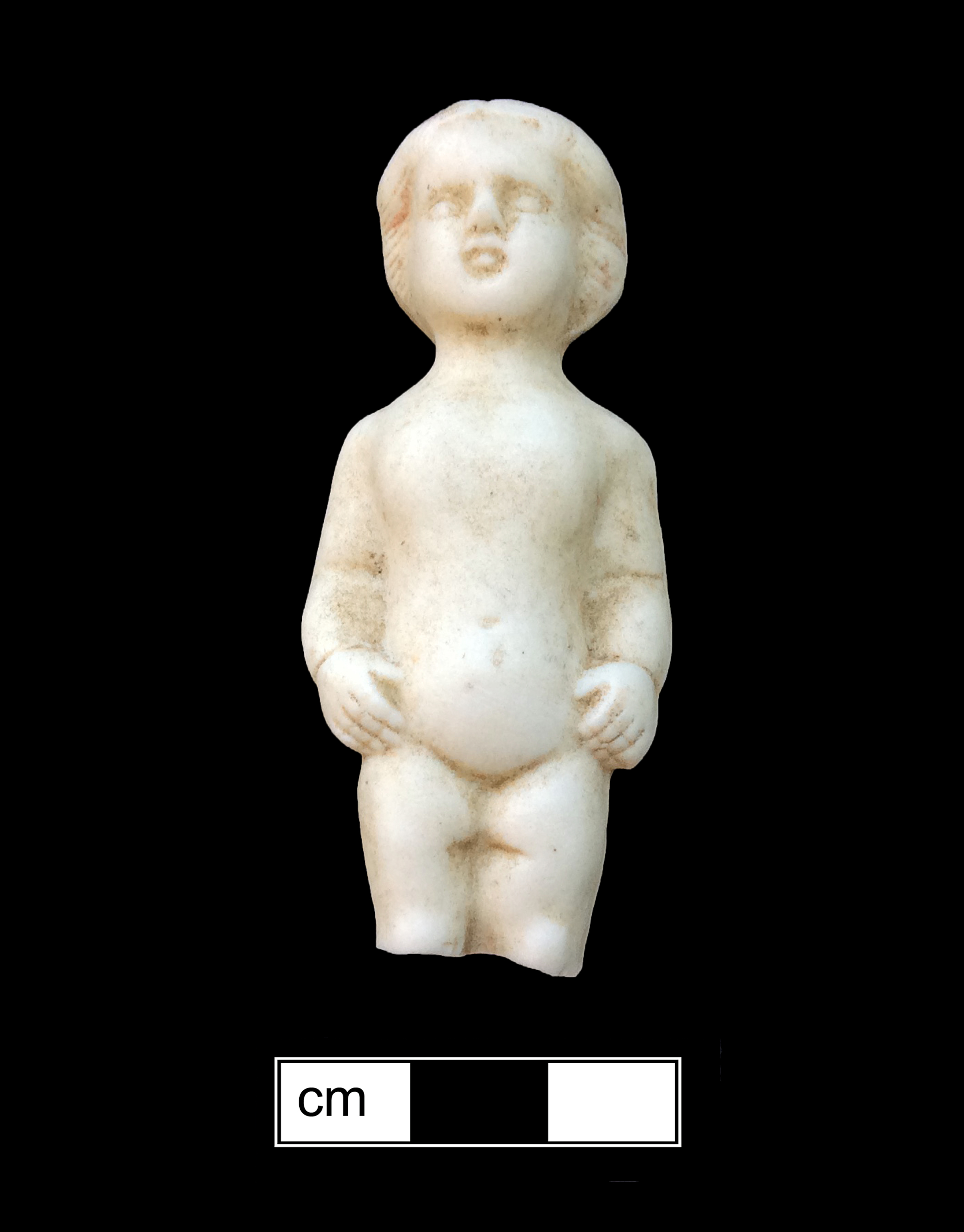
Most of the toys made from ceramic fall into two categories: dolls and toy tableware.
Ceramic dolls were made in different styles, typically of porcelain, and the MAC Lab collections encompass a good variety of these types. Basic information and dating are provided for each example, but there are also great source materials that can assist you with greater details.
One style of doll found frequently on archaeological sites from the last half of the 19th century to the early 20th century were penny or "Frozen Charlotte" dolls. Made in a range of sizes in both glazed and unglazed porcelain, these penny dolls were usually molded in one piece, although examples with joined arms and legs do exist.
Other doll styles featured cloth bodies with ceramic heads, legs, and arms attached in several ways. It is common to find legs, arms, and heads of Continental European hard paste porcelain with painted details. Painted bisque porcelain was also a common material for doll heads.
Tableware vessels in small sizes, either for dolls or children, are also common finds on archaeological sites from the second half of the 19th century and through the 20th century. These toy vessels are most often made from undecorated Continental European hard paste porcelain, although decorated examples are also found.
Metal Toys and Games
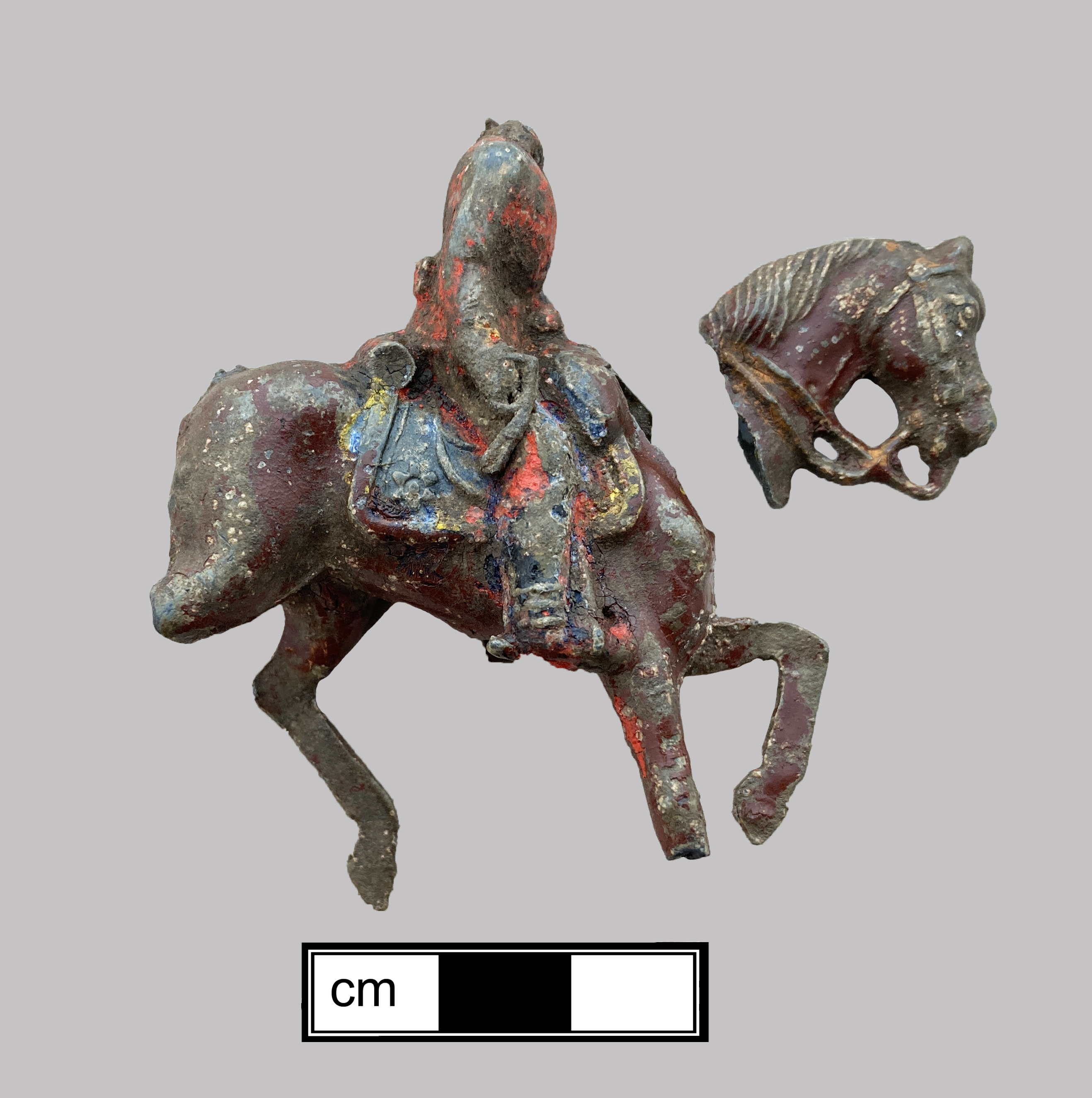
Toys of iron, pewter, lead, copper alloy, or white metal are present in the MAC Lab collections. These toys are not easily characterized, including items like cast iron toy soldiers, automobiles, and toy guns, and game pieces like whizzers or jacks.
Wood/Other Toys and Games
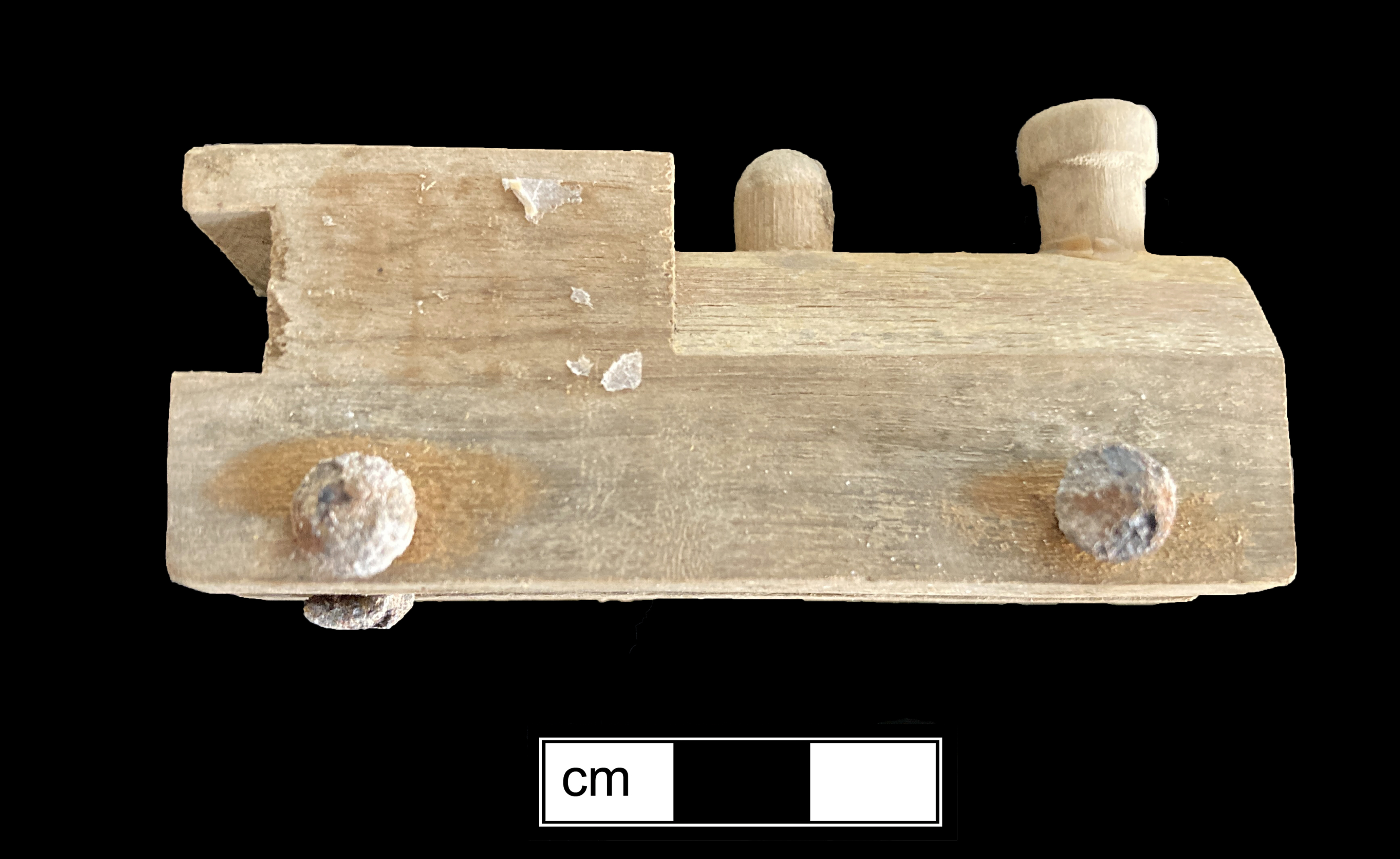
This section of the website includes toys made from wood, bone, plastic, rubber, and other materials. While wood does not generally survive well in the archaeological record, the anerobic environments of some privies will allow wooden artifacts to remain intact. Common wooden toys in the MAC Lab collections include spinning tops, skittles, dominos, and game pieces like checkers. Bone dice are also relatively common. Moving into the late 19th and 20th centuries, toys of rubber and plastic become increasingly common.
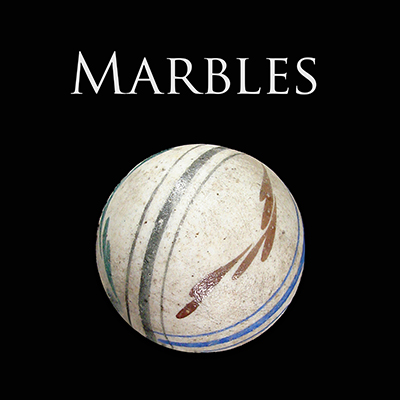
Marbles
Marbles are one of the most common toys found on North American historic period archaeological sites. The essay below will attempt to provide dating and identification tools for ceramic, stone and glass marbles typically found on these sites.