Bowman's Brook
Defining Attributes
Bowman's Brook is a Late Woodland ware with a smooth surface and often intricate narrow incised decoration with punctated lips. The paste is a reddish yellow or orange with a shale or grit temper.
Chronology/Distribution
Bowman's Brook is said to be associated with the Pahaquarra culture of the Upper Delaware Valley and is found most frequently in eastern Pennsylvania, northwestern New Jersey and parts of southern New York extending to the lower Hudson River and Long Island Sound. Kraft (1975) postulates that the culture is a predecessor of the Delaware Munsee/Minisink of the Lenni Lenape dating from around 1000 to 1350 AD. Radiocarbon dating from the Bowman’s Brook site resulted in a date of around 1340 AD. Michael Stewart reported earlier radiocarbon dates of 680 and 940 AD from Bowman’s Brook-like associated features at the Sturgeon Pond site near Trenton, New Jersey, suggesting it may date to the Middle Woodland period as well (Wall and Stewart 1996:37; Stewart 1998).
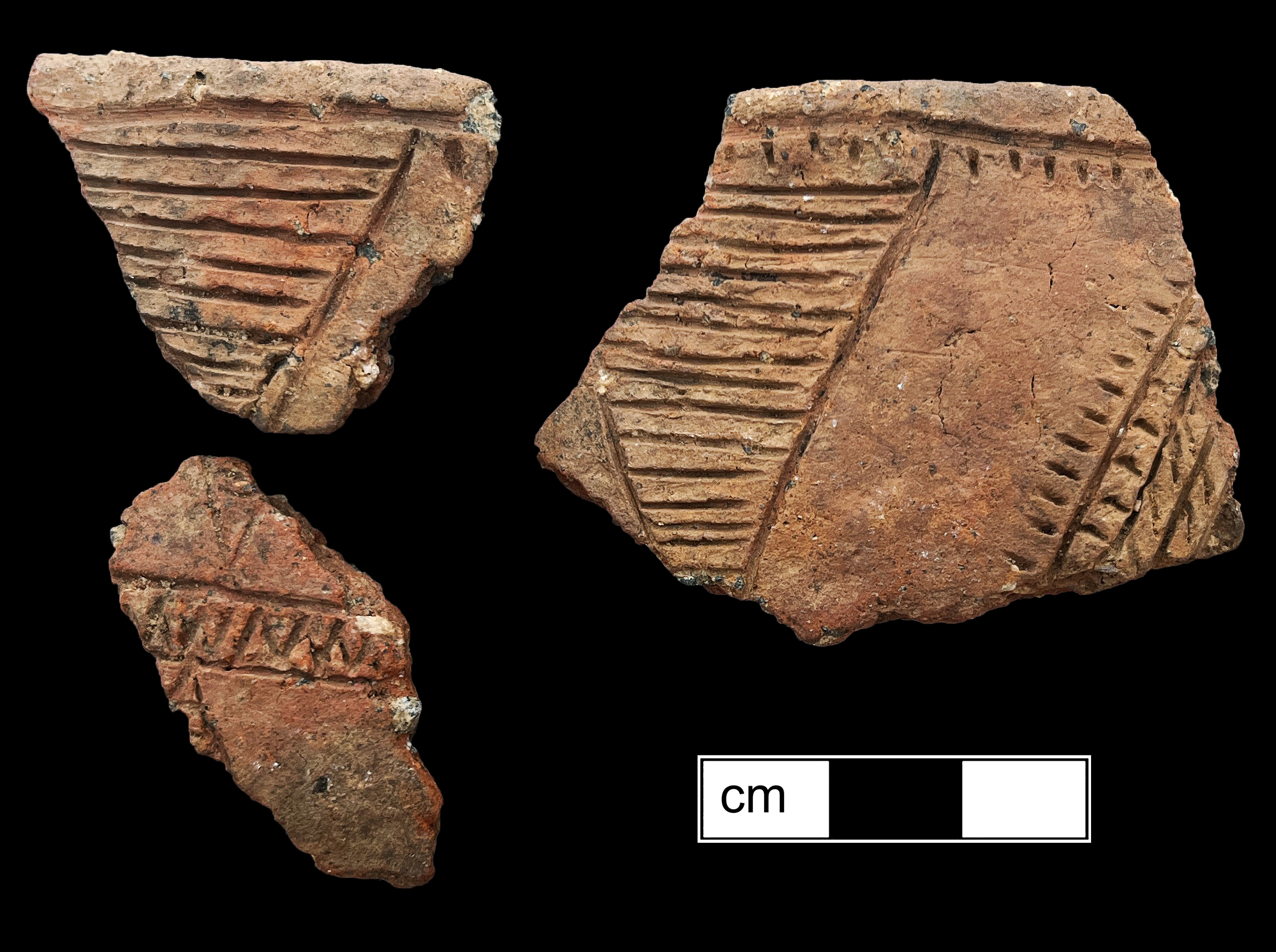
Figure 1. Example of Bowman's Brook pottery.
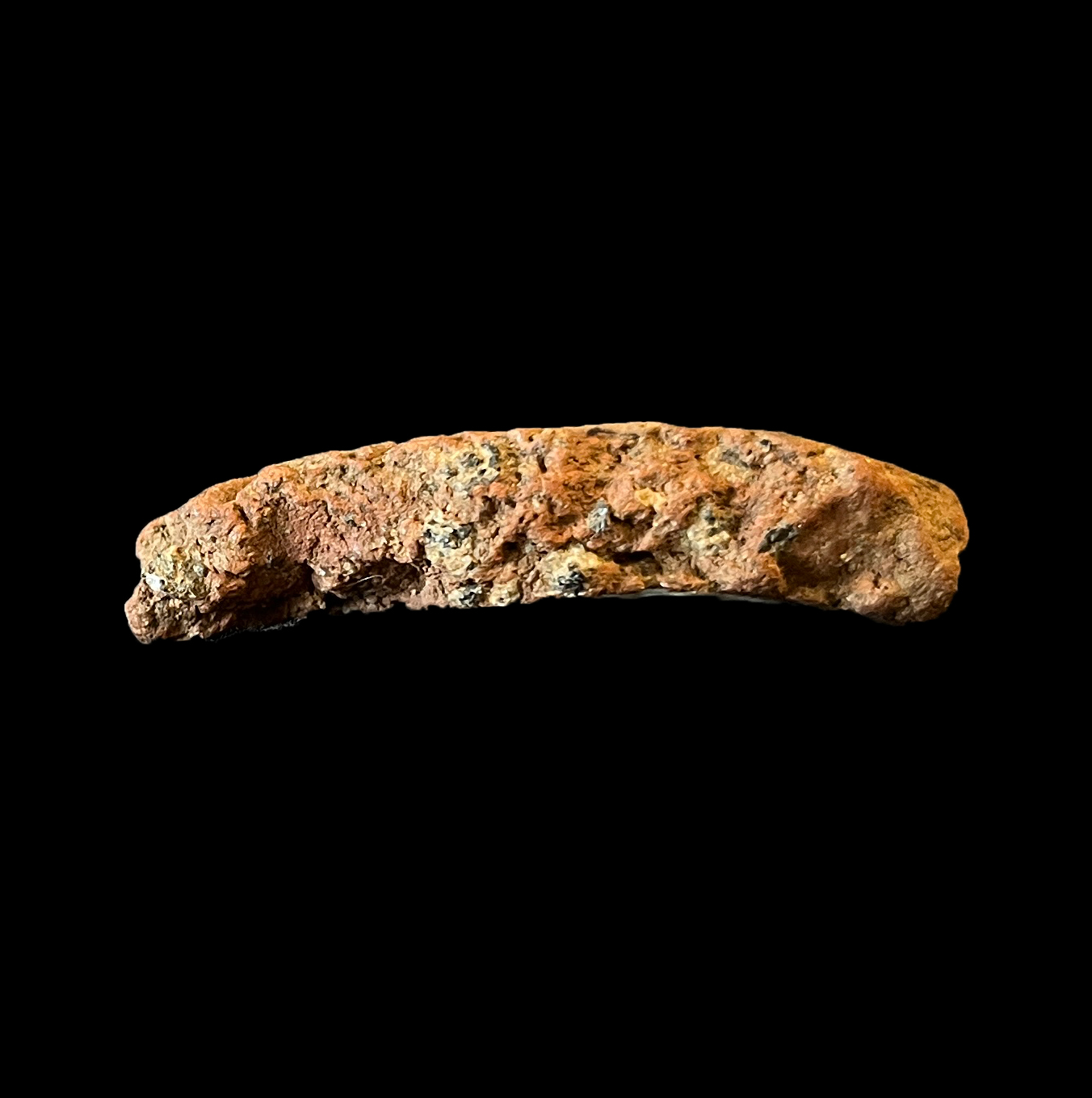
Figure 2. Paste close-up.
Description
Paste/Temper
The paste has been described as having a reddish yellow or orange color (Staats 1974; Kraft 1975). Temper is composed of grit, predominantly of crushed shale, argillite, and/or gneiss.
Surface Treatment
Exterior surface are smoothed over. Very rarely are other surface treatments noted, though smoothed over cord-marking has been found. Interior surfaces are smoothed.
Decoration
Most vessels are incised with intricate designs composed of right angles, zig-zags, herringbone, or triangular designs similar to those found on Townsend and Minguannan ceramics (Custer 1987). Incised lines are usually narrow. Designs are found from the lip to the shoulder. Punctations are common on the lips of vessels (Staats 1974; Kraft 1975). Kostiw (2015) notes a variety called Bowman’s Brook Stamped, which consists of horizontal impressions with a cord-wrapped stick.
Morphology
Bowman's Brook ceramics are coil-constructed with paddle malleation. Vessels are conoidal (described as “hornet’s nest”-shaped) or egg-shaped. Rims are straight or slightly incurvate with flattened lips. Vessel thickness is generally around 6mm.
Defined in the Literature
Bowman's Brook ceramics are named for Bowman’s Brook site (also known as Mariner's Harbor) in Staten Island, New York, which was first excavated by Alanson Skinner in 1907. Kraft (1975) described the type as an early Late Woodland phase called the Pahaquarra culture, which consisted of other ceramic types such as Levanna Cord-on-Cord, Canandaigua Plain, Castle Creek Incised, Clemson Island Punctate, Overpeck Incised, and Sackett Corded/Owasco. Others have noted the type may be culturally and linguistically tied to the Unami band/sub-tribe of the Lenni Lenape.
Bowman's Brook shares many similarities with other wares such as Overpeck Incised, Minguannan, Riggins, Owasco, and Abbott Zoned Incised. Stewart (1998), in his examination of ceramics from the Trenton Complex surrounding the Abbott Farm site in New Jersey identified Types VIII G and XIII A as examples that could be described as Bowman's Brook. There appears to be considerable overlap between Bowman's Brook and Overpeck Incised in particular. While similarly decorated, the main difference between the two is the temper and surface treatment. Overpeck Incised ceramics are predominantly quartz tempered and exhibit cord-marked surface treatments (Kraft 1979; Clark 2019).
Type Site
Bowman's Brook (also known as Mariner’s Harbor, NYSM Site 8505).
Maryland Sites with Bowman's Brook Components
- Obrecht's (18AN113)*
* collections at the MAC Lab
References
2019 Algonquian Cultures of the Delaware and Susquehanna River Drainages: A Migration Model. Report prepared for the Delaware Water Gap National Recreation Area, National Park Service. https://www.dhr.virginia.gov/wp-content/uploads/2021/05/Algonquian-Cultures-5-6-19-2.pdf, accessed November 2025.
1987 Late Woodland Ceramics and Social Boundaries in Southeastern Pennsylvanie and the Northern Delmarva Peninsula. In Archaeology of Eastern North America, Vol. 15 (Fall 1987), pp. 13-27.
1975 The Late Woodland Pottery of the Upper Delaware Valley: A Survey and Reevaluation. In Archaeology of Eastern North America, Vol. 3 (Spring 1975), pp 101-140.
1979 Marcey Creek Plain Pottery. In Bulletin of the Archaeological Society of New Jersey, Vol. 34, pp. 15-16.
1974 A Fresh Look at Bowmans Brook and Overpeck Incised Pottery. In Bulletin of the Archaeological Society of New Jersey, Vol. 30, pp 1-7.
1998 Ceramics and Delaware Valley Prehistory: Insights from the Abbott Farm. Trenton Complex Archaeology, Report 14. Louis Berger and Associates, Inc., East Orange.
1996 Sturgeon Pond Site (28Me114), Data Recovery. Trenton Complex Archaeology, Report 14. Louis Berger and Associates, Inc., East Orange.