Townsend Series
Defining Attributes
Townsend Series are Late Woodland to Early Contact-period wares, characterized by shell temper, fabric-impressed exterior surfaces, and various decorative motifs. Defined types include Rappahannock Fabric-Impressed, Rappahannock Incised, Rappahannock Plain, Townsend Herringbone, and Townsend Corded-Horizontal.
Chronology
Stratigraphic sequences and radiometric dating indicate that Townsend wares date from ca. A.D. 950 – A.D. 1600. Townsend wares have been reported on post-Contact seventeenth century indigenous sites in southern Maryland, where it was a dominant ware type at the circa 1650 to 1712 Choptico Indian Town (18ST153) site (King et al. 2014). It has also been reported as a minority ware at the circa 1680 to 1695 Piscataway settlement at Zekiah Fort (18CH808) site (Flick et al. 2012).
Distribution
Townsend wares are found throughout the Coastal Plain region of Maryland and Virginia, and throughout southern Delaware. Minor amounts of Townsend are also found into the Piedmont region.
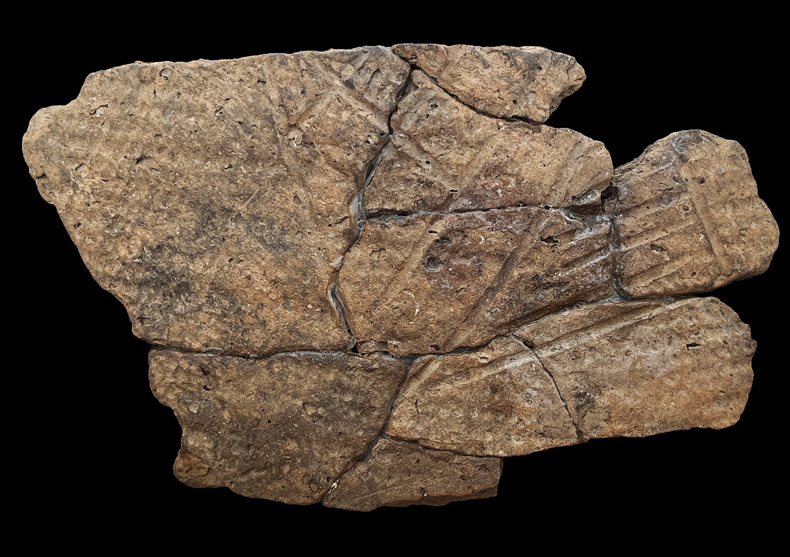
Figure 1. Example of Townsend Series pottery.
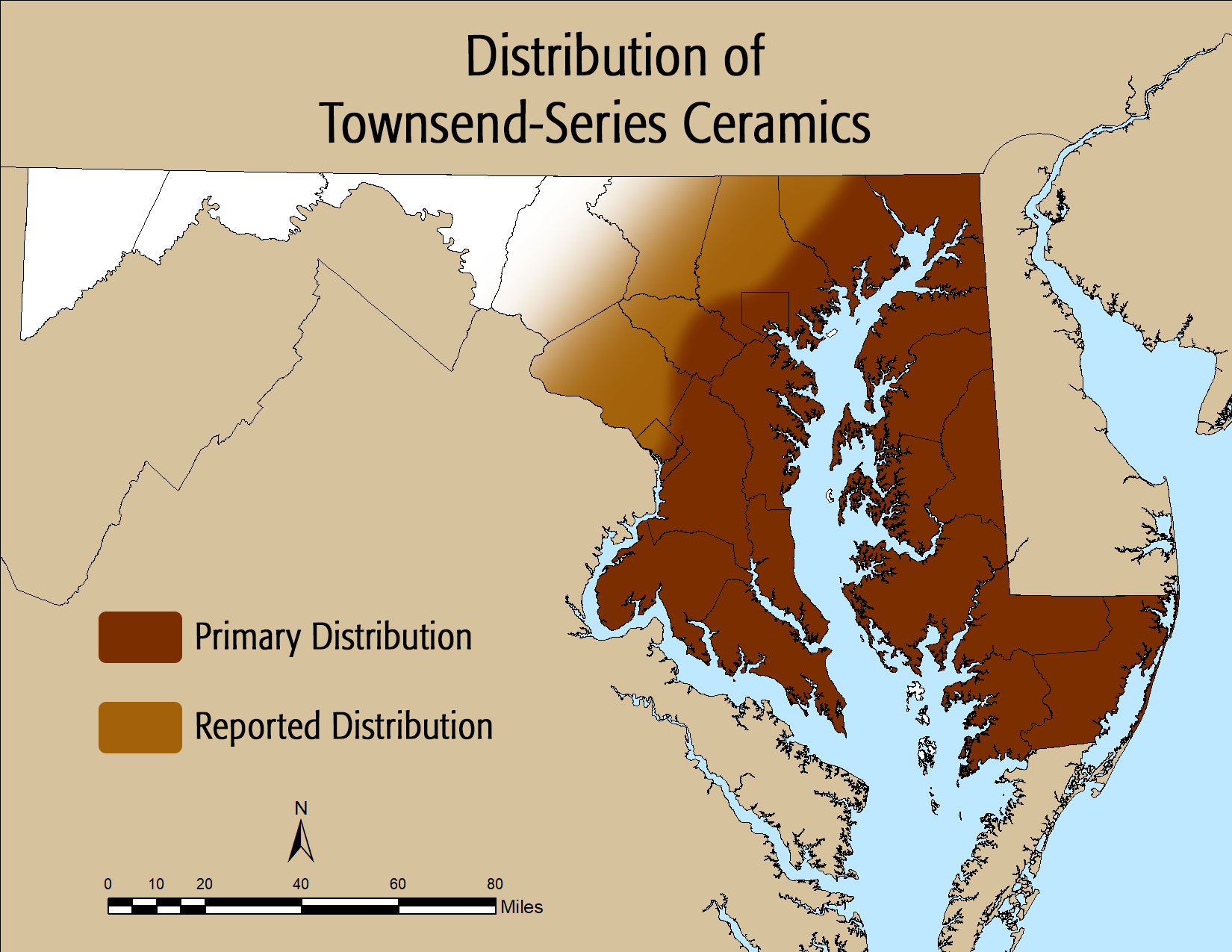
Figure 2. Distribution map.
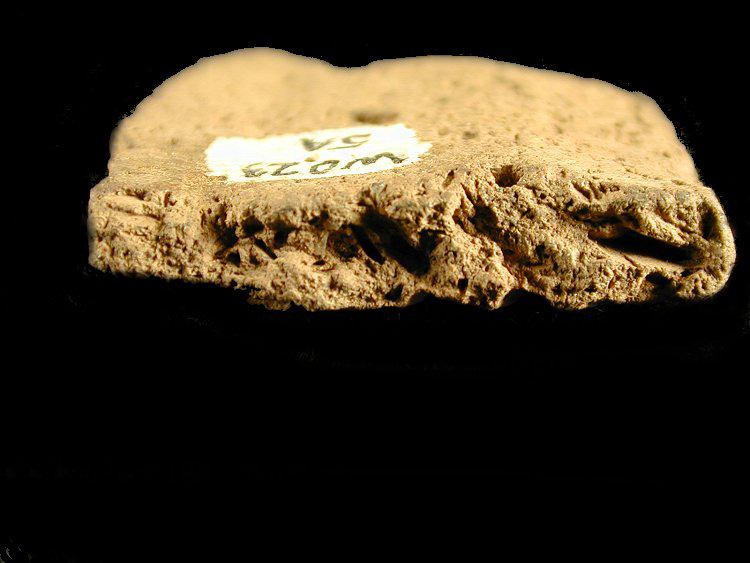
Figure 3. Paste close-up.
Description
Paste/Temper
The paste of the Townsend wares is compact and fine, but poorly mixed. Temper consists of relatively finely crushed,unburned shell (usually ribbed mussel or oyster),often partially leached, which comprises 10% –20% of the paste. Blaker (1963:14) noted that inclusions appear frequently as coarse, subangular grains of white quartz sand, ranging in size from very fine to 4 mm thick. Other inclusions include small nodules of bright orange ocherous clay. Townsend wares have a Moh’s scale hardness of 2.0 –2.5. Color ranges from an oxidized reddish buff through orange, brown, gray, and tan. Reddish-tan and buff colors are predominant in the southern portion of its distribution.
Surface Treatment
Exterior surfaces of Townsend Series wares are fabric-impressed, often utilizing a fabric-wrapped paddle. Impressions appear as parallel rows of weft impressions placed perpendicular, oblique, or parallel to the rim. Occasionally exterior surfaces are smoothed afterwards, but without obliterating the fabric design. Interior surfaces are smoothed.
Decoration
Many vessels in the Townsend Series show some form of decoration. The majority of sherds are incised with a broad shallow line, directly cord-impressed, or cord-wrapped stick (psuedo-cord) impressed. All decorations occur on the exterior below the lip of the rim.
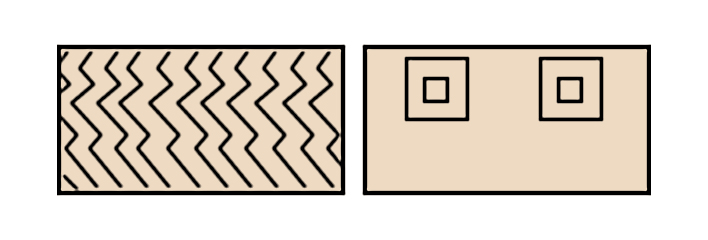
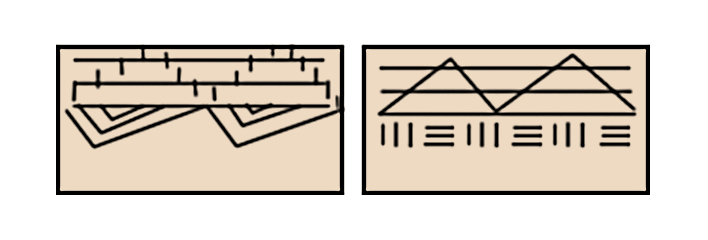
Rappahannock Plain is undecorated and Rappahannock Fabric-Impressed has no decoration other that lip nicking. Rappahannock Incised is decorated with a blunt tool. Incisions are U-shaped in cross-section, 1.5 mm to 2.5 mm wide and 1 mm to 2 mm deep. Griffith (1982:57) noted eight variations based on decoration:
- Horizontal bands
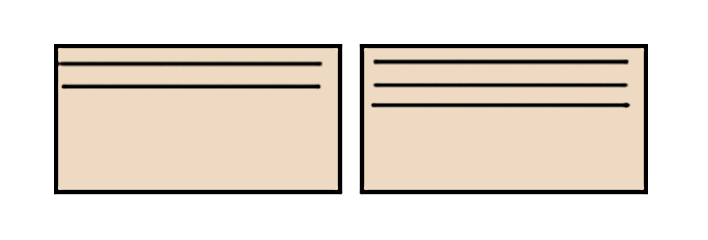
- Horizontal bands surmounting single, discrete lines
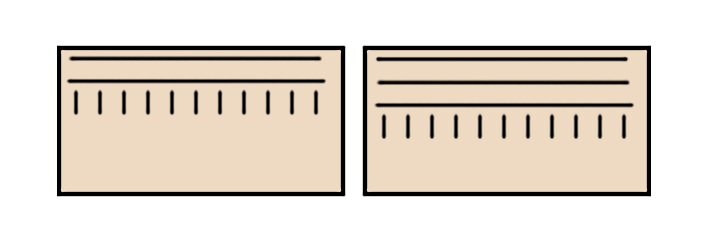
- Horizontal bands surmounting any combination of two or more discrete lines
of any type

- Horizontal bands surmounting complex geometric shapes (zig-zags, squares,
or triangles)
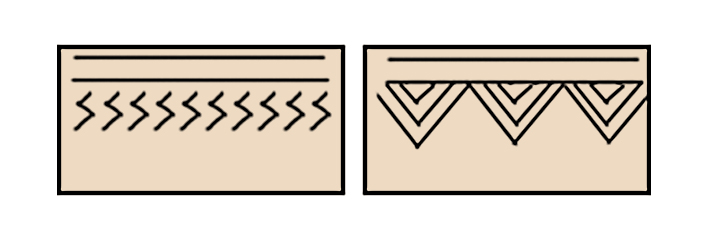
- Square, horizontal, oblique, or vertical lines
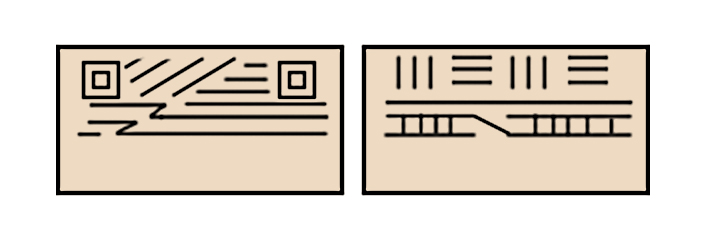
- Discrete horizontal, oblique, or vertical lines
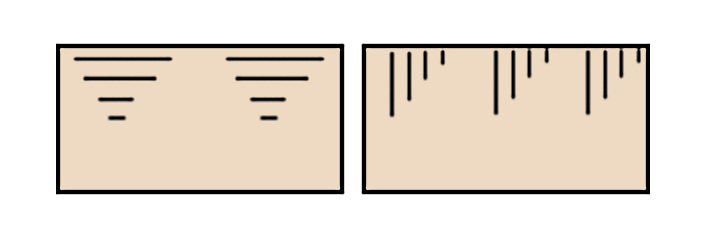
- Complex geometric designs (squares, triangles, zig-zags)
- Horizontal bands with overlying embellishments.
Townsend Corded-Horizontal is decorated with direct cord-impressions made with a twisted cord, pseudo cord-impressions made with a cord-wrapped stick on wet plastic, or pseudo cord-impressions made over pseudo cord-impressed oblique lines. Townsend Herringbone has Pseudo cord-impressions in horizontal bands over incised herringbone or zig-zag patterns.
Morphology
Townsend wares are coil-constructed. Fractures are found along coiling planes, which are horizontal to markedly oblique, the latter condition apparently the result of amalgamating the coils. Vessels generally have elongated conoidal body shapes, though they are sometimes globular, with circular necks. Bases are occasionally rounded, but more commonly are conoidal or semi-conoidal. Base sherds show evidence of coil construction. Rims are direct, ranging from everted through perpendicular to inverted. Folded or thickened rims are rare, but have been found. Lips are rounded, rounded and flattened, or rarely squared. Vessel size ranges from miniature pots to large cooking vessels. Miniature pots average 3.8 cm in height and 4.4 cm in diameter. Larger vessels average 20.9 cm in diameter and 26 cm in height. Vessel wall thickness is fairly thin, ranging from 5 mm –10 mm.
Defined in the Literature
The Townsend Series was first described by Blaker (1963:14-21) from pottery excavated in the 1940s from the Townsend site, located a short distance inland from Lewes, Delaware. She identified three wares from this site: Townsend Incised, Townsend Corded Horizontal, and Townsend Herringbone. She also expanded upon the work done by Karl Schmitt, who had previously named and identified Rappahannock Fabric Impressed as a minority ware from the Potomac Creek site (44ST2). Blaker subdivided Schmitt’s group into two more wares, Rappahannock Fabric Impressed and Rappahannock Incised. Daniel Griffith (1982) further refined Blaker’s work by reclassifying the Townsend Series and identifying four categories based on decorative motifs. Egloff and Potter (1982:108-109) later noted that Rappahannock Fabric-Impressed and Rappahannock Incised were identical to Evans' (1955) Chickahominy Fabric-Impressed and Chickahominy Incised, and suggested that those names no longer be used.
Type Site
Townsend
Maryland Sites with Townsend Components
- Waveland Farm (18AN17)*,
- Duck’s Run (18AN546)*,
- Locust Neck (18DO117)*,
- Piscataway (18PR7),
- Thomas Point (18ST570)*,
- Cumberland (18CV171)*
*collections at the MAC Lab
Radiocarbon Dates
| Radiocarbon Dates | |||||
|---|---|---|---|---|---|
| Type | Date | Sample No. | Site | Feature | Reference |
| Townsend | 920 ± 110; A.D. 1030 | Beta-11638 | Duck's Run (18AN546) | Test Pit 2, Level 3 | |
| Townsend | 810 ± 80; A.D. 1140 | Beta-11639 | Duck's Run (18AN546) | Test Pit 1A, Level 3 | |
| Townsend | 420 ± 100; A.D. 1530 | SI-6404 | Locust Neck (18DO117) | Feature 3 | McNamara 1985 |
| Rappahannock Fabric Impressed | 710 ± 80; A.D. 1180-1410; intercept A.D. 1290 | Beta-151237 | Maddox Island Site (18SO240) | Feature 2 | Lowery 1996; Wall 2001 |
| Rappahannock Fabric Impressed | 660 ± 70; A.D. 1290 | SI-6731 | Locust Neck (18DO117) | Feature 16b | McNamara 1985 |
References
1963 Aboriginal ceramics: The Townsend site near Lewes, Delaware. The Archeolog 15: 14-39.
1982 Indian Ceramics from Coastal Plain Virginia. Archeology of Eastern North America 10: 95-117.
1955 A Ceramic Study of Virginia Archaeology, Bulletin 160, Bureau of American Ethnology, Smithsonian Institution, Washington, D.C.
2012 "…a place now known unto them:" The Search for Zekiah Fort. Report on file, St. Mary's College of Maryland, St. Mary's City.
1982 Prehistoric Ceramics in Delaware (An Overview). Archaeology of Eastern North America 10: 46-68.
2014 An Archaeological Survey of Choptico Indian Town, Chaptico, Maryland. Report on file, St. Mary's College of Maryland, St. Mary's City.
1996 Archaeological Survey Work on Maryland's Eastern Shore During the 1996 Field Season. Report on file at the Maryland Historical Trust, Crownsville.
1985 Excavations on Locust Neck: The Search for the Historic Indian Settlement in the Choptank Indian Reservation. Journal of Middle Atlantic Archaeology, 1: 87-95.
1952 An Archaeological Chronology of the Middle Atlantic States. In Archaeology of the Eastern United States, edited by James B. Griffin, editor, University of Chicago Press.
2001 Late Woodland Ceramics and Native Populations of the Upper Potomac Valley. Journal of Middle Atlantic Archaeology 17:15-37.